Signs of Termites in Your House

Jose Brito
I’m Jose Britto, the writer behind The Country Store Farm Website. I share practical, down-to-earth gardening advice for home growers—whether you’re starting your first raised bed, troubleshooting pests, improving soil, or figuring out what to plant next. My focus is simple: clear tips you can actually use, realistic expectations, and methods that work in real backyards (not just in perfect conditions). If you like straightforward guidance and learning as you go, you’re in the right place.
Termites are sneaky. Most of the time, they are eating wood where you cannot see them, which is why people often discover a problem late. The good news is there are a handful of warning signs that show up again and again. If you know what to look for, you can catch a possible infestation early and get a professional opinion before the damage spreads.
This guide focuses on the most common, easiest-to-spot signs of termites in a house, plus how to tell when it might be something else. It is for awareness, not a diagnosis. Only a hands-on inspection can confirm termites.
Quick context: Subterranean termites typically come from the soil and often leave mud tubes. Drywood termites live in the wood itself and are more likely to leave pellet-like droppings (frass). In many regions, subterranean termites are widespread, while drywood termites are more common in warmer and coastal areas.
Quick checklist: the big termite clues
If you want the fastest scan of your home, here are the signs that deserve a closer look:
- Mud tubes on foundation walls, crawl spaces, basements, or slab penetrations
- Frass (drywood termite pellets) collecting beneath a small kick-out hole in wood
- Hollow-sounding wood when tapped, especially trim and window frames
- Discarded wings on window sills or near lights
- Sagging floors or soft spots that feel spongy
- Small surface breaks (tiny pinholes, bubbling paint, or thin spots) near suspicious areas
One sign alone does not always confirm termites. But if you see two or more, or if one sign is showing up in multiple places, it is time to take it seriously.
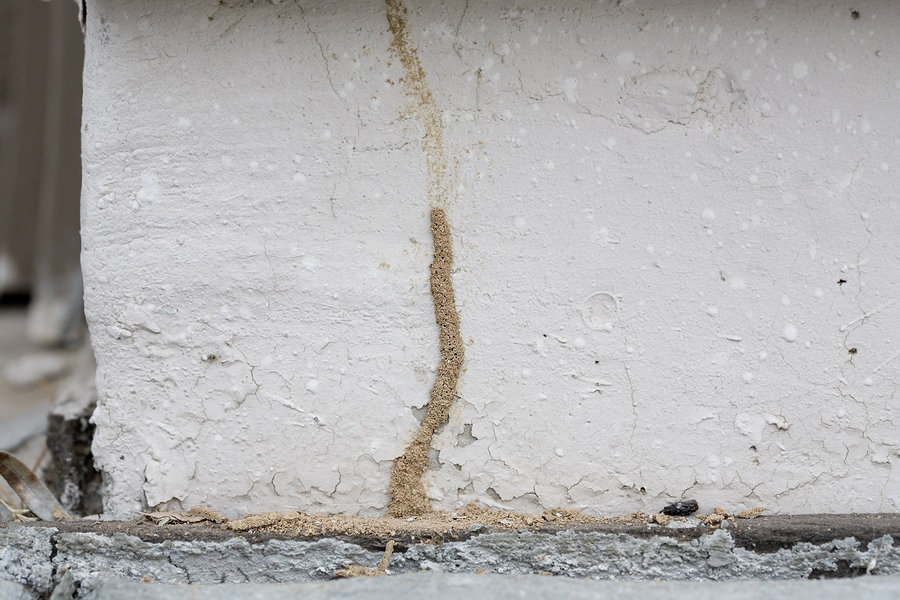
1) Mud tubes on walls or foundations
Mud tubes are one of the clearest signs of subterranean termites, which are the most common type in many areas. These termites live in the soil and build pencil-width to finger-width tunnels to travel from the ground to the wood in your home while staying moist and protected. Some tubes are thinner, exploratory “scout” tubes that still deserve attention.
Where to look
- Along the foundation, especially near the soil line
- Inside crawl spaces on piers, walls, or subflooring
- In basements along cracks, seams, or behind stored items
- Near porches, steps, and attached garages where soil meets concrete
- Near slab entry points like plumbing penetrations or expansion joints
What it looks like
Mud tubes look like dried, packed dirt forming a raised line. They are rarely perfectly straight. They often hug corners, seams, or rough surfaces.
A simple at-home check
If you gently break a small section of tube with a screwdriver, an active tube may show live termites inside or get rebuilt within a few days. If you do not see termites, that does not rule them out. Tubes can be abandoned, activity can shift, or you may have opened an inactive section.
Lookalikes: Sometimes dried mud from splashback or old spider shelters can fool people. The difference is mud tubes tend to look intentional, like a continuous covered pathway.
2) Frass (drywood termite pellets)
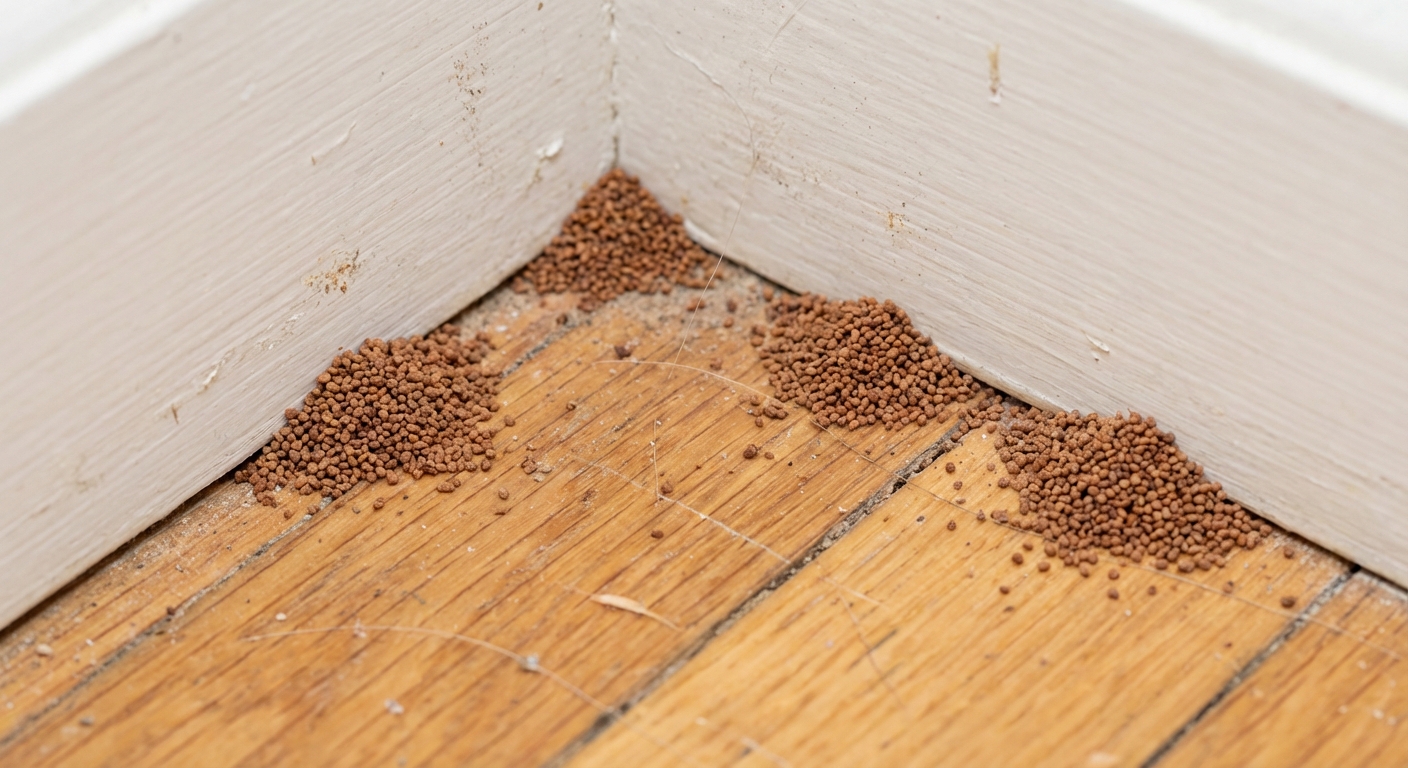
Drywood termites can leave behind frass, which is basically fecal pellets pushed out of small kick-out holes in the wood. Homeowners often notice it as a small pile that keeps coming back after cleaning.
What frass looks like
- Tiny pellets that resemble sand, coffee grounds, or pepper
- Uniform pieces (often with a subtle ridged look) rather than a fuzzy dust
- Small piles beneath a single spot in trim or framing
Where you find it
- Under window frames and sills
- Along baseboards
- In attics near rafters or roof sheathing
- Beneath wood furniture if it is infested
Lookalikes: Carpenter ants leave debris too, but it is usually a messy mix of wood shavings, insect parts, and dirt. Wood-boring beetles can leave a fine, flour-like powder. Termite frass is more uniform and pellet-like.
3) Hollow-sounding wood and damaged trim
Termites often eat along the grain and can leave a thin surface veneer intact, so the surface may look fine while the interior is damaged. One of the simplest signs is wood that sounds or feels wrong.
How to check
- Tap suspicious wood with the handle of a screwdriver. Damaged wood often sounds dull, papery, or hollow.
- Press gently on trim or baseboards. Damaged areas may flex more than expected.
- Probe carefully in an inconspicuous spot with a small screwdriver. If it sinks in easily, that is a red flag.
Pay extra attention to window trim, door frames, and baseboards near bathrooms, kitchens, or any spot that has had moisture problems.
Lookalikes: Rot from water damage can also make wood soft. Rot usually comes with discoloration, a musty smell, or obvious moisture history. Termite damage can show up even when the wood looks dry on the outside.
4) Discarded wings near windows, doors, or lights
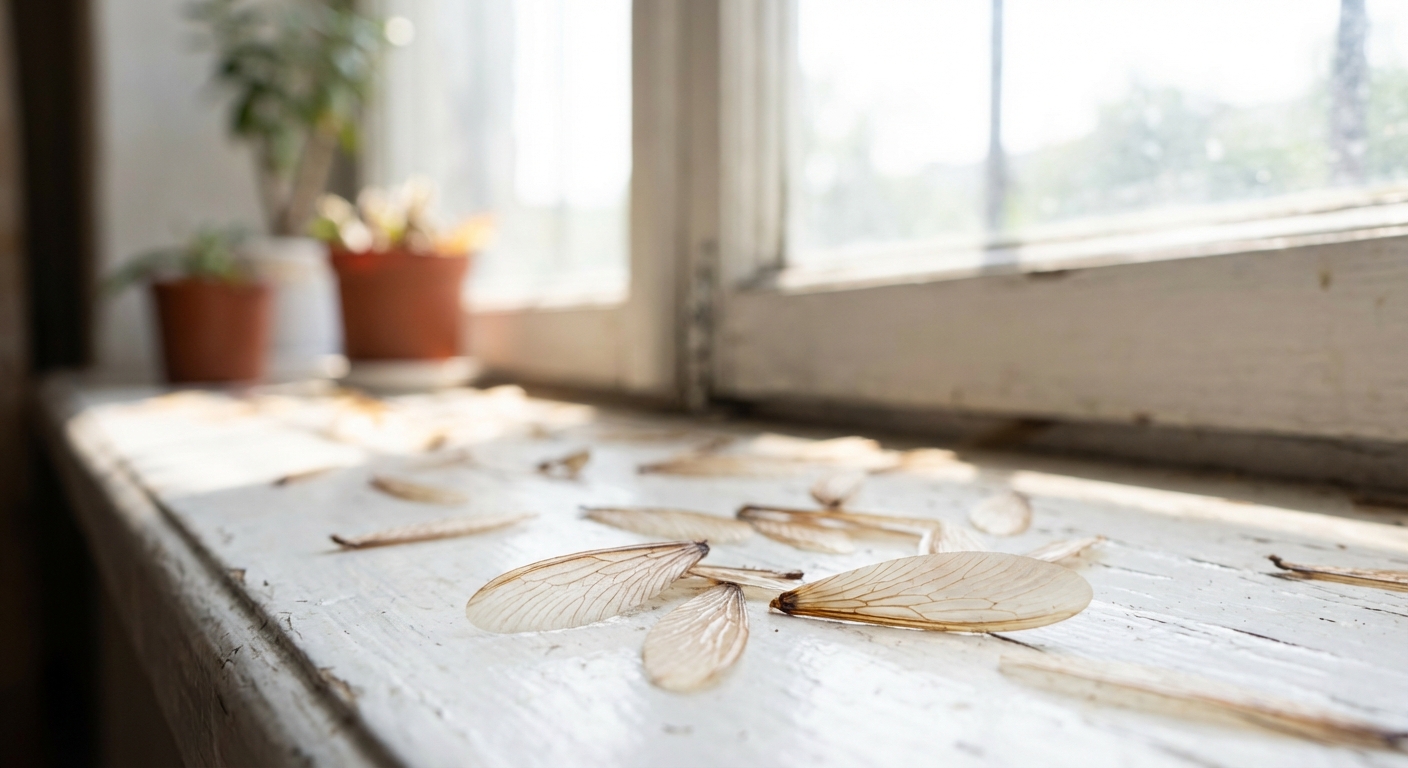
Many termite species swarm seasonally. During a swarm, winged termites called alates leave an existing colony to start new ones. After landing, they shed their wings.
Where wings show up
- On window sills
- Near door thresholds
- Under porch lights or indoor lights
- In basements and crawl space entrances
What to notice
Termite wings are often similar in size and shape, and you may find a small pile of them. Seeing wings indoors is a sign you should not ignore, especially if you also see mud tubes or wood damage.
Lookalikes: Flying ants also swarm and shed wings. If you can safely capture one, ants usually have elbowed antennae, a pinched waist, and two noticeably different wing sizes. Termites tend to have straighter bodies, bead-like antennae, and wings that are more equal in length. If you are not sure, treat it as suspicious and get it checked.
5) Sagging floors, soft spots, or sticking doors
When termites damage structural wood, the changes can show up as shifting or sagging in areas that used to feel solid. This is more of a late-stage sign, but it is important.
Common symptoms
- Floors that feel spongy or bounce more than normal
- Tiles that crack without an obvious cause
- Floorboards that dip in a consistent area
- Doors or windows that start sticking even in mild weather
Lookalikes: Seasonal humidity can make doors stick and floors shift a bit. The difference is persistent, localized changes, especially near exterior walls, bathrooms, or known moisture spots.
6) Small surface damage and debris
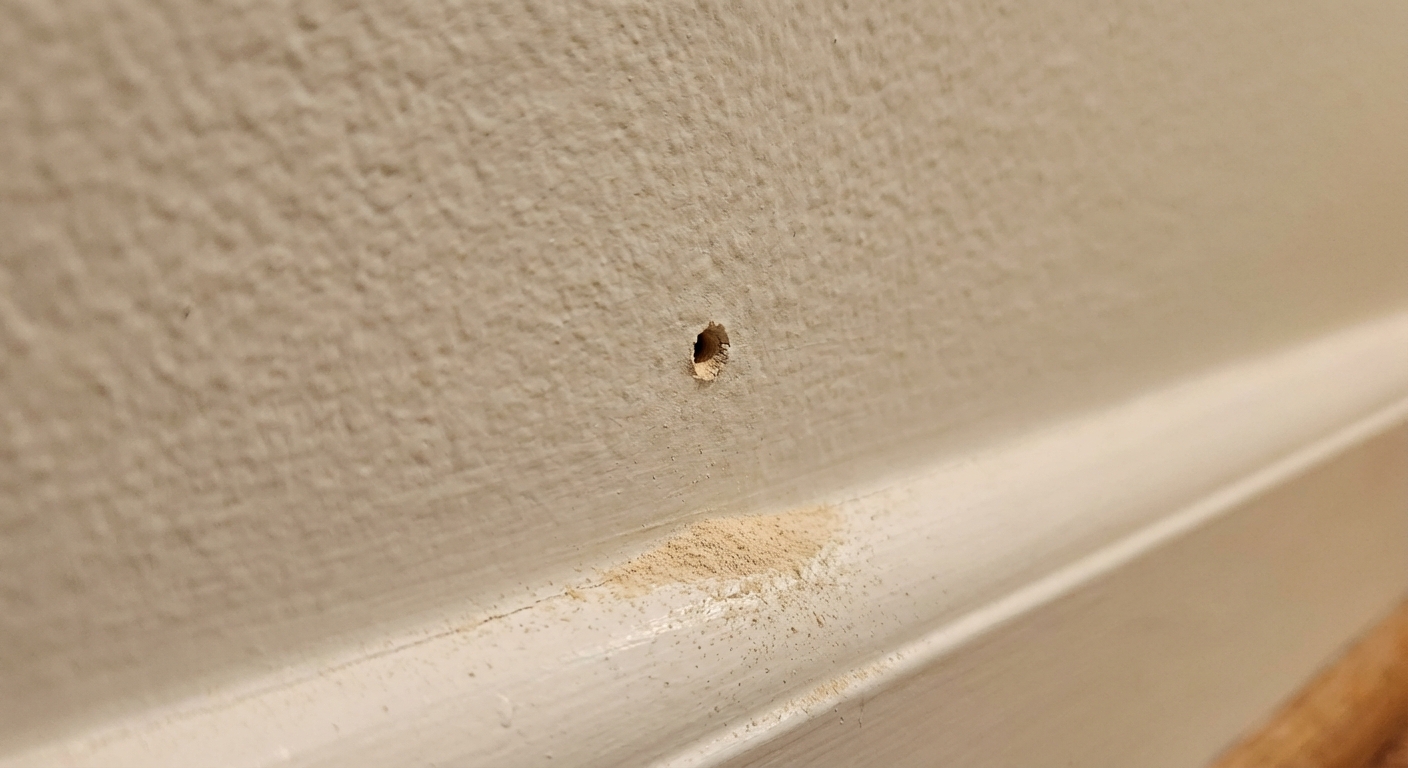
Small surface issues can show up in paint, drywall, or trim when activity is immediately behind it. These signs can be real clues, but they are also commonly confused with other pests or moisture problems, so treat them as “check closer” signals rather than proof.
What to look for
- Bubbling or blistered paint, especially in a localized strip
- Tiny pinholes or thin spots in drywall near trim or along a seam
- Debris below a spot, such as drywood termite pellets, or soil-like staining in some subterranean cases
Where to check
- Drywall near baseboards
- Wood trim around windows and doors
- Exposed beams in garages or basements
- Attics near rafters
Lookalikes: Powderpost beetles can create many clean, round exit holes in wood and leave a fine, flour-like powder. Termite frass is typically pellet-like. If you see lots of neat holes paired with floury dust, beetles may be more likely than termites. Either way, both deserve a professional inspection.
Other termite signs people miss
Blistered or bubbling paint
Termites can disturb the surface as they tunnel behind paint or thin drywall paper. This can look like water damage, so consider the whole picture: moisture history, nearby tubes, wings, or recurring pellets.
Clicking sounds in walls
Some homeowners report faint clicking or rustling in quiet rooms, especially at night. Termites can make noise when disturbed, but sound alone is not enough to confirm a problem.
Yard clues near the house
- Wood-to-soil contact, like fence posts, deck supports, or siding touching soil
- Old tree stumps or buried wood near the foundation
- Mulch piled high against the house, holding moisture
Where to inspect first (10-minute walk-through)
If you want a simple order of operations, this is how I would check a typical home without getting too technical:
- Outside foundation: Walk the perimeter and look for mud tubes, cracks, and any wood touching soil.
- Garage and utility areas: Check sill plates, exposed framing, and corners where moisture collects.
- Windows and doors: Look for wings, pellet piles, and trim that sounds hollow.
- Bathrooms and kitchen: Focus on areas with past leaks or condensation.
- Crawl space or basement: Use a flashlight and look along piers, joists, and foundation walls.
If you find something suspicious, snap a few clear photos and note the exact location. That helps a pro quickly zero in on likely entry points.
When to call an exterminator
If you see any of the following, it is worth scheduling an inspection soon:
- Active-looking mud tubes, especially in more than one place
- Wings indoors or repeated swarms near the home
- Recurring pellet piles that come back after cleaning
- Soft floors, sagging, or wood that probes easily
- Any sign plus a history of leaks or chronic moisture around the foundation
If you only have one unclear sign, you can still call. A good inspection is usually far cheaper than repairing structural damage later.
If you are deciding whether it is “too soon” to call, remember this: termites do not take breaks, and damage can compound quickly.
What to do before the inspection
You do not need to tear into walls, and you definitely do not need to start spraying random chemicals. A few simple steps can make the visit more useful:
- Clear access to walls, baseboards, and crawl space entrances.
- Do not destroy evidence like pellet piles or wings. If you must clean, take photos first.
- Write down timing, like when you first noticed wings or when a soft spot appeared.
- Check moisture sources and note any leaks, standing water, or clogged gutters.
What not to do
- Do not seal, paint over, or fully remove mud tubes before an inspection. It can hide key clues.
- Do not apply DIY termiticides blindly, especially near drains, wells, or water sources.
- Do not open up large areas of damaged wood or drywall unless a pro tells you to. Disturbing a colony can make activity harder to track.
Even if it ends up not being termites, you will still learn something valuable about your home and any moisture issues that need attention.