Pothos Plant Care for Beginners

Jose Brito
I’m Jose Britto, the writer behind The Country Store Farm Website. I share practical, down-to-earth gardening advice for home growers—whether you’re starting your first raised bed, troubleshooting pests, improving soil, or figuring out what to plant next. My focus is simple: clear tips you can actually use, realistic expectations, and methods that work in real backyards (not just in perfect conditions). If you like straightforward guidance and learning as you go, you’re in the right place.
Pothos (often called devil’s ivy) is one of the best starter houseplants for a reason. It handles missed waterings, it can grow in brighter rooms or dim corners, and it bounces back quickly once you dial in the basics.
Below is a true beginner guide: what light to aim for, how to water without guessing, how to propagate from cuttings in water, when to repot, and what to do when you see yellow leaves or long bare vines.

Quick pothos basics
- Common name: Pothos, devil’s ivy
- Botanical name: Epipremnum aureum (the most common “pothos” sold as a houseplant)
- Growth habit: Trailing vine that can climb if given support
- Speed: Fast grower in good light
- Beginner win: Very forgiving and easy to propagate
One important note: pothos is toxic if chewed by pets or kids (it contains calcium oxalate crystals). It can cause mouth irritation, drooling, and vomiting. It’s usually not life-threatening, but it’s still a vet or poison-control situation. If you’ve got a curious cat or toddler, keep vines up high or choose a safer plant.
Light requirements (and what “low light” really means)
Pothos does best in bright, indirect light, like a few feet back from an east or west window, or near a bright window filtered by a sheer curtain.
Can pothos grow in low light?
Yes, it can survive and still look decent in low light, which is why it’s so popular for apartments and offices. But here’s the tradeoff:
- Growth slows and vines stretch out more between leaves.
- Variegation fades on types like Golden or Marble Queen.
- Soil stays wet longer, which means overwatering is easier.
Signs your pothos wants more light
- Leaves getting smaller over time
- Long sections of vine with wide gaps between leaves (leggy growth)
- Variegated leaves turning mostly green
Can pothos take direct sun?
Gentle morning sun can be fine, but harsh midday sun through glass can scorch leaves. If you see bleached spots or crispy edges near a window, pull it back a bit.

How to water pothos (simple schedule that works)
Instead of watering on a strict calendar, water based on how dry the potting mix feels. Most pothos problems come from watering too often.
The easiest watering rule
Water when the top 1 to 2 inches of soil are dry. Stick your finger in the pot. If it feels dry at that depth, it’s time. If it still feels cool and damp, wait.
Typical timing (use as a baseline)
- Bright light, warm room: about every 7 to 10 days
- Medium light: about every 10 to 14 days
- Low light or winter conditions: about every 2 to 3 weeks
These ranges vary with pot size, soil mix, and humidity, so the finger test beats the calendar every time.
How to water correctly
- Water slowly until you see water drain from the bottom.
- Let it drain fully, then empty the saucer.
- Don’t let the pot sit in water. After about 10 to 15 minutes, dump any excess.
Best soil and pot choice
Pothos likes a mix that holds some moisture but drains well. A simple option is a quality indoor potting mix with a handful of perlite mixed in for extra air space. Always use a pot with a drainage hole if you can.
Humidity and temperature
Pothos isn’t picky. Normal home humidity is usually fine.
- Ideal temperature: 65 to 85°F (18 to 29°C)
- Avoid: cold drafts, heat vents blowing directly on the plant, and temps below about 55°F (13°C)
If your air is very dry, you may see brown tips. Grouping plants together or using a small humidifier helps more than misting.
Fertilizing pothos (keep it light)
Pothos doesn’t need heavy feeding. If you want faster growth and fuller vines, a little fertilizer goes a long way.
- Spring and summer: feed monthly with a balanced liquid houseplant fertilizer at half strength
- Fall and winter: skip or feed very lightly if the plant is still actively growing
If you see lots of growth but smaller leaves, you likely need more light, not more fertilizer.
Repotting (when and how)
Pothos can stay happy slightly snug in its pot, but eventually it’ll need a size up.
Signs it’s time to repot
- Roots poking out of the drainage holes
- The plant dries out very fast, like it’s thirsty again after just a few days
- Roots circling the inside of the pot (you’ll see this when you slide it out)
- Slower growth in good light, even with normal care
How to repot without stressing it
- Move up one pot size, usually 1 to 2 inches wider.
- Use fresh, well-draining mix (potting soil plus perlite works great).
- Water once after repotting, then let it settle in bright, filtered light.
Best time: spring through early summer, when it’s ready to grow.
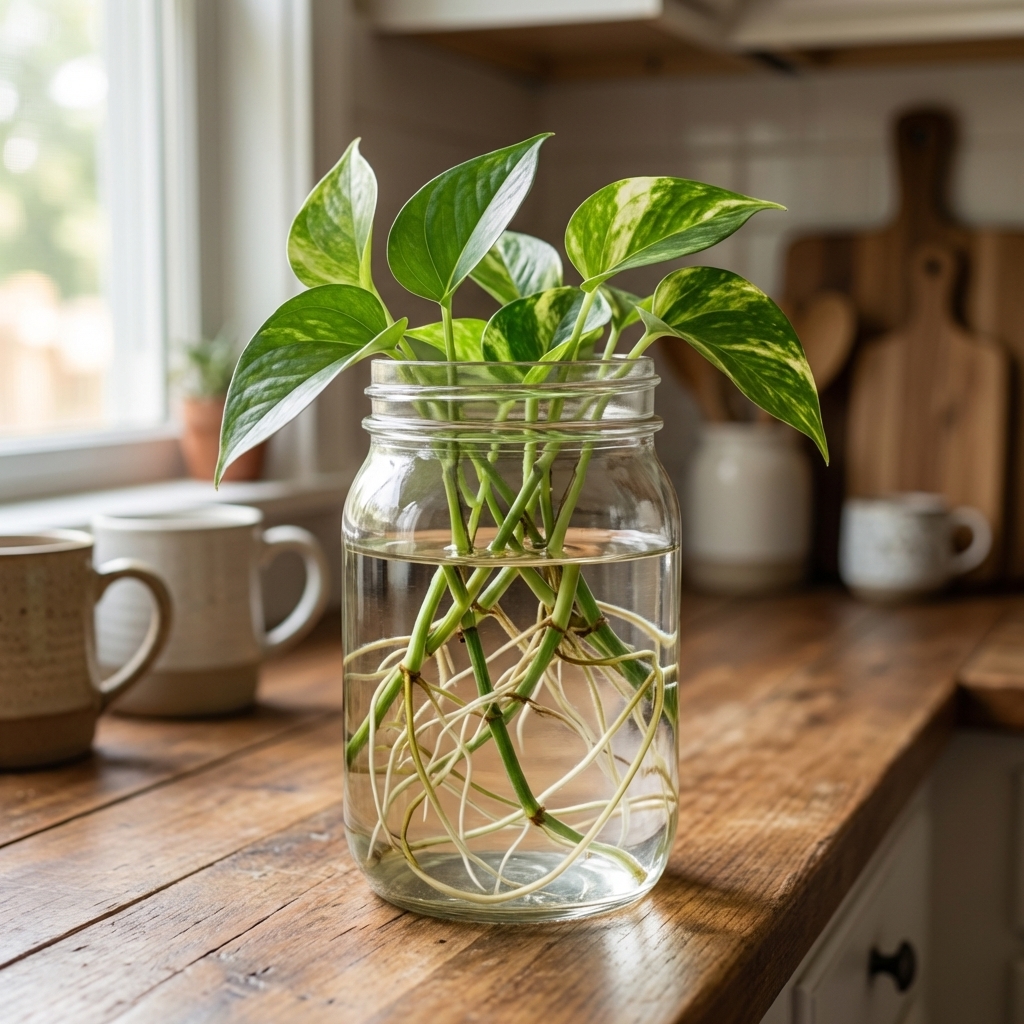
Propagation in water (step-by-step cuttings)
Pothos is one of the easiest plants to propagate in water. It’s also a quick way to turn one plant into several.
What you need
- Clean scissors or pruners
- A jar or glass
- Room temperature water
How to take a cutting
- Find a node. It’s the small bump on the stem where a leaf and aerial root can form.
- Cut just below the node. Aim for a cutting with 2 to 4 leaves.
- Remove the bottom leaf so it won’t sit in water and rot.
Rooting in water
- Place the cutting in water with the node submerged.
- Keep it in bright, indirect light.
- Change the water every 7 to 10 days, or sooner if it looks cloudy.
When to pot it up: once roots are a few inches long and you see some branching. You don’t have to wait for a huge root system. If you pot sooner, just keep the soil evenly moist for the first couple of weeks.
Pro tip for a fuller plant: take several cuttings and plant them back into the same pot around the rim. That’s the fastest way to fix a thin pothos.
Pruning and training (how to keep it full)
If you want pothos to look lush instead of long and stringy, prune it. Pothos responds well and can branch near the cut, especially in good light.
Simple pruning method
- Trim vines back to just above a leaf node.
- Use the trimmed pieces as cuttings to propagate.
- Repeat a few times during the growing season for a bushier look.
Hanging vs climbing
Pothos naturally trails, but it can also climb a moss pole, trellis, or board. Climbing often leads to larger leaves over time, especially in brighter light.
Common pothos problems (and what to do)
Yellow leaves
A yellow leaf here and there, especially older ones, is normal. Multiple yellowing leaves usually means something is off.
- Most common cause: overwatering or soil staying wet too long
- What to do: let the plant dry more between waterings, confirm the pot drains, and consider a chunkier mix with perlite
- Also check: low light (slower drying), cold drafts, or a rootbound pot that isn’t taking up water evenly
Leggy growth (long vines with few leaves)
- Cause: not enough light, or the plant hasn’t been pruned in a long time
- Fix: move to brighter indirect light and prune vines back; root the cuttings and add them back into the pot
Brown tips or crispy edges
- Likely causes: underwatering, very dry air, or a buildup of salts from fertilizer or hard water
- Fix: water thoroughly when the top couple inches are dry, and flush the pot occasionally by running water through the soil for a minute or two and letting it drain
Drooping leaves
Droop can mean too dry or too wet.
- If the soil is bone dry and the pot feels light, water deeply and it should perk up.
- If the soil is wet and heavy, pause watering, increase light and airflow, and check roots if it doesn’t improve.
Root rot (quick check)
If your pothos stays wet for days and looks limp or yellow, check for root rot.
- Signs: sour smell, black or mushy roots, stems that feel soft near the soil line
- What to do: unpot it, trim away mushy roots, repot in fresh dry mix, and water lightly. Then let it dry more between waterings.
Pests (mealybugs, spider mites)
Pothos is fairly tough, but pests can show up, especially on stressed plants.
- Wipe leaves with a damp cloth.
- Spot treat with insecticidal soap or neem oil according to the label.
- Isolate the plant until the problem is under control.
Best pothos varieties for beginners
Most pothos care is the same across varieties. The main difference is how much light they need to keep their color.
Golden pothos
The classic. Green leaves with yellow variegation. Tolerates low light well, though it’ll look more green in dim rooms.
Marble Queen pothos
Heavier white and green marbling. Because it has less chlorophyll, it usually needs brighter indirect light to stay full and colorful.
Neon pothos
Bright chartreuse leaves. Color is strongest in bright indirect light. In low light it can dull to a more standard green.

Tips for growing pothos in low-light spaces
If your only spot is a hallway, bathroom, or office corner, pothos can still work. You just need to adjust expectations and care.
- Pick the right variety: Golden pothos is usually the most forgiving in low light.
- Water less often: low light means slower drying. Check soil depth before every watering.
- Rotate the pot: turn it a quarter turn every couple of weeks so one side doesn’t thin out.
- Prune on purpose: low light vines get leggy faster, so trim and replant cuttings to keep it full.
- Consider a small grow light: even a modest LED grow light for 8 to 12 hours a day can make a big difference in color and fullness.
FAQ
How fast does pothos grow?
In bright, indirect light with consistent watering, pothos can put on noticeable growth in a month and keep going through the warm season. In low light it grows much slower.
Should I mist pothos?
Misting is optional and usually not the best fix for dry air. If you want higher humidity, a small humidifier or grouping plants works better.
Can pothos live in water permanently?
It can grow in water for a long time if you keep the water fresh and provide nutrients occasionally. For long-term growth, most people find pothos grows more vigorously in a well-aerated potting mix.
Are there pet-safe alternatives to pothos?
If you need a non-toxic option, look at spider plant, peperomia, or a prayer plant (calathea). Always double-check any plant with a reliable pet-safety source if your pet is a chewer.
A simple pothos care routine you can follow
- Weekly: check soil moisture and look over leaves for pests
- Every watering: water thoroughly and empty the saucer
- Monthly (spring and summer): fertilize lightly
- Anytime: prune leggy vines and propagate cuttings to thicken the pot
If you do just two things, do these: give it brighter indirect light when possible, and let the top part of the soil dry before watering again. That alone solves most beginner pothos problems.