Poison Ivy Identification and Home Remedies

Jose Brito
I’m Jose Britto, the writer behind The Country Store Farm Website. I share practical, down-to-earth gardening advice for home growers—whether you’re starting your first raised bed, troubleshooting pests, improving soil, or figuring out what to plant next. My focus is simple: clear tips you can actually use, realistic expectations, and methods that work in real backyards (not just in perfect conditions). If you like straightforward guidance and learning as you go, you’re in the right place.
Poison ivy is one of those plants you do not notice until it is too late. The tricky part is that it changes throughout the year, it hides in hedges and fence lines, and it has a few convincing lookalikes.
This page covers two things most gardeners actually need: how to identify poison ivy confidently, and what to do if you (or a family member) end up with the rash. I will also walk you through safe removal, because the oil that causes the reaction can stick around on tools, gloves, pet fur, and dried stems.
At a glance
- ID clues: three leaflets, center leaflet on a longer stem, alternating leaves on the vine, hairy rootlets on climbing vines, pale berries.
- If you touched it: wash within 10 to 30 minutes if you can, use a grease-cutting soap, and use firm friction with a washcloth (do not scrub hard enough to break skin).
- Never burn it: smoke can carry the oil into your eyes and lungs.

Why poison ivy is a problem
The rash is caused by urushiol, an oily resin in the plant’s sap. It is found throughout the plant (leaves, stems, roots, and often on berries), and it transfers like invisible grease. You can get it on you from:
- Direct touch while weeding, trimming, or gardening
- Indirect touch from gloves, pruners, shoes, garden hoses, or phone screens
- Pets that brush through it and carry oil on fur
- Smoke if poison ivy is burned (this is dangerous)
Important reality check: the fluid from blisters does not spread the rash. New patches usually show up because the oil was still on your skin, clothing, or surfaces, or because different skin areas react at different speeds.
How to identify poison ivy
1) “Leaves of three” is a starting point
Poison ivy typically has three leaflets per leaf. The center leaflet has a longer little stem than the two side leaflets. That said, there are many harmless three-leaf plants, so use the full set of clues below.
2) Leaf edges can be smooth or toothed
Poison ivy leaflets may have smooth edges, shallow lobes, or a few teeth. Do not rely on “jagged equals poison ivy” or “smooth equals safe.” Both happen.
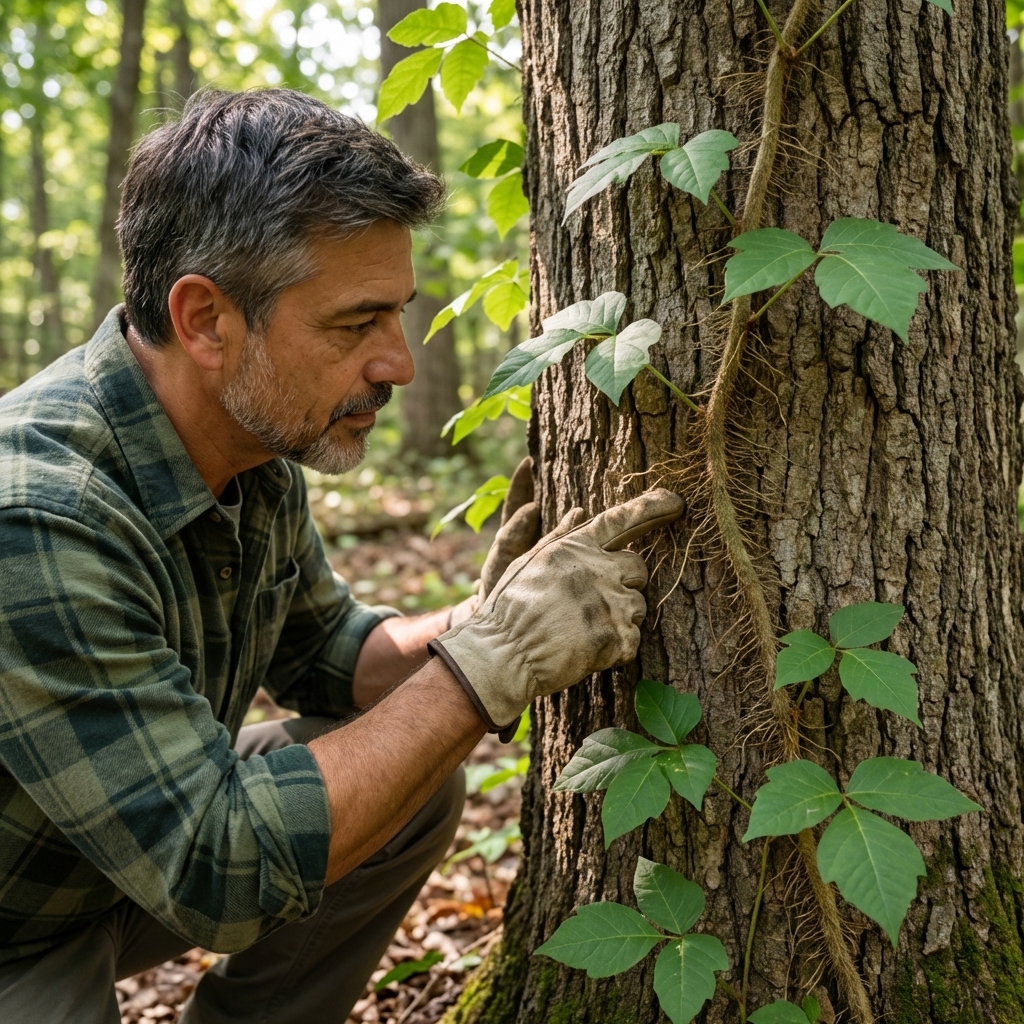
3) Look for a vine with hairy rootlets
Mature poison ivy often climbs as a vine. On trees or fences, it may look like a ropey vine with fuzzy, hair-like rootlets clinging to the surface.
4) New growth is often reddish
In spring, poison ivy can start with reddish or bronze-tinted leaves, then turn green as it matures.
5) Shiny leaves are common but not guaranteed
Many poison ivy leaves look glossy, especially when young, but shade, dust, and weather can make them look dull. Use the plant structure and leaflet pattern more than shine.
6) Berries are pale, not blue
Poison ivy produces small off-white to pale yellow berries in clusters. Birds eat them and spread seeds, which is why new plants pop up along fence lines and under trees.
Poison ivy by season
Spring
New shoots often look red or bronze. Small clusters of three leaflets are easy to miss when you are pulling early weeds.
Summer
Full green growth, often lush at the edges of woods, behind sheds, and along sunny fence lines. This is peak contact season.
Fall
Leaves can turn yellow, orange, or bright red. People get surprised in fall because the plant stops looking like “typical” poison ivy.
Winter
Leaves drop, but bare vines and stems still contain urushiol. Winter brush clearing can absolutely trigger a rash.
Common lookalikes
These are the plants I see most often mistaken for poison ivy in backyards.
Virginia creeper
- Usually has five leaflets (sometimes three on young growth)
- Often forms a vine that clings with tiny suction-cup pads, not hairy rootlets
- Produces dark blue berries
Note: Virginia creeper does not contain urushiol, but it can still irritate skin for some people. Its berries are also not for snacking.

Boxelder seedlings (maple family)
- Can have three leaflets and confuse people
- Leaves tend to appear opposite each other on the stem (poison ivy is typically alternating)
- Often shows a more “tree seedling” growth habit, not a scrambling vine
Sumacs
- Many common sumacs have more than three leaflets (often 7 to 13+)
- They are typically shrubs or small trees
- Poison sumac is a different plant and is less common in many home yards, usually in wet areas
If you are truly unsure, treat the plant as poison ivy until proven otherwise. Wear protection, avoid skin contact, and consider sending a clear photo to your local cooperative extension office for confirmation.
Regional note: depending on where you live, you may also run into poison oak or poison sumac. They cause the same kind of reaction and the same cleanup rules apply.
If you touched it
The best “home remedy” is quick action in the first minutes after contact. Washing within about 10 to 30 minutes is ideal, but washing later can still help.
- Wash skin fast with cool to lukewarm running water and a grease-cutting soap. Dish soap (like Dawn) works well because urushiol acts like grease.
- Use firm friction with a washcloth to lift the oil off. Do not scrub so hard that you break or abrade the skin.
- Clean under nails. Urushiol hides there and re-contacts your skin later.
- Rinse, then wash again if you were deep in it.
- Remove and isolate clothing. Wash it separately with detergent using the warmest water the fabric allows.
- Wipe down gear like pruners, gloves, boots, phone case, and watch band.
If you have access to it, a poison ivy cleanser designed to break down urushiol can be helpful, but soap plus friction right away is still a big win.
If a pet barreled through a patch, wipe down fur with pet-safe wipes or bathe with pet shampoo, and wash your hands after. Most people get re-exposed from pet fur without realizing it.
Home care for the rash
Once the rash starts, the goal is to calm itching and inflammation while your body clears the reaction. These options are practical, easy, and commonly used.
Oatmeal bath
Colloidal oatmeal is ideal, but you can also grind plain oats into a fine powder.
- Add oatmeal to lukewarm bath water
- Soak 10 to 15 minutes
- Pat dry, do not rub
Baking soda paste
For small areas, mix baking soda with a little water until it forms a paste.
- Apply a thin layer
- Let it dry
- Rinse gently
Cool compresses
A cool, damp washcloth can take the edge off itching.
- Apply for 10 to 20 minutes
- Repeat as needed
Calamine lotion
Calamine can dry weepy spots and reduce itch. Apply as directed on the label. If your skin is cracking or very dry, alternate with a gentle, fragrance-free moisturizer on surrounding skin.
Common OTC options
- 1% hydrocortisone can help mild inflammation and itch on small areas. Follow the label and avoid using it on broken skin.
- Oral antihistamines can help some people sleep if itching is keeping them up. Follow label directions and ask a pharmacist if you are unsure.
Skip these common mistakes: hot showers (itch gets worse), scratching (risk of infection), and greasy salves early on (they can trap heat and feel worse).
When to call a doctor
Home care is fine for mild to moderate rashes, but get medical help if you notice any of the following:
- Rash on face, eyes, lips, or genitals
- Severe swelling or widespread rash
- Signs of infection (increasing redness, warmth, pus, fever)
- Trouble breathing or swallowing
- You inhaled smoke from burning brush that may have included poison ivy
Doctors can prescribe stronger treatments when needed, and it can make a huge difference in comfort and healing time.
Safe removal
If poison ivy is on your property, removal is doable, but the process matters more than brute force. The main goal is to avoid getting urushiol on your skin and spreading it around the yard.
What to wear
- Long sleeves and long pants
- Closed-toe shoes or boots
- Disposable nitrile gloves under sturdy work gloves if possible
- Eye protection if you are cutting vines or working overhead
Small patches: dig and bag
For young plants, you can often dig them out. Poison ivy has a tough root system, so expect to follow roots and remove as much as possible.
- Water the soil first to reduce snapping and scattering
- Dig out roots and runners
- Bag everything immediately in heavy trash bags
Vines on trees: cut, do not rip
If a vine is climbing a tree, do not yank it down. Cut it near the ground and again at chest height, then leave the upper vine to die in place.
- Optional: to reduce regrowth, you can treat the fresh cut stump with a brush-on stump herbicide labeled for poison ivy (follow the product label exactly, avoid drift, and keep it off desirable plants).
- Expect regrowth and check the base for new shoots
Disposal rules
- Do not burn poison ivy. Smoke can carry urushiol into lungs and eyes.
- Follow your local rules for yard waste. In many areas, bagging for trash is safer than composting.
- Avoid home composting. Most backyard compost piles do not reliably break down urushiol, and you can re-expose yourself later when you turn or use the compost.
Cleaning up after removal
- Wash tools with a degreasing soap and water, then rinse well
- Wipe hard surfaces with rubbing alcohol or a degreasing cleaner, then wash
- Wash clothes separately with detergent using the warmest water the fabric allows
- Shower with cool to lukewarm water and use firm friction with a washcloth
- Launder washable gloves or discard disposable ones
If poison ivy keeps coming back in the same spot, it is usually because root pieces remain, seeds are dropping in from nearby, or birds are perching on a fence and “planting” berries. Plan on monitoring that area for a few months.
Prevention tips
- Walk fence lines, wood edges, and under hedges a few times each season
- Keep edges mowed or mulched so seedlings are easy to spot
- Teach kids the basics: three leaflets, do not touch
- If you have dogs, rinse paws and wipe or bathe fur after trail walks or brush clearing
- Consider a barrier cream made for urushiol exposure if you know you will be in risky areas. It helps, but it is not a substitute for protective clothing and washing.
Poison ivy is one of those problems where a little vigilance saves a lot of misery later. If you want, tell me what region you are in and where it is growing (fence, tree, hedge line), and I can suggest the safest removal approach for your setup.