Philodendron Care for Beginners

Jose Brito
I’m Jose Britto, the writer behind The Country Store Farm Website. I share practical, down-to-earth gardening advice for home growers—whether you’re starting your first raised bed, troubleshooting pests, improving soil, or figuring out what to plant next. My focus is simple: clear tips you can actually use, realistic expectations, and methods that work in real backyards (not just in perfect conditions). If you like straightforward guidance and learning as you go, you’re in the right place.
Philodendrons are one of those houseplants that can make you feel like you have a green thumb even if you are still figuring things out. They are forgiving, they bounce back, and most types grow steadily as long as you give them a few basics: decent light, a pot that drains, and a watering routine that is more “check first” than “water on a schedule.”
This guide covers the beginner favorites (heartleaf, ‘Brasil’, and birkin), plus the care fundamentals that apply to most common philodendrons.
Quick safety note: Philodendrons are toxic if chewed or swallowed (they contain calcium oxalate crystals). Keep them away from pets and small kids, and wash hands after pruning if you have sensitive skin.
Popular philodendron varieties
There are a lot of philodendrons out there, but these three show up everywhere for a reason. They handle indoor life well and do not demand perfect conditions.
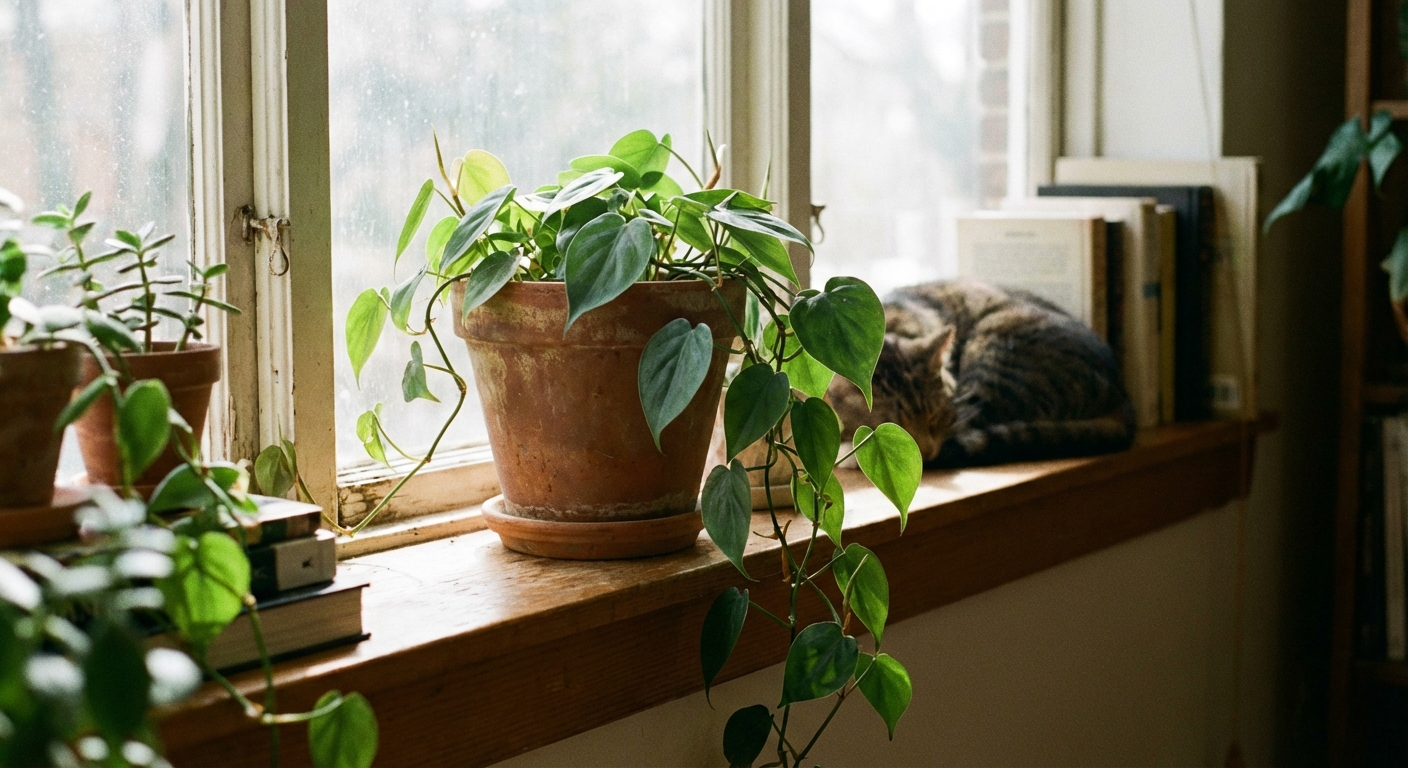
Heartleaf philodendron (Philodendron hederaceum)
- Look: Solid green, heart-shaped leaves on trailing vines.
- Why beginners like it: It tolerates lower light and minor watering mistakes better than most.
- Growth habit: Trailing. Great for shelves, hanging pots, or training up a moss pole.
Philodendron ‘Brasil’
- Look: Heart-shaped leaves with lime to yellow variegation on a green base.
- Care note: Variegation needs brighter light than plain green heartleaf to stay bold.
- Growth habit: Trailing like heartleaf.
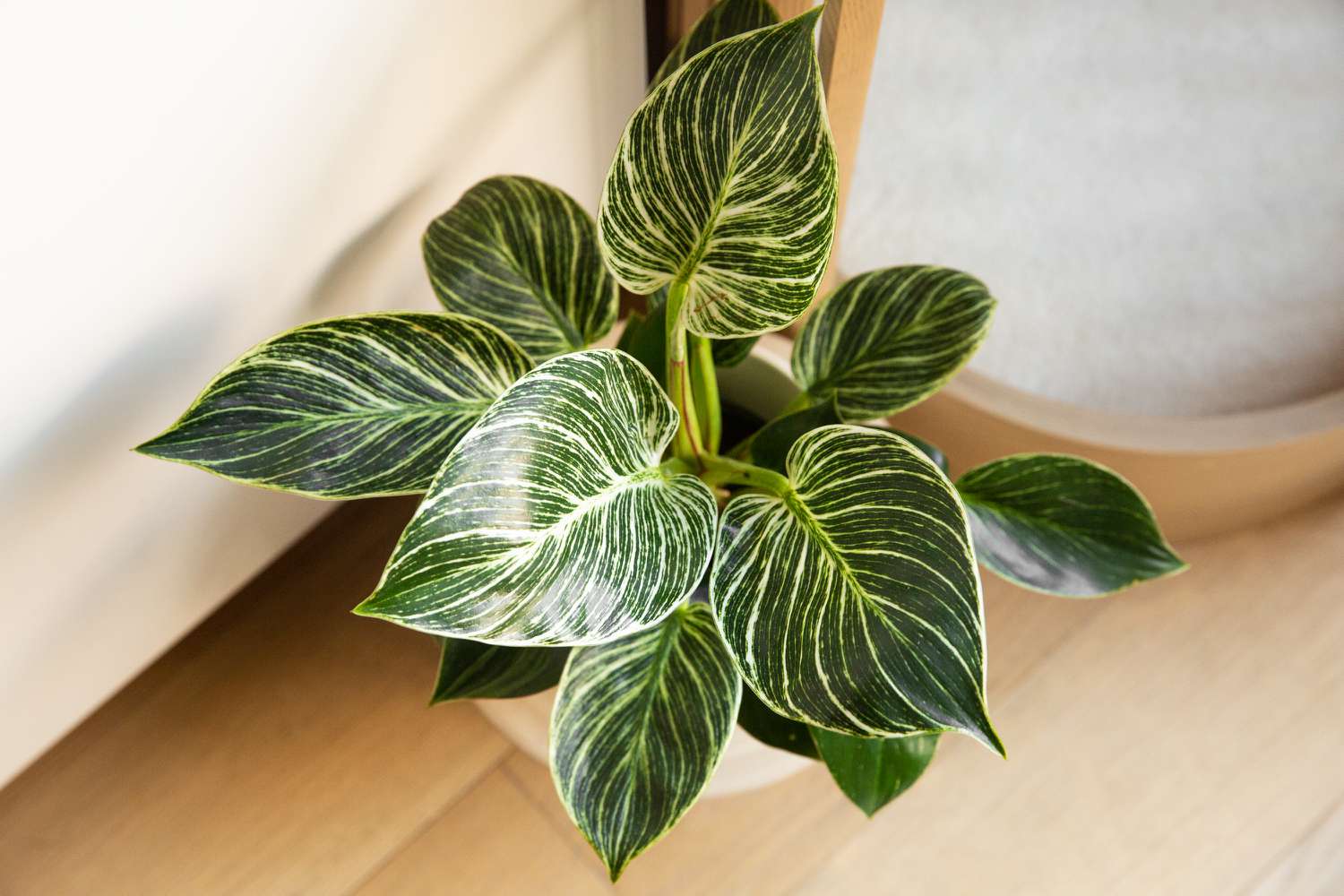
Philodendron Birkin
- Look: Upright, compact plant with dark green leaves striped with creamy white pinstripes.
- Care note: It is slower and more sensitive to overwatering than heartleaf types.
- Good to know: Birkin variegation can be a little unpredictable. If a leaf comes in greener or with lighter striping, it does not automatically mean you did something wrong.
- Growth habit: More self-heading and upright, not a long vine (at least while young).
Light
Most common philodendrons do best in bright, indirect light. Think “near a window” rather than “in the window.” Too little light slows growth and makes vines leggy. Too much direct sun can bleach leaves or leave dry, crispy patches.
Easy light guidelines
- Best spot: A few feet back from an east window, or close to a north window.
- South or west windows: Bright, but often intense. Use a sheer curtain, set the plant back from the glass, or keep it out of direct rays.
- If you only have low light: Heartleaf can tolerate it, but expect slower growth and longer gaps between leaves.
- For ‘Brasil’ and birkin: Give them brighter light to keep variegation and strong growth.
Tip that saves frustration: Rotate the pot a quarter turn every week or two. Philodendrons lean toward the light, and rotating keeps them from getting lopsided.
Watering
The fastest way to lose a philodendron is consistent overwatering. Not “too much water once,” but watering again before the mix has had a chance to dry a bit.
When to water
Use the finger test, but match it to your pot size:
- Small pots (4 to 6 inches): Check about 1 inch down.
- Medium pots (6 to 10 inches): Check about 2 inches down.
- Large pots: Check deeper, or use a chopstick to see how damp the mix is lower in the pot.
- If it feels dry at that depth, water.
- If it still feels damp or cool, wait a few more days and check again.
How to water correctly
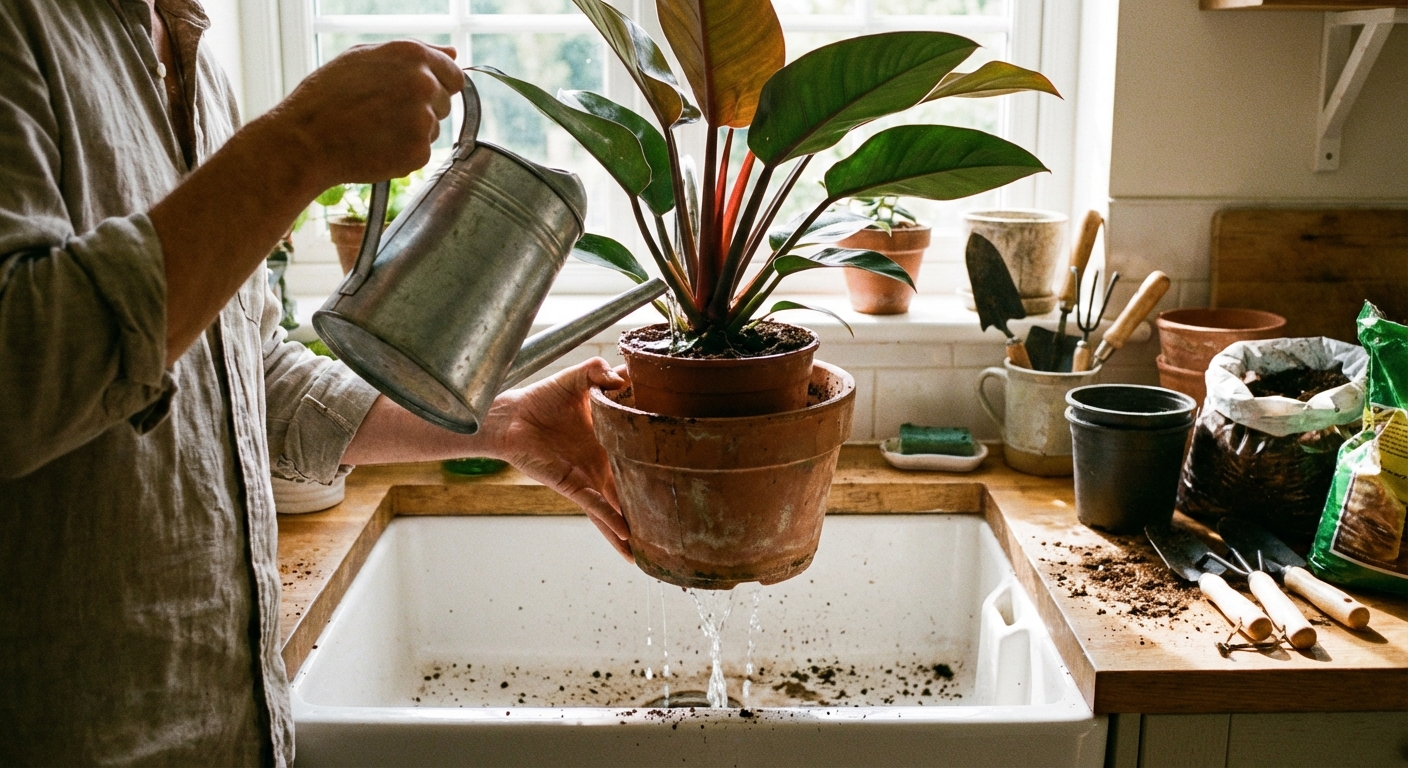
- Water slowly until you see water drain from the bottom.
- Empty the saucer after 10 to 15 minutes.
- Do not let the pot sit in water.
Signs you are watering wrong
- Overwatering signs: Yellowing leaves (especially lower ones), limp stems, a musty smell, soil that stays wet for many days.
- Underwatering signs: Leaves curling inward, drooping that perks up after watering, crispy edges (especially if the mix goes bone-dry).
Soil and pots
Philodendrons want soil that holds some moisture but still breathes. Regular potting soil straight from the bag can be too dense indoors, especially in plastic pots with limited airflow.
A beginner-friendly soil mix
You can do this with common materials:
- 2 parts indoor potting mix
- 1 part perlite (for airflow and drainage)
- 1 part orchid bark (or coco chips) for chunkiness and root oxygen
If you only have potting soil and perlite, that still works. Just be extra careful not to water too often.
Pick a pot that drains
- Use a pot with at least one drainage hole.
- Nursery pots inside a decorative cover pot are fine. Just never let water pool in the bottom.
- Size up slowly. Jumping to a much bigger pot keeps soil wet longer and raises the risk of root rot.
Repotting
Philodendrons do not need constant repotting, but they do appreciate fresh mix once they outgrow their pot.
When to repot
- Roots circling the bottom or poking out of drainage holes
- The plant dries out unusually fast after watering
- Growth slows even in good light during spring and summer
How to repot without drama
- Best time is spring through early summer.
- Go up 1 pot size (usually 1 to 2 inches wider).
- Water lightly after repotting, then let it settle. Avoid heavy fertilizing for about 4 weeks.
Temperature and humidity
Most houseplant philodendrons are happy in normal indoor conditions.
- Temperature: Aim for 65 to 80°F. Keep them away from cold drafts and heat vents.
- Humidity: Average home humidity is usually fine. Many plants grow a bit faster around 40 to 60%, but crispy edges are more often tied to watering swings or mineral and fertilizer salts than humidity alone.
If your air is dry in winter and leaf edges start crisping, move the plant away from the vent, keep your watering consistent, and consider grouping plants together or running a small humidifier nearby.
Fertilizer
Philodendrons are not heavy feeders, but they do appreciate light, consistent nutrition when they are actively growing.
Simple routine
- In spring and summer, feed once a month with a balanced liquid houseplant fertilizer at half strength.
- In fall and winter, either stop or feed every 6 to 8 weeks if the plant is still actively pushing new leaves under good light.
If you see white crust on the soil surface or leaf tips browning after feeding, flush the pot with plain water once (water heavily and let it drain fully) and back off the fertilizer.
Pruning and training
If you want a fuller plant, pruning is your friend. You are not “hurting it.” You are helping it branch.
- To encourage fullness: Snip vines just above a node. New growth often sprouts from nodes below the cut.
- To get bigger leaves: Many philodendrons mature more as climbers. Training a vine up a moss pole or trellis can lead to larger leaves over time.
- Bonus: The pieces you prune are perfect for propagation.
Leaf cleaning
Dusty leaves block light and make pests harder to spot. Every few weeks, wipe leaves with a damp microfiber cloth. Skip leaf shine products. They can clog leaf pores and make buildup worse.
Propagation from stem cuttings
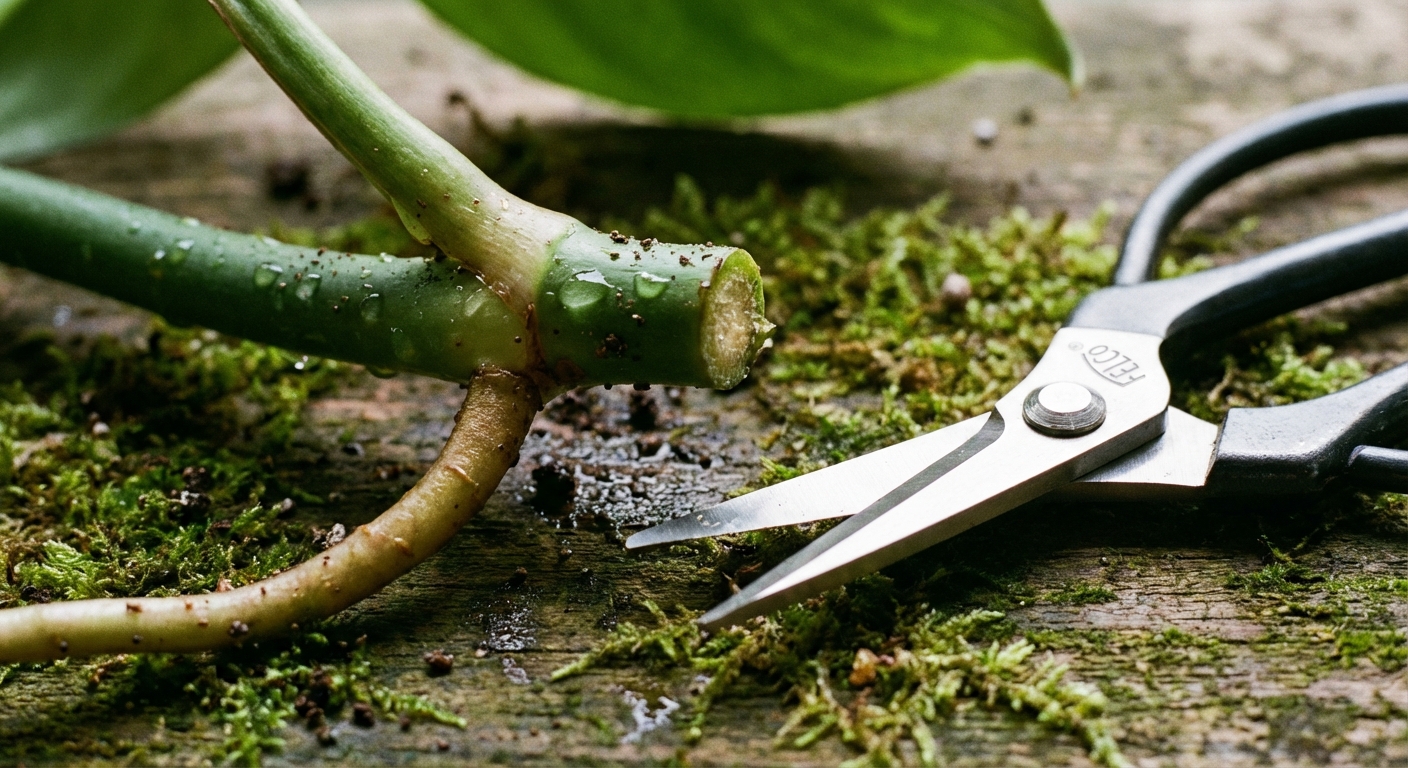
Propagating philodendron is one of the most satisfying beginner wins. The key is making sure your cutting includes a node, which is the little bump on the stem where roots form.
Step-by-step
- Choose a healthy vine. Pick a section with 2 to 4 leaves.
- Find the node. Look just below where a leaf meets the stem. You may see a small aerial root.
- Make the cut. Cut about 1/2 inch below the node using clean scissors.
- Root in water or damp moss. Keep the node submerged in water, or nestled in moist sphagnum moss. Leaves should stay above the waterline.
- Provide warmth and bright indirect light. Change water weekly if water rooting.
- Pot up when roots are ready. When roots are 2 to 4 inches long and you see secondary roots starting, plant in your chunky mix and keep slightly moist for the first 1 to 2 weeks.
Good to know: If your cutting wilts after potting, it usually means the new roots are still adjusting. Keep light steady, do not drench the soil, and give it time.
Philodendron vs pothos
This is one of the most common mix-ups in houseplants. They look similar, they often live in the same light, and they are both easy. But they are different plants with slightly different habits.
Quick ID checks
- Leaf texture: Philodendron leaves are often thinner and softer. Pothos leaves tend to feel thicker and a bit more waxy or leathery.
- Petiole shape: Philodendron petioles (leaf stems) are usually rounder and smoother. Many pothos have a petiole with a noticeable groove and can look a little “winged” where it meets the leaf.
- New growth: Heartleaf philodendron often pushes new leaves from a papery sheath called a cataphyll. Pothos typically unfurls new leaves without that same sheath look.
- Growth pattern: Philodendron vines can look a little more flexible and “reaching.” Pothos often has sturdier vines and can look more rugged.
If you are still unsure, that is normal. Many stores label them incorrectly. Care is similar enough that you can still succeed, but philodendrons generally prefer a slightly airier mix and can sulk more if kept too wet.
Common problems
Yellow leaves
- Most common cause: Overwatering or soil staying wet too long.
- Fix: Let it dry more between waterings, switch to a chunkier mix, and make sure the pot drains freely.
Leggy growth
- Cause: Not enough light.
- Fix: Move closer to a bright window or add a simple grow light. You can also trim and propagate to make the plant fuller.
Brown, crispy edges
- Common causes: Underwatering or inconsistent watering, salt buildup from fertilizer or hard water, and sometimes very dry air.
- Fix: Check your watering rhythm first, then consider occasional soil flushing. If your air is very dry, a small humidifier can help too.
Small leaves on trailing types
- Cause: Low light, no feeding during growing season, or the plant needs support to mature.
- Fix: Brighter indirect light, light fertilizing, and consider a moss pole or trellis.
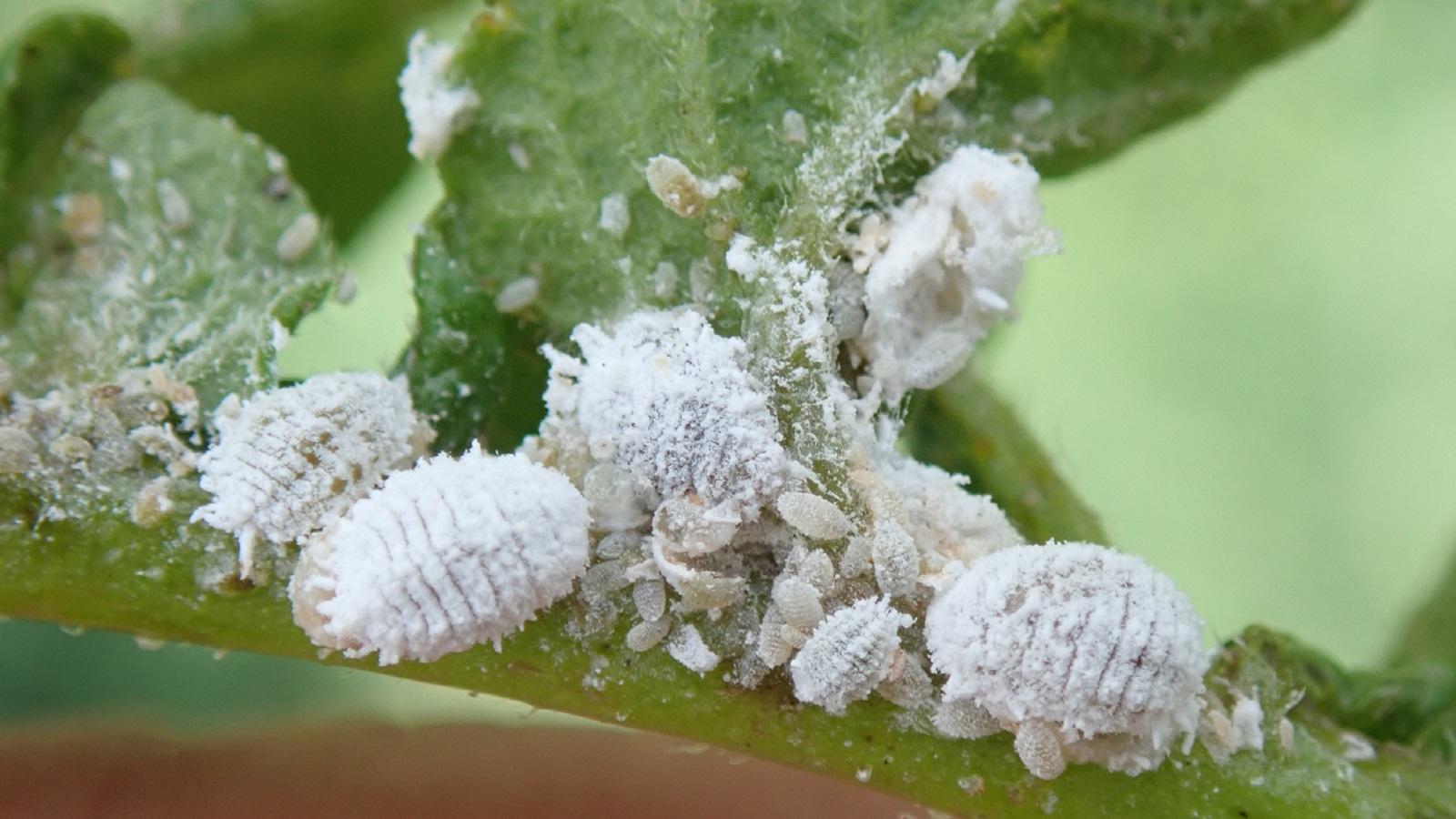
Pests (spider mites, mealybugs)
- What you will see: Speckling, sticky residue, webbing, or cottony clumps.
- Fix: Isolate the plant, rinse leaves, then treat with an insecticidal soap or horticultural soap according to the label. Repeat weekly for a few rounds. If you use a DIY soap spray, keep it very dilute and patch test first since stronger mixes can burn leaves.
Beginner checklist
- Bright, indirect light for best growth and color
- Water only after checking the mix, and adjust the “finger test” depth to your pot size
- Use a chunky, well-draining mix and a pot with drainage
- Feed lightly in spring and summer
- Repot when rootbound, usually in spring or early summer
- Prune vines to encourage fullness, and use a pole if you want bigger leaves
- Propagate from stem cuttings that include a node
- Rotate the pot occasionally for even growth
- Keep away from pets and kids due to toxicity
If you keep just those basics in mind, philodendrons are the kind of plant that gets better over time. Once yours is growing steadily, take a few cuttings and start a second pot. That is how most of us end up with more philodendrons than we planned, and honestly, it is a good problem to have.