Peace Lily Care for Beginners

Jose Brito
I’m Jose Britto, the writer behind The Country Store Farm Website. I share practical, down-to-earth gardening advice for home growers—whether you’re starting your first raised bed, troubleshooting pests, improving soil, or figuring out what to plant next. My focus is simple: clear tips you can actually use, realistic expectations, and methods that work in real backyards (not just in perfect conditions). If you like straightforward guidance and learning as you go, you’re in the right place.
Peace lily (Spathiphyllum) is one of the best starter houseplants because it is tough, it bounces back after a missed watering, and it tolerates lower light better than many flowering plants. It also has a reputation as an air-cleaning plant. Lab studies suggest it can remove some VOCs, but the real-world impact in a typical home is usually modest. The real win is simply that it is easy to live with.
If you take away just one thing: peace lilies like bright, indirect light and even moisture. Not soggy soil, not bone-dry for weeks. Steady, not extreme. Practically, that means you are aiming for a similar dry-down each time: the top inch or two dries, you water thoroughly, and you do not let it sit wet for long stretches.

Why peace lilies are so popular indoors
- Low-light tolerance: They can survive in lower light than many houseplants, though they grow and bloom better with brighter indirect light.
- Clear signals: They “tell you” when they are thirsty by drooping, then perk up after watering.
- Air-cleaning reputation: Often cited in air-quality discussions, with lab evidence for VOC uptake, but typically limited effect in everyday homes.
- Compact and tidy: They do not vine all over your shelves and they stay fairly contained in a pot.
Light requirements
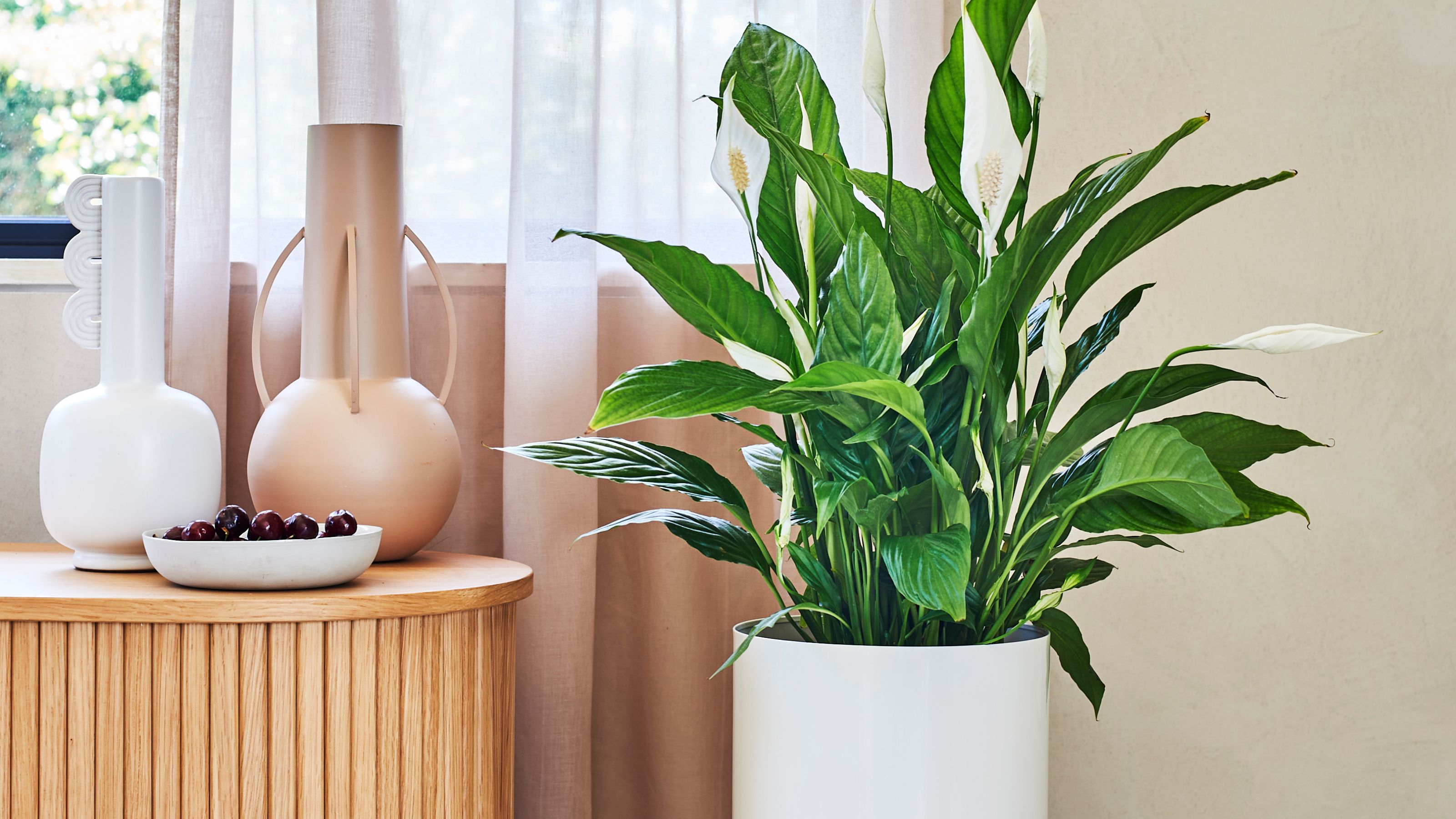
Peace lilies do best in bright, indirect light. Think a few feet back from an east or north window, or filtered light through a sheer curtain.
Best light for growth and blooms
- Bright indirect light: Fastest growth and best chance of blooming.
- Medium light: Steady growth, fewer blooms.
- Low light: Plant usually survives but grows slowly and may not bloom.
Signs your light is off
- Too much sun: Washed-out leaves, yellowing, or scorched brown patches, especially if it gets direct afternoon sun.
- Too little light: Smaller new leaves, slow growth, no flowers, stems leaning toward the window.
How often to water a peace lily
There is no perfect schedule because watering depends on pot size, soil mix, light, and indoor temperature. A better approach is to water based on the soil.
The simple watering rule
Water when the top 1 to 2 inches of soil feels dry. If the pot is small and the plant is large, you might water more often. If the pot is big or the room is cool and dim, you will water less often. Expect to water less in winter in most homes.
Two easy ways to double-check
- Finger test: Check 1 to 2 inches down, not just the surface.
- Pot weight: Lift the pot after watering, then again when it is dry. The difference is dramatic and very reliable over time.
How to water correctly
- Water thoroughly until you see a little runoff.
- Let excess water drain fully. Do not leave standing water in the saucer.
- If the soil has shrunk from the pot edges and water runs straight through, soak it slowly in stages so it can rehydrate evenly.
What kind of water is best?
Peace lilies can be sensitive to salts and minerals. If your tap water is very hard and you keep getting brown tips, switching water can help.
- Best options: rainwater, reverse osmosis, distilled, or filtered water (depending on your filter).
- About “letting water sit out”: This can reduce some chlorine odor in certain areas, but it does not remove hardness or dissolved minerals, and chloramine does not dissipate well by sitting.
Humidity and temperature
Peace lilies are tropical plants. Average indoor humidity is usually fine, but they look best with a little extra.
Humidity tips that actually help
- Group plants together: Creates a slightly more humid microclimate.
- Use a pebble tray: Keep the pot above the water line so roots are not sitting in water.
- Run a humidifier: Most reliable option in winter.
Temperature range
Keep them in typical home temps, roughly 65 to 80°F. Avoid cold drafts, heat vents, and placing the pot right against a chilly window in winter. Try not to let it sit below 55 to 60°F for long.
Soil and pot choice
Peace lilies want a mix that holds moisture but still drains well. If the soil stays wet for many days, roots can rot. If it dries in a day, the plant will droop constantly.
A good beginner soil mix
- 2 parts quality indoor potting mix
- 1 part perlite (or pumice)
- Optional: a small handful of orchid bark to add airflow
Pot must-have
Choose a pot with a drainage hole. That one detail prevents most beginner problems.
Common peace lily problems and fixes
Drooping leaves
Most common cause: Underwatering. Peace lilies often flop dramatically when thirsty, then recover within a few hours after watering.
- Check soil moisture 2 inches down.
- If dry, water thoroughly and let it drain.
- If wet and it is still drooping, suspect root issues, a pot that is not draining, or cold stress.
Brown tips
Brown tips are common and usually not a crisis. The goal is to reduce the cause, not chase perfection.
- Low humidity: Increase humidity slightly.
- Mineral buildup: Try rainwater, distilled, RO, or filtered water and flush the pot monthly with plain water until it drains freely.
- Fertilizer burn: Feed less often and at a lower dose.
- Inconsistent watering: Keep moisture more even.
You can trim brown tips with clean scissors, following the leaf’s natural shape.
Yellow leaves
One or two older leaves yellowing occasionally is normal. Widespread yellowing usually points to care issues.
- Overwatering: Let the soil dry more between waterings and confirm the pot drains well.
- Too much direct sun: Move it back from the window or add a sheer curtain.
- Natural aging: Remove fully yellow leaves at the base.
Brown patches or crispy edges
- Sun scorch: Move away from hot direct light.
- Dry soil for too long: Water more consistently.
- Heat vent draft: Relocate the plant.
No flowers
Peace lilies can bloom indoors, but they are not automatic bloomers in low light. Blooming is influenced most by light and plant maturity, and some store plants are encouraged to bloom before sale.
- Increase light to bright indirect light.
- Avoid overpotting, which can keep soil wet for too long and slow the plant down.
- Feed lightly during spring and summer.
How to encourage blooming
The classic white “flower” is actually a modified leaf called a spathe. Blooming is most likely when the plant has enough light and steady care.
Bloom checklist
- Light: Bright indirect light is the biggest lever.
- Watering: Even moisture. Avoid frequent drought and rescue watering.
- Feeding: Use a balanced houseplant fertilizer at half strength every 4 to 6 weeks in spring and summer.
- Grooming: Remove spent blooms so the plant puts energy into new growth.

Repotting peace lilies
Peace lilies do not mind being slightly snug in a pot, and many bloom well when a bit rootbound. Repot when roots are circling the bottom, poking out drainage holes, or the plant dries out extremely fast.
When to repot
- Best time: spring through early summer
- Typical timing: every 1 to 2 years, depending on growth
Step-by-step repotting
- Choose a pot only 1 to 2 inches wider than the current one.
- Gently slide the plant out and loosen the outer roots.
- Trim mushy, black, or foul-smelling roots with clean scissors.
- Set in fresh mix at the same depth as before.
- Water thoroughly, then let it settle for a week in bright indirect light.
Can you divide a peace lily?
Yes. If your plant has multiple crowns, you can split it during repotting. Make sure each division has healthy roots and at least a few leaves. Smaller divisions may take time to bloom again.

Fertilizing without overdoing it
Peace lilies are light feeders. Too much fertilizer can cause brown tips and stressed growth.
- Use a balanced liquid fertilizer diluted to half strength.
- Feed in spring and summer every 4 to 6 weeks.
- Skip feeding in fall and winter unless the plant is actively growing in strong light.
If you suspect fertilizer buildup, flush the soil with plain water until it runs freely from the bottom, then let it drain well.
Leaf cleaning
Dust builds up on those broad leaves. Wipe them gently with a damp cloth every few weeks so the plant can photosynthesize efficiently. Skip leaf shine products. They can clog leaf pores.
Pests to watch for
Peace lilies are not pest magnets, but indoor plants can still pick up visitors. Check the undersides of leaves and the base of the plant when you water.
- Spider mites: Fine webbing, speckled leaves. Rinse the plant, then treat with insecticidal soap or horticultural oil, repeating weekly for a few rounds.
- Mealybugs: White cottony clusters in leaf joints. Dab with isopropyl alcohol on a cotton swab, then follow with soap or oil sprays.
- Scale: Small brown bumps on stems and leaf veins. Scrape off gently and treat like mealybugs.
The best first step is often a thorough rinse in the sink or shower, plus isolation from other plants until you are sure it is clear.
Quick care checklist
- Light: Bright indirect, tolerates low light
- Water: When top 1 to 2 inches are dry
- Humidity: Average is fine, higher is better
- Soil: Moisture-retentive but well-draining
- Repot: Every 1 to 2 years, go up one pot size
- Blooming: More light, steady care, light feeding
Safety note
Peace lilies are considered toxic if chewed by pets or kids because they contain calcium oxalate crystals. They are not true lilies, and they typically cause mouth irritation, drooling, and vomiting rather than the severe kidney failure risk associated with true lilies. If you have a curious cat or dog, place the plant up high or choose a pet-safe alternative.