How to Treat a Tick Bite at Home

Jose Brito
I’m Jose Britto, the writer behind The Country Store Farm Website. I share practical, down-to-earth gardening advice for home growers—whether you’re starting your first raised bed, troubleshooting pests, improving soil, or figuring out what to plant next. My focus is simple: clear tips you can actually use, realistic expectations, and methods that work in real backyards (not just in perfect conditions). If you like straightforward guidance and learning as you go, you’re in the right place.
Finding a tick attached to your skin can make your stomach drop. The good news is that most tick bites can be handled calmly at home, as long as you remove the tick correctly and pay attention to symptoms over the next few weeks.
This guide walks you through safe tick removal, what to do after, when it makes sense to save the tick, and the red flags that should send you to a medical professional.

Remove the tick safely
The goal is simple: remove the tick as soon as you notice it, without squeezing its body or leaving parts behind. The best tool for the job is a pair of fine-tipped tweezers.
What you need
- Fine-tipped tweezers
- Soap and water, or rubbing alcohol
- Alcohol wipes (optional)
- A small container or zip-top bag (if you plan to save the tick)
- Gloves (optional, but helpful)
Step-by-step tick removal
- Wash your hands (or put on gloves).
- Grab the tick as close to the skin as you can using fine-tipped tweezers. Aim for the head and mouth area, not the swollen body.
- Pull upward with steady, even pressure. Do not jerk or yank. Try not to twist. Steady traction is what helps the tick release cleanly.
- Check the bite area. If you see a tiny dark speck, it might be a small piece of the mouthparts. That can cause local irritation, but it usually does not increase the risk of tick-borne disease. Do not dig aggressively. Clean the area and monitor it.
- Clean the bite and your hands with soap and water or rubbing alcohol.
What not to do
- Do not burn the tick off with a match, lighter, or hot object.
- Do not smother it with petroleum jelly, nail polish, essential oils, or soap.
- Do not squeeze the tick’s body while removing it. It may increase irritation and is best avoided.
If you do not have fine-tipped tweezers, use the closest option you have that can grip the tick close to the skin. If you cannot remove it cleanly or it is in a tricky spot (like inside the ear or near the eye), it is worth getting help.
After removal
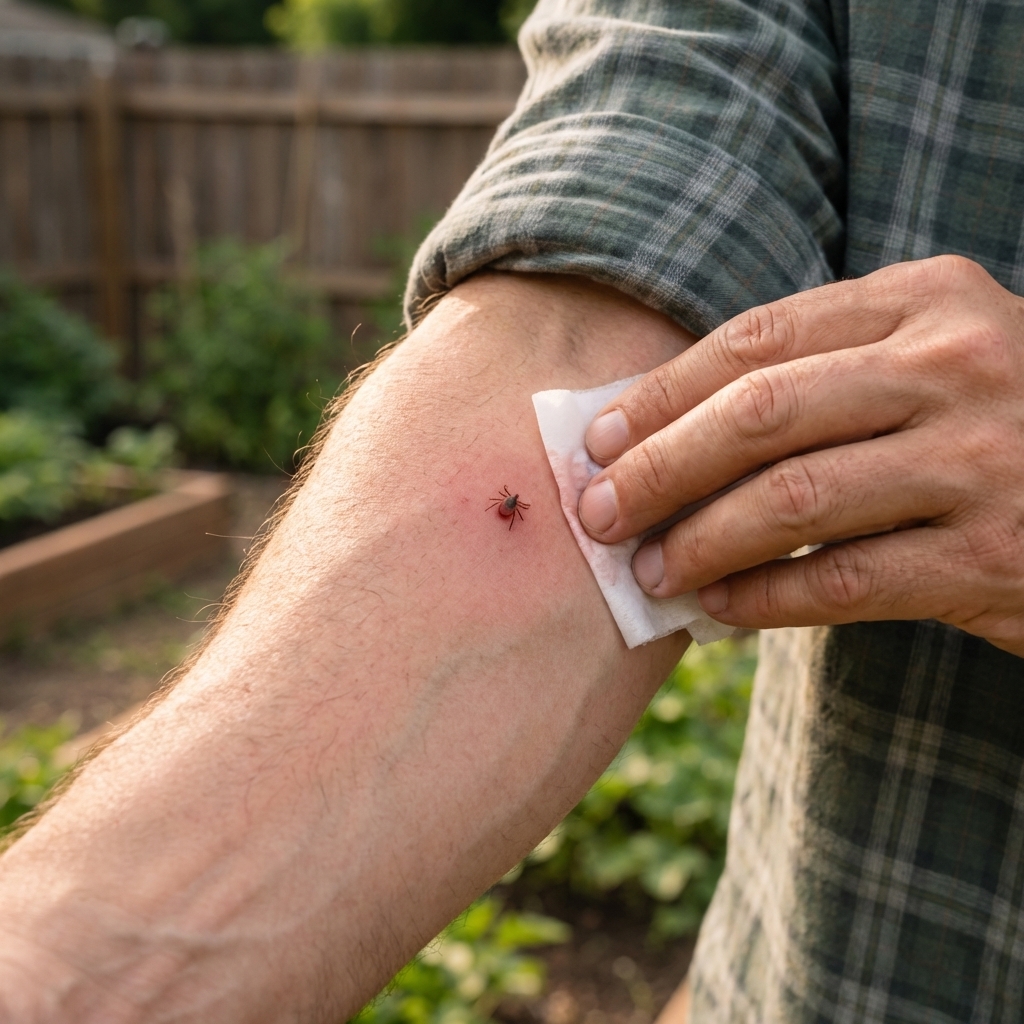
Once the tick is out, the bite usually looks like a small red bump, similar to a mosquito bite. That is normal. What matters is keeping it clean and watching how it changes.
Basic wound care at home
- Wash with soap and water or clean with rubbing alcohol.
- If the skin is irritated, apply a thin layer of antibiotic ointment (optional).
- Cover with a small bandage if it is rubbing against clothing, otherwise letting it breathe is fine.
- For itching, consider 1% hydrocortisone cream or an oral antihistamine, following label directions.
Quick documentation tip: Take a clear smartphone photo of the tick (if you have it) and the bite area right after removal, then again if the skin changes. Photos are often very helpful for clinicians.
How long should redness last?
Mild redness right at the bite can last a couple days. It should slowly improve. A spreading rash, increasing pain, warmth, swelling, or pus is not typical and should be checked.
Should you save the tick?
Sometimes, yes. If you develop symptoms later, identification can help your clinician understand your risk. That said, a photo is often easier than storing the specimen.
When it is worth saving the tick
- You do not know how long it was attached.
- You live in or visited a region with higher risk of Lyme disease or other tick-borne illnesses.
- The tick looked engorged (swollen), suggesting it fed for a while.
- You begin feeling sick in the days or weeks after the bite.
How to store it
- Place the tick in a sealed container or zip-top bag.
- You can keep it dry, or add a small amount of rubbing alcohol to preserve it.
- Label with the date and the body location of the bite.
- Store it in the refrigerator if you plan to keep it for a few days.
Do not spend time stressing about at-home tick testing. In many cases, clinicians make decisions based on your symptoms, local risk, and exposure details, not tick testing.
What to watch for
This is the part most people skip. A tick bite is not just about removal. It is about monitoring. Set a reminder to check the bite area and how you feel for at least the next 30 days. Some tick-borne illnesses can show up sooner, and some symptoms can appear weeks later.
Normal reactions
- A small red bump or mild itching at the bite
- Minor redness that stays close to the bite and improves over a few days
Lyme disease signs
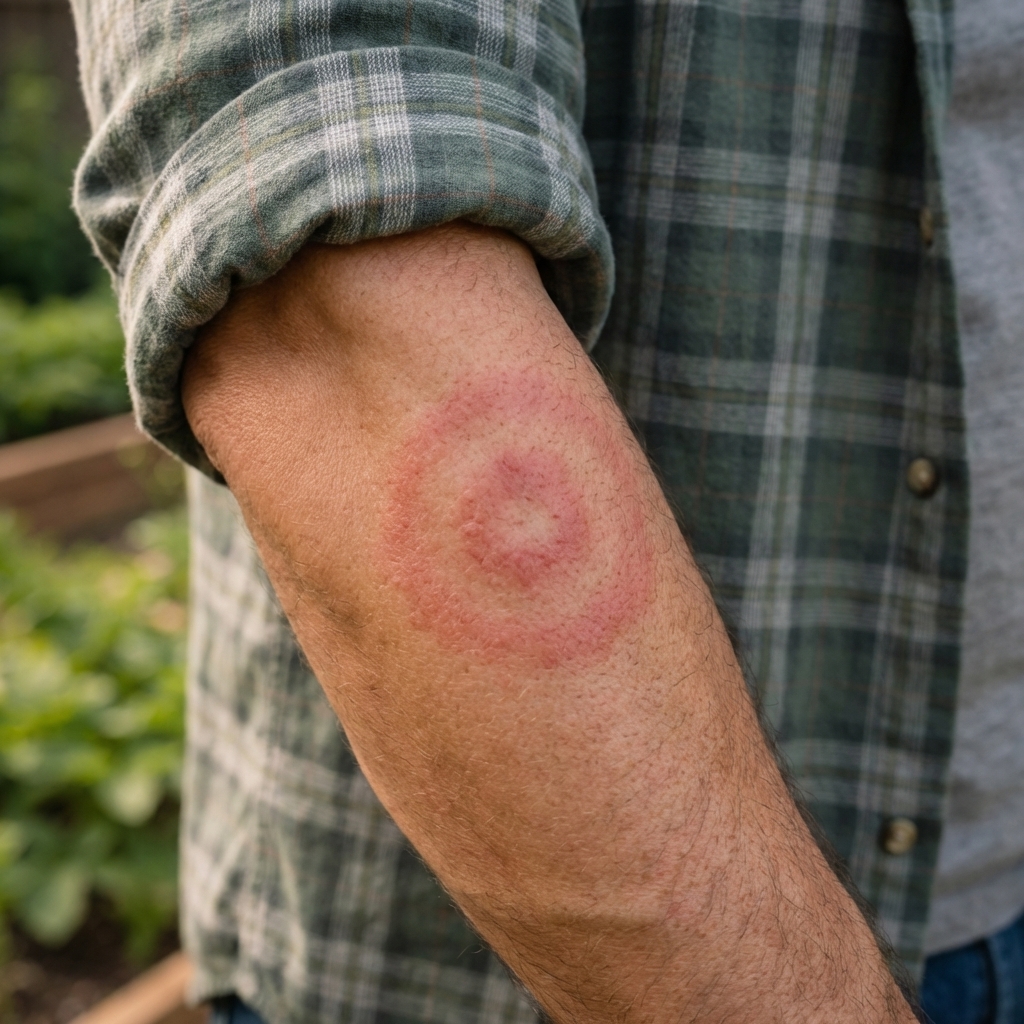
The most talked-about Lyme sign is the erythema migrans rash, often described as a bullseye. It does not always look like a perfect target, and it is not always painful or itchy.
- A rash that expands over days (often larger than 2 inches (5 cm))
- It may have central clearing, or it may look like a solid red patch
- Flu-like symptoms: fever, chills, fatigue, headache, body aches
- Swollen lymph nodes
Rocky Mountain spotted fever
Rocky Mountain spotted fever can become serious quickly. The rash can appear later, and not everyone gets one right away.
- Sudden fever and severe headache
- Muscle aches, fatigue
- Nausea, vomiting, or stomach pain
- A rash that may start on wrists and ankles and spread, sometimes involving palms and soles
Other symptoms to take seriously
- New joint pain, especially in the knees
- Facial droop or weakness
- Neck stiffness
- Heart palpitations, dizziness, or shortness of breath
- Increasing redness, warmth, swelling, or drainage at the bite (possible skin infection)
- New allergic-type reactions to red meat (hives, stomach upset, or anaphylaxis hours after eating beef, pork, or lamb), which can rarely happen after certain tick bites (alpha-gal syndrome)
When to see a doctor
If you are unsure, it is always okay to call your doctor or urgent care and explain the situation. Tick-borne illnesses are much easier to treat early, and risk depends on the type of tick and where you were exposed.
Get medical care soon if:
- You develop a spreading rash anywhere on your body within 3 to 30 days.
- You get fever, chills, body aches, severe fatigue, or a bad headache after a tick bite.
- The tick may have been attached for a long time (often discussed as 36 hours or more), or it was engorged.
- You cannot remove the tick completely, or the bite area is getting more painful and inflamed.
- You are pregnant, immunocompromised, or the bite is on a young child and you want guidance.
Ask about preventive antibiotics if:
In certain higher-risk situations, a clinician may recommend a single dose of doxycycline to help prevent Lyme disease. This is time-sensitive and usually needs to be started within 72 hours of tick removal. It is most often considered when the tick is an Ixodes (deer tick) in a Lyme-endemic area and it was likely attached for 36 hours or more. If you think you might fit that picture, call promptly.
Go to urgent care or the ER now if:
- You have trouble breathing, swelling of the face or throat, or hives (possible allergic reaction).
- You have confusion, fainting, severe weakness, or a stiff neck with high fever.
When you go, bring the tick (if you saved it), plus the photo if you took one, note the date you found it, and share where you were outdoors in the days before the bite.
Quick checklist
- Remove with fine-tipped tweezers, close to the skin.
- Pull straight up with steady pressure.
- Clean the bite and your hands.
- Take a quick photo of the tick and bite.
- Save the tick if you can.
- Watch for rash or flu-like symptoms for at least 30 days.
- See a doctor if symptoms show up or the rash spreads.
Prevention for gardeners
If you spend time in tall grass, leaf litter, brushy edges, or around deer trails, tick prevention is worth building into your routine. A quick tick check after gardening and a shower soon after coming indoors can help you catch ticks before they attach firmly.
To make prevention more actionable, consider using an EPA-registered insect repellent like DEET or picaridin on exposed skin, and treating clothing and gear with permethrin (or buying permethrin-treated items). Long pants, light-colored clothing, and tucking pants into socks can also help.
If you are also dealing with ticks around your property, tackling the yard side of the problem can cut down on repeat bites.