How to Treat a Spider Bite at Home

Jose Brito
I’m Jose Britto, the writer behind The Country Store Farm Website. I share practical, down-to-earth gardening advice for home growers—whether you’re starting your first raised bed, troubleshooting pests, improving soil, or figuring out what to plant next. My focus is simple: clear tips you can actually use, realistic expectations, and methods that work in real backyards (not just in perfect conditions). If you like straightforward guidance and learning as you go, you’re in the right place.
Most suspected spider bites are mild and can be treated at home with basic first aid. The tricky part is knowing when a bite is not “just a bite”, especially if symptoms ramp up quickly or you suspect a medically significant spider like a black widow or brown recluse. This guide walks you through what to do right away, what symptoms to monitor, and when to get medical care.
Important: This is general first aid information, not a diagnosis. If you have severe symptoms, are immunocompromised, or the bite is on a child, pregnant person, or older adult, it is smart to call a clinician, poison control, or local emergency services for guidance.
One more reality check: True spider bites are relatively uncommon and are often mistaken for other skin issues. If you did not see a spider, treat it like a mystery bite and watch how it changes.
First aid for a common spider bite
If the bite looks like a small red bump, itches, and feels sore like a mild sting, start with these steps. They are the same basics that help with many minor insect bites too.
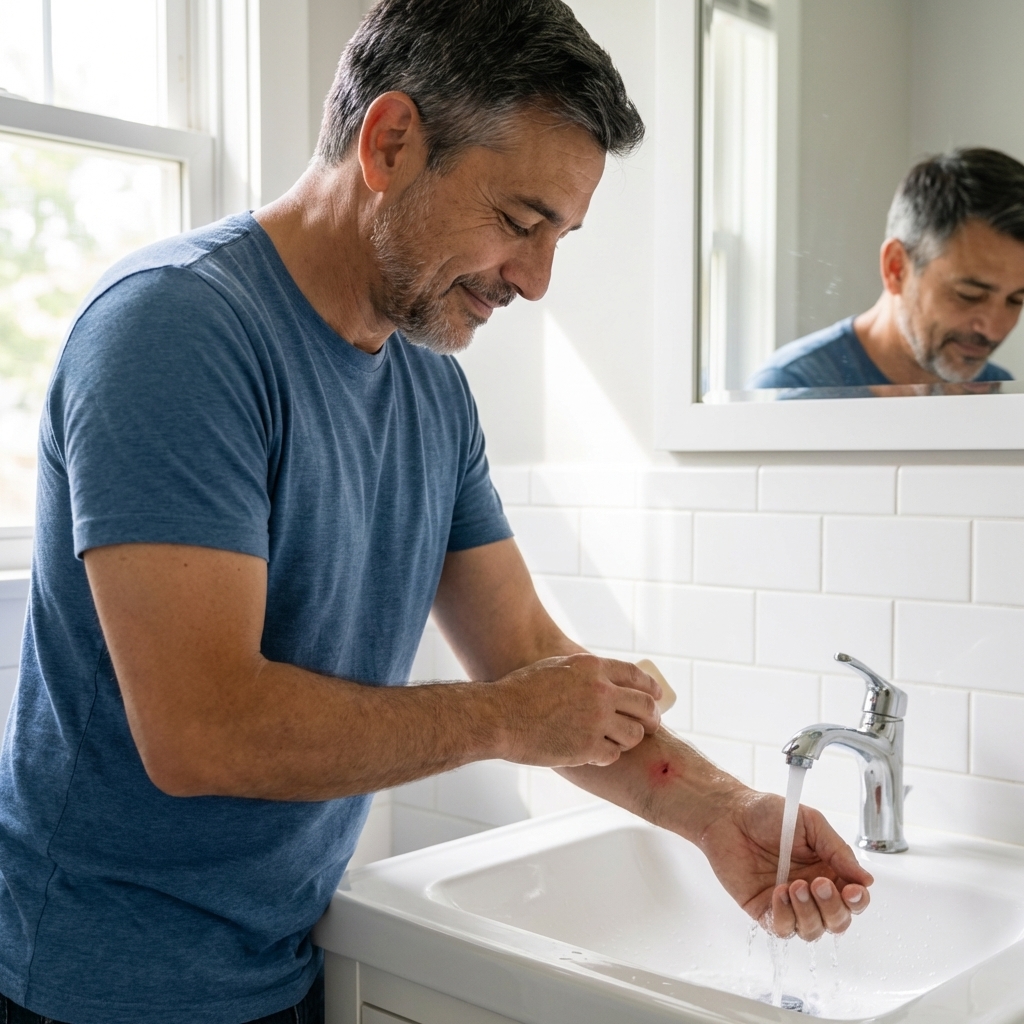
1) Clean the area
- Wash with soap and running water for at least 20 seconds.
- Pat dry with a clean towel.
- Avoid harsh chemicals like bleach. Hydrogen peroxide is not routinely recommended on broken skin because it can irritate tissue and slow healing.
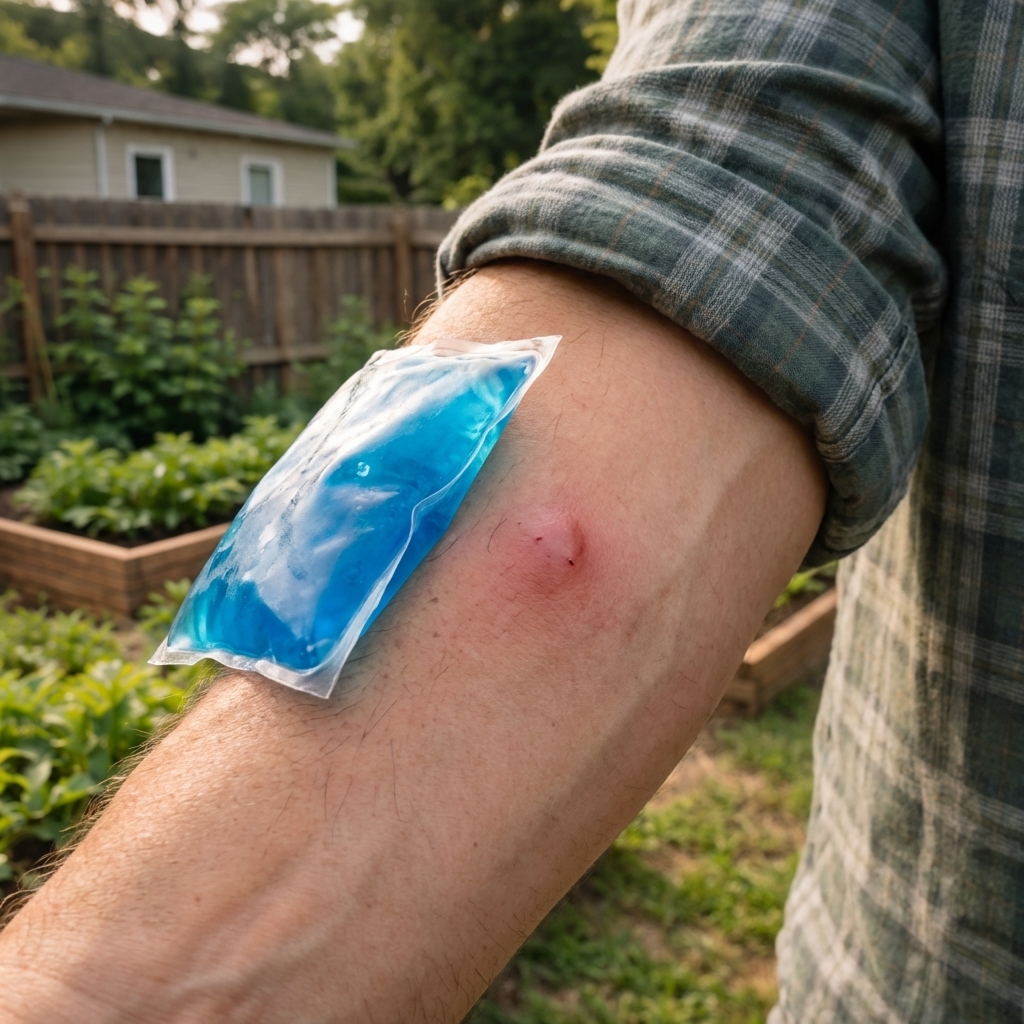
2) Apply a cold pack
- Use a cold pack or ice wrapped in a thin towel.
- Apply for 10 minutes on, 10 minutes off for the first hour or two, as needed.
- Cold helps reduce swelling, pain, and itching.
3) Elevate if possible
If the bite is on a hand, arm, foot, or leg, keep it elevated above heart level when you can. This helps reduce swelling and throbbing.
4) Consider pain and itch relief
- Oral pain relievers like acetaminophen or ibuprofen can help (follow label directions).
- Itch relief: an oral antihistamine (like cetirizine or loratadine) can help with itch and swelling for some people.
- Kids: confirm pediatric dosing with the label or a clinician. Do not guess.
- If you use a topical anti-itch product, apply a thin layer and stop if burning or worsening redness occurs. Try not to stack multiple products at once.
5) Keep it from getting infected
- Do not scratch. Scratching breaks skin and increases infection risk.
- Keep the area clean and dry.
- If there is a small blister, avoid popping it.
6) Check your tetanus status
If the skin is broken, make sure your tetanus vaccine is up to date. Many guidelines recommend a booster if it has been 10 years or more (or sooner for higher-risk wounds). If you are not sure, call a clinician.
What to expect: Mild bites often improve over 1 to 3 days, though itching can linger a bit longer. Take a quick photo of the bite once a day so you can tell if it is truly improving or slowly expanding.
When to seek urgent or emergency care
Spider bites can look similar to other problems like infected ingrown hairs, allergic reactions, or skin infections. Do not try to “tough it out” if any of these red flags show up.
Call 911 or go to the ER now if you have:
- Trouble breathing, wheezing, throat tightness, or swelling of the face, lips, or tongue
- Chest pain, fainting, severe weakness, or confusion
- Severe abdominal cramping or widespread muscle spasms
- Rapidly worsening pain that feels out of proportion to the skin changes
- Seizure or uncontrolled vomiting
Seek same-day medical advice if:
- You suspect a black widow or brown recluse bite
- There is spreading redness, warmth, swelling, or pus
- You develop fever, chills, body aches, or swollen lymph nodes
- The bite is on the face, neck, genitals, or near an eye
- You have diabetes, immune suppression, or poor circulation
- The bite is on a young child or symptoms are hard to track
Tip: If you safely can, take a photo of the spider or capture it in a sealed container for identification. Do not risk another bite to do this.
US help line: Poison Control is available at 1-800-222-1222.
How to tell a spider bite from a look-alike
It is common to blame a spider when you find a sore spot, but many “spider bites” are actually something else.
Common look-alikes
- Mosquito, flea, or bed bug bites: often multiple itchy bumps
- Skin infection (including MRSA): can look like a painful, red, swollen bump that may drain
- Allergic contact dermatitis: rash after touching plants, chemicals, or new products
- Tick bite: small puncture. In Lyme-endemic areas, watch for an expanding rash (sometimes bullseye-shaped) and flu-like symptoms
If you did not see a spider, treat it like a mystery bite and focus on symptoms and progression. Fast-spreading redness, increasing heat, pus, or fever deserve a call to a clinician.
Brown recluse bites
Brown recluse spiders are most common in the south-central United States, though they can show up elsewhere via moving boxes and stored items. Outside established regions, true recluse bites are often overdiagnosed, so it is worth keeping an open mind about look-alikes like infection.
Typical timing and symptoms
- Early on, the bite may feel mild or go unnoticed.
- Over hours, it may become painful with increasing redness and swelling.
- Some bites develop a blister and then a darker, bruise-like center.
- In more serious cases, the center can break down into an open sore over days.
When to get help
Because tissue damage can worsen over time, contact a clinician the same day if you suspect a brown recluse bite, especially if you see a blister, a darkening center, or rapidly increasing pain.
What not to do
- Do not cut the bite open.
- Do not try to “suck out” venom.
- Do not apply heat. Cool compresses are generally recommended.
Black widow bites
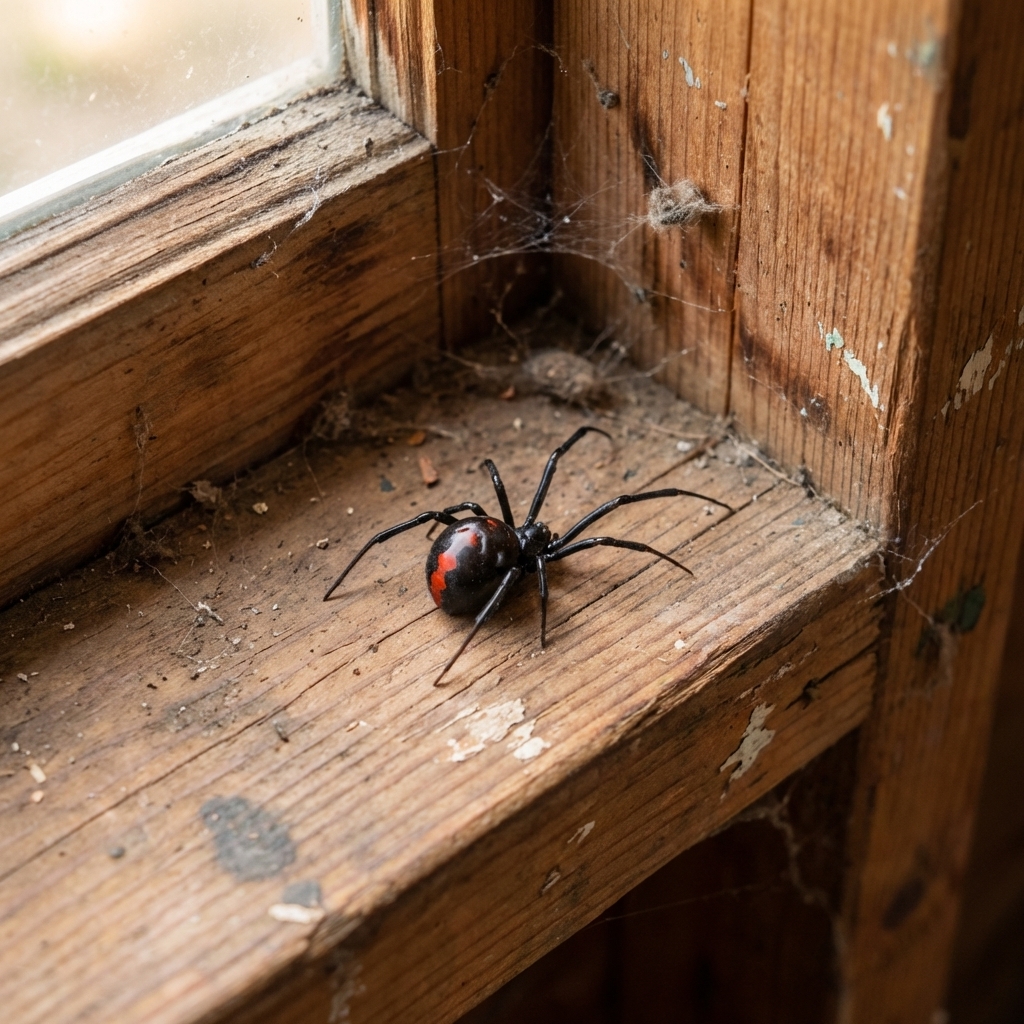
Black widows are found in many regions and tend to hide in dark, undisturbed areas like woodpiles, sheds, crawl spaces, and cluttered corners of garages.
Typical timing and symptoms
- The bite can feel like a pinprick at first.
- Within 30 minutes to a few hours, symptoms can spread beyond the bite site.
- Muscle cramping or spasms, especially in the abdomen, back, or legs
- Sweating, nausea, headache, restlessness, and sometimes elevated blood pressure
If you suspect a black widow bite and you develop muscle cramps, significant pain, vomiting, or severe symptoms, seek urgent care right away. Treatment may include pain control, muscle relaxants, and observation. In some cases, antivenom is considered for severe symptoms, and clinicians weigh benefits against the risk of allergic reactions.
Natural remedies for mild bites
For a mild, uncomplicated bite, a few simple home options can calm itch and irritation. Think of these as comfort measures, not “cures”. Always stop if burning, rash, or worsening redness occurs.
Baking soda paste
- Mix baking soda with a small amount of water to make a thick paste.
- Apply a thin layer for 10 to 15 minutes, then rinse.
- Some people find it helpful, but evidence is limited.
Aloe vera
- Use plain aloe gel (or gel from a clean aloe leaf).
- Apply a thin layer 2 to 3 times daily.
- Aloe can soothe irritation and dryness around the bite.
Oatmeal (for itch)
- A lukewarm bath with colloidal oatmeal can help widespread itching.
- Keep water lukewarm, not hot. Heat can worsen itch and swelling.
What to avoid
- Essential oils directly on broken skin (can irritate and cause burns)
- Vinegar on open or raw areas (often stings and can inflame)
- Uncovered ice pressed directly to skin (can cause frost injury)
How to monitor for 48 hours
This is the part most people skip. A quick daily check helps you catch infection or more serious reactions early.
- Circle the redness lightly with a pen to track if it spreads.
- Take a daily photo in similar lighting.
- Watch for increasing warmth, firm swelling, pus, or red streaking.
- Pay attention to whole-body symptoms like fever, nausea, muscle pain, or cramps.
Antibiotics note: Most bites do not need antibiotics. They are used when there is a secondary infection or another diagnosed skin condition.
If it is getting worse instead of better after 24 to 48 hours, it is time to call a clinician.
Prevention tips
If you garden, store firewood, or spend time in sheds and garages, you are in spider territory. You do not need to fear them, but you do want a few practical habits.
Simple habits that prevent bites
- Wear gloves when reaching into woodpiles, compost, dense groundcover, or stored pots.
- Shake out boots, garden gloves, and towels that have been sitting in a garage or shed.
- Use a flashlight in dark corners before grabbing items.
- Keep storage areas tidy and reduce clutter where spiders hide.
Yard and home steps
- Store firewood off the ground and away from the house if possible.
- Seal obvious entry points around doors, windows, and foundations.
- Reduce outdoor insects near doors by limiting bright lights that attract bugs at night.

Quick spider bite checklist
- Clean with soap and water.
- Cold pack 10 minutes on, 10 minutes off.
- Elevate the limb.
- Do not scratch. Keep it clean.
- Check tetanus status if skin is broken.
- Watch for red flags: trouble breathing, severe cramps, fever, spreading redness, blistering, or worsening pain.
- Seek urgent care if you suspect black widow or brown recluse, or symptoms escalate.
If you want the “real backyard” takeaway, it is this: most bites calm down with basic care, but the ones that get serious usually announce themselves with fast-changing symptoms. Treat the bite, then watch the trend.