How to Propagate Pothos in Water

Jose Brito
I’m Jose Britto, the writer behind The Country Store Farm Website. I share practical, down-to-earth gardening advice for home growers—whether you’re starting your first raised bed, troubleshooting pests, improving soil, or figuring out what to plant next. My focus is simple: clear tips you can actually use, realistic expectations, and methods that work in real backyards (not just in perfect conditions). If you like straightforward guidance and learning as you go, you’re in the right place.
Pothos is one of the easiest houseplants to multiply, and water propagation is the simplest way to do it. You get a front-row seat to root growth, and you can turn one leggy vine into several new plants without fancy tools.
Below is the exact process I use, plus the small details that make the difference between crisp white roots and a cutting that turns mushy.
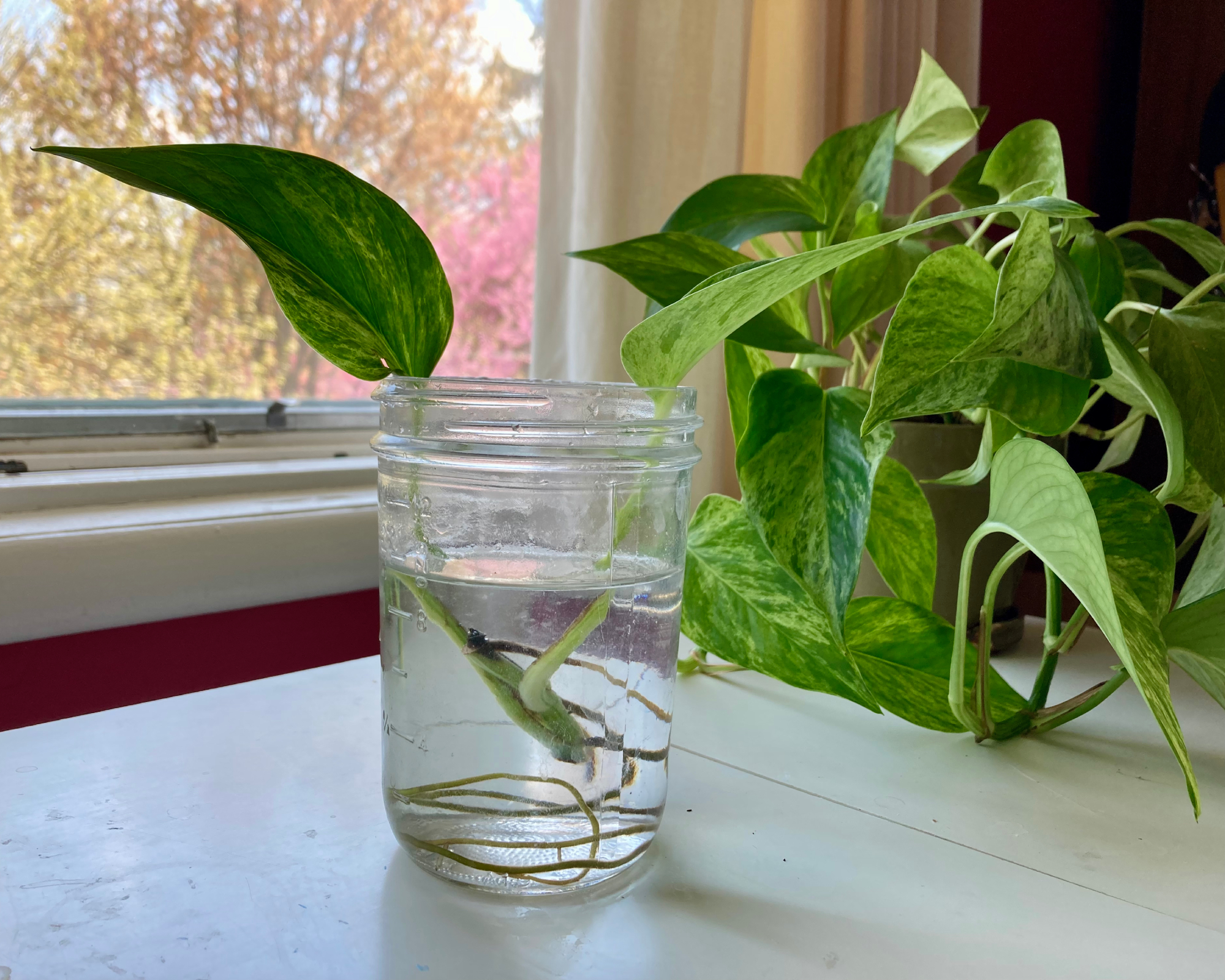
What you need
Keep it simple. Most propagation failures come from dirty tools, missing nodes, or water that sits too long with decaying plant bits.
- A healthy pothos vine with several leaves
- Clean scissors or pruning shears (wipe with rubbing alcohol)
- A clear jar or glass (clear makes it easy to monitor roots and water quality)
- Room-temperature water (tap is usually fine)
- Optional: a small piece of charcoal or a narrow-neck bottle to reduce odor and slime
Find the node (this part matters)
If there is one thing to remember: roots come from nodes.
Without a node, a cutting will not produce new roots or new growth. A single leaf on its own might stay green in water for a while, but it will not turn into a new plant.
A node is the little joint on the vine where leaves and aerial roots form. On pothos, you will often see a small brown nub, bump, or tiny root poke coming out near the base of a leaf. That is your node.
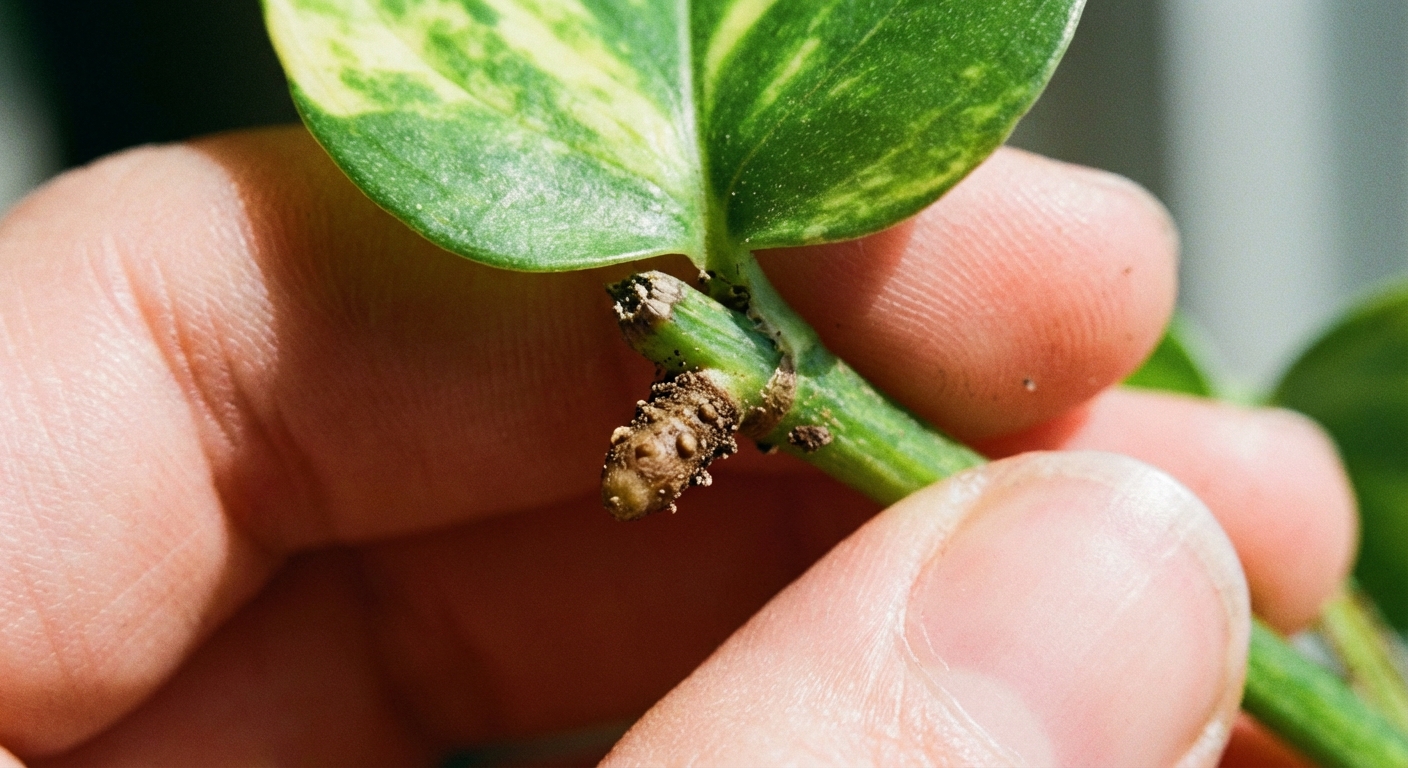
Where to cut
Make your cut just below a node. You want the node to end up underwater, because that is where roots will emerge.
Best cutting size
- 1 to 2 nodes per cutting is easiest for beginners
- 2 to 4 leaves per cutting is a good balance
- If the vine is very long and leggy, make multiple cuttings instead of one huge one
Quick cutting checklist
- Node included: yes
- Leaves healthy (no major yellowing): yes
- Bottom leaf removed so it will not sit in water: yes
- Clean cut, not crushed: yes
Set the cutting in water
Fill your jar so the node is submerged, but keep the leaves above the waterline. Leaves sitting in water are a common cause of rot and cloudy water.
- Submerge: the node (and any aerial root nubs)
- Keep above water: all leaves
- Position: bright, indirect light near a window
Bright indirect light helps the cutting photosynthesize without stressing it. Avoid harsh, direct sun that heats the jar and cooks the cutting.
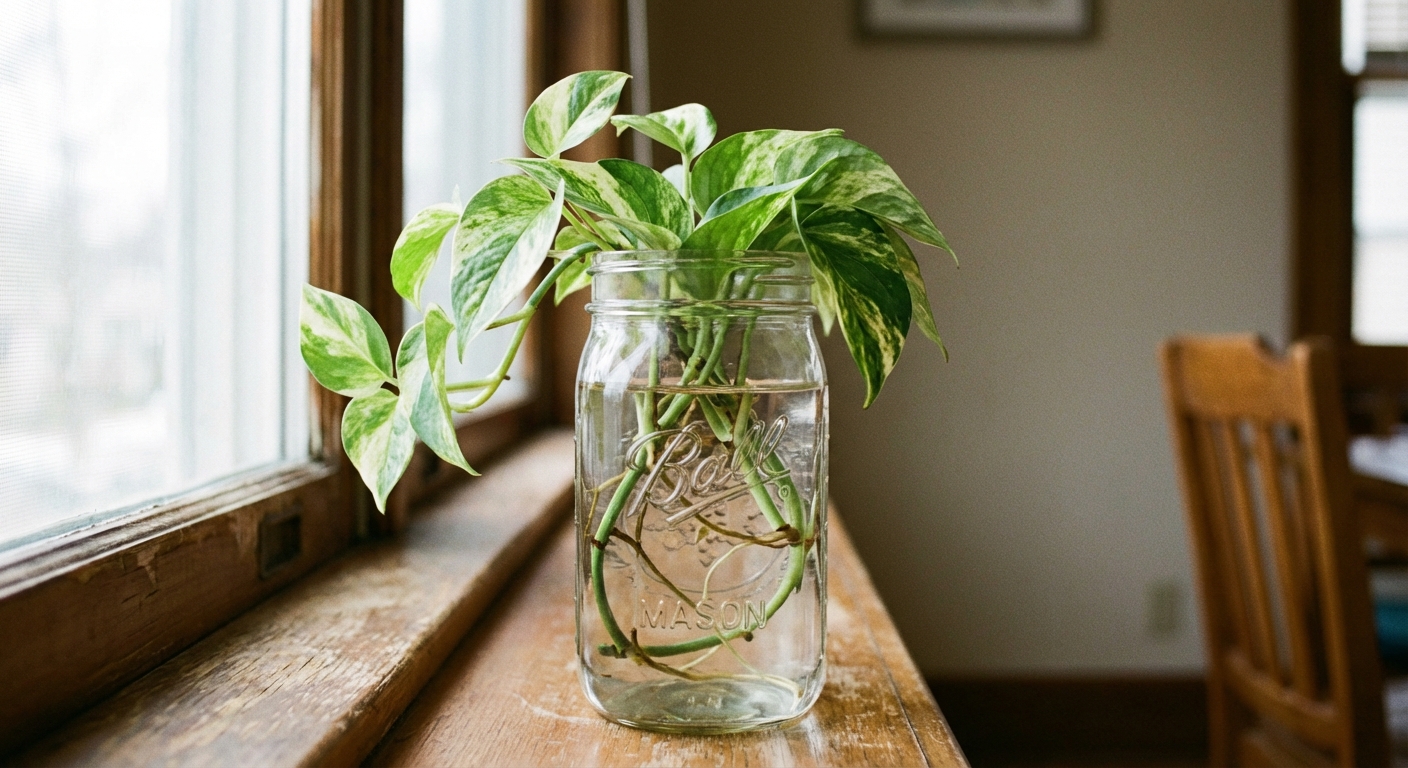
Water changes (and why it helps)
Stagnant water is where problems start. The goal is clean water with decent oxygen levels and minimal microbial buildup around the stem.
A beginner-safe schedule
- First 2 weeks: change the water every 3 to 5 days
- After roots start: change the water about once a week
Plenty of people get roots with less-frequent changes, especially if the water stays clear and nothing is decaying in the jar. I still like the schedule above because it cuts down on slime, smell, and mushy stems while you are waiting for roots to show up.
Top off or fully change?
Do a full change most of the time. Topping off is fine if the level drops mid-week, but full changes keep things fresher.
How long until roots form?
Most pothos cuttings push roots in 1 to 3 weeks in warm, bright conditions. Slower homes can take a month. Temperature matters more than people think.
- Fast rooting: bright indirect light, 70 to 80°F (21 to 27°C)
- Slow rooting: low light, cool rooms, water that gets cloudy or slimy
You will usually see tiny white bumps first, then actual roots. Those early bumps are a good sign. Do not pot up the moment you see them.
When to move from water to soil
You can keep pothos in water long-term, but if your goal is a potted plant, move it once it has a real root system. A cutting that goes into soil too early often stalls or rots.
Best time to pot up
- Roots are 2 to 4 inches long
- You have several roots, not just one stringy root
- Even better: a few branching roots (little side roots)
That usually lands around 3 to 6 weeks, depending on light and warmth.
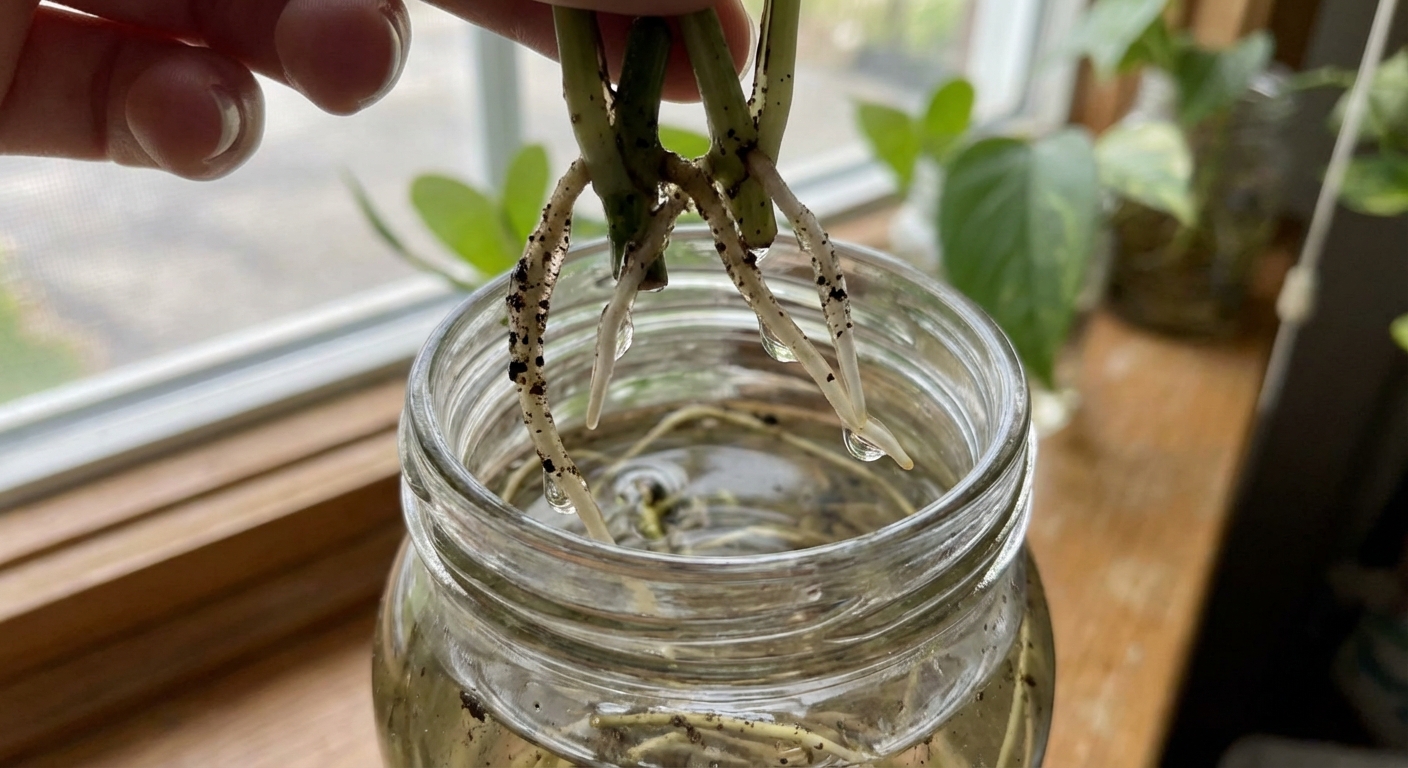
How to plant rooted cuttings
Water roots are a bit different than soil roots. They are used to constant moisture, so the transition needs to be gentle.
Potting steps
- Pick a small pot with drainage holes. A 3 to 4 inch (8 to 10 cm) pot is perfect for a few cuttings. Oversized pots stay wet too long.
- Use a light, well-draining mix. A basic indoor potting mix with added perlite works well. An aroid-style mix also works great.
- Plant the node just under the soil surface. Roots down, stem supported.
- Water thoroughly. Let excess drain out.
- Keep evenly moist for 1 to 2 weeks. Not soggy, not bone-dry.
After the first couple weeks, you can start letting the top inch of soil dry between waterings, just like a normal pothos routine.
If you fertilize your houseplants, wait a week or two after potting before feeding. Fresh roots appreciate a calm landing.
For a fuller plant
Plant several rooted cuttings in the same pot. One cutting makes a sparse plant. Three to six cuttings makes a pot that looks full much sooner.
Common mistakes
Most rot issues come down to missing nodes, dirty water, or foliage sitting underwater. Here is what to watch for.
1) Submerging leaves
Leaves in water break down fast, cloud the jar, and feed bacteria. Remove the lowest leaf so only nodes are underwater.
2) No node
A cutting without a node will not root into a new plant. If you are unsure, look for that joint and the little aerial root nub.
3) Letting water get funky
Cloudy water usually means bacteria and decaying plant material are building up. Stick to a regular change schedule, especially during the first two weeks.
4) Low light and cold rooms
Cool, dim areas slow the cutting down. Slow cuttings sit longer before rooting, which raises the odds of stem rot.
5) Taking weak vines
Start with healthy growth. Yellowing, heavily spotted, or pesty vines have less energy to root and are more likely to fail.
6) Potting too early
Tiny root nubs are not enough. Wait until you have a small handful of real roots before moving to soil.
Troubleshooting
Water is cloudy
- Dump and rinse the jar
- Trim off any slimy stem tissue with clean scissors
- Refill with fresh room-temperature water
- Move to brighter indirect light
Algae in the jar
- Rinse the jar and refresh the water
- Move the jar out of direct sun
- If it keeps coming back, switch to an opaque container or wrap the jar with paper
Cutting turning yellow
- Check if a leaf is underwater and remove it
- Give brighter light
- If the vine segment is long with many leaves, shorten it so the cutting has less foliage to support
Stem is mushy or smells bad
That is rot. Cut back to clean, firm tissue above the rotted area, making sure the new piece still includes a node. Start again in a clean jar with fresh water.
No roots after 4 weeks
- Move to a brighter spot (still indirect)
- Warm the room if possible
- Refresh water more often
- Try a fresh cutting from a more vigorous section of the plant
Tap water tips
In most homes, regular tap water works. If your tap water is heavily chlorinated, softened, or leaves lots of mineral crust, try filtered water or let a container of water sit out overnight before using it.
Can pothos live in water long-term?
Yes, pothos can grow in water long-term, even for years, especially if you refresh the water and provide some nutrients. If you keep it in water for more than a month or two, consider adding a very diluted hydroponic fertilizer occasionally. Without nutrients, it may survive but grow slowly and look pale over time.
Pet note
If pets like to chew plants, keep pothos out of reach. It is toxic if eaten.
Quick recap
- Find a node
- Cut just below the node
- Remove any leaves that would sit in water
- Submerge the node, keep leaves above the waterline
- Change water every 3 to 5 days at first, then about weekly
- Pot up when roots are 2 to 4 inches long with multiple roots
- Keep soil evenly moist for 1 to 2 weeks after potting
If you want a fuller houseplant fast, propagate a handful of cuttings at once and pot them together. Pothos is forgiving, and once you get the node part right, it becomes almost automatic.