How to Keep Squirrels Out of Your Garden

Jose Brito
I’m Jose Britto, the writer behind The Country Store Farm Website. I share practical, down-to-earth gardening advice for home growers—whether you’re starting your first raised bed, troubleshooting pests, improving soil, or figuring out what to plant next. My focus is simple: clear tips you can actually use, realistic expectations, and methods that work in real backyards (not just in perfect conditions). If you like straightforward guidance and learning as you go, you’re in the right place.
Squirrels are bold, athletic, and stubborn. They dig in freshly worked soil, steal tomatoes the day before you pick them, and treat bulb beds like a snack drawer. The good news is you do not need to “win” against squirrels forever. You just need to make your garden harder to mess with than the rest of the neighborhood.
This page walks you through what actually helps, starting with physical barriers (your best long-term solution), then adding safe repellents, motion-activated deterrents, distraction feeding, and a few plants that can tip the odds in your favor.
Start with the why: what squirrels are doing in your beds
If you can spot the pattern, you can pick the right fix instead of throwing random products at the problem.
- Fresh digging in mulch or soil: often squirrels caching nuts (especially in fall), or investigating newly amended soil.
- Holes around bulbs: they are after tulips, crocus, and other tasty bulbs, or they are simply digging and discovering them.
- Half-eaten tomatoes or strawberries: sometimes hunger, sometimes water. In hot weather they may take a bite for moisture.
- Seedling damage: they may pull up sprouts out of curiosity, to eat the seed, or while digging.
In most gardens, a combination approach works best: block access first, then discourage repeat visits.
Physical barriers that actually work
If you want a solution that does not wash off after a rain, barriers are it. They are also the most “set it and forget it” option once installed.
1) Netting over beds and berries
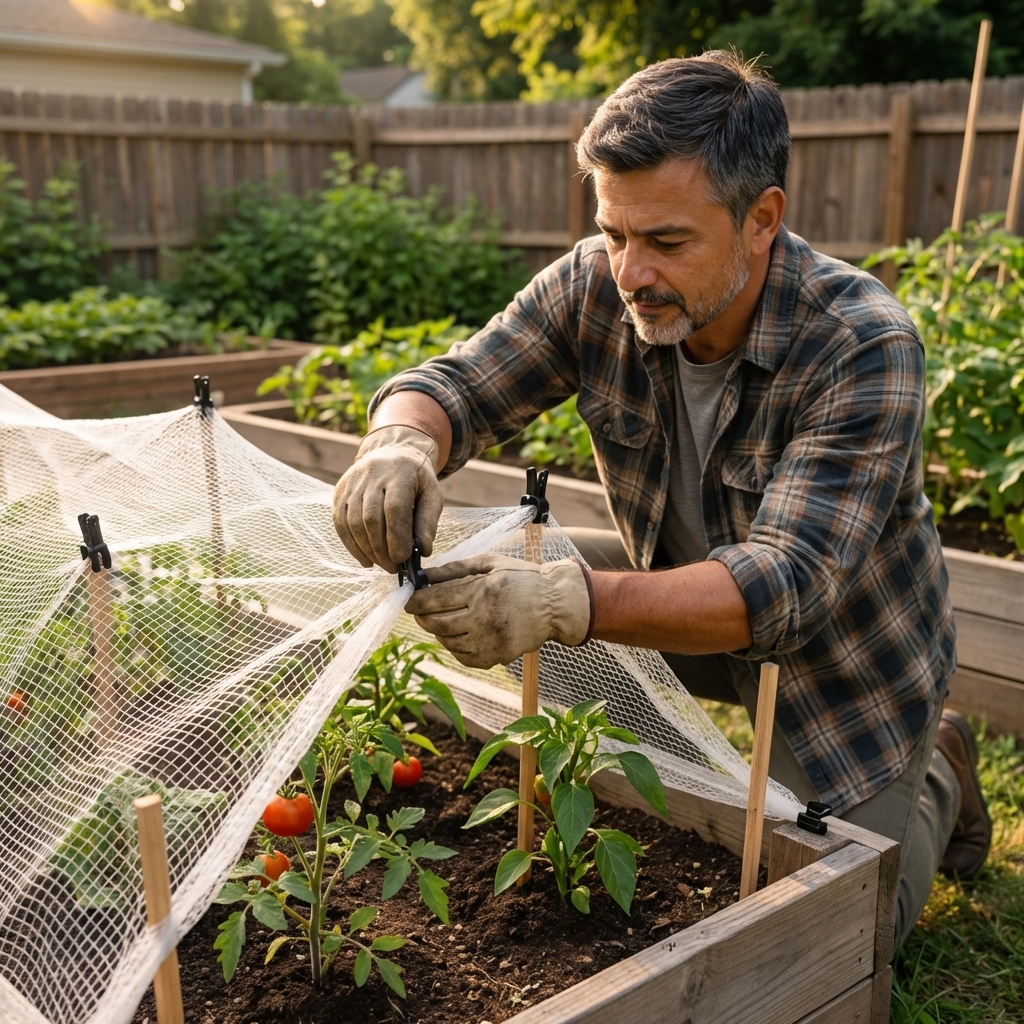
Garden netting can protect strawberries, blueberries, young greens, and newly seeded beds. The key is securing the edges so squirrels cannot lift it and crawl under.
- Use landscape staples, bricks, or boards along the entire perimeter.
- Keep netting taut so it does not snag on plants.
- Check frequently when fruit is ripening so you can harvest on time and make sure the netting stays secure.
Chewing note: Many squirrels go under netting, but they can also chew through lightweight plastic bird netting. If you see chew holes, upgrade to sturdier mesh like metal hardware cloth over a frame, or a heavier-duty woven mesh rated for pests.
Wildlife safety: Avoid loose, floppy netting that wildlife can tangle in. Choose appropriate mesh, keep it tight, and secure edges so nothing can get trapped.
Tip: If birds are also a problem, choose a netting size made for birds, and keep it taut. If squirrels are persistent, the material strength matters as much as the edge seal.
2) Wire cloches for seedlings and transplants
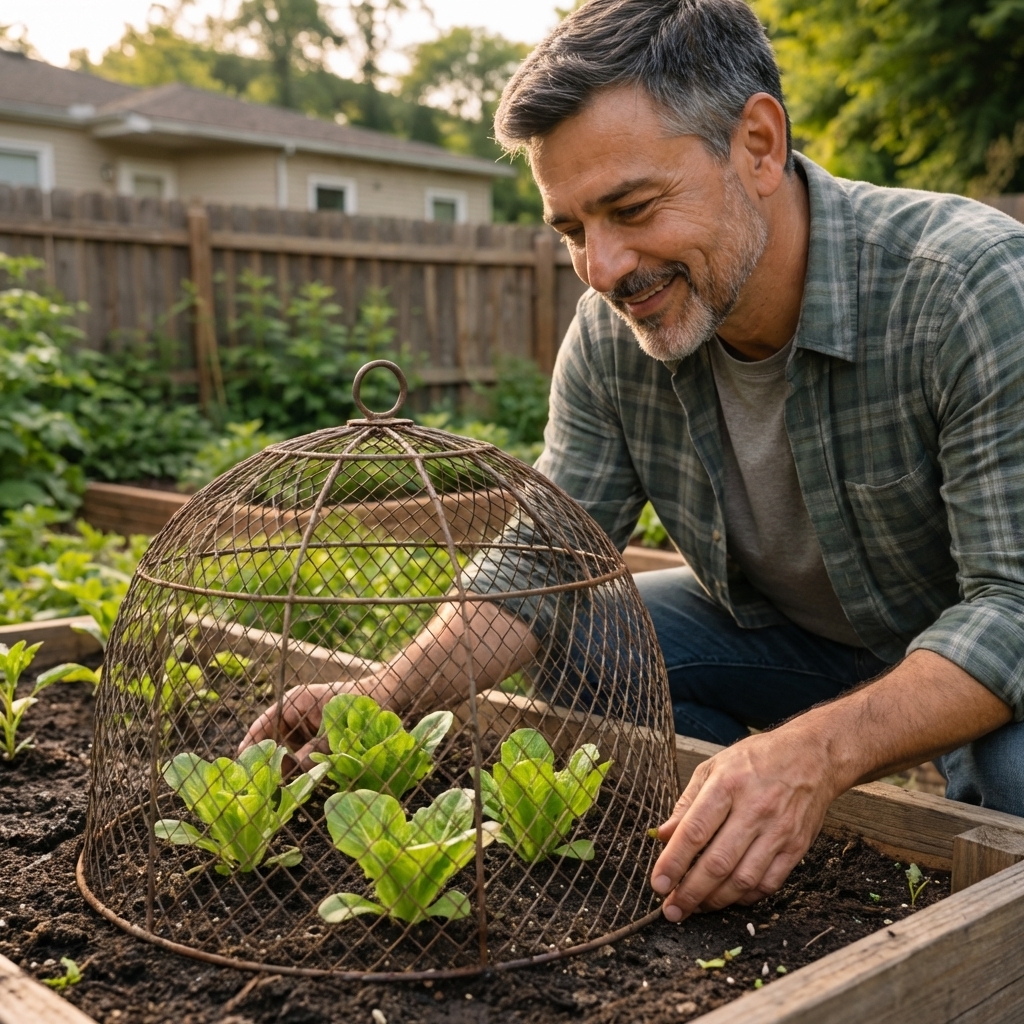
For small areas, nothing beats a simple cloche made from chicken wire or hardware cloth. This is great for:
- Newly planted seedlings
- Direct-sown seeds (beans, peas, sunflowers)
- Bulb baskets and small flower plantings
You can bend wire into a dome and pin it down with garden stakes, or make a rectangular “cage” that sits over a section of row.
Best material: Hardware cloth (metal mesh) is sturdier than chicken wire and harder for animals to deform. For most garden cages, 1/2-inch hardware cloth is a good all-around choice. Chicken wire is fine for quick protection, but it can be pushed around more easily.
3) Fencing that slows climbing and blocks easy access
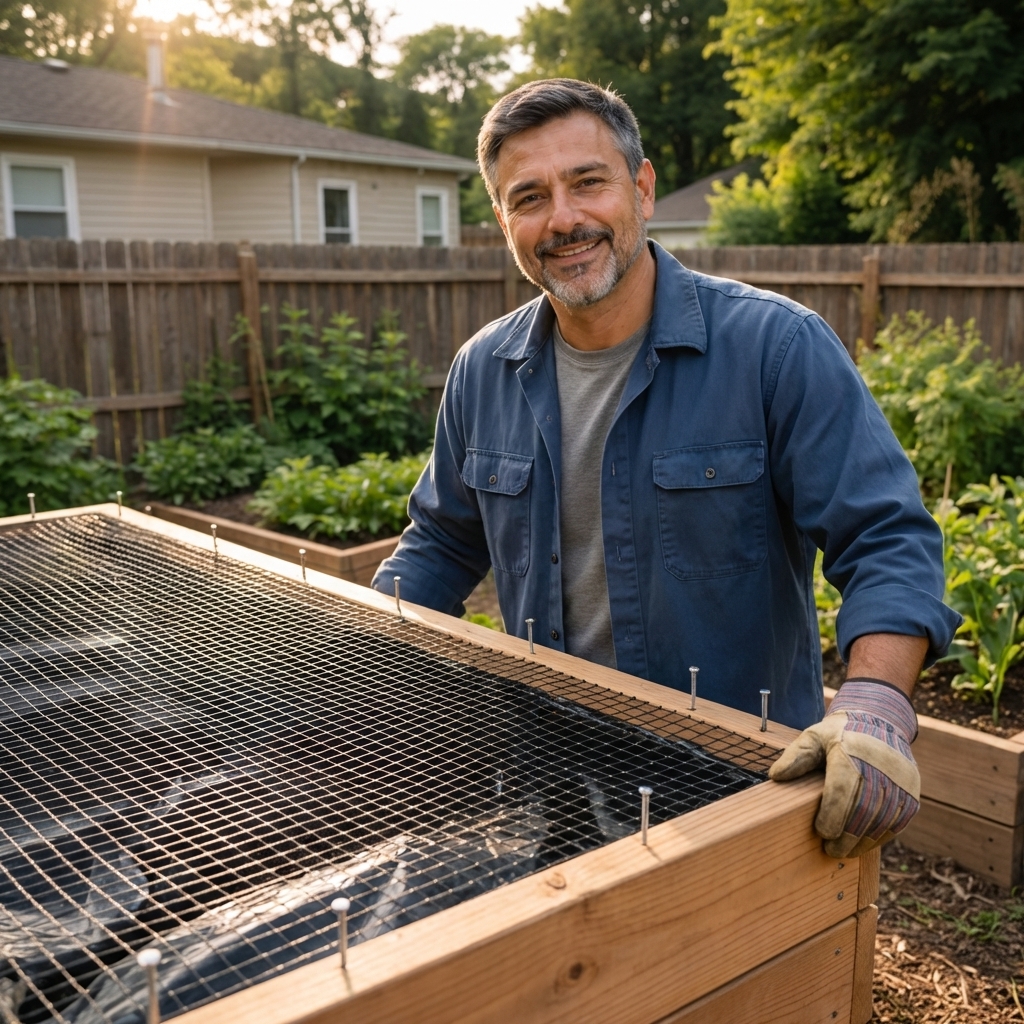
Squirrels can climb most fences. That does not mean fencing is useless, but results vary a lot. The more complete the enclosure, the better it works, especially when paired with bed covers or row covers in high-value areas.
- Height: 4 to 6 feet can help, but it is not truly squirrel-proof on its own.
- Top deterrent: Add a floppy top (a loose extension of netting or wire) or an outward-angled section. This makes it harder for them to get a grip.
- Bottom edge: Tree squirrels usually enter from above or through gaps, but you still want a tight bottom edge so they cannot slip under. Burying 6 to 12 inches or adding an outward “L” apron is more critical for digging pests like chipmunks and ground squirrels, and it also helps prevent gaps at grade.
- Gate: Most “fence failures” happen at the gate. Make sure it closes tight with no gap at the bottom.
If your main issue is a few raised beds, fencing the entire yard may be overkill. A bed-level cage, row cover, or framed mesh cover is often cheaper and faster.
Natural repellents: what to try and how to use them
Repellents can help, but think of them as maintenance. Their effectiveness is mixed and often depends on persistence, weather, and local squirrel pressure. They work best when you reapply consistently and when you pair them with a physical barrier.
Cayenne pepper and hot pepper products
Capsaicin (the “heat” in peppers) can discourage chewing. Many gardeners use:
- A light dusting of cayenne on soil surface after planting
- Commercial hot pepper sprays labeled for garden use
How to make it more effective: Reapply after rain or overhead watering. Focus on the soil surface where they dig and the edges of beds where they enter.
Safety note: Do not apply where pets can inhale it or rub it into eyes, and avoid using it on edible parts you cannot wash well.
Peppermint oil
Peppermint oil can be useful around the perimeter of beds, containers, and entry points. Use it carefully:
- Apply to cotton balls or rags placed in a ventilated container near the bed, not directly on plants.
- Refresh every few days, especially in hot weather.
Essential oils can burn foliage if applied directly and can be harmful to pets if misused. Keep it as a perimeter scent, not a plant spray.
Predator urine products
Predator scent products are common and sometimes help for short periods, especially early on. The downside is that squirrels can get used to them, and heavy rain reduces effectiveness fast.
- Use them as a temporary push while you set up a barrier.
- Rotate with other deterrents so the smell does not become background noise.
What to skip (most of the time)
- Mothballs: not recommended for garden use and can be toxic.
- Homemade chemical mixes: anything that could harm soil life, pets, or kids is not worth it.
Distraction feeding stations: when it helps and when it backfires
Some gardeners have success giving squirrels an easier option away from the beds. Others find it increases squirrel traffic. If you try this, do it strategically.
How to set it up
- Place the station as far from the garden as you can, ideally on the opposite side of the yard.
- Keep it consistent. Random feeding trains squirrels to keep checking your property.
- Choose low-mess foods to avoid attracting rats. Avoid piles of mixed bird seed on the ground.
A helpful “distraction” in hot weather
In hot, dry weather, squirrels may bite tomatoes and cucumbers for moisture. A shallow water dish placed away from the garden may help in some yards, but it is not guaranteed. Refresh it often to avoid mosquitoes.
Motion-activated deterrents
Squirrels are jumpy, but they are also smart. Motion deterrents work best when they are unpredictable and when you adjust them occasionally.
Motion-activated sprinklers
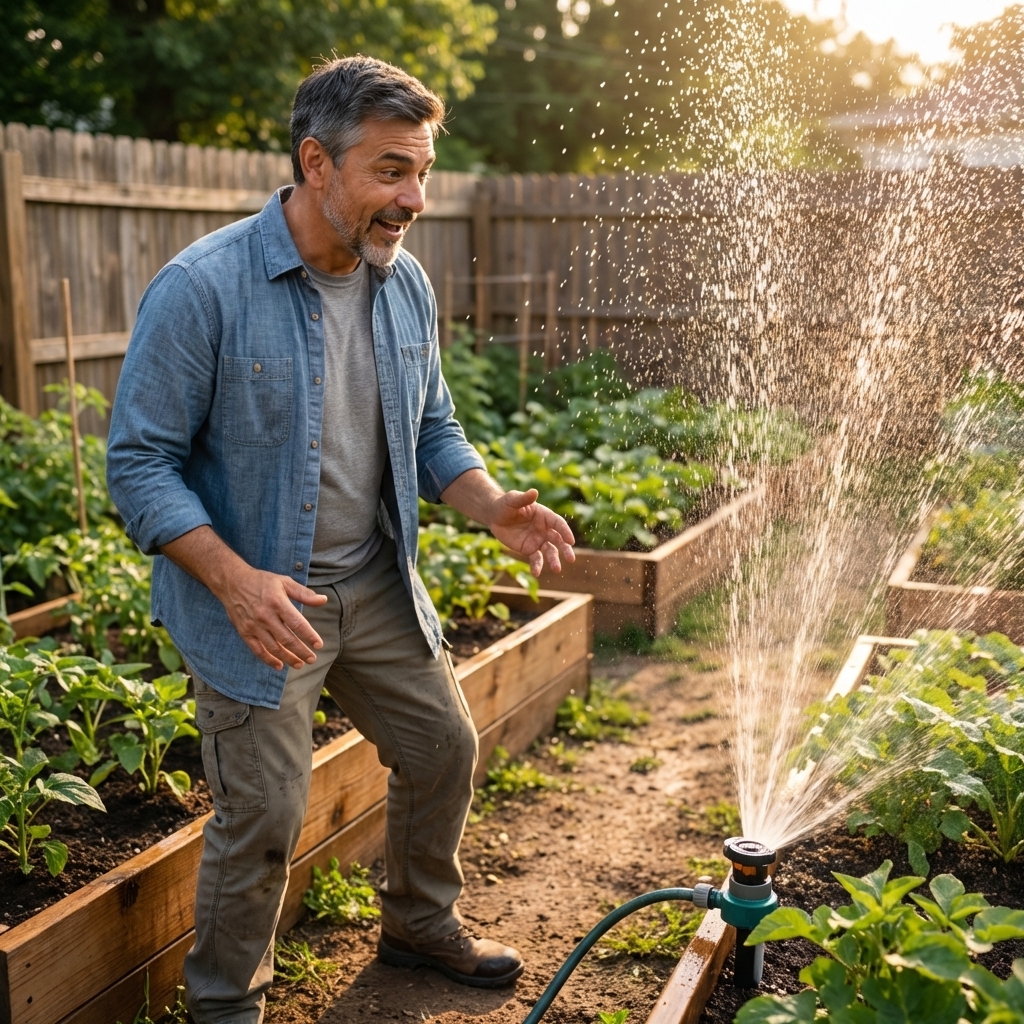
This is one of the most effective non-harmful tools for persistent squirrels in many backyards. A sudden blast of water teaches quick lessons.
- Set the sprinkler to cover the main approach routes.
- Move it every week or two so squirrels do not learn the safe path.
- Use it during the times you see the most activity, usually morning and late afternoon.
Motion lights and sound devices
Lights can help at night, but squirrels are active during the day. Sound devices can work briefly, then animals get used to them. If you use them, combine with a barrier and change placement often.
Companion planting: plants squirrels tend to avoid
No plant is a magic force field, but strong scents and certain textures can make a bed less appealing. Think of these as helpers around the edges or near high-value crops.
Plants that may deter squirrels
- Alliums: garlic, chives, onions
- Strong herbs: mint (best in pots), rosemary, thyme, sage
- Flowers with odor or irritation potential: marigolds, daffodils (especially helpful around bulbs)
How to use them
- Border raised beds with alliums and herbs.
- Plant daffodils around tulips to reduce bulb digging.
- Use container mint near entry points, but do not plant it in open ground unless you want a permanent mint patch.
Companion planting is most effective when the main “reward” is also harder to access, like strawberries under secure netting or bulbs in wire baskets.
Protect the things squirrels target most
If you only have time for a few upgrades, focus on the crops and situations that get hit hardest.
Bulbs
- Plant bulbs in wire bulb baskets or under a layer of hardware cloth.
- Cover the area with mulch after planting, but expect digging unless protected.
- Mix in daffodils around the perimeter as a bonus deterrent.
Tomatoes, strawberries, and other ripe fruit
- Use netting or a simple frame with mesh to block access. If chewing becomes an issue, switch to sturdier mesh over a frame.
- Harvest a little earlier and finish ripening indoors if squirrels are taking “one bite” from everything.
- Add a water source away from the garden during heat waves. It may reduce test-bites for moisture in some cases.
Newly seeded beds
- Cover with row cover or netting until seedlings are established.
- Use cloches over the most tempting spots.
Quick note: squirrels or something else?
If your barrier plan is not working, double-check the culprit.
- Tree squirrels: often come from above (trees, fences, roofs) and squeeze through gaps. They also dig in loose soil and containers.
- Chipmunks and ground squirrels: more likely to tunnel and enter from below. Tight bottom edges and buried mesh matter more.
- Rabbits: clip seedlings cleanly and usually do not climb. Low fencing can work well for them.
You can still use the same layered approach, but the “weak point” changes depending on the animal.
A simple plan that works in most backyards
If you are overwhelmed, start here. This combination is realistic for most home gardens.
- Block access: netting for berries and seedlings (kept taut and secured), wire cloches for small areas, and hardware cloth for bulbs.
- Add a “shock” deterrent: motion-activated sprinkler for two to three weeks, then keep it ready for flare-ups.
- Use a repellent as backup: hot pepper products on soil, reapplied after rain.
- Reduce repeat visits: clean up fallen fruit, harvest on time, remove easy snacks like spilled bird seed, and keep compost and trash secured.
Give any change at least a week. Squirrels are persistent, but they do learn when a garden stops paying off.
FAQ
Will coffee grounds keep squirrels away?
Sometimes the smell discourages digging for a short time, but it is inconsistent. If you use coffee grounds, use them as a light top dressing and do not rely on them as your main solution. Barriers are more dependable.
Do fake owls or plastic snakes work?
They can work briefly, especially if you move them often. Left in one place, they usually become yard decorations. Pair them with netting or a motion sprinkler if you want better results.
Is it safe to use hot pepper on vegetables?
Use hot pepper products mainly on soil and non-edible surfaces. If you spray near edible parts, choose a product labeled for garden use and wash harvest well. Avoid overdoing it where kids and pets play.
What is the most effective single method?
If you choose only one, pick a physical barrier. Secure netting for berries and a sturdy mesh like hardware cloth for bulbs and seedlings solve the problem at the source.
Bottom line
Squirrels are going to test your garden. Your job is to make the test annoying and unrewarding. Start with barriers, back them up with motion deterrents, and use repellents as maintenance. Do that, and you will spend a lot less time replanting and a lot more time harvesting.