How to Grow Basil Indoors Year-Round

Jose Brito
I’m Jose Britto, the writer behind The Country Store Farm Website. I share practical, down-to-earth gardening advice for home growers—whether you’re starting your first raised bed, troubleshooting pests, improving soil, or figuring out what to plant next. My focus is simple: clear tips you can actually use, realistic expectations, and methods that work in real backyards (not just in perfect conditions). If you like straightforward guidance and learning as you go, you’re in the right place.
Indoor basil is one of those plants that makes you feel like you have your act together, even in January. The trick is treating it like what it is: a sun-loving, warm-weather herb that will tolerate indoor life only if you give it enough light and don’t drown it.
This guide walks you through varieties that actually do well indoors, light setups that work in real homes, and the habits that keep basil producing instead of getting tall, pale, and cranky.
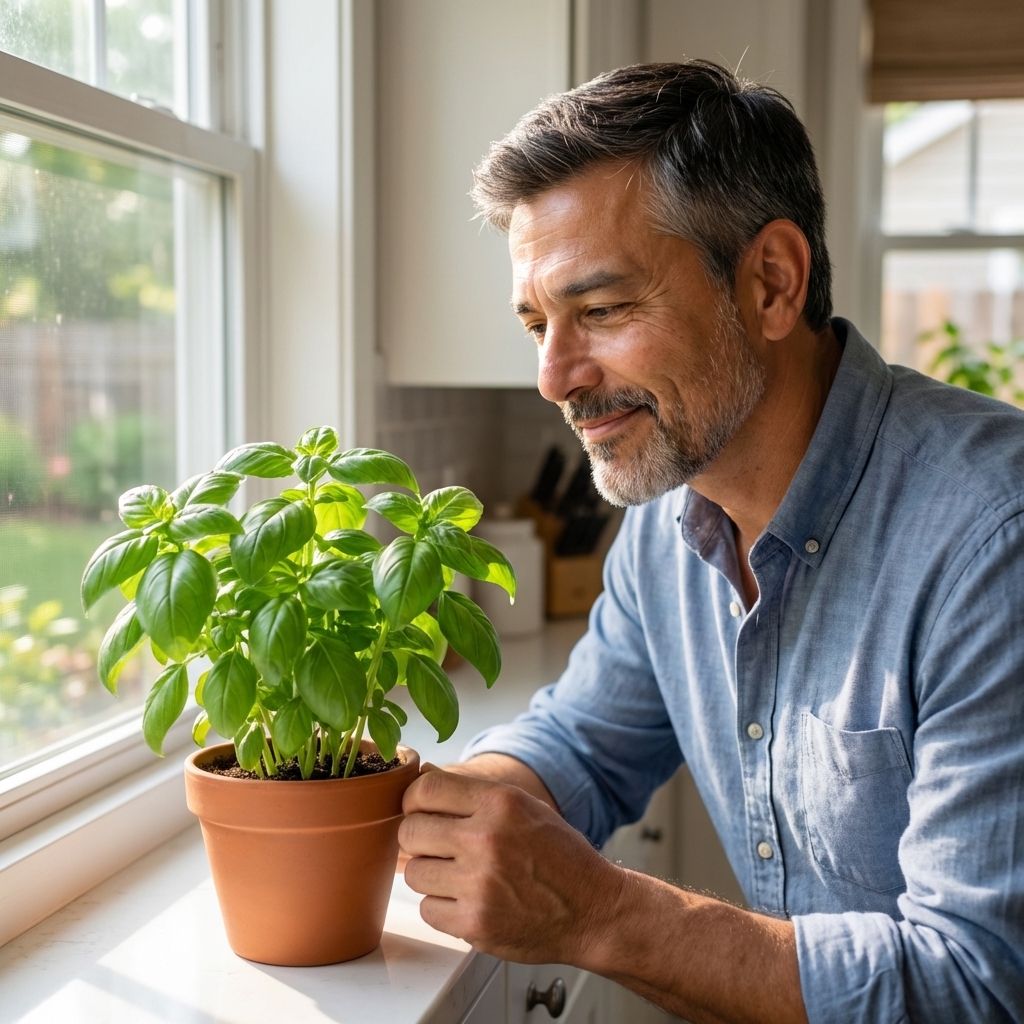
Best basil varieties for indoors
Many common culinary basils can be grown inside, but a few types handle containers and frequent harvesting especially well. If you are buying seed, start with one of these.
- Genovese basil: Classic Italian basil for pesto and pasta. Big flavor, easy to pinch into a bushy plant. (Large-leaf types can be a little fussier indoors, so give them strong light.)
- Thai basil: Slightly tougher leaves, slower to wilt, and a bit more forgiving indoors. Great for stir-fries and soups.
- Lemon basil: Bright citrusy flavor and usually stays more compact. Nice if you want something different than standard pesto basil.
- Greek basil: A compact, small-leaf option that naturally stays bushier and is a great choice if your basil always wants to reach for the ceiling.
Light: the make-or-break factor
Basil wants strong light. Indoors, most problems that look like “watering issues” are really light issues. A sunny window can work, but for dependable, thick-stemmed basil (especially in winter or at higher latitudes), a grow light is often the difference between “surviving” and “actually cooking with it.”
Option A: Sunny window
Give basil 6+ hours of direct sun if possible. A south-facing window is usually best. East-facing can work in summer, but winter light through glass is often too weak for robust growth.
Tip: Rotate the pot a quarter turn every few days so the plant doesn’t lean hard toward the glass.
Option B: Grow light
If you want consistent basil in every season, a grow light is the simplest option. You do not need a fancy setup.
- How long: 12 to 16 hours per day
- How close: Start about 6 to 12 inches above the top leaves, then adjust based on the fixture. Weak lights often need to be closer; high-output LEDs may need more distance.
- Goal: Short stems, tight leaf spacing, deep green color
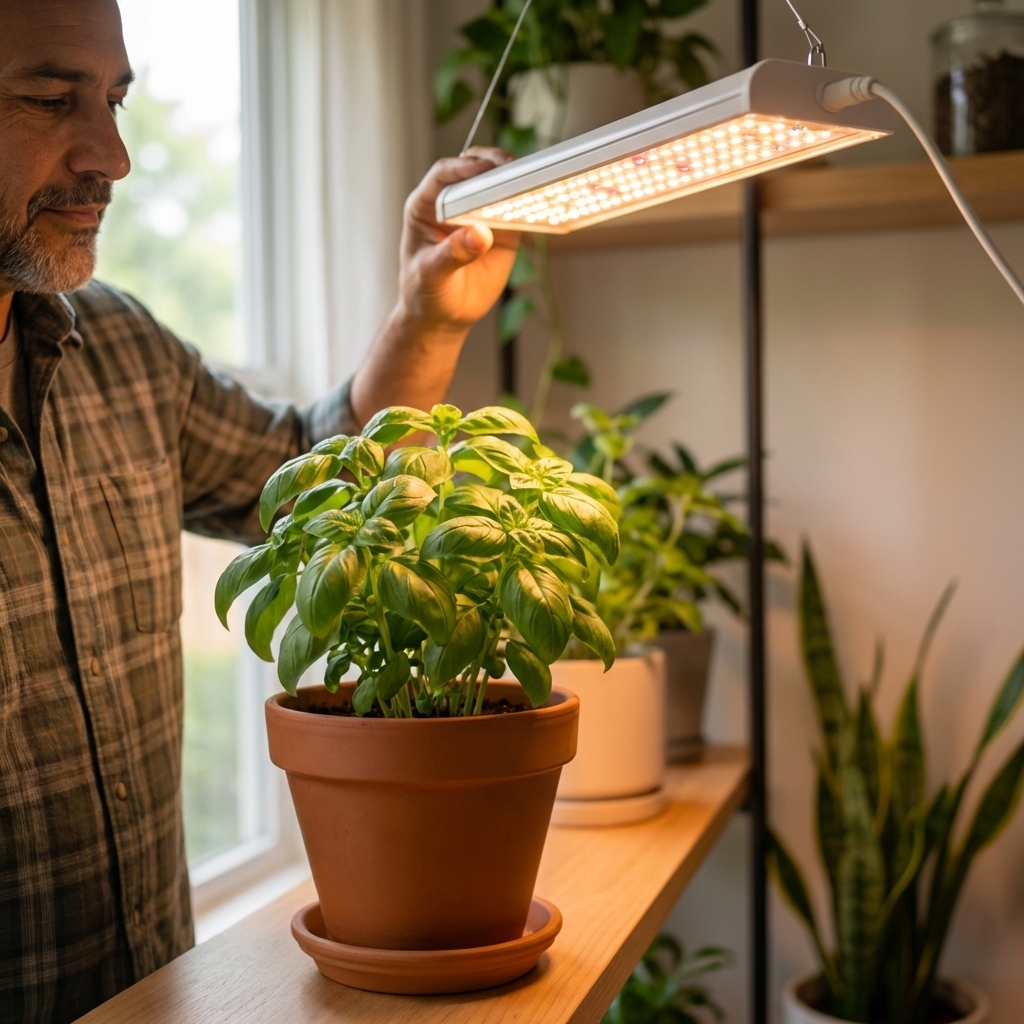
If your basil is stretching fast, move the light closer or increase hours. If the leaf edges look bleached or crispy, raise the light a bit.
Containers and soil that won’t fight you
Indoors, basil needs a potting mix that drains well and a container with a drainage hole. No drainage is the fastest route to yellow leaves and root problems.
Pot size
- One plant: A 6 to 8-inch pot is a comfortable starting point.
- Multiple seedlings together: Use a wider pot, but expect you may need to thin them so they don’t compete.
Soil
Use a quality indoor potting mix. If it feels heavy and stays wet for days, mix in perlite to improve drainage. Basil likes moisture, but it hates soggy roots.
Watering: keep it steady, not soaked
The goal is even moisture. Indoors, basil usually dies from too much water, not too little.
- Water when the top 1 inch of soil feels dry.
- Water thoroughly until it runs out the drainage hole, then empty the saucer.
- In winter, you will likely water less often because growth slows and light is weaker.
Quick reality check: If the pot still feels heavy and cool 2 or 3 days after watering, it is staying too wet. Improve light, reduce watering frequency, and make sure the pot drains freely.
Temperature and indoor air
Basil likes warmth. Aim for 65 to 80°F if you can. Growth slows a lot below about 60°F, and cold can cause yellowing and drop even if everything else is fine.
- Keep basil away from cold window glass at night in winter.
- Avoid placing it right next to heating vents or radiators, which can dry it out fast and stress the plant.
- Average home humidity is usually fine, but if your air is very dry, a small humidifier nearby can help more than misting ever will.
- Gentle airflow helps prevent mildew. A small fan across the room is enough.
Pinching for bushy growth
Basil naturally wants to grow one tall stem. Indoors, that usually turns into a spindly plant that flops over. Pinching forces branching and keeps it productive.
How to pinch
- When the plant has at least 3 or 4 sets of true leaves, pinch the main stem just above a leaf set.
- Two new branches will grow from that spot.
- Repeat every time new stems grow 4 to 6 inches long.
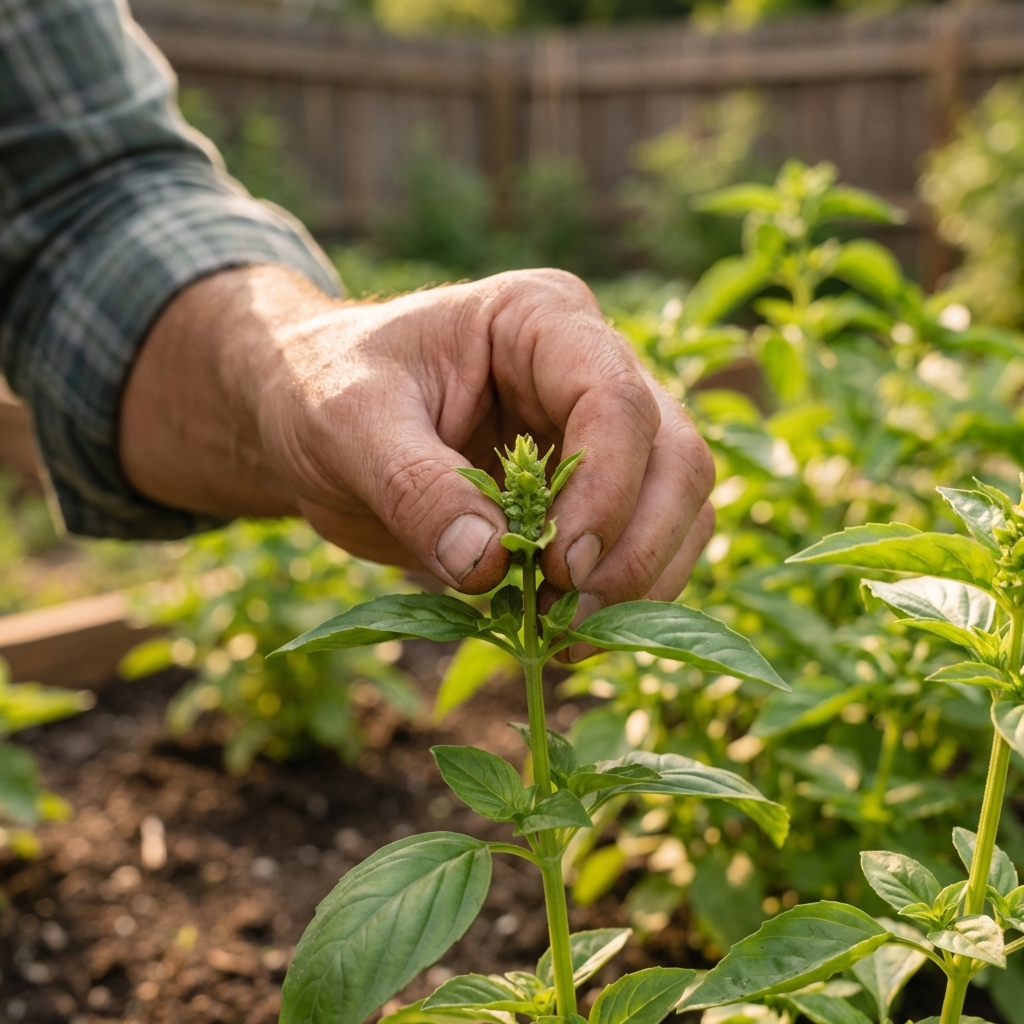
Remove flower buds immediately. Once basil starts flowering, leaf production slows and flavor can turn stronger or more bitter. Indoors, flowering is usually driven by age and genetics, plus stress from low light, uneven watering, or sudden changes in conditions.
Harvesting without slowing the plant down
Harvesting is basically pinching with a purpose. Done right, it makes the plant bushier.
- Harvest by cutting stems above a leaf node, not by stripping random leaves.
- Try not to take more than one-third of the plant at a time.
- Harvest often. Regular cutting keeps basil in grow mode.
If you only need a few leaves, take them from multiple stems rather than denuding one branch.
Feeding indoor basil
In a pot, nutrients run out. Basil that looks pale even with good light may simply be hungry.
- Use a balanced liquid fertilizer at half strength every 2 to 4 weeks during active growth.
- If growth slows in winter due to low light, reduce feeding.
Over-fertilizing can make basil soft and weak, so when in doubt, feed lighter and focus on improving light first.
Grocery store basil rescue
Those lush grocery store basil pots look like a deal, but they are usually dozens of seedlings crammed into one container. Indoors, that overcrowding declines fast unless you intervene.
- Split it: Slide the root ball out and gently tease it into 3 or 4 smaller clumps.
- Repot: Plant each clump in its own pot with drainage and fresh potting mix.
- Reset the plant: Pinch the tops lightly so it branches instead of racing upward.
- Give it a week: Keep light strong and watering careful while it recovers.
Common indoor pests
Indoor basil is not doomed to bugs, but a few pests show up often. The good news: if you catch them early, they are very manageable.
Fungus gnats
What you see: Tiny black flies hovering near the soil, especially after watering. Usually a sign the mix is staying too wet.
- Let the top 1 inch dry between waterings.
- Use yellow sticky traps to catch adults.
- If they persist, top-dress with a thin layer of sand or use BTI (mosquito bits) in your watering can.
Spider mites
What you see: Fine webbing, speckled or dusty-looking leaves, especially in dry air.
- Rinse the plant thoroughly (including undersides of leaves).
- Follow with insecticidal soap, repeating every 5 to 7 days for a few rounds.
- Move the plant away from heating vents and consider boosting humidity slightly.
Aphids
What you see: Clusters of soft green or black insects on new growth, sometimes sticky residue.
- Rinse them off with a strong spray of water.
- Use insecticidal soap if they return.
Why basil turns yellow indoors
Yellow leaves are common indoors, and the cause is usually one of these issues.
1) Overwatering and poor drainage
Signs: Yellowing lower leaves, limp stems, soil stays wet for days, occasional musty smell.
- Let the top 1 inch dry before watering again.
- Make sure the pot has a drainage hole and the saucer is emptied.
- Move the plant to brighter light so it uses water faster.
- If the mix is soggy and roots look brown or slimy, repot into fresh, slightly damp potting mix.
2) Not enough light
Signs: Pale green color, slow growth, yellowing plus long, weak stems.
- Add a grow light or move to the brightest window available.
- Extend day length to 12 to 16 hours if using LEDs.
3) Nutrient deficiency
Signs: Overall pale color, older leaves yellow first, growth is thin even with decent light.
- Feed with a balanced liquid fertilizer at half strength.
- If the plant has been in the same pot for months, refresh the top few inches of mix or repot.
4) Cold drafts
Signs: Sudden leaf drop or yellowing after a cold night near a window.
- Keep basil in the 65 to 80°F range when possible.
- Pull it a few inches back from cold glass at night.
Why basil gets leggy
Leggy basil is the indoor classic: long stems, big gaps between leaves, and a plant that can’t hold itself up.
Main causes
- Weak light: the plant stretches to find sun.
- Not pinched: one tall stem takes over.
- Too warm with too little light: fast stretching with poor structure.
Fix it
- Increase light intensity. Add a grow light if needed.
- Pinch the top growth back to just above a leaf node to force branching.
- If the plant is extremely stretched, take healthy cuttings, root them in water, and restart with compact growth.
Starting from seed
If you want a steady supply, seed is cheap and surprisingly easy indoors.
- Germination: Basil likes warmth. Aim for about 70 to 80°F for best sprouting.
- Light: Once it sprouts, give strong light immediately so seedlings do not stretch.
- Thin early: If multiple seedlings come up in one spot, thin to avoid a crowded tangle of weak stems.
Keeping basil productive for months
Indoor basil is at its best when you treat it like a rotating crop, not a forever houseplant.
- Start new plants every 6 to 10 weeks (or whenever your current plant gets woody, leggy, or tired) from seed or cuttings so you always have a fresh, vigorous one coming up.
- Do not overcrowd a pot. Basil declines fast indoors when too many stems compete for light and water.
- Keep airflow gentle to discourage mildew.

Quick indoor basil checklist
- Light: 6+ hours sun or 12 to 16 hours under a grow light
- Pot: drainage hole required
- Water: when top 1 inch is dry, never let it sit in a full saucer
- Pinch: early and often, remove flower buds
- Harvest: cut stems above a node, do not strip a plant bare
- Feed: half-strength fertilizer every 2 to 4 weeks during active growth
- Air: avoid cold drafts and heating vents
If you get the light and pinching right, basil indoors goes from barely surviving to something you can actually cook with every week.