How to Get Rid of Voles in Your Yard

Jose Brito
I’m Jose Britto, the writer behind The Country Store Farm Website. I share practical, down-to-earth gardening advice for home growers—whether you’re starting your first raised bed, troubleshooting pests, improving soil, or figuring out what to plant next. My focus is simple: clear tips you can actually use, realistic expectations, and methods that work in real backyards (not just in perfect conditions). If you like straightforward guidance and learning as you go, you’re in the right place.
Voles are one of those pests you often do not notice until something you planted starts failing for no obvious reason. A seedling wilts overnight. A young fruit tree looks fine in fall and then leafs out weak in spring. You tug on a plant and it lifts like it never rooted.
The good news is vole control is very doable once you stop treating them like moles. Voles are rodents that live and feed at ground level. If you remove cover, protect your plants, and trap the right way, you can get your yard back under control.

Voles vs. moles vs. mice
Most frustration comes from misidentifying the pest. Here is the quick, practical breakdown.
What voles are
- Small rodents sometimes called meadow mice.
- Live in shallow burrows and travel in surface runways under grass, mulch, or snow.
- Damage plants by chewing roots, tubers, stems, and bark.
How voles differ from moles
- Moles primarily eat insects, grubs, earthworms, and other soil invertebrates, not plants.
- Moles make raised tunnels and mounds of soil in the lawn.
- If you see volcano-like piles or ridges that heave the turf, that is usually a mole problem (or gophers in some areas), not a vole problem.
How voles differ from mice
- Field mice can enter homes and sheds more often, while voles usually stay outdoors.
- Voles are stockier with a shorter tail and smaller ears that can look partially hidden in the fur.
- In the yard, the big clue is well-worn runways through grass or mulch leading to plant damage.
If you are not sure, focus on the signs in the next section. The damage pattern tells the truth even when you never see the animal.
Signs you have voles
1) Surface runways
This is the classic vole sign. You will see narrow paths where the grass is flattened or clipped close to the soil. In mulched beds, the runway looks like a clean little trench through the mulch.
- Runways are often about 1 to 2 inches wide.
- You may see small holes along the runway that go down into shallow burrows.
2) Chewed roots, bulbs, and crowns
Voles love underground food. If plants suddenly collapse, check the base. You may find the roots gnawed off or the crown chewed.
- Common targets: hostas, strawberries, beans and peas at the base, perennials, bulbs, potatoes, sweet potatoes, carrots.
- Raised beds are not automatically safe. Mulch and dense groundcover can still hide runways.
3) Bark gnawing and girdling
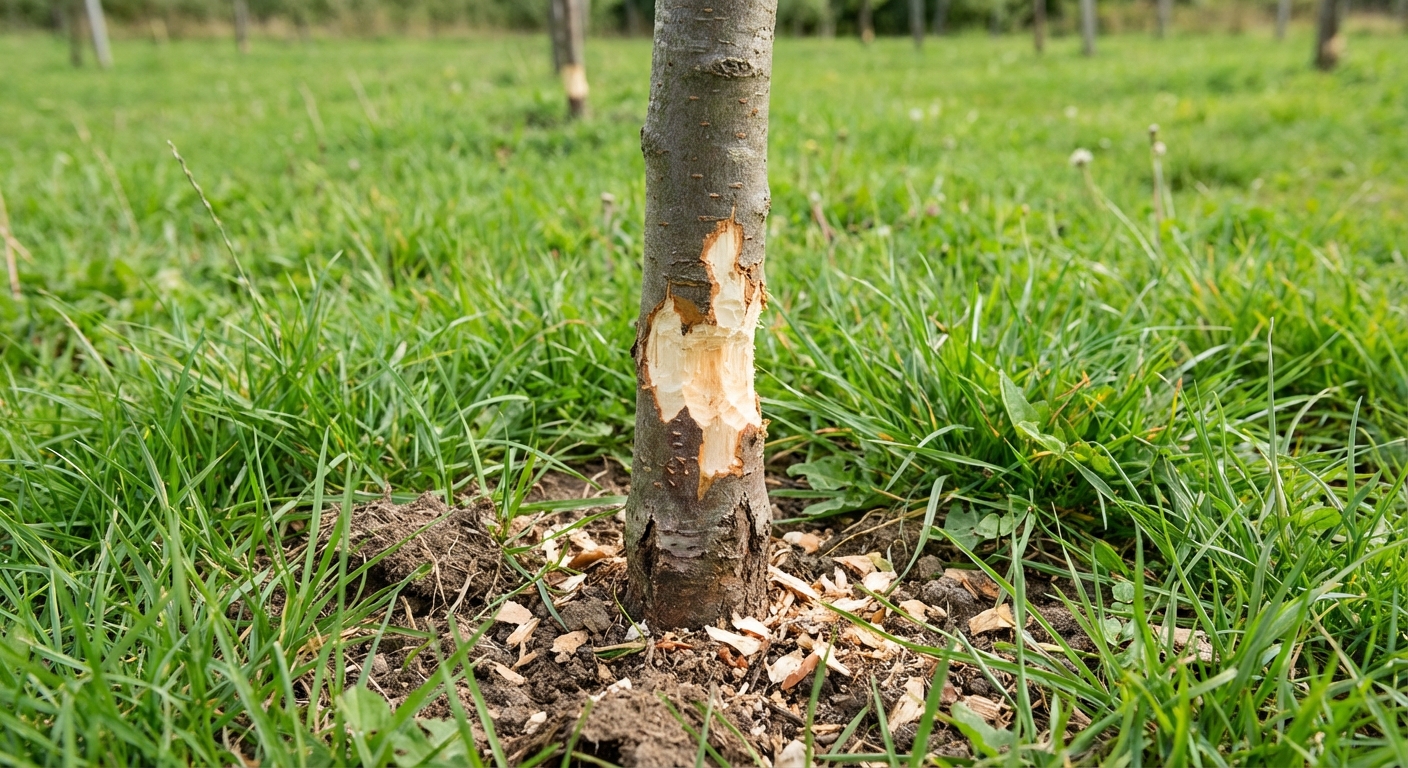
In fall and winter, voles often switch to bark, especially when snow or tall grass gives them cover. They chew the bark at the base of young trees and shrubs. If they chew all the way around, it is called girdling, and the tree may die because it cannot move water and nutrients properly.
- Look for ragged tooth marks close to the soil line.
- Damage may be hidden under mulch, weeds, guards that are too tight, or snow.
Seasonal tip: Some of the worst damage happens under winter snow cover, when voles can feed safely out of sight.
Start with habitat changes
If you only trap but keep the yard perfect for voles, new ones move in. Habitat work is not glamorous, but it is what makes control stick.
Reduce cover
- Mow short, especially along fences, shed lines, brushy edges, and around garden beds.
- Weed and thin dense groundcovers near valuable plants.
- Rake out thick thatch in lawns where runways are forming.
- Keep mulch pulled back 3 to 6 inches from the base of trees and shrubs.
Clean up food and hiding spots
- Remove piles of boards, tarps, or debris sitting on the ground.
- Store firewood up off the ground if possible.
- Harvest fallen fruit and keep compost contained.
Watering and fertilizing reality check
A lush, overwatered, overfed yard can create thick cover and tender plant growth that attracts pests. You do not need to stress your plants, but aim for healthy instead of overgrown.
Natural deterrents that help
Deterrents work best as part of a plan, not as a one-and-done solution. Think of them as pressure, not a magic switch.
Encourage predators
- Owls, hawks, foxes, and snakes all hunt voles.
- Cats may catch voles, but outdoor cats can also impact songbirds and other wildlife. I do not recommend getting a cat for vole control.
- If you have the space, an owl box can help in rural and semi-rural areas.
- Avoid using rodenticides. They can poison predators that eat affected rodents.
Castor oil repellents
Castor oil products are more commonly marketed for moles, and evidence for consistent vole repellency is limited. Some people see short-term disruption, others see no change. If you try it:
- Apply after mowing and water it in as directed.
- Reapply after heavy rain.
- Use it to push activity away from high-value areas while you trap.
What to be cautious with
- Ultrasonic devices are inconsistent outdoors.
- Homemade poisons and unapproved baits can harm pets, wildlife, and children. Skip them.
Trapping voles
If you want the most consistent results without risking pets and wildlife, trapping is the workhorse method. The keys are: place traps on active runways, use enough traps, and check them daily.
Best times to trap: late fall and early spring are often the most efficient, before populations spike and while food cover is changing. That said, trap whenever you find fresh damage.
Step 1: Find active runways
Pick a few runways and do a quick test.
- Flatten a short section of runway with your shoe or place a light piece of cardboard over it.
- Come back in 24 hours. If it is reopened or disturbed, that runway is active.
Step 2: Choose a trap
- Mouse snap traps work very well for voles when placed correctly.
- Vole-specific scissor traps can also be effective in runways and burrow openings.
- Live traps are usually less practical. Voles stress easily, and relocation is often restricted or not humane in practice.
Step 3: Set traps correctly
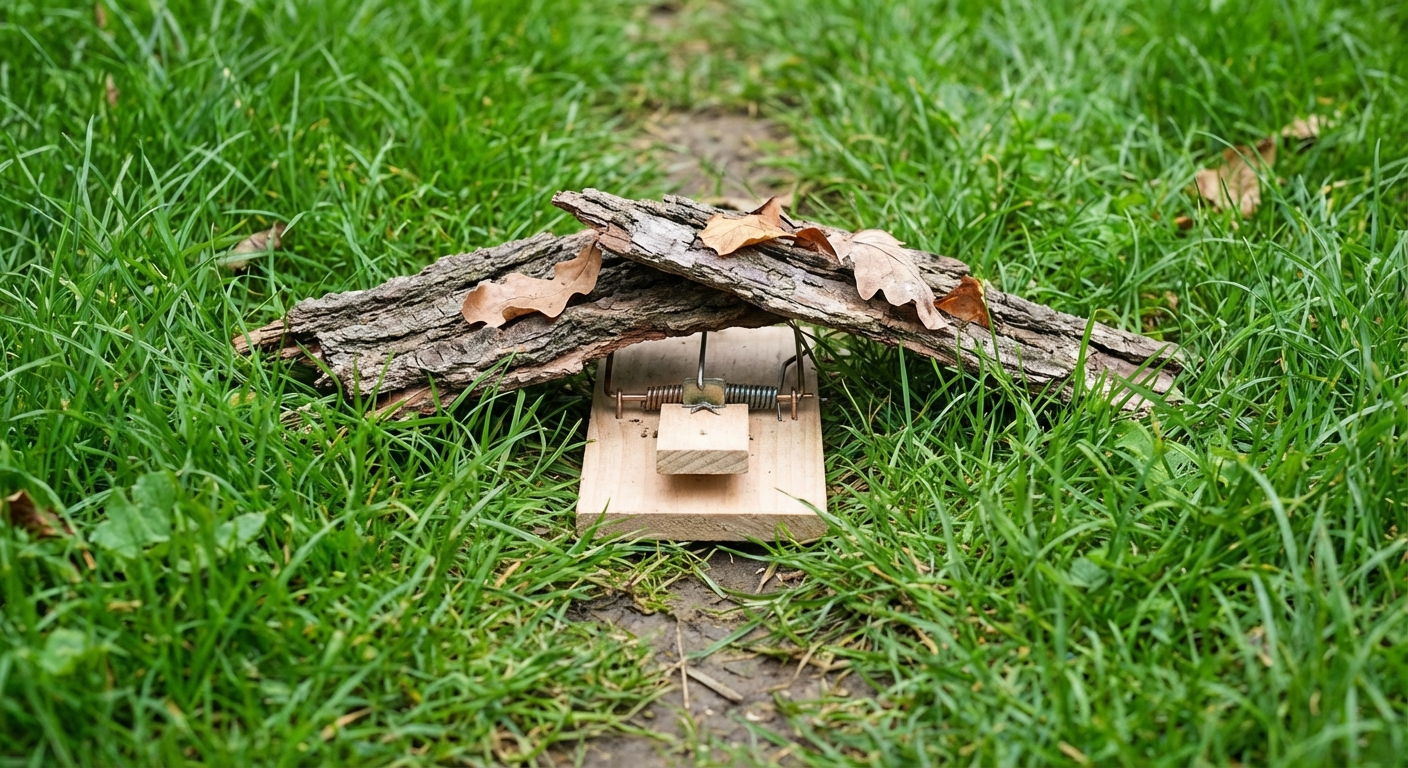
- Place traps perpendicular to the runway so the trigger sits right in the travel path.
- Use two traps back-to-back in a runway if pressure is high.
- Lightly cover with a bucket, tote, or landscape fabric to keep out birds and pets while keeping the runway feel. Leave gaps so voles still enter.
Step 4: Bait (optional)
In active runways, bait is often not necessary. If you do bait, keep it small and plant-based first, since voles are mostly herbivores:
- Apple slice
- Oats
- Peanut butter (tiny smear) can work, but it is not always the top choice for voles
Step 5: Keep at it
- Check traps daily.
- Reset and move traps if nothing happens in 2 to 3 days on a “maybe” runway.
- Continue for at least a week after activity stops, then keep a couple of traps ready for quick response.
Safety and cleanup
- Wear gloves when handling traps or carcasses.
- Bag and dispose of carcasses according to local guidelines. Wash hands and sanitize reusable tools.
- If kids or pets use the area, always cover traps securely and place them where they cannot be reached.
Protect garden beds
Voles love the exact conditions many gardeners create: thick mulch, steady watering, and dense plantings. You can still garden that way, but you need a few guardrails.
Use hardware cloth where it counts
- For new raised beds, line the bottom with 1/4-inch hardware cloth before adding soil. This blocks entry from below.
- For beds already built, consider protecting the most vulnerable plants with hardware cloth cylinders or baskets around root zones when transplanting.
- For bulbs and small high-value plants, hardware cloth baskets can prevent underground chewing.
Be smart with mulch
- Keep mulch thinner near seedlings and crowns.
- Do not pile mulch against stems.
- If voles are active, temporarily reduce mulch and keep aisles clean to remove hiding spots.
Row covers and low tunnels
Row cover can protect from insects but can also hide vole activity. If you use it, check edges and look for runways under the fabric every few days.
Protect young trees and shrubs
If you only do one thing, do this. Voles can kill a young tree by girdling it, often under snow where you do not notice until it is too late.
Install trunk guards the right way
- Use a 1/4-inch hardware cloth wrap for the most reliable protection.
- Make it a cylinder with a little space between the mesh and the bark.
- Bury the bottom edge 1 to 2 inches into the soil to prevent voles from slipping underneath.
- Extend the guard 12 to 18 inches high, and higher in areas with deep snow.
Clear a no-cover ring
- Keep a bare soil or short grass ring around trunks.
- Pull mulch back and remove weeds.
Check in early spring
As soon as snow melts, inspect the trunk base. Early discovery gives you a chance to respond before decline gets severe.

What about poison baits?
I avoid recommending rodenticides for most home yards. Besides the risk to pets and kids, poisoned voles can be eaten by owls, hawks, and other helpful predators. That secondary poisoning is a real problem.
If your vole issue is severe and you are considering bait products, it is worth calling a licensed professional and asking specifically about pet-safe placement, local regulations, and non-target risk.
When to call a pro
Most homeowners can handle vole control with habitat work, guards, and trapping. Bring in help if:
- You have repeated tree girdling or valuable orchard trees at risk.
- The problem covers a large property or multiple neighboring edges you cannot realistically manage.
- You cannot trap safely because of kids, dogs, or free-roaming pets.
- You have tried trapping correctly on active runways for 2 weeks and activity is still high.
A simple plan that works
If you are feeling overwhelmed, do it in this order:
- Step 1: Confirm it is voles by locating runways and checking for chewing on roots or bark.
- Step 2: Remove cover. Mow, weed, thin, and pull mulch back from trunks and crowns.
- Step 3: Trap on active runways for 7 to 14 days. Use enough traps to make a dent. Late fall and early spring are prime windows, but do not wait if damage is happening now.
- Step 4: Protect what you cannot replace. Hardware cloth on young trees, and consider bed bottom protection and baskets for bulbs or prized plants.
- Step 5: Stay ready. Voles come and go with weather, food, nearby habitat, and winter snow cover.
Once you break the “safe runway” system and remove food access, vole problems usually shrink fast. The earlier you act, the less damage you will be trying to undo later.
Quick FAQ
Do voles make dirt mounds?
Usually no. Raised ridges and mounds are more typical of moles. In some regions, gophers can also make obvious mounds. Voles mostly leave surface runways and small openings.
Why did my plants die even though I watered?
Voles can chew the roots or crown so the plant cannot take up water. The soil can be moist and the plant still collapses.
Will chickens get rid of voles?
Chickens can reduce cover and may catch some, but they rarely solve a vole problem alone. Habitat changes plus trapping is more dependable.