How to Get Rid of Tomato Hornworms

Jose Brito
I’m Jose Britto, the writer behind The Country Store Farm Website. I share practical, down-to-earth gardening advice for home growers—whether you’re starting your first raised bed, troubleshooting pests, improving soil, or figuring out what to plant next. My focus is simple: clear tips you can actually use, realistic expectations, and methods that work in real backyards (not just in perfect conditions). If you like straightforward guidance and learning as you go, you’re in the right place.
Tomato hornworms can defoliate a healthy tomato plant fast. One day your plant looks fine. The next, you are staring at bare stems, chewed leaves, and half-eaten green fruit.
The good news is hornworms are one of the easiest tomato pests to control once you know what to look for. Below I will walk you through how to identify them (and tell them apart from tobacco hornworms), the damage they cause, the fastest removal methods, when to leave them alone because of beneficial wasps, what to do after damage, and what to do now so next season is less of a fight.
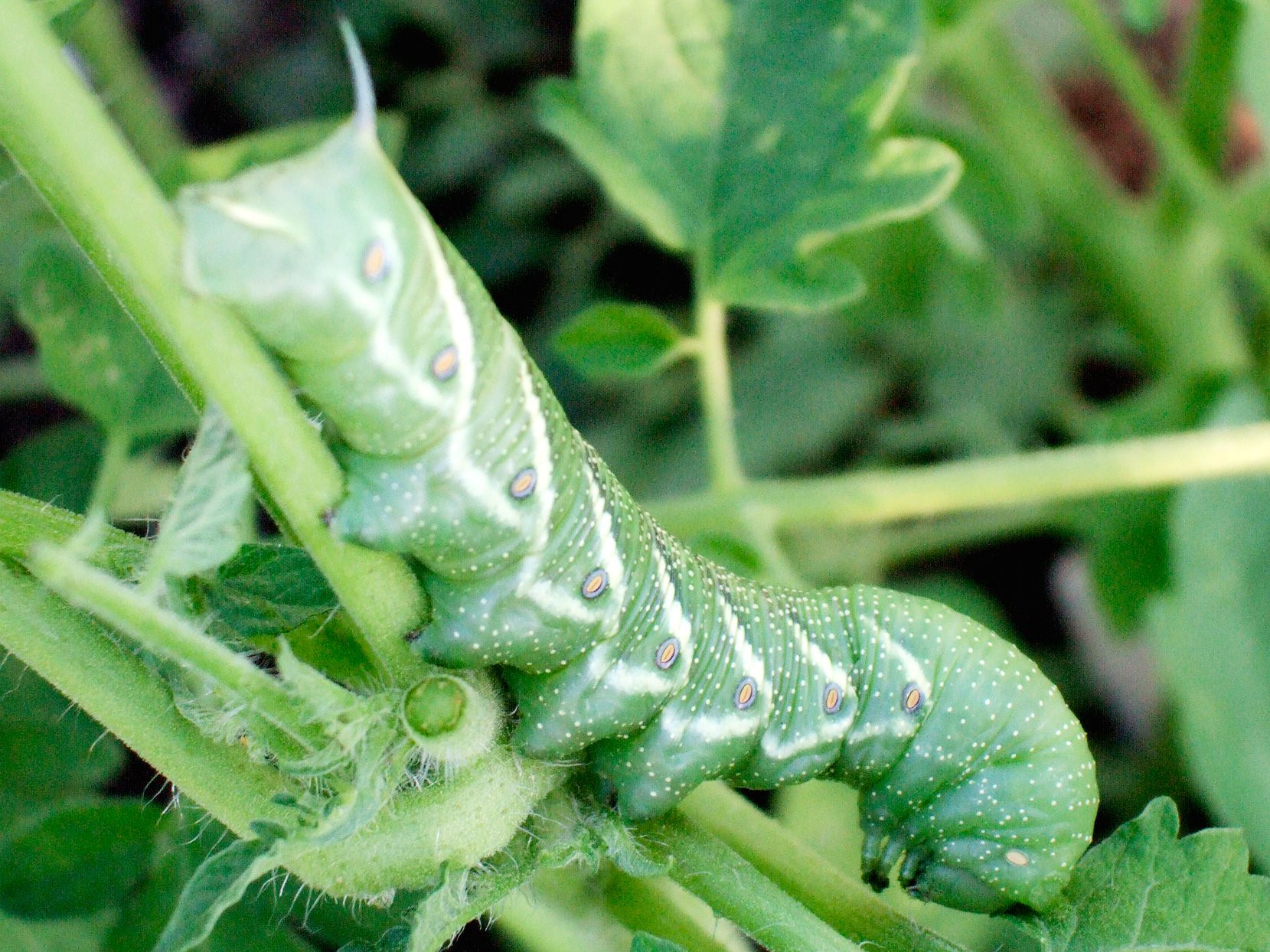
What tomato hornworms are
Hornworms are the caterpillar stage of large moths called sphinx moths, also known as hawk moths. The moths lay eggs on tomato-family plants, and the caterpillars hatch and start feeding fast.
In many areas they show up most in mid to late summer, but timing can vary by climate and how many generations you get in a season. If you grow tomatoes, chances are you will eventually run into them. Other nightshades can host them too, including eggplant, peppers, and potatoes.
Tomato vs tobacco hornworm
Gardeners usually lump them together because the control is the same, but there are two common culprits:
- Tomato hornworm (Manduca quinquemaculata)
- Tobacco hornworm (Manduca sexta)
How to tell them apart
- Tomato hornworm: white V-shaped marks (chevrons) on the sides and a dark horn.
- Tobacco hornworm: diagonal white stripes on the sides and typically a red horn.
In real life, you might not get a perfect look because they blend in so well. If you are not sure which one you have, do not stress. Your control steps are the same.
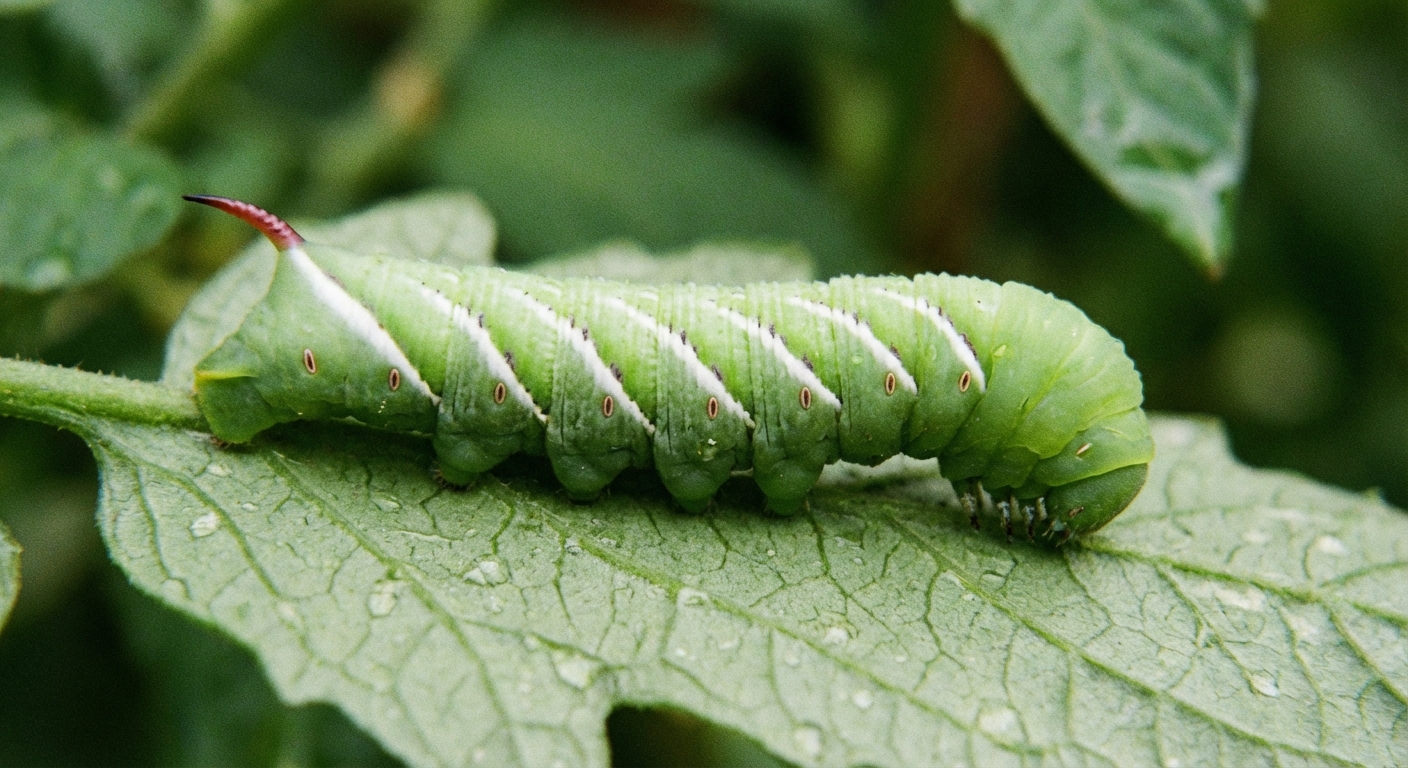
Signs you have hornworms
Hornworms are masters of camouflage. Most people do not see the hornworm first. They see the damage.
Common hornworm damage
- Sudden defoliation: leaves disappear quickly, often starting near the top of the plant.
- Chewed stems and leaf ribs: you may see bare, stripped stems where leaves used to be.
- Damage to green tomatoes: large gouges or chunks missing, usually on fruit still on the vine.
- Black droppings: small, dark pellets (frass) on leaves, on the ground, or on lower foliage. This is one of the easiest clues.
If you see leaf loss plus black droppings, start hunting right away. One big caterpillar can do a lot of damage in a short time.
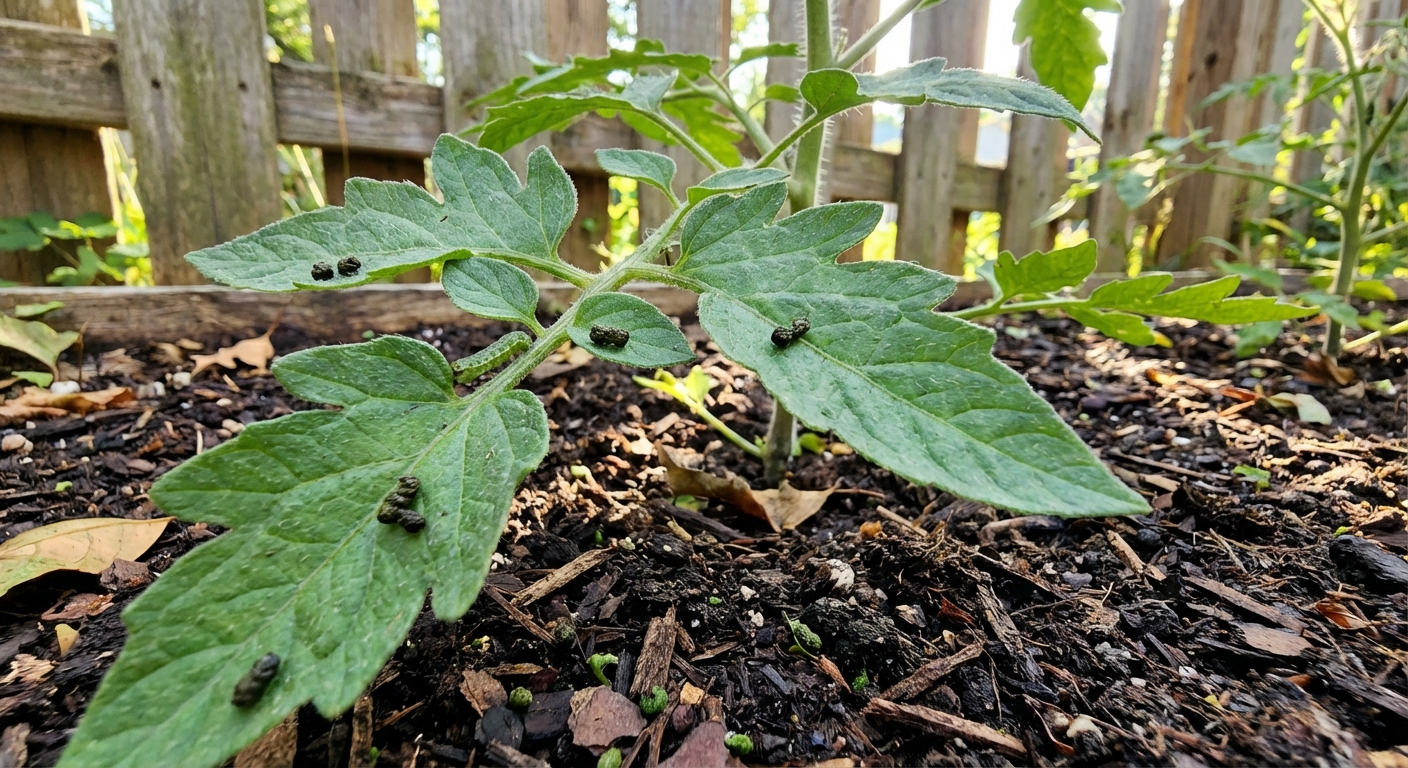
Check for eggs first
If you catch hornworms early, you can stop the problem before it becomes a horror show.
- What eggs look like: tiny, pale green to whitish spheres.
- Where to look: leaf undersides, the upper canopy, and near fresh growth.
- What to do: pinch them off, wipe them with your finger, or remove the whole small leaf if needed.
This one habit can save you a lot of handpicking later.
Fastest fix: handpick
If you only have a few plants, handpicking is the quickest, most effective solution. No waiting, no spraying, no guesswork.
How to find hornworms quickly
- Check at dusk or early morning: they are easier to spot when light is softer and they are actively feeding.
- Start where damage is freshest: look at the top of the plant and around missing leaf clusters.
- Look for droppings: follow the black pellets upward. The hornworm is usually above them.
- Flip leaves and check stems: they often rest along the main stem or under leaf branches.
How to remove them
- Wear gloves if you prefer.
- Grab the caterpillar just behind the head and pull it off the stem.
- Drop into a container of soapy water if you want a sure, quick end.
- No chickens? Seal them in a bag and toss them, or drop them into a lidded container for disposal.
- If you keep chickens, hornworms are usually a welcome snack.
Tip: A cheap UV flashlight at night can make hornworms easier to spot because they often fluoresce under blacklight. It is not required, but it can turn a frustrating search into a quick one.
Before you kill it: check for wasp cocoons
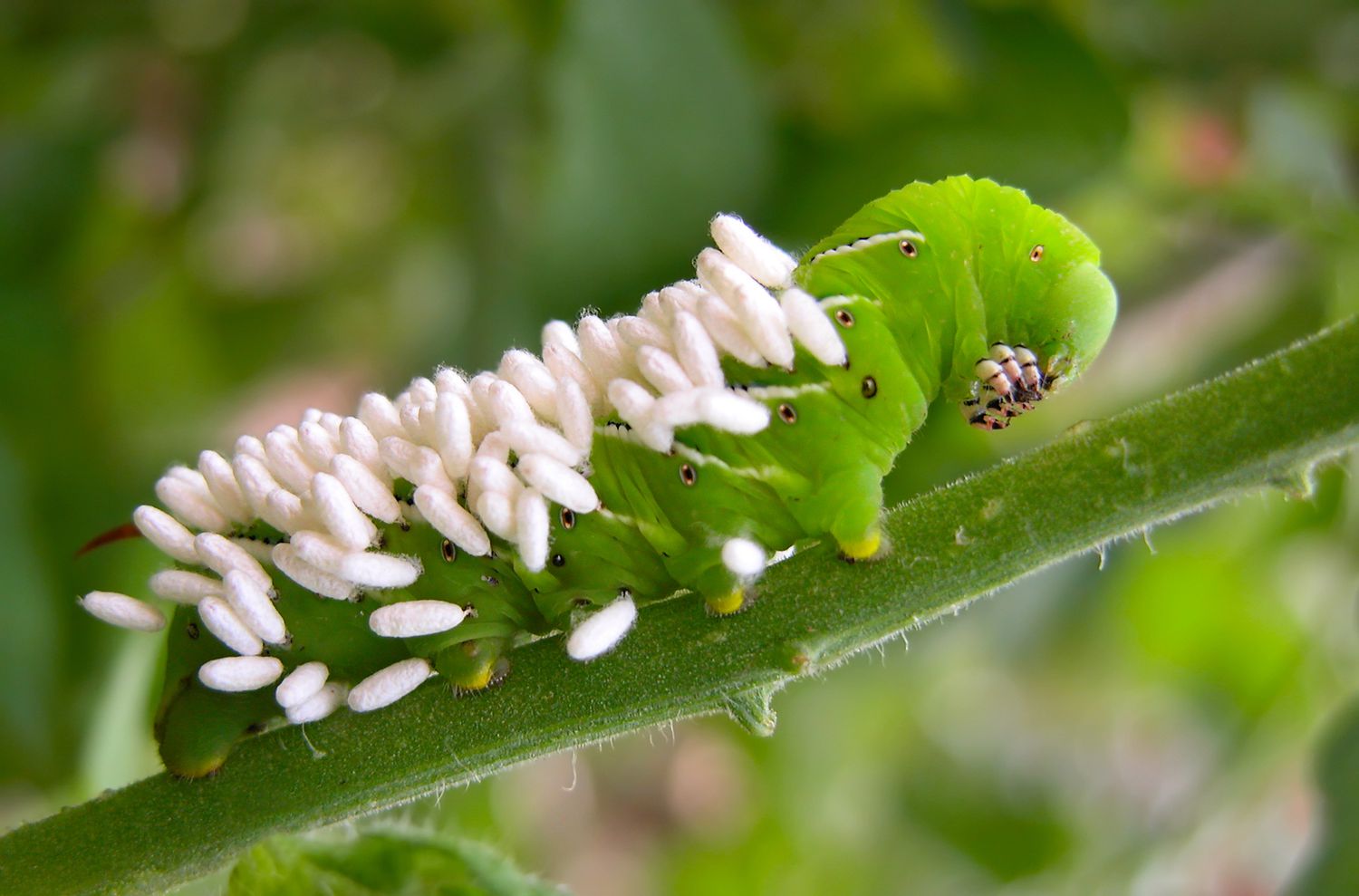
Sometimes you will find a hornworm covered in what looks like tiny white rice grains stuck to its back. Those are braconid wasp cocoons. These are beneficial parasitoid wasps that lay eggs on hornworms. The larvae feed on the hornworm and eventually kill it.
What to do if you see white cocoons
- Do not crush or drown that hornworm. You would also be killing the beneficial wasps.
- Leave it on the plant or move it to a “decoy” tomato plant. Parasitized hornworms may keep feeding for a bit, but they often slow down as the parasitoids develop, and they will not go on to become breeding moths.
- Avoid broad insecticides that could harm beneficial insects.
In a backyard garden, braconid wasps are one of the best long-term allies you can have against hornworms.
BT spray
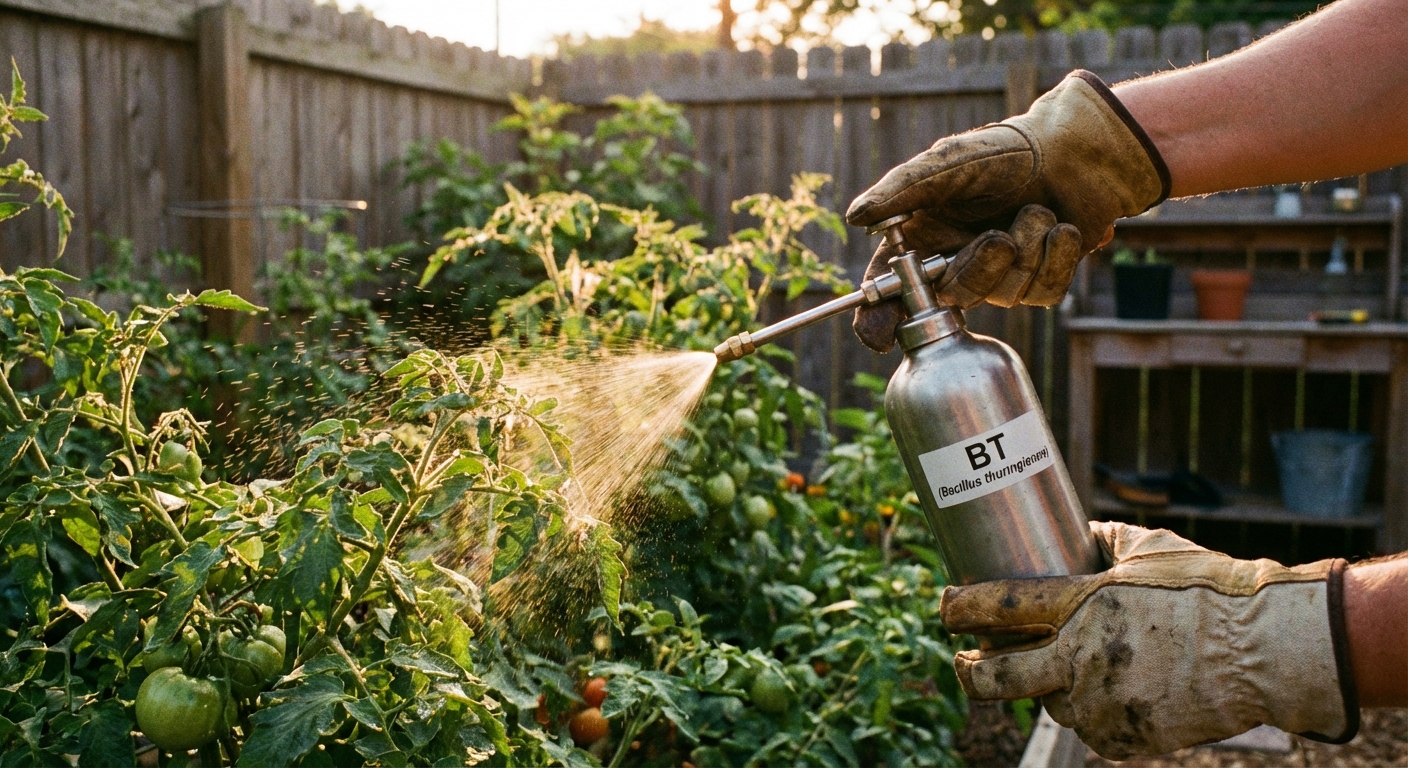
If handpicking is not enough, or you have a lot of plants, BT (Bacillus thuringiensis var. kurstaki) is my go-to spray for hornworms and other leaf-eating caterpillars.
BT is a naturally occurring soil bacterium. Once a caterpillar eats treated foliage, it stops feeding and dies within a couple of days. BT does not work well on pests that do not chew leaves, and it is most effective when used correctly.
How to apply BT
- Spray in the evening to reduce breakdown from sun and to avoid spraying when pollinators are most active.
- Coat leaves thoroughly, especially the undersides and the upper growth where hornworms feed.
- Reapply after rain or heavy overhead watering, since it washes off.
- Follow the label for mixing and timing. Different products vary.
Important note on non-target caterpillars
BT is selective, but it can still harm butterfly and moth caterpillars if they eat treated leaves. Avoid spraying it on plants you are using as host plants for butterflies, and keep your spray targeted to the tomatoes and nearby nightshades that are actually being hit.
What to expect
- Hornworms usually stop feeding fairly quickly after ingesting BT.
- You might still see them for a day or two. That does not mean it failed.
- BT works best on smaller caterpillars, so early detection matters.
If you are choosing between options, BT is usually the most effective spray choice for hornworms without resorting to harsh chemicals.
Companion planting and deterrents
Companion planting will not magically stop hornworms, but it can help reduce pressure and make your tomato bed more resilient. Think of it as stacking small advantages, not relying on one secret plant.
Plants that can help
- Basil: popular in tomato beds and may help confuse pests by scent.
- Marigolds: can help with overall garden diversity and may deter some insects.
- Dill, fennel, cilantro (let some flower): attract beneficial insects that help control pests.
- Nasturtiums: can act as a distraction plant for some pests and adds habitat diversity.
What matters most
- More flowering plants nearby means more beneficial insects and better pest balance.
- Spacing and airflow keeps plants healthier so they recover faster after damage.
- Regular scouting beats any deterrent plant. A quick check a few times a week prevents surprise defoliation.

Other helpers
Hornworms have enemies, and your job is to make your garden a place those helpers want to stay.
- Braconid wasps: the big one for hornworms.
- Paper wasps: can hunt caterpillars to feed their young.
- Birds: some birds will pick off caterpillars, especially if you avoid heavy pesticide use.
- Chickens: if you have them, supervised garden time can reduce pests fast.
Broad-spectrum insecticides can knock back these helpers and often lead to more pest issues later. If you spray, use targeted options like BT and aim for timing that avoids beneficial activity.
Aftercare for chewed plants
If your tomato looks stripped, do not panic. Tomatoes are tougher than they look, and many will rebound if you remove the hornworms and give the plant a chance to recover.
- Water deeply and keep moisture consistent for the next week or two.
- Go easy on fertilizer: skip heavy nitrogen. If you feed at all, keep it light and balanced.
- Do not over-prune: leave whatever healthy foliage is left so the plant can photosynthesize.
- Support damaged stems: tie the plant up and protect it from wind while it pushes new growth.
- Keep scouting: once a plant is hit, you will often find more larvae soon after.
Prevention for next season
You cannot control every moth that flies into your yard, but you can make hornworms less likely to become a yearly disaster.
1) Rotate nightshades if you can
If you grow tomatoes in the same bed every year, it can be easier for pests to build up. Rotating tomatoes, peppers, eggplant, and potatoes to a different area can help break cycles.
2) Disturb soil at season end (where appropriate)
Hornworms pupate in the soil. In fall, after you pull tomato plants, lightly turning the top few inches can expose pupae to birds and weather. If you garden no-till, you can still reduce pupae by removing debris and using mulch strategically, just be consistent with scouting next year.
3) Clean up tomato debris
Remove old vines and fallen fruit. Composting is fine if your compost heats well, but do not leave a messy tomato patch overwintering.
4) Start scouting early
Once plants are growing fast, get in the habit of checking them a few times per week. Look for:
- fresh leaf chewing
- missing top growth
- black droppings
- eggs on leaf undersides and near fresh growth
5) Encourage beneficial insects
Plant a small strip or border of flowers and let some herbs bolt. The goal is a steady supply of nectar and habitat so helpers are already present when hornworms show up.
Quick checklist
- Look for black droppings and missing leaves.
- Check for eggs and remove them.
- Handpick hornworms first.
- Check for white braconid wasp cocoons and leave those hornworms alone.
- Use BT in the evening and reapply after rain.
- Add flowers and flowering herbs nearby to support beneficial insects.
- Clean up beds at the end of the season and rotate if possible.
If you want the simplest do this today plan: go out at dusk, check leaf undersides for eggs, handpick what you can, then follow up with BT so you catch the smaller ones you missed.