How to Get Rid of Squirrels in the Attic

Jose Brito
I’m Jose Britto, the writer behind The Country Store Farm Website. I share practical, down-to-earth gardening advice for home growers—whether you’re starting your first raised bed, troubleshooting pests, improving soil, or figuring out what to plant next. My focus is simple: clear tips you can actually use, realistic expectations, and methods that work in real backyards (not just in perfect conditions). If you like straightforward guidance and learning as you go, you’re in the right place.
Squirrels in the attic can go from “what was that noise?” to real damage fast. They chew wood, shred insulation, and sometimes nest near wiring. The good news is you can remove them humanely and keep them out, as long as you do it in the right order.
This page walks you through what I recommend for typical homes: confirm they’re there, locate entry points, use one-way exits, consider live trapping only when it makes sense, and then seal everything up tight so you are not dealing with round two.
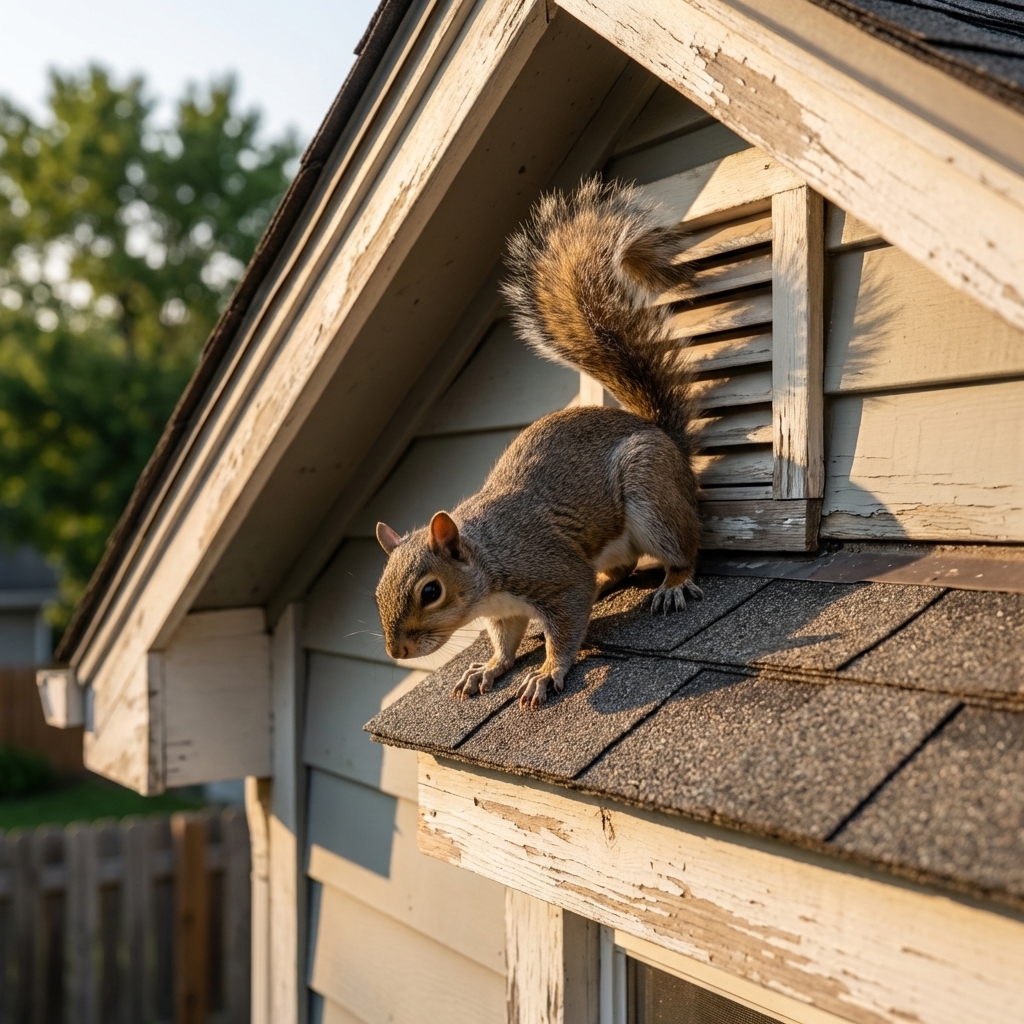
First, make sure it is actually squirrels
Different attic pests leave different clues. Squirrels are loud, active during the day, and often sound like running, thumping, or rolling marbles above the ceiling.
Common signs of squirrels in the attic
- Noise in daylight hours, especially early morning and late afternoon
- Scratching and sprinting across the ceiling or inside walls
- Chewed openings at roof edges, soffits, fascia boards, vents, or where utilities enter
- Insulation pulled apart and piled into a nest
- Droppings (often confused with rat droppings). Droppings alone are not a reliable ID, so use multiple signs.
- Staining or odor around entry points from urine and debris
If you’re hearing mostly at night, you might be dealing with raccoons (heavier, slower thuds) or rodents like rats and mice (lighter, more constant scratching). Timing matters because the removal method changes.
Safety note before you start
Attics are cramped and messy, and squirrels can bite if cornered. Nesting areas can also contain fleas, ticks, and contaminated dust. The disease risk for most homeowners is low, but basic precautions are still worth it.
- Wear gloves, long sleeves, eye protection, and an N95 or similar mask.
- Do not handle a squirrel with bare hands.
- If you see a squirrel acting confused, aggressive, or unusually tame, keep your distance and call animal control for guidance.
- Check local rules. Some areas restrict relocation or require specific handling.
The humane, effective order of operations
The biggest mistake people make is sealing holes first. That can trap squirrels inside, leading to desperate chewing, odor problems, or worse. Use this order instead.
- Confirm activity and locate entry points.
- Install a one-way exit on the primary entry point.
- Wait and verify they’re out before sealing.
- Seal and reinforce all gaps and weak spots.
- Trim branches and remove attractants so your roof is not an easy target again.
Avoid common mistakes: Do not use poison, glue traps, or snap traps for squirrels in an attic. These methods are inhumane, can be illegal, and often create a dead-animal odor problem inside your home.
Step 1: Find how they’re getting in
Squirrels usually enter where rooflines meet and materials flex or rot. Openings can be surprisingly small and then get chewed larger. As a rule of thumb, anything around 2 inches across (and certainly larger gaps) is worth treating as a potential entry point.
Quick check inside the attic
- Look for daylight coming through roof edges, corners, or vents.
- Look for nesting material, shredded insulation, and gnaw marks near rafters and corners.
- Try to pinpoint sound during daytime activity so you can focus your exterior search.
Where to check outside
- Soffits and fascia along roof edges, especially corners and returns
- Gable vents and roof vents that are cracked or poorly screened
- Chimney gaps and loose flashing
- Roof valleys where debris holds moisture and causes wood rot
- Tree branch access within jumping distance of the roof
- Utility lines and entry holes where cables go into the house
Quick ways to confirm the active hole
- Look for rub marks or greasy staining around the opening.
- Look for fresh wood chips or torn material below the spot.
- At dusk or early morning, watch quietly from a distance to see where they come and go.

Step 2: Use a one-way exclusion door
If you can identify the main entry point, a one-way exclusion door is usually the simplest and most humane fix. The squirrel can leave, but cannot get back in.
How to use one-way exclusion properly
- Install the device over the primary active hole. Do not install it “near” the hole.
- Seal every other gap you find first, except the one with the one-way door. If there are multiple open routes, they’ll just use another one.
- Leave it in place long enough to confirm activity stops. Many cases resolve in 2 to 7 days, but weather, food sources, and the number of animals can change the timeline.
How to verify they’re out
- Do a 48 to 72 hour quiet check. Listen during daytime hours for running and scratching.
- Use a simple tape test (light tape or a small strip of paper) across the entry edges to see if it gets disturbed.
- If you have one, aim a trail camera at the exit to confirm no returns.
- Before final sealing, do one last attic look for fresh debris or new droppings around the nest site.
Important: Avoid exclusion during peak baby season in your area. If there are dependent young in the attic, the mother may be locked out, and you may end up with a worse situation. If you suspect babies, skip ahead to the “babies” section below.
Step 3: Live trapping
Live trapping can work, but it is not my first choice. It requires daily checks, correct placement, and a plan for what you are legally allowed to do next. In many places, relocating wildlife is restricted or discouraged because it can spread disease and reduce survival.
When live trapping makes sense
- You can’t install a one-way door safely (steep roof, brittle siding, inaccessible entry).
- The squirrel is entering an interior space where you need immediate control.
- You’ve confirmed local rules for handling and release.
Tips for successful live trapping
- Use a properly sized live trap designed for squirrels.
- Place it along the travel path near the entry point, or on the roofline if safe and stable.
- Bait with peanut butter on bread, nuts, or slices of apple.
- Check traps at least once in the morning and once later in the day.
- Wear gloves when handling the trap and keep hands away from the cage bars.
Legal and ethical note: Release rules and approved distances vary widely. Before trapping, check with your local wildlife agency or animal control so you know what is allowed and what is recommended in your area.
If trapping turns into a repeat problem, that’s a sign the entry is still open or there are multiple holes you have not found yet.
Do deterrents work?
Deterrents can help push squirrels out and make an attic less appealing, but they rarely solve the problem by themselves. Think of them as support for exclusion, not a replacement for sealing.
Light and sound
- Bright work lights aimed into the nesting area can discourage staying.
- Talk radio at moderate volume can add enough disturbance to encourage exit.
- Ultrasonic devices are inconsistent. Some homeowners report success, many do not.
Smell-based repellents
Most strong-smell repellents have inconsistent results in attics. Some can also be unpleasant for you and may not be safe around pets or kids. If you use any repellent product, follow the label exactly and do not combine chemicals.
If you want a simple approach that is usually safe: light plus mild noise for a few days while your one-way door is installed.

What if there are babies in the attic?
This is where people get into trouble. If you block the mother out, the babies can’t leave, and you’ll be dealing with odor, flies, and a bigger cleanup. In many areas, squirrels often have two breeding seasons, typically late winter through spring and again in mid to late summer, depending on species and region.
Clues you might have a nest with young
- Persistent activity in one spot, especially near insulation piles
- Higher frequency chattering sounds
- Mother repeatedly entering and leaving on a schedule
If you strongly suspect babies and you’re not experienced, it’s smart to call a wildlife professional. Humane removal is still possible, but timing and technique matter.
Step 4: Seal the attic after you’re sure they’re out
Once the attic is quiet and you are confident squirrels are out, it’s time to seal and reinforce. This is the part that prevents repeat invasions.
Materials that hold up
- Hardware cloth (galvanized wire mesh) for vents and gaps
- Metal flashing for edges and corners that get chewed
- Exterior-grade screws rather than staples alone
- Wood repair for rotted soffit or fascia before covering it
Sealing checklist
- Cover gable vents with sturdy mesh from the inside or outside.
- Repair and reinforce soffit corners and roof returns.
- Seal utility entry holes with appropriate materials for the surface.
- Add or repair chimney caps and flashing where needed.
Do not rely on spray foam alone in areas squirrels can reach. If they want in, they’ll chew right through it.
Clean up and check for damage
After removal, plan on at least a basic cleanup. Squirrels leave droppings and nesting debris, and they can compress insulation so it no longer performs well.
What to look for
- Chewed wires or damaged junction boxes (call an electrician if you see this)
- Wet or matted insulation that should be removed and replaced
- Gnaw marks on rafters, ductwork, or stored items
- Droppings and urine staining around the nest site
Lightly mist droppings with a disinfectant before disturbing them to reduce dust, then bag debris securely. Avoid vacuuming droppings with a standard household vacuum or shop-vac, since it can spread particles. A HEPA-rated vacuum is a safer choice. Wash hands after, and launder work clothes separately.
If contamination is heavy, it may be worth hiring an attic cleanup crew.
How to keep squirrels off your roof long-term
Once squirrels learn your home is an option, they’ll test it again. Prevention is mostly about access and weak points.
- Trim branches back 6 to 10 feet from the roofline when possible.
- Secure garbage and keep outdoor pet food inside.
- Use a squirrel baffle on bird feeders if you feed birds.
- Inspect the roof edge after storms for loose soffit and lifted flashing.
- Reinforce vents with proper mesh, not plastic.
If a squirrel gets into your living space
It happens. If a squirrel ends up in a room, keep it simple.
- Close interior doors to contain it.
- Turn off ceiling fans and keep pets and kids out.
- Open an exterior door or window and give it a clear path out.
- If it won’t leave, or you can’t do this safely, call a wildlife professional.
When to call a professional
Some situations are worth paying for. A good wildlife control pro can identify hidden entry points, handle babies properly, and install exclusion hardware safely on steep roofs.
Call for help if:
- You can’t safely access the roof or the entry point.
- You suspect babies are present.
- You see chewed wiring or smell burning or electrical odor.
- The problem keeps returning after you tried sealing.
- You hear multiple animals or heavy movement suggesting more than one species.
When you hire someone, ask what exclusion hardware they use, whether they do a full perimeter inspection, and if they include repairs and sealing in the service.
Quick FAQ
How long does it take to get squirrels out of an attic?
With a one-way door and a clear main entry point, many cases resolve in a few days. Sometimes it takes closer to a week. The real time is often in finding every weak spot, verifying they’re out, and sealing correctly.
Will mothballs or ammonia drive squirrels out?
They’re unreliable and can create strong fumes in enclosed spaces. I don’t consider them a dependable, homeowner-friendly solution compared to exclusion and sealing.
Can I just close the hole at night?
No. Squirrels are active in the day, and you’re likely to trap one inside if you guess wrong. Use a one-way exit and confirm they’re out before sealing.
The simple plan that works
If you want the shortest version: find the main entry, install a one-way door, seal all other gaps, confirm the attic goes quiet for 48 to 72 hours, then permanently repair and reinforce the entry points. That is the humane approach that actually sticks.