How to Get Rid of Slugs and Snails in the Garden

Jose Brito
I’m Jose Britto, the writer behind The Country Store Farm Website. I share practical, down-to-earth gardening advice for home growers—whether you’re starting your first raised bed, troubleshooting pests, improving soil, or figuring out what to plant next. My focus is simple: clear tips you can actually use, realistic expectations, and methods that work in real backyards (not just in perfect conditions). If you like straightforward guidance and learning as you go, you’re in the right place.
Slugs and snails can wipe out seedlings overnight, chew holes through leafy greens, and turn ripening strawberries into a mess. The good news is you do not need harsh chemicals to get control. The best results come from a mix of cleanup, barriers, and targeted trapping or baiting, timed for when they are most active.
This guide covers the most reliable organic options: beer traps, copper barriers, diatomaceous earth, eggshell deterrents, companion planting strategies, safer slug baits, plus biological controls like beneficial nematodes and natural predators. I will also point out which plants they go after first and how to protect those favorites before the damage starts.
Know what you are dealing with
Slugs and snails are most active when it is cool and damp, usually at night, early morning, or on cloudy rainy days. They hide during the day under boards, mulch, dense groundcovers, pot rims, rocks, and thick weeds. They leave behind shiny slime trails and ragged holes, especially on tender leaves.
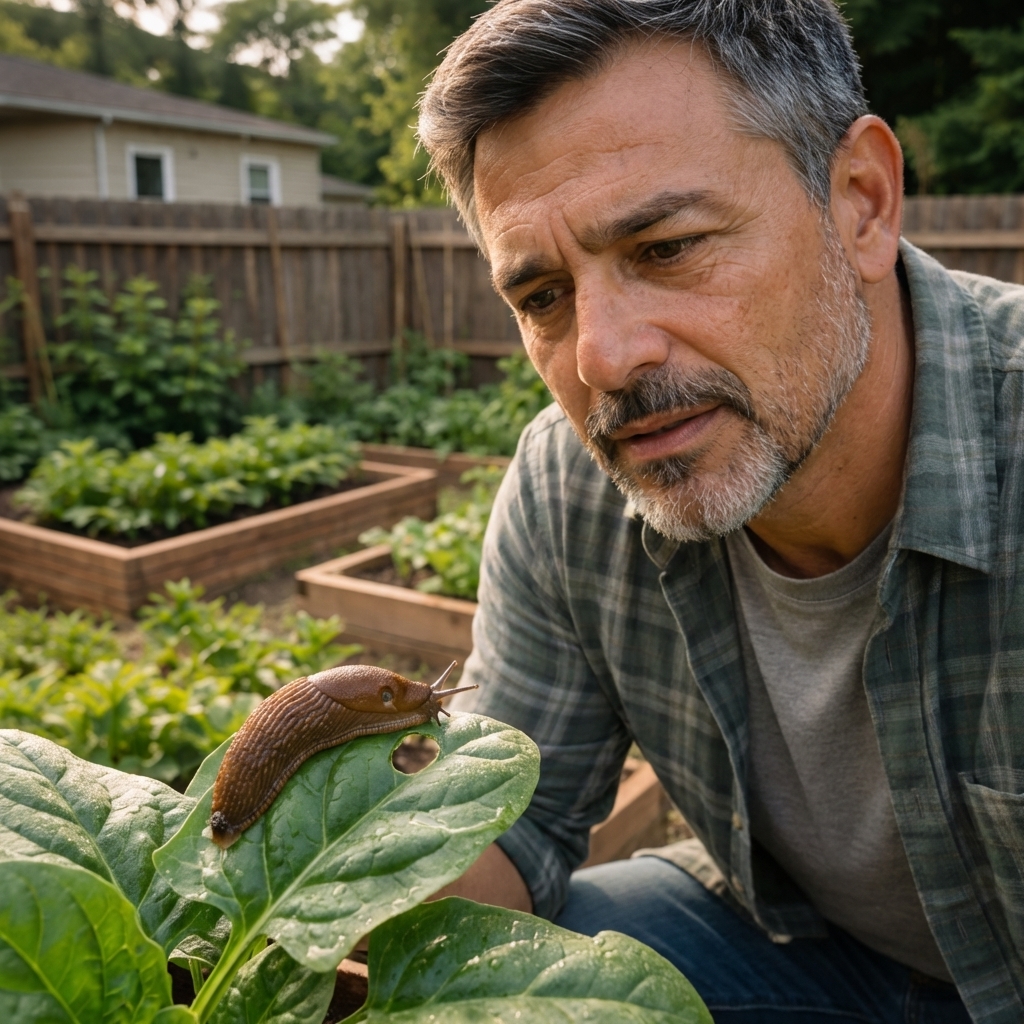
Quick tip: Go out with a flashlight 1 to 2 hours after dusk. If you see slugs on the plants, you will get faster results using traps or bait right away, plus barriers on the plants you care about most.
Before you treat: Make sure it is actually slugs. Slime trails, nighttime feeding, and irregular holes on low, tender growth are classic. Caterpillars usually leave frass, and earwigs tend to hide in tight crevices and chew more jagged edges.
Plants slugs and snails target most
Slugs are not picky, but they absolutely have favorites. If you protect these first, you usually save most of the garden.
High-risk plants
- Seedlings of almost anything (they can mow down brand new sprouts)
- Lettuce and leafy greens (lettuce, spinach, chard, kale when young)
- Hostas and many shade perennials
- Strawberries and other low-hanging fruit
- Cabbage family starts (broccoli, cabbage, cauliflower, Brussels sprouts)
- Beans and peas (especially young leaves)
- Basal leaves on squash and cucumbers when plants are small
- Marigolds and zinnias can get shredded in wet years
Why these get hit
They are tender, close to the soil, and stay moist longer. Slugs prefer soft, thin leaves over tough, hairy, or strongly aromatic foliage.
Start with habitat changes
If you only do traps and skip cleanup, you will keep feeding the problem. You do not need a sterile garden, just fewer hiding spots right next to your most vulnerable plants.
- Water in the morning so the surface dries by evening. Night watering is basically a dinner bell.
- Thin dense groundcover and remove weeds around beds.
- Lift pots and boards and clear debris where slugs hide during the day.
- Use mulch thoughtfully: thick, wet mulch right up against seedlings can shelter slugs. Pull mulch back a few inches from stems during peak slug season.
- Harvest and prune low leaves so plants dry faster and air moves through.
These steps will not solve slugs alone, but they reduce pressure so barriers, traps, and baits actually keep up.
Hand-picking (low-tech, very effective)
If you can stomach it, hand-picking is one of the fastest ways to turn the tide, especially for seedlings and new transplants.
How to do it
- Go out at night with a flashlight, or head out early in the morning while it is still cool.
- Drop slugs into a container of soapy water.
- Set simple shelters: lay down a board, a damp folded newspaper, or a grapefruit or melon rind near problem areas. Check underneath in the morning and remove what is hiding there.
Practical note: Do this for a few nights in a row when damage starts, then switch to barriers and bait for maintenance.
Beer traps (simple and surprisingly effective)
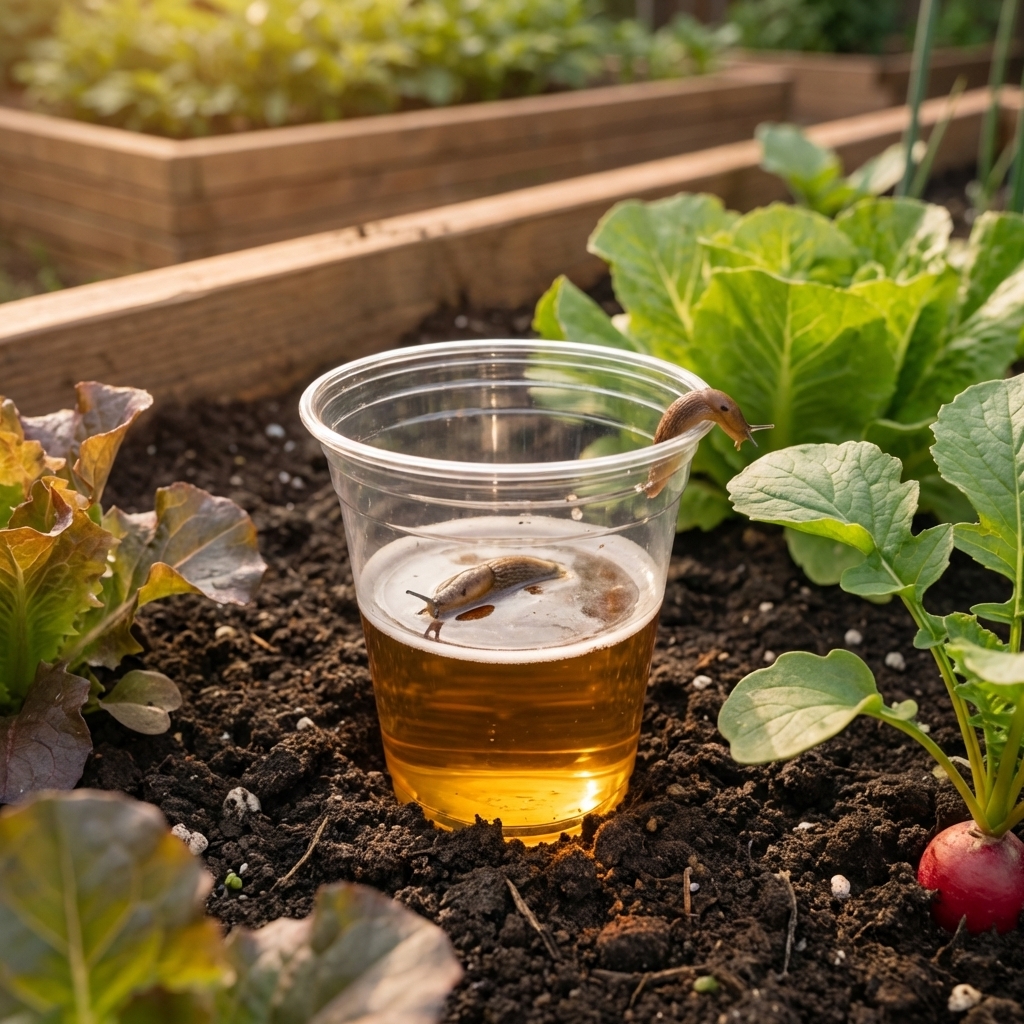
Beer traps work because slugs are attracted to the yeast smell. They crawl in and drown. This is a good option if you want a quick population knockdown, especially in spring when you first notice damage.
How to set a beer trap
- Use a shallow container like a yogurt cup or tuna can.
- Bury it so the rim is about level with the soil surface. This makes it easy for slugs to fall in.
- Fill with beer about halfway. Cheap beer works fine.
- Place traps near problem areas, not right in the middle of your best bed if you can help it. It can draw in nearby slugs.
- Empty and refresh every 1 to 2 days, or after heavy rain.
- Dump the old beer away from your beds and give the container a quick rinse if it gets funky.
Practical note: Beer traps can catch a lot, but they are maintenance-heavy. If you go this route, run them for 3 to 7 nights to knock numbers down, then switch to barriers and spot baiting.
Copper barriers (best for pots and raised beds)
Copper is a solid low-effort barrier. When a slug’s slime contacts copper, it can create a mild electrochemical reaction that discourages crossing. Effectiveness can vary by conditions and sometimes by species, but it is a proven tool for many gardens.
Where copper shines
- Raised beds: apply copper tape along the top edge or outer sides.
- Containers: wrap copper tape around pots, especially for basil, lettuce, and strawberries.
- Small exclusion zones: a copper ring around an individual plant can help early on.
Tips to make copper work
- Use a wide enough strip (narrow tape is easier for slugs to bridge).
- Keep it clean. Dirt and algae reduce effectiveness. Wipe it occasionally.
- Make sure there are no leaves touching over the barrier. Slugs use plants as bridges.
Reality check: Copper does not fix a heavy infestation by itself. It is best combined with cleanup and either trapping or baiting to reduce the population outside the barrier.
Diatomaceous earth (DE): use as backup
Food-grade diatomaceous earth is made from fossilized diatoms and works by scratching and drying out soft-bodied pests. It can help with slugs, but results are mixed and it is generally less reliable on slugs and snails than on many insects. It is best used as a supplemental barrier, not the main plan.
DE only works well when it stays dry. After rain or irrigation, it loses effectiveness and needs to be reapplied.
How to apply DE for slugs
- Choose food-grade DE, not pool filter DE.
- Apply a thin, continuous ring around plants or along bed edges.
- Reapply after rain, heavy dew, or watering.
- Wear a mask when applying if you are sensitive to dust, and avoid windy days.
Where it works best: Under a covered porch container, inside a greenhouse, or during a dry stretch when slugs are still active at night.
Eggshell deterrents (a small help, not a cure)
Crushed eggshells are popular, and they can help a little as a scratchy surface. The problem is that shells break down, get pushed into soil, and slugs can still cross if the layer is thin or wet. Treat eggshells as a bonus, not your main defense.
Best way to use eggshells
- Rinse and dry shells to avoid lingering odors and to make them easier to store and crush.
- Crush into sharp, coarse pieces, not powder.
- Apply a thick ring around individual plants or a short border around seedlings.
- Refresh after heavy rain.
My take: If you already have eggshells, use them. Just do not expect them to hold the line during a wet spring without another method backing them up.
Companion planting and plant choices
You cannot companion plant away a serious slug problem, but you can stack the deck. The goal is to avoid creating a garden layout that stays damp and shaded all the time, and to mix in plants slugs tend to avoid.
Plants slugs often avoid
- Alliums: chives, garlic, onions
- Aromatic herbs: rosemary, sage, thyme, lavender
- Fuzzy or tough leaves: borage and some Mediterranean herbs
- Some flowers: geraniums and plants with tougher foliage
How to use this in real beds
- Border a lettuce bed with chives or garlic chives.
- Plant herbs near vulnerable greens to break up all-you-can-eat patches.
- Give plants space so airflow reduces damp hiding conditions.
Trap crop idea: In some gardens, a sacrificial patch of very tender greens can pull slugs to one area where you can trap or hand-pick. If you do this, commit to checking that spot regularly, or you are just raising slugs.
Biological controls (work with nature)
If you want truly low-chemical control, add pressure from the other side: predators and beneficial organisms. These options can take time to show results, but they are great for long-term balance.
Beneficial nematodes
In some regions you can buy slug-targeting beneficial nematodes (often sold for slugs, frequently based on Phasmarhabditis). You water them into moist soil, and they help reduce slug populations in the ground.
- Follow product directions closely (timing, soil temperature, and moisture matter).
- They are usually most useful in spring and fall when soil is cool and moist.
- They can be more expensive than bait, but they are a solid organic tool where available.
Encourage natural predators
- Ground beetles and other beneficial insects: keep some leaf litter or a small wild edge away from your most vulnerable seedlings, and avoid broad-spectrum pesticides.
- Toads and frogs: provide a damp, shaded hide like an upside-down pot with a doorway cut out, and keep a shallow water source nearby if appropriate.
- Birds: some birds will eat slugs, especially if you keep soil uncovered in spots and provide habitat. Just protect seedlings from scratching if birds become a problem.
Reality check: Predators help most when you also cut back slug hiding places right next to your tender plants. Otherwise, slugs still have a safe base camp.
Safe slug baits (the most reliable low-maintenance option)
If you want something that works in wet weather and does not require daily cleanup, a slug bait with iron phosphate is usually the best organic-friendly choice. It is commonly sold as pellet bait labeled for slugs and snails.
Why iron phosphate is a good pick
- Effective even when slug pressure is high
- Generally considered safer for pets and wildlife than older metaldehyde baits when used as directed
- Can be used in vegetable gardens (always follow the label)
How to bait correctly
- Apply in the evening when slugs start moving.
- Scatter lightly, do not pile it up. More is not better.
- Target around the plants they are eating and along bed edges.
- To reduce non-target exposure, consider placing pellets under a board, in a simple bait station, or tucked under foliage where pets are less likely to find it.
- Reapply based on label directions, especially after heavy rain or irrigation cycles.
Important: Check the active ingredients. Some iron phosphate products also include spinosad, which can increase kill power. That can be useful, but it is another reason to read labels carefully and use bait precisely, not broadly.
Also important: Avoid baits with metaldehyde if you have pets, wildlife, or kids in the yard. It can be dangerous if eaten.
Protecting plants day-to-day
Seedlings and transplants
- Use collars made from cut plastic cups or small nursery pots with the bottom removed. Push them 1 inch into the soil.
- Start seeds in modules and transplant stronger plants rather than direct seeding everything in peak slug season.
- Cover at night using a cloche or mesh if you see heavy nighttime activity.
Leafy greens
- Keep leaves from resting on wet soil by thinning and harvesting outer leaves.
- Try copper on container rims if you grow greens in pots.
Strawberries
- Use straw mulch to keep fruit off wet soil, but keep it clean and not overly thick right at the crown.
- Consider growing in hanging baskets or elevated planters with copper tape.

What I would do first
If you want a practical order of operations, here is the approach that usually gets results fast without turning slug control into a full-time job.
- Tonight: flashlight check and hand-pick what you see. Drop them into soapy water.
- This week: tidy hiding spots, pull weeds near beds, and switch to morning watering.
- Next: protect vulnerable plants with copper tape on pots or bed edges, and add collars on seedlings.
- Then: choose either beer traps for a short knockdown or iron phosphate bait for steadier control in wet weather.
- For long-term balance: consider beneficial nematodes where available, and make your garden friendlier to predators like ground beetles and toads.
Once you get ahead of them, maintenance is usually simple: check after rainy stretches and protect new seedlings as they go in.
FAQ
Do slugs live in the soil?
They often hide in soil cracks, under mulch, or in debris near the soil surface during the day. They also lay eggs in moist, protected spots. That is why reducing hiding places helps so much.
Will salt kill slugs?
Yes, but it also damages soil and nearby plants. It is not a garden-friendly solution.
Are coffee grounds a real deterrent?
They might help a little in some situations, but results are inconsistent and they wash away. If you have a real slug problem, use barriers, traps, biological controls, or iron phosphate bait instead.