How to Get Rid of Possums From Your Yard Naturally

Jose Brito
I’m Jose Britto, the writer behind The Country Store Farm Website. I share practical, down-to-earth gardening advice for home growers—whether you’re starting your first raised bed, troubleshooting pests, improving soil, or figuring out what to plant next. My focus is simple: clear tips you can actually use, realistic expectations, and methods that work in real backyards (not just in perfect conditions). If you like straightforward guidance and learning as you go, you’re in the right place.
First things first: most “possum” problems are really “free food” problems. Opossums (the North American kind) are opportunistic nighttime foragers. If your yard has pet food, open trash, fallen fruit, or a cozy hideout under the deck, they will come back until the setup changes.
The good news is you can usually solve this without poisons, traps, or drama. The goal is to make your yard boring and hard to access.

Possum vs. opossum
In the U.S. and Canada, the animal people call a possum is almost always the Virginia opossum. It is the only marsupial native to the U.S. and Canada. (True “possums” live in Australia and nearby regions.)
Quick ID checklist
- Size: about house-cat sized, often around 4 to 14+ pounds.
- Color: grayish body with a white face.
- Tail: long, hairless, and prehensile.
- Feet: five toes, with a “thumb-like” big toe on the back foot.
- Timing: mostly active after dusk through early morning.
If you are seeing an animal in broad daylight, it is not automatically rabid. Opossums can be out during the day when they are hungry, displaced, or caring for young. Also reassuring: opossums have a naturally lower body temperature than many mammals, and rabies in opossums is considered very rare.
That said, any wildlife acting severely disoriented, staggering, or unusually aggressive should be left alone and reported to local animal control.
Opossum behavior
Opossums are opportunistic omnivores and scavengers with a strong sense of smell and a “why not?” attitude toward food. They are not usually looking to attack your garden. They are looking for easy calories and safe cover.
Common signs you have an opossum visiting
- Trash can tipped or lids pried open
- Pet food disappearing overnight
- Fallen fruit cleaned up fast (especially peaches, apples, persimmons)
- Droppings near a feeding spot (often hard to ID because they can resemble other animals)
- Noisy shuffling under a deck, porch, or shed at night
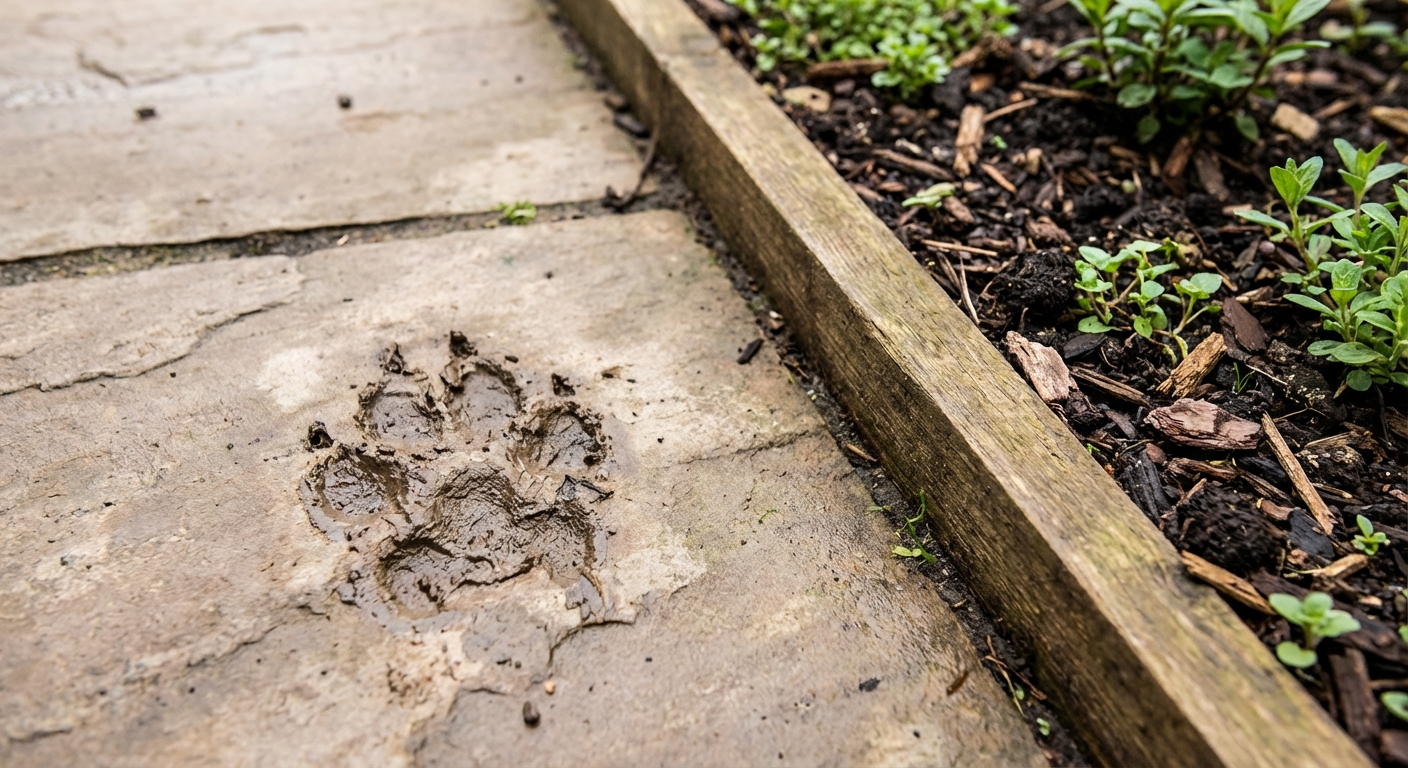
- Tracks with a hand-like look, often near muddy areas
What attracts possums
If you only do one thing from this guide, do this: remove the attractants. Deterrents work best when you are not offering a nightly buffet.
1) Pet food (the biggest repeat offender)
Outdoor feeding bowls for cats and dogs are a magnet. Opossums are happy to eat kibble, scraps, and even seed mixes.
- Feed pets indoors when possible.
- If you must feed outside, pick up bowls before dusk.
- Store pet food in a sealed bin, not an open bag in the garage.
2) Garbage and compost that is too “fresh”
Loose lids, thin bags, and food-scented trash are easy targets.
- Use a trash can with a locking lid or add a bungee cord.
- Rinse food containers before tossing.
- Keep trash in a garage or shed until pickup day if possible.
- If you compost, avoid meat, dairy, grease, and cooked foods. Bury fruit and veggie scraps deep in the pile and cover with browns.
3) Fallen fruit and bird feeding areas
Fruit trees are basically a dinner bell once fruit starts dropping. Bird seed on the ground also draws rodents, and rodents draw bigger visitors.
- Pick up fallen fruit daily during peak drop.
- Consider a simple tarp under the tree for quick cleanup.
- Use bird feeders with seed catchers and clean spilled seed.
- Bring feeders in at night if wildlife pressure is high.
4) Water sources
A dripping spigot, pet water bowl, or low spot that stays wet can keep animals coming back.
- Fix leaks.
- Bring water bowls in overnight.
- Dump standing water where possible.
5) Cozy shelter under structures
The best “possum control” often looks like basic home maintenance.
- Open gaps under decks and porches
- Cluttered sheds or crawlspaces
- Wood piles pushed right up against the house
Humane deterrents
Once you remove food sources, deterrents become much more effective. Here are options that work well in real backyards.
Motion-activated lights
A sudden bright light makes nighttime foraging less comfortable, especially around trash cans, patios, or under-deck areas.
- Aim lights at the approach route (fence line, gate opening, side yard).
- Use a wider beam and adjust sensitivity to avoid constant triggers from branches.
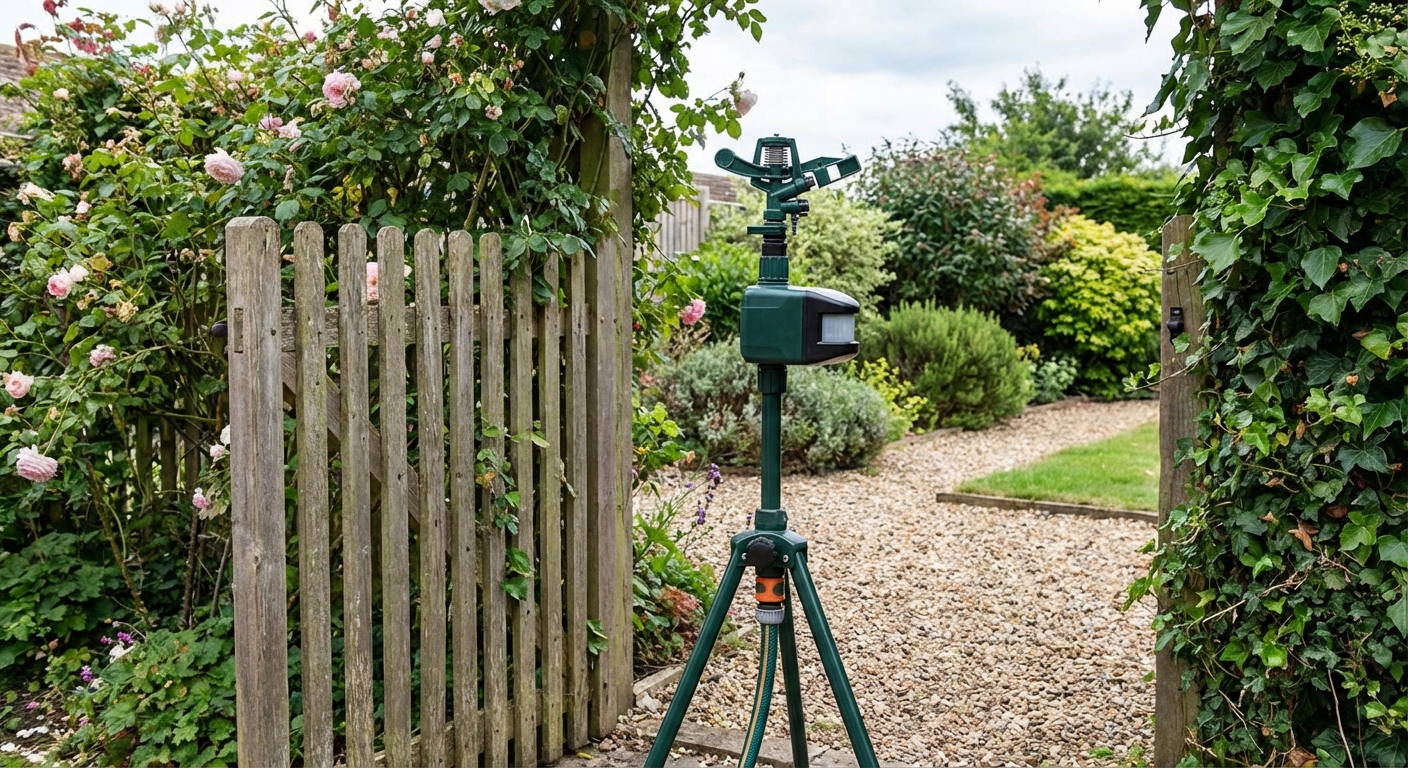
Motion-activated sprinklers
This is one of the most reliable humane tools because it adds surprise and discomfort without harming the animal.
- Place it where the opossum is entering or feeding.
- Run it for 1 to 2 weeks consistently, then reassess.
- Combine with food removal so they do not “push through” for a reward.
Make the area less comfortable
Opossums like quiet, protected spaces. Take that away.
- Turn on a porch light for a few nights.
- Use a radio at low volume in a shed (only if it will not bother neighbors).
- Reduce hiding spots by cleaning up brush piles and stored clutter.
Natural scent deterrents
People often ask about ammonia, mothballs, predator urine, and strong-smelling repellents. In practice, results are mixed and short-lived, especially outdoors after rain.
- Avoid mothballs. They are toxic and not a safe outdoor wildlife solution.
- If you try a scent deterrent, use it as a short-term helper while you fix the real issue: food and access.
Exclusion under decks and sheds
If a possum is using your yard as a pass-through, deterrents may be enough. If it has moved in under a structure, you need exclusion. The key is to do it humanely so you do not trap an animal (or babies) inside.
What you will need
- 1/2-inch hardware cloth (not chicken wire)
- Screws and fender washers (or hardware cloth fasteners designed for wood)
- Work gloves and eye protection
- Shovel (for the buried apron)
- Tin snips or wire cutters
- A one-way exclusion door (store-bought or pro-installed)
Step 1: Confirm the space is empty
- Watch from a distance at dusk to see if it exits.
- Look for fresh tracks or droppings near the opening.
- For 2 to 3 nights, use light and mild disturbance (like a porch light and tidy-up activity) to make the den less appealing.
- If it is spring or early summer and you suspect a mother, assume babies may be present and consider calling a pro.
Step 2: Use a one-way door
A one-way exclusion door allows the animal to leave but not re-enter. These are commonly used for wildlife exclusion and are more reliable than trying to time it perfectly.
- Install over the main opening for several nights.
- Wait for at least 2 to 3 consecutive nights with no signs of activity before you seal everything up.
Step 3: Seal it up properly
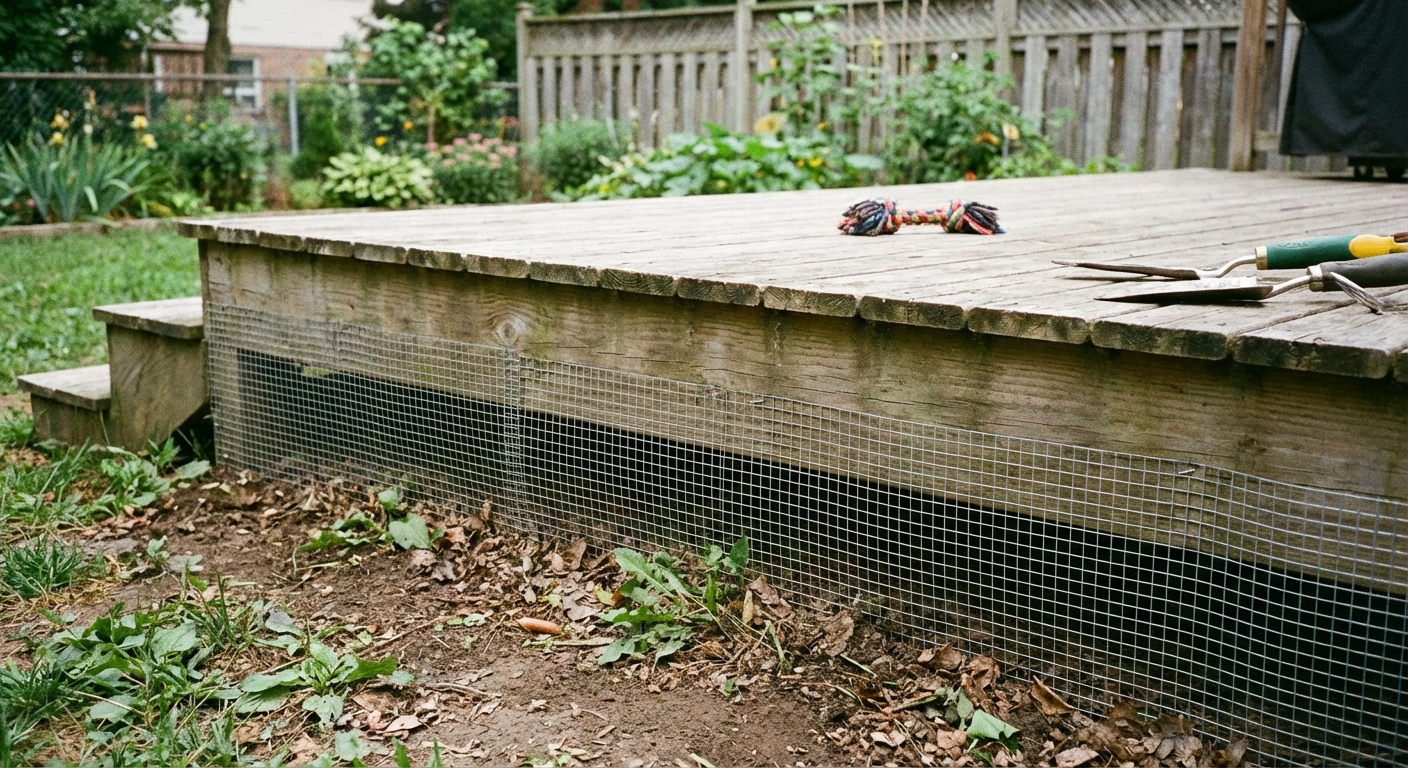
For decks and sheds, you want a barrier that stops digging and squeezing. As a practical rule, treat any gap around 4 inches or larger as an easy entry point and close it off.
- Use hardware cloth (not chicken wire). Aim for 1/2-inch mesh.
- Create an L-shaped apron: bury the bottom 8 to 12 inches, then bend it outward 8 to 12 inches to discourage digging.
- Fasten securely with screws and washers to framing, not just staples.
- Close gaps around doors and corners.
Garden and coop tips
Raised beds and vegetable gardens
Opossums are not usually the main culprit for heavy plant damage, but they will snack on ripe produce and anything smelly.
- Harvest ripe tomatoes, melons, and berries promptly.
- Keep compost and cull piles contained and away from the garden.
- If you have repeated nighttime visitors, a low electric fence (where legal and safe) can be effective, but start with food cleanup and motion sprinklers first.
Chicken coops
Opossums can raid coops for eggs and may occasionally attack birds if they can reach them, especially at night.
- Lock birds in at dusk with a secure latch.
- Use 1/2-inch hardware cloth on openings, not poultry netting.
- Store feed in sealed metal or heavy plastic bins.
- Clean up spilled feed daily.
Fruit trees
- Pick up fallen fruit daily.
- Use a closed compost system for dropped fruit or dispose of it promptly.
- Prune low branches that make it easy to climb from the ground or a fence.
Pet safety
- Bring pet food and water bowls inside at night, then wash hands after handling outdoor bowls.
- Keep dogs leashed at night and do not let them corner wildlife.
- Keep pet vaccinations current and call your vet if your pet has a wildlife encounter.
What not to do
- Do not use poison. It is inhumane, may be illegal depending on where you live, and can harm pets and beneficial predators through secondary poisoning.
- Do not rely on mothballs. They are toxic and not intended for outdoor pest control.
- Do not seal a den opening without confirming it is empty. This can trap animals inside and create a bigger problem.
- Do not leave traps unattended. If you choose trapping, follow local laws and use a licensed wildlife professional when in doubt.
Are possums bad to have around?
It is okay to want them out of your yard, especially near pets, trash, or a coop. But it also helps to understand they are generally more nuisance than menace.
- They are usually non-aggressive and prefer to avoid conflict.
- They are scavengers, which means they help clean up carrion and dropped fruit.
- They can be helpful pest control because they eat slugs, beetles, roaches, and other insects they find while foraging.
- They can carry parasites like any wild animal, so avoid handling wildlife.
A simple 7-day plan
Day 1 to 2: Remove the buffet
- Bring in pet food and water at night.
- Secure trash lids and clean up spills.
- Pick up fallen fruit.
Day 3 to 4: Add deterrents
- Set up a motion light near trash or the entry route.
- Add a motion sprinkler near the feeding area or garden gate.
Day 5 to 7: Close the hotel
- Inspect under decks, sheds, and porches for gaps.
- Use a one-way door if you suspect denning.
- After 2 to 3 consecutive nights with no activity, install hardware cloth with a buried apron.
If you do these three things, most opossums move on quickly because there is no reward.
When to call a pro
Call a licensed wildlife control operator or local animal services if:
- You suspect babies are present (especially in spring and early summer).
- The animal is inside a wall, attic, or tight crawlspace.
- You cannot safely access the area to exclude it.
- You see signs of injury or abnormal behavior.
Humane exclusion is usually fast for a professional, and it prevents repeat visits better than a one-time removal.
FAQ
Will vinegar or ammonia keep possums away?
Strong smells may discourage a possum briefly, but outdoors they fade quickly and often do not solve the root cause. Use them only as a short-term helper while you remove food sources and block access.
Do possums come back after you scare them off?
They will if the food is still there or the den is still open. If you remove attractants and do exclusion, repeat visits drop sharply.
Is it okay to relocate a possum?
Relocation rules vary by state and municipality. In many places it is restricted or discouraged because relocated animals often do not survive. Humane exclusion and habitat changes are usually the best long-term fix.
What time do possums come out?
Typically after dusk through the night. If you want to confirm activity, set a motion camera facing the suspected entry path.