How to Get Rid of Mice in Your House Fast

Jose Brito
I’m Jose Britto, the writer behind The Country Store Farm Website. I share practical, down-to-earth gardening advice for home growers—whether you’re starting your first raised bed, troubleshooting pests, improving soil, or figuring out what to plant next. My focus is simple: clear tips you can actually use, realistic expectations, and methods that work in real backyards (not just in perfect conditions). If you like straightforward guidance and learning as you go, you’re in the right place.
If you're hearing scratching at night, finding droppings, or spotting a mouse dart along the baseboard, you don't need fancy tricks. You need a fast, focused plan: confirm where they're active, set the right traps in the right places, and seal the holes that are letting them in. Do those three things, and you can usually turn a “mouse problem” into a “mouse is gone” situation within days for smaller issues.
Below is the same approach I use for real houses and real basements, not perfect lab conditions.

First, confirm you actually have mice
It matters because rats, squirrels, and even bats call for different tactics. Most indoor mouse issues show up with a few common signs.
Common signs of mice in the house
- Droppings: Small, dark pellets about the size of a grain of rice, often in drawers, under sinks, behind appliances, or along walls. (Rat droppings are usually larger and thicker.)
- Sounds at night: Light scratching or scurrying in walls, ceilings, or under cabinets.
- Grease rub marks: Smudgy streaks along baseboards where they run the same path nightly.
- Chewing: Shredded paper, nibbled pantry packaging, chewed plastic, or damaged wiring.
- Nesting material: Bits of insulation, fabric, paper, or dried plant material tucked in a hidden corner.
Quick check: the flour test
To find active pathways fast, lightly dust a little flour (or baby powder) along suspected runways overnight, like behind the stove or along a basement wall. In the morning, you may see tiny tracks and tail drags that tell you exactly where to place traps.
The fastest plan (do this today)
If you want speed, don't start with “repellents.” Start with capture and exclusion. Here's the order that works.
- Remove easy food and water. Put pantry items in sealed containers, pick up pet food at night, and fix drips under sinks.
- Set multiple traps immediately. Use the right trap style and place them correctly along runways.
- Seal obvious entry points you can find right away. Even a quick first pass helps, then do a deeper seal-up once activity drops.
- Clean and disinfect safely. This protects your household and removes scent trails that encourage repeat traffic.
Best traps for getting rid of mice fast
In most homes, traps are preferable to poison, especially if you want fast results and fewer headaches. Poison can leave you with dead mice in walls, bad smells, and a real risk to kids, pets, and wildlife.
Basic safety: Keep traps out of reach of kids and pets (or use enclosed stations), wash hands after handling traps or rodents, and follow your local rules for disposal.
1) Snap traps (fast and reliable)
Standard snap traps are still one of the quickest ways to knock down a mouse problem, especially when you set enough of them.
- Pros: Fast, inexpensive, effective.
- Cons: You must place them safely away from kids and pets, or use enclosed snap traps.
Best bait: Peanut butter is the classic because it sticks. A tiny smear is enough. You can also press a few oats, a sliver of chocolate, or a bit of dried fruit into the peanut butter.
2) Enclosed bait stations with snap traps (good for homes with kids or pets)
These are protective boxes that hold a snap trap inside. They keep curious hands and paws away while still catching mice quickly.
3) Electric traps (clean and quick, cost more)
Electric traps can be very effective for light to moderate infestations. They're tidy and simple to check.
4) Live traps (use with caution)
Live traps can work, but they're rarely the “fast” option. You must check them often and relocate properly. In some areas, relocation is restricted or regulated, and survival after release can be poor due to stress, exposure, or predators.
What to avoid if you want fast results
- Glue boards: They're messy, inhumane, and often lead to suffering. They can also catch non-target animals.
- Ultrasonic plug-ins: Evidence is mixed. If you notice a change, it may be because mice shifted to a different area of the home, not because they left.
- Most “repellent sprays”: They may mask odor but rarely solve an active indoor infestation by themselves.
If you choose poison anyway: Use only tamper-resistant bait stations, keep them away from kids and pets, and consider hiring a pro. Loose bait is a bad idea in occupied homes.
Trap placement: where to put traps so they actually work
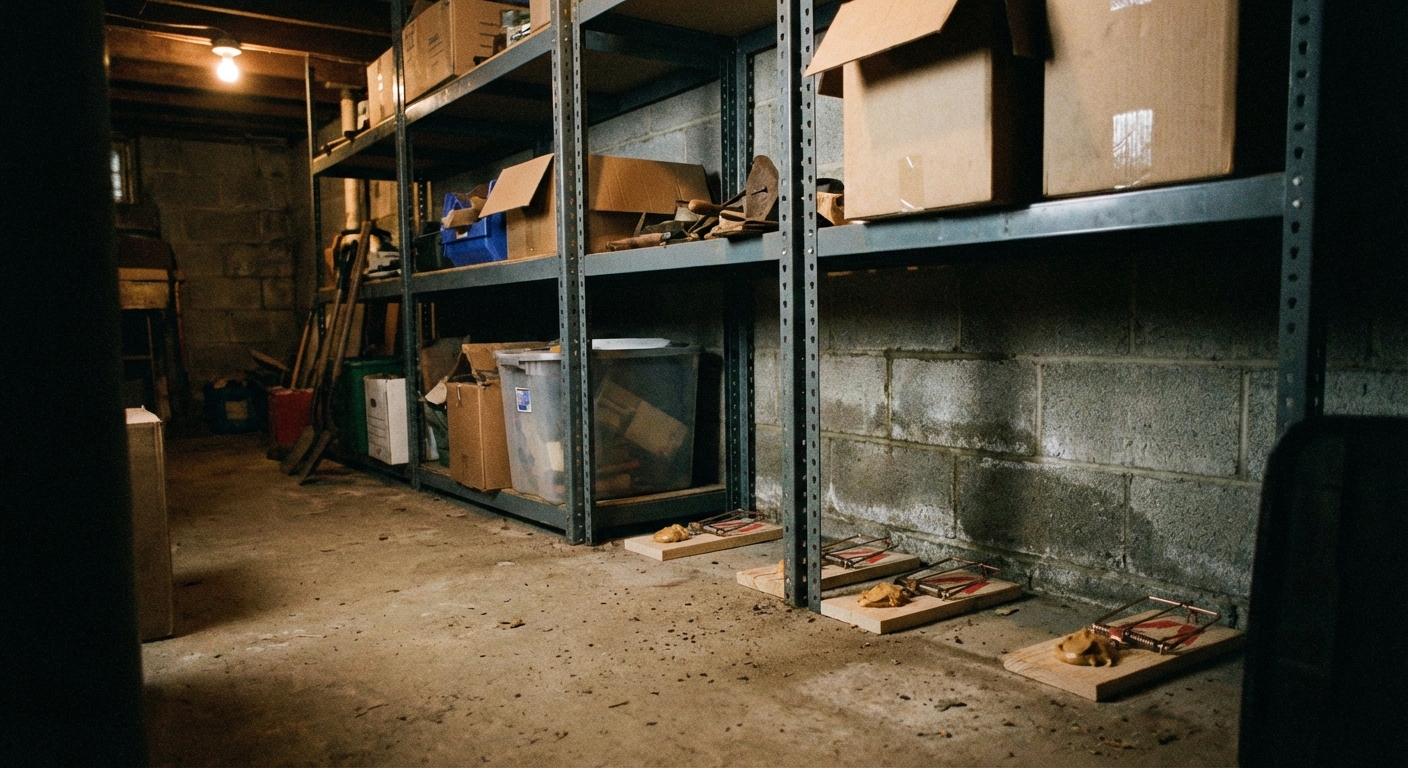
Most trap failures are placement failures. Mice are edge runners. They prefer to travel tight to walls and slip behind objects.
Where to place traps
- Along baseboards in kitchens, pantries, basements, garages, and laundry rooms.
- Behind appliances like the stove, refrigerator, and dishwasher.
- Under sinks where plumbing comes through the cabinet.
- Near suspected entry points like gaps around pipe penetrations or garage door corners.
- In attics or crawl spaces near insulation disturbance or droppings.
How to aim the trap
Place snap traps perpendicular to the wall with the trigger end tight to the baseboard. For high activity areas, set two traps side-by-side, triggers facing outward. This catches mice running in either direction.
How many traps you need
For a typical kitchen or pantry issue, start with 6 to 12 snap traps. For a basement or garage, you may need more. If you're only setting one or two traps, you're usually just feeding mice, not removing them.
If you're getting zero catches
First, move traps to the freshest droppings and rub marks. Then try pre-baiting: bait the traps but leave them unset for one night so mice feed without getting popped. The next night, set them. This can help with trap-shy mice.
How long until you see results?
In an active area, you can often catch the first mouse the first night. A noticeable drop in activity often happens within 2 to 5 days for smaller problems if placement is right and you're using enough traps. Bigger infestations can take longer, especially if entry points are still open.
Seal entry points (this is what keeps them from coming back)
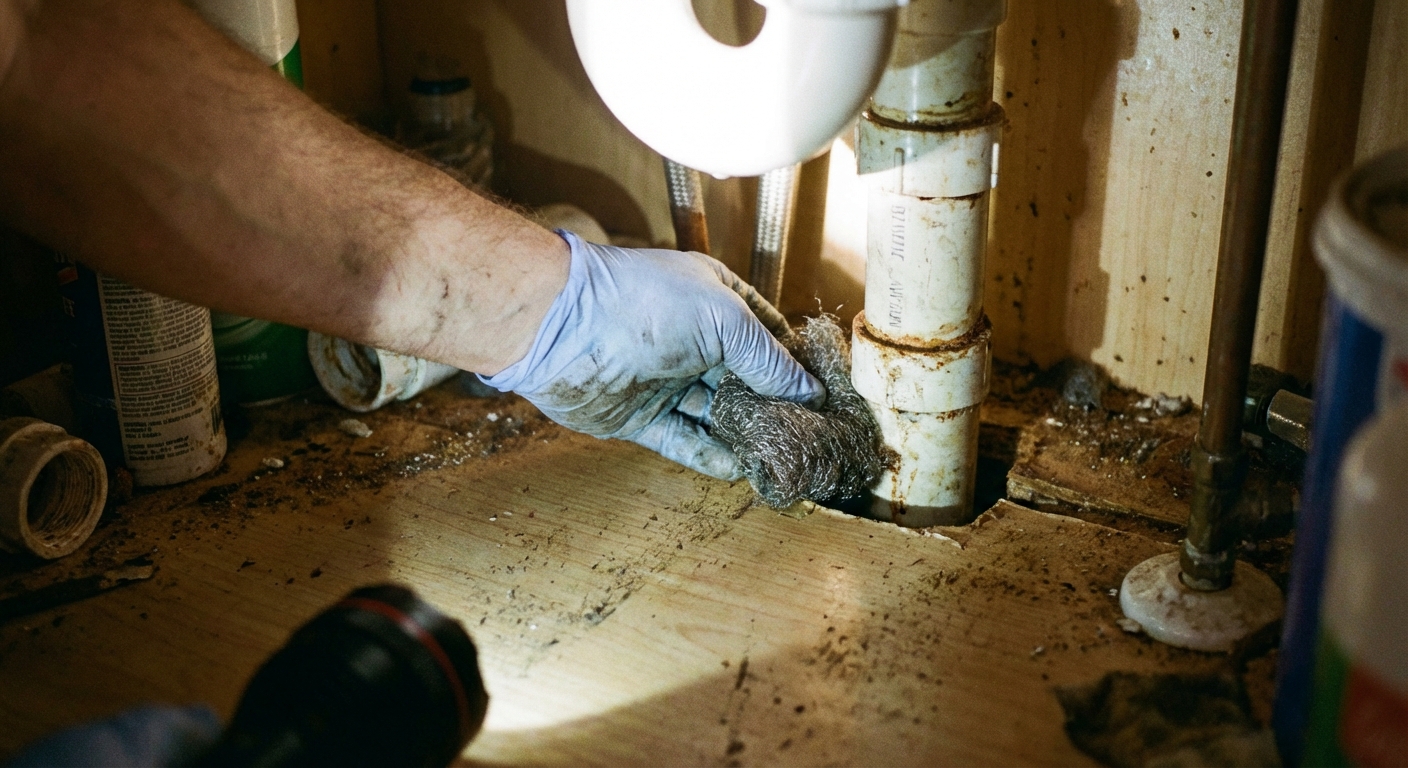
Trapping removes the current mice. Sealing stops the next wave. Mice can squeeze through holes as small as 1/4 inch (about pencil-width).
Fast “first pass” sealing (do this while traps are out)
Start with the biggest, most obvious gaps you can see right now:
- Under sinks: Gaps around water lines and drain pipes.
- Behind the stove: Often a large opening where gas or electrical lines pass.
- Basement rim joist area: Where the house framing meets the foundation.
- Garage: Corners of the door, weather stripping, and gaps where the slab meets siding.
Best materials for mouse-proofing
- Steel wool + sealant: Stuff the gap with steel wool, then seal over it with caulk or expanding foam (foam alone is easy to chew).
- Hardware cloth (1/4 inch mesh): Great for larger openings, vents, and soffit repairs.
- Copper mesh: Similar idea to steel wool, often easier to work with and resists rust.
- Door sweeps and weather stripping: Essential for exterior doors and garage side doors.
Do an outdoor perimeter check
Many entry points are outside. Walk the exterior and look low first: where siding meets the foundation, utility lines, hose bibs, dryer vents, garage corners, and door thresholds. Seal from the outside when you can, since that blocks new arrivals before they get in.
Do not trap yourself with a smell problem
If mice are actively inside, seal strategically. You want to close the entry points, not create a situation where mice die in a wall because you blocked their usual route without reducing the population. A good sequence is: trap hard for a few nights, then do a full seal-up once activity drops.
Clean up safely (important for health and for results)
Mouse droppings and urine can carry germs. One of the biggest concerns is Hantavirus, which is a key reason public health guidance warns against sweeping or vacuuming dry droppings. The goal is to clean without stirring up dust.
Safe cleanup steps
- Ventilate the area for 30 minutes if possible.
- Wear gloves and consider a mask if there's heavy droppings buildup.
- Do not sweep or vacuum dry droppings. That can put particles into the air.
- Spray with disinfectant (an EPA-registered disinfectant works well) or use a freshly mixed bleach solution (about 1 part bleach to 10 parts water) and let it sit for 5 minutes.
- Wipe up with paper towels and dispose in a sealed bag.
- Mop or wipe the area again with disinfectant.
Important: Never mix bleach with ammonia or other cleaners.
Tip: Wash any cloth items (like dish towels) with hot water. For nesting material, mist it first with disinfectant before bagging it.
Natural deterrents: what helps, what does not
Deterrents can support your plan, but they rarely solve a mouse problem on their own. Think of them as “make the area less inviting,” not “make mice disappear.”
What can help a little
- Peppermint oil: Some people see short-term improvement when cotton balls with a few drops are placed in small, enclosed areas. Reapply often. Do not use where pets can ingest it.
- Reducing clutter: Cardboard, paper piles, and stored fabric make great nesting spots. Plastic bins with tight lids are better.
- Strong sanitation habits: Crumbs, open cereal boxes, and pet food left out overnight are basically a welcome sign.
What usually disappoints
- Mothballs: Not recommended. They're toxic and not a safe indoor strategy.
- Random scents and “home remedies”: If mice have food, warmth, and shelter, smells alone rarely matter.
Where mice hide most often
Most indoor mice stay close to food and shelter and avoid open spaces.
- Kitchen: Under the sink, behind the stove, behind the refrigerator, inside the toe-kick under cabinets, pantry corners.
- Laundry room: Behind the washer and dryer, near floor drains.
- Basement: Along perimeter walls, behind stored boxes, near sump pumps, around the water heater and furnace.
- Garage: Behind stored items, near pet food, along edges where the door meets the floor.
- Attic: Around insulation and stored items, near vents and roofline gaps.

When to call a professional
Sometimes the fastest route is getting help, especially if the problem is bigger than it looks.
Call a pro if:
- You're catching mice but activity never drops after a week of heavy trapping.
- You see mice during the day regularly (often a sign of higher numbers).
- You suspect a wall, attic, or crawlspace nest you cannot access safely.
- You have repeated entry issues you cannot locate.
- There's possible electrical damage (chewed wires) or contamination in HVAC ducts.
Ask specifically about their exclusion work (sealing). A trap-and-leave approach can turn into a repeat visit every season.
Fast FAQ
How do I get rid of mice overnight?
You can sometimes catch mice overnight by setting multiple snap traps directly on runways along walls, baited lightly with peanut butter. Overnight success is common, but full control usually takes several days plus sealing entry points.
Is it better to use bait or traps?
For most houses, traps are better. They act fast and avoid the risk of poisoned mice dying in walls or harming pets and wildlife.
Why are my traps not catching anything?
The most common reasons are poor placement (not along a wall), too few traps, too much bait, or you're targeting the wrong area. Move traps to where you see droppings and rub marks and keep the trigger tight to the baseboard. If they're ignoring traps, try pre-baiting for one night.
Will mice leave if I clean?
Cleaning helps, but it usually won't make mice leave by itself. Use cleaning to remove food sources and scent trails, then trap and seal.
Quick checklist
- Put food in sealed containers, pick up pet food at night, fix drips.
- Set 6 to 12 snap traps along walls, especially behind stove and fridge.
- Check traps daily and reset immediately.
- Do a first pass seal with steel wool or copper mesh plus caulk or foam.
- Clean droppings safely with disinfectant, not sweeping or dry vacuuming.
- After activity drops, do a full seal-up, especially on the exterior.
If you do those steps in that order, you'll usually get fast results and a long-term fix, not just a temporary break.