How to Get Rid of Japanese Beetles

Jose Brito
I’m Jose Britto, the writer behind The Country Store Farm Website. I share practical, down-to-earth gardening advice for home growers—whether you’re starting your first raised bed, troubleshooting pests, improving soil, or figuring out what to plant next. My focus is simple: clear tips you can actually use, realistic expectations, and methods that work in real backyards (not just in perfect conditions). If you like straightforward guidance and learning as you go, you’re in the right place.
Japanese beetles can turn a healthy garden into lace fast. One day your beans look fine, the next day the leaves are “skeletonized” with just the veins left behind. The good news is you do not need fancy gear to fight them. You need timing, a few simple tools, and a plan that hits both the adult beetles and the grubs that come later.
This page walks you through identification, what their life cycle looks like, and the control methods that actually make a difference in real backyards.
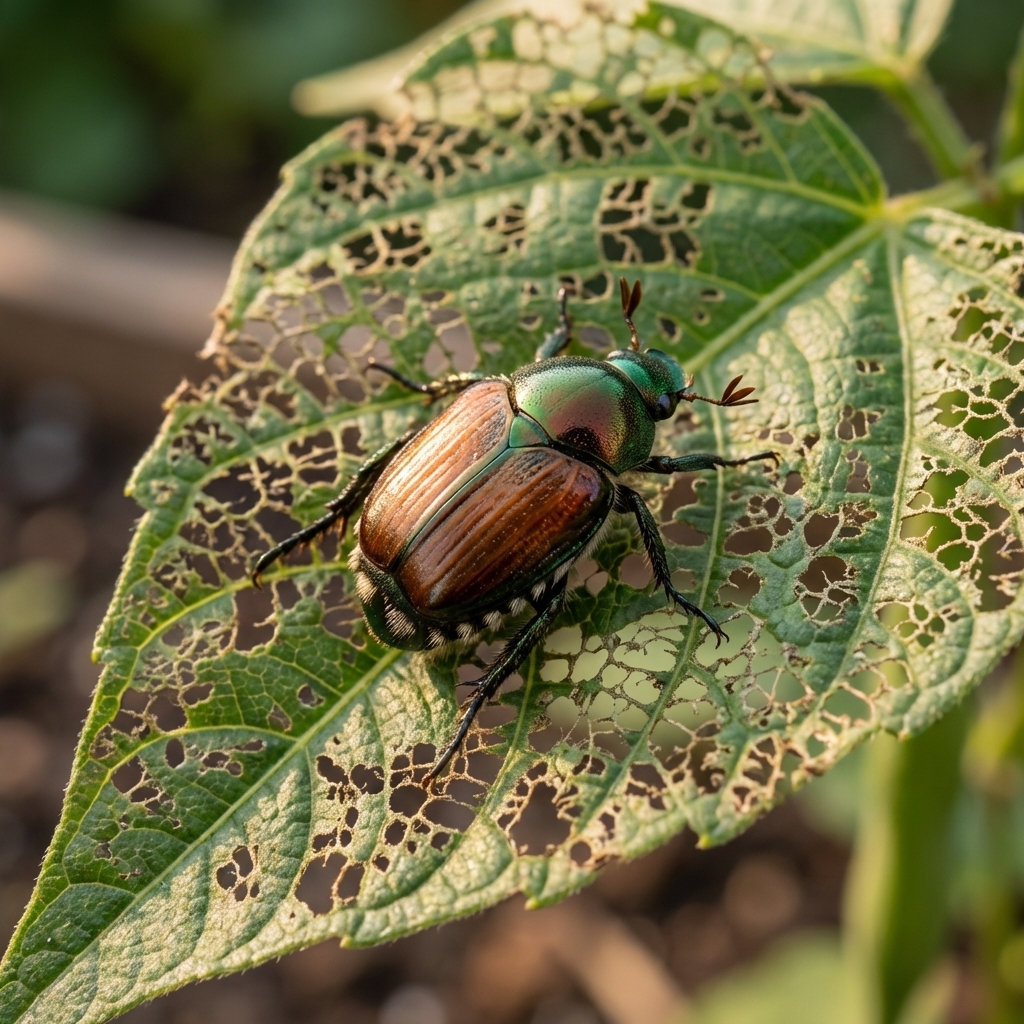
How to identify Japanese beetles
Correct ID matters because a lot of beetles are beneficial. Japanese beetles are not.
What they look like
- Size: about 3/8 inch long
- Color: metallic green head and thorax with shiny copper-brown wing covers
- Key giveaway: white hair tufts on the abdomen, usually five tufts on each side and two at the tip
What the damage looks like
- Skeletonized leaves where soft tissue is eaten but veins remain
- Ragged flowers especially roses, zinnias, and dahlias
- Clusters of beetles feeding together, often in full sun
They are most active in warm, sunny parts of the yard and often start at the top of plants.

Life cycle: why they keep coming back
Japanese beetles have one generation per year in much of the eastern US, and understanding their timing makes control easier. In cooler northern areas, development can sometimes take two years, which can shift when you see peak pressure.
- Early summer: adults emerge from the soil, feed, and mate. This is when leaf damage spikes (often June through August).
- Mid to late summer: females lay eggs in turf or weedy areas with moist soil.
- Late summer to fall: eggs hatch into white grubs that feed on grass roots and other plants underground.
- Winter: grubs go deeper and pause.
- Spring: grubs move back up, feed again briefly, then pupate into adults.
If you only kill adults, you can still make a big dent in damage this season. If you also target grubs at the right time, you reduce next year’s pressure. Just keep in mind adults can fly in from neighboring yards, so the goal is control, not total eradication.
What they love to attack
Japanese beetles are not picky, but a few garden favorites are basically magnets.
- Roses, grapes, raspberries and blackberries
- Green beans, okra, asparagus
- Basil and some other herbs
- Zinnias, hibiscus, linden trees, and many ornamentals
They often hit plants in waves. If you stay on top of them early, you can prevent that snowball effect where a few beetles attract many more.
Control method 1: hand-picking
Hand-picking sounds too simple, but it works because Japanese beetles tend to feed in groups. When they feed, they also release aggregation pheromones that can draw in more beetles. Removing the first wave early often prevents a bigger swarm later.
How to do it (fast and effective)
- Go out in the early morning when beetles are sluggish.
- Hold a container with soapy water under the leaves and flick beetles in. They drop when disturbed.
- Check the sunny side of plants first and look at the tops of leaves.
- Repeat daily during peak season if you can, even for 5 minutes.
Tip from the real world: if you only have time for one spot, prioritize the plants getting hit hardest right now. Saving a crop today beats scouting everything perfectly.

Control method 2: neem oil sprays
Neem can help, but it is not a magic “one and done” fix. Neem products vary a lot, so read the label and follow it. In general, neem works best when you treat early and consistently, and when you pair it with hand-picking.
Which neem matters
- Azadirachtin products are typically used for antifeedant and growth-disrupting effects (more “behavior change” than instant knockdown).
- Clarified hydrophobic neem oil is mainly a contact oil and may offer modest repellency on adults, but results can be mixed.
Best practices for neem in the garden
- Spray in the evening to reduce risk to pollinators and avoid leaf burn from hot sun.
- Cover both the tops and undersides of leaves.
- Reapply as directed, especially after heavy rain.
- Do a small test spray on one part of the plant first if you have not used neem on it before.
If flowers are open and full of bees, skip spraying those blooms. Instead, focus on hand-picking and physical barriers for a few days.
Control method 3: row covers
Row covers are one of the cleanest solutions for vegetables. The goal is simple: keep the adults from landing and feeding.
When row covers work best
- On crops that do not need insect pollination while covered, or that can be uncovered briefly for pollination
- Early in the season and during peak beetle flights
- On smaller plantings where you can seal the edges well
How to use them without headaches
- Use hoops so the fabric is not sitting directly on tender leaves.
- Seal the edges with soil, boards, or landscape pins. Gaps are an open door.
- Check weekly for tears and make sure you did not trap beetles inside.

Control method 4: grub control
Grub control is the long game. It will not stop adult feeding tomorrow, but it can lower pressure next season, especially if your yard has a lot of turf or weedy edges where eggs get laid. Timing matters most: treatments usually work best in late summer to early fall when grubs are small and closer to the surface.
Milky spore (slow and steady)
Milky spore is a biological control that targets Japanese beetle grubs in the soil. It does not give overnight results, but it can reduce grub populations over time in areas where Japanese beetles are established.
- It targets Japanese beetle grubs specifically, not every type of grub.
- It works best when applied according to label directions and given time to establish.
- Results are typically gradual. In many yards it can take 1 to 3 years to build up, and effectiveness can vary by region, soil, and temperature.
Beneficial nematodes (faster option)
If you want a more immediate organic option, consider beneficial nematodes, especially Heterorhabditis bacteriophora. They hunt grubs in the soil and can knock populations down faster than milky spore when applied correctly.
- Apply when soil is moist and temperatures are in the product’s recommended range.
- Water in as directed and keep the area lightly moist for a bit so they can move through the soil.
- Use fresh product and follow storage instructions closely since nematodes are living organisms.
One more turf tip: since females prefer to lay eggs in moist soil, avoiding heavy, frequent watering during peak egg-laying can help in some lawns. Do not stress your lawn in extreme heat though. Balance matters.
Control method 5: garlic and chives
Companion planting will not stop a heavy outbreak by itself, but it can be a helpful piece of the puzzle. Strong-scented alliums like garlic and chives may offer a slight deterrent by making it harder for pests to zero in on their favorite plants. Do not rely on this as your main defense.
Easy ways to use garlic and chives
- Plant chives along the border of beds with beans, basil, or roses nearby.
- Tuck garlic between vulnerable plants in fall for spring growth.
- Let chives flower if you want, they also draw beneficial insects. If beetles are thick on blooms, deadhead and keep using physical controls.
Think of this as “making your garden less inviting,” not as a shield that makes beetles disappear.

Do Japanese beetle traps help?
This is the big one. Those bag traps can catch a shocking number of beetles. The catch is that traps draw beetles in, so placement is everything. If you put a trap too close to the plants you are trying to protect, you can increase feeding pressure right where you do not want it.
When traps can backfire
- If the trap is in or near your garden, you may pull beetles into your yard that would have flown past.
- On small properties, there is often no truly “far enough away” spot to place a trap.
If you use a trap, do it like this
- Place it as far from your garden as you realistically can, ideally near a property edge and downwind if possible.
- Use only one trap unless you have acreage and a clear plan.
- Empty it often. A full bag turns into a smelly mess and still keeps attracting beetles.
In many backyard gardens, traps cause more frustration than relief. Hand-picking plus targeted sprays and barriers usually protect plants better.
Other spray options
If hand-picking and barriers are not enough, there are stronger products that can help. Always follow the label, avoid spraying open blooms, and check local rules for pesticide use in your area. Broad-spectrum insecticides can also harm beneficial insects, so use the least disruptive option that gets the job done.
- Spinosad: often very effective on Japanese beetles when used correctly, but it can be hazardous to pollinators if they contact fresh residue. Use in the evening and keep it off blooms.
- Pyrethrins: can provide quick knockdown, but they are short-lived and can impact beneficials.
- Other conventional options: some gardeners use stronger lawn and garden insecticides, but these are typically broader-spectrum. If you go that route, be extra careful about timing, drift, and non-target impacts.
A simple action plan
If you are seeing adults right now
- Hand-pick in the morning for 3 to 7 days straight.
- Protect your most valuable plants with row covers where possible.
- Use neem in the evening on heavily hit foliage, following the label, and avoid spraying open blooms.
- If pressure is still high, consider a targeted product like spinosad, used carefully and away from pollinators.
If you want fewer beetles next year
- Target grubs in late summer to early fall with beneficial nematodes (Heterorhabditis bacteriophora) or milky spore if it fits your yard and you can be patient.
- Keep your lawn and weedy edges in mind since that is where many eggs get laid.
- Plan a few garlic and chive plantings around high-value crops as a low-effort support strategy.
FAQ
Why are there suddenly so many Japanese beetles?
Warm weather, moist soil for egg-laying, and nearby turf can all boost populations. Also, beetles attract more beetles once they start feeding, so early control matters.
Will soap spray kill Japanese beetles on plants?
Soapy water is great for drowning beetles you knock into a container. Spraying soap mixtures directly on leaves can burn plants if the mix is strong or the sun is hot. If you use a commercial insecticidal soap, follow the label closely and test a small area first.
Should I remove badly damaged leaves?
If a leaf is mostly skeletonized, it is not doing much for the plant and you can prune it off. Do not strip a plant bare in the heat of summer though. Focus on stopping the beetles first, then tidy up.
What time of day is best to remove them?
Early morning is easiest. They are slower and more likely to drop straight down into your soapy water container.
Bottom line
Japanese beetles are stubborn, but they are not unbeatable. Start with hand-picking to knock the numbers down, use row covers to protect what you can, and apply neem carefully when it makes sense. If they show up every year, add a long-term grub strategy like beneficial nematodes or milky spore and you will usually see improvement over time.