How to Get Rid of Fruit Flies in Your House

Jose Brito
I’m Jose Britto, the writer behind The Country Store Farm Website. I share practical, down-to-earth gardening advice for home growers—whether you’re starting your first raised bed, troubleshooting pests, improving soil, or figuring out what to plant next. My focus is simple: clear tips you can actually use, realistic expectations, and methods that work in real backyards (not just in perfect conditions). If you like straightforward guidance and learning as you go, you’re in the right place.
Fruit flies are one of those pests that feel like they appear out of nowhere. One day your kitchen is fine, the next day you have tiny flies hovering around the fruit bowl, sink, trash can, or coffee corner.
The good news is you can get rid of them quickly. The catch is you have to do two things at the same time: remove where they are breeding and trap the adults that are already flying around. If you only do one, they keep coming back.

What indoor fruit flies actually are
Most “fruit flies” in the house are Drosophila species. They are tiny (usually about 2 to 4 mm), tan to brown, and they love fermenting sugars. That is why they gather around overripe produce, sticky spills, recycling bins, and sometimes drains where gunk builds up.
That said, misidentification is common. Some homes have phorid flies (small, hump-backed “scuttle” flies that run more than they fly) or drain flies instead. If your traps are catching nothing and the problem keeps repeating, it is worth double-checking what you are dealing with.
Fruit flies are not dangerous in the way mosquitoes are, but they are a nuisance and they can spread microbes from rotting material onto clean surfaces.
Fruit fly lifecycle (why they multiply so fast)
Understanding the lifecycle is the fastest way to win this battle. Fruit flies do not just “hang around.” They are breeding somewhere, and the eggs and larvae are hidden from view.
- Eggs: Laid on moist, sugary, fermenting material (overripe fruit, residue in a drain, wet recycling). Eggs often hatch in 24 to 48 hours in warm indoor conditions.
- Larvae (maggots): Tiny white larvae feed where the eggs were laid. This is the stage most people never see.
- Pupae: They pupate nearby, often in the same area or just adjacent to it.
- Adults: Depending on temperature and food, the full cycle is often around 7 to 10+ days indoors.
That is why fruit flies can explode from “a few” to “a swarm” in a short time. If you remove the breeding material today, you still need to catch adults for several days while the last wave finishes developing.
Why fruit flies show up in your house
Fruit flies are drawn to fermentation. They can come in on produce from the store or simply find their way in through a door, window, or torn screen. But they do not stick around unless they find a place to breed.
Most common indoor breeding sources
- Overripe produce: bananas, peaches, tomatoes, melons, and onions are common offenders when they start breaking down.
- Counter spills: fruit juice, soda, beer, wine, syrup, smoothie drips, or sticky residue under appliances.
- Trash and recycling: especially cans and bottles with a little liquid left, or bags with fruit scraps.
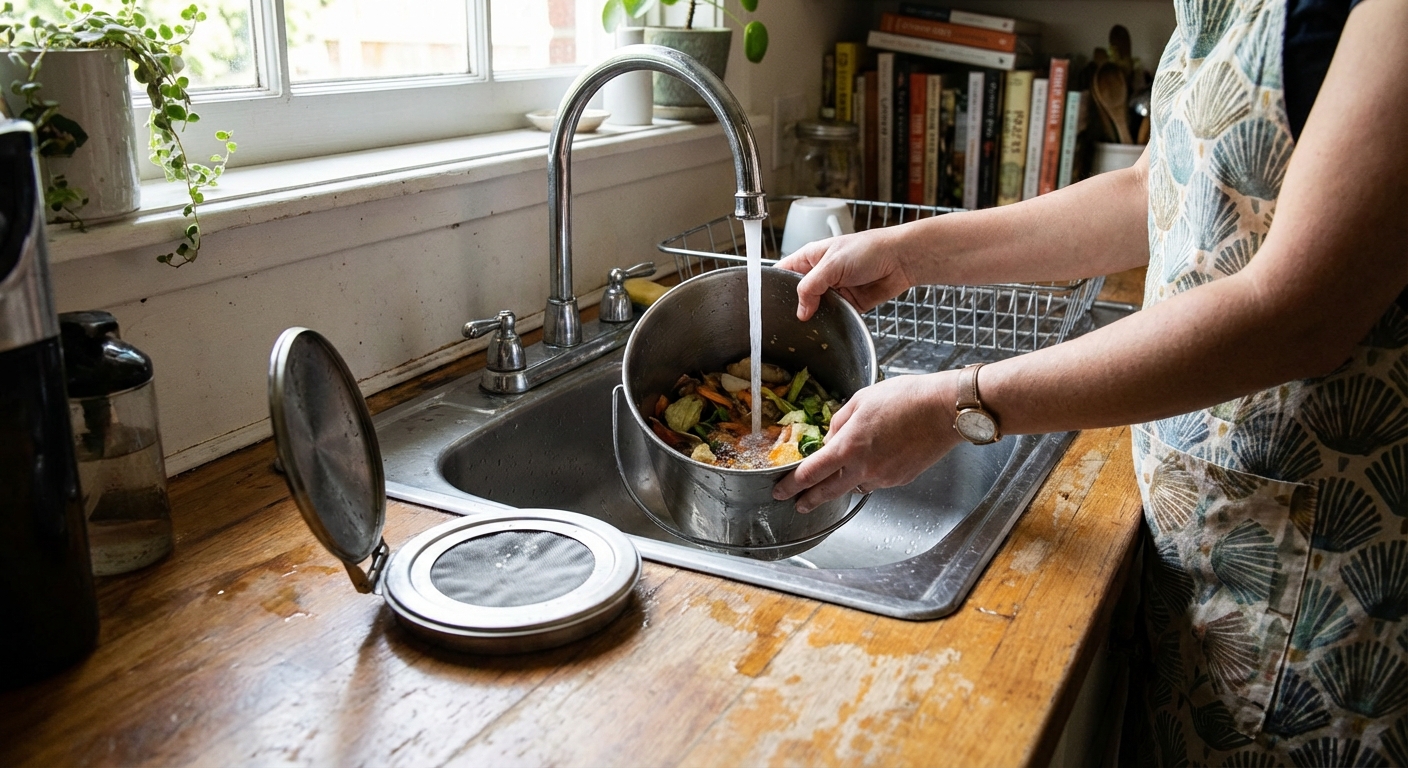
- Compost bins: open or loosely covered countertop compost pails.
- Sink drains: organic slime and food residue in the drain or garbage disposal. This is a top cause when people swear they have “no fruit out.”
- Mops, rags, sponges: damp items with food residue can quietly ferment.
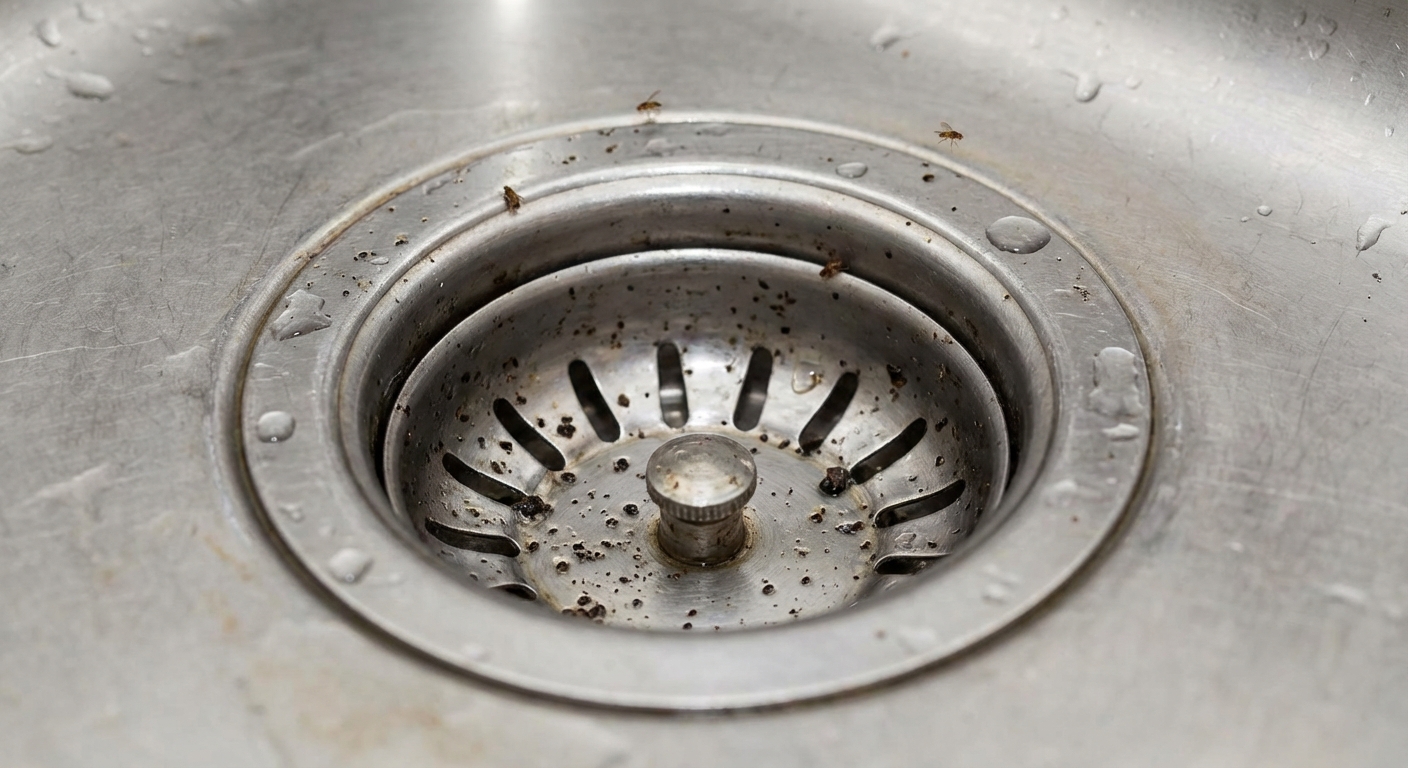
Fruit flies vs fungus gnats vs drain flies
Before you treat, make sure you are targeting the right insect. Different small flies have different breeding spots, and that is usually why traps “don’t work.”
Fruit flies
- Where you see them: around fruit, trash, recycling, sink, coffee bar.
- Behavior: hover and dart around food sources.
- Look: tiny tan or brown flies, often with noticeable eyes.
Fungus gnats
- Where you see them: near houseplants, potting soil, seed starting trays.
- Behavior: weak fliers, often walking on soil surface.
- Look: slender, mosquito-like, usually darker.
Drain flies (moth flies)
- Where you see them: sinks, tubs, floor drains.
- Behavior: rest on walls near drains.
- Look: fuzzy, moth-like wings.
Phorid flies (hump-backed flies)
- Where you see them: often near trash, drains, leaking plumbing, or hidden moist areas.
- Behavior: tend to run along counters (“scuttle”) instead of hovering.
- Look: small, darker, with a slightly hump-backed profile.
If your “fruit flies” are mostly hanging around potted plants, see the prevention tips below and focus on soil moisture. If they are fuzzy and clustering near a bathroom drain, treat it like drain flies. If they are circling produce and trash, keep reading.
The fastest way to get rid of fruit flies (a simple game plan)
If you want the quickest results, do this in order:
- Remove breeding sources (produce, scraps, wet recycling, hidden spills).
- Scrub and dry the problem areas (trash can, recycling bin, compost pail, under appliances).
- Treat drains for several nights in a row if you suspect sink breeding.
- Set traps to catch adults immediately and keep them from laying more eggs.
- Repeat for 5 to 7 days to break the lifecycle.
Step 1: remove and clean the breeding source
Kitchen counter and produce
- Throw out anything overripe or bruised.
- Move produce into the fridge for a week if you are battling an infestation.
- Wipe counters with warm soapy water, including around the fruit bowl area.
Trash and recycling
- Take out trash daily for several days.
- Rinse bottles and cans before recycling.
- Wash the trash can and recycling bin with soap and hot water, then dry.
Compost bin
- Empty the kitchen compost more often during warm months.
- Rinse the pail and let it dry.
- Keep the lid closed, and consider freezing scraps until drop-off day if fruit flies keep returning.
Step 2: set a DIY vinegar trap that works
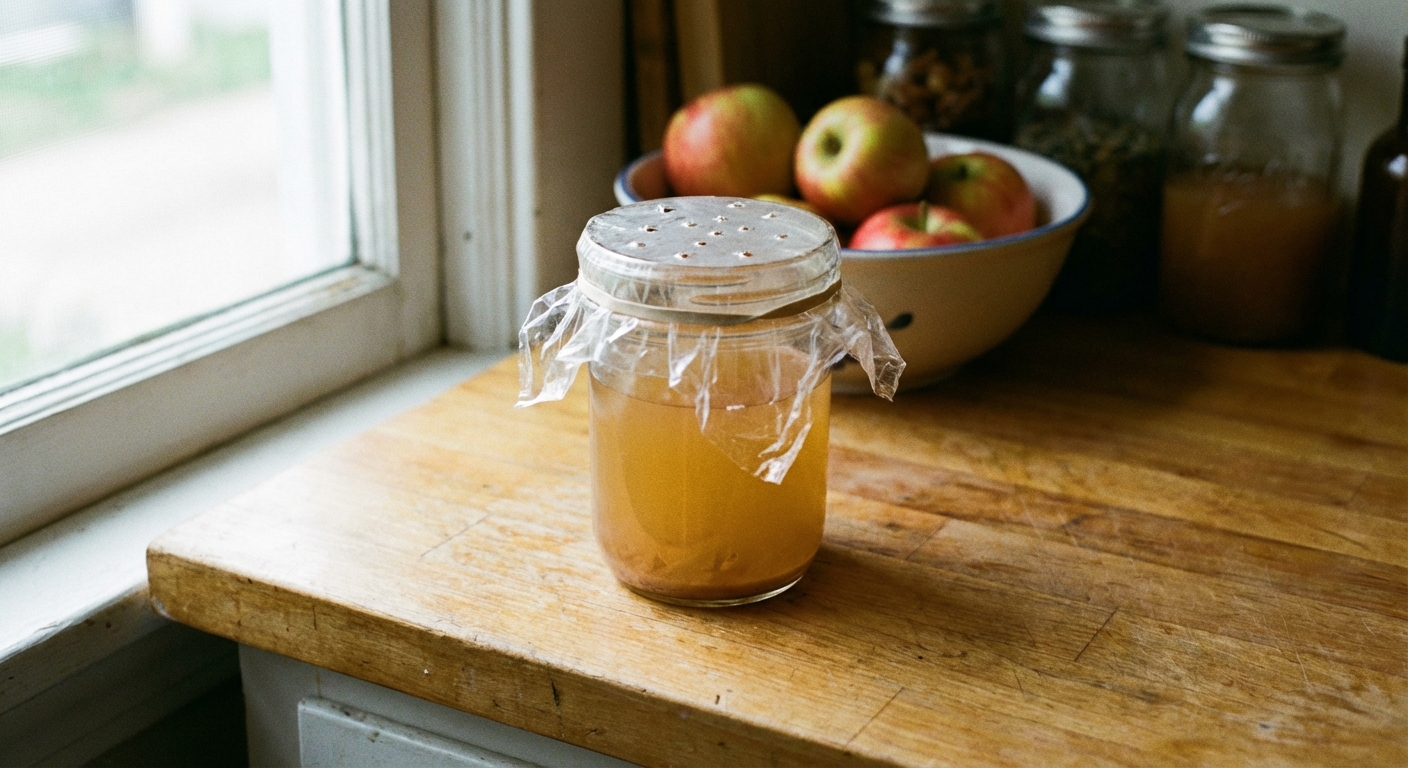
Vinegar traps are popular because they are cheap, quick, and effective when placed close to the action. The key is adding a little soap to break surface tension so flies sink instead of landing and escaping.
Apple cider vinegar trap (best all-around)
- Fill a small cup or jar with 1/2 inch of apple cider vinegar.
- Add 1 to 2 drops of dish soap. Do not overdo it.
- Optional: add a pinch of sugar if you are using cheap vinegar.
- Place it right where you see the most activity: near fruit, sink, trash, or recycling.
Plastic wrap version (helps when flies ignore open cups)
- Make the same vinegar mix in a small bowl.
- Cover tightly with plastic wrap.
- Poke several small holes using a toothpick.
Tip: Use more than one trap. In a typical kitchen, 2 to 4 traps placed in different hotspots work faster than one trap in the middle of the room.
Safety note: Keep traps out of reach of kids and pets, and set them on a small plate if you are worried about spills.
Step 3: treat drains and the garbage disposal
If you have fruit flies but no obvious produce problem, drains and disposals are a common place to look. Small flies can breed in organic buildup, and the fix is removing the film they feed on.
Best method: physical cleaning plus enzyme drain gel
- Scrub the drain opening and surrounding area using a stiff brush.
- If you have a garbage disposal, turn off power and scrub the rubber splash guard where slime builds up.
- Use an enzyme-based drain cleaner at night according to label directions, then avoid running water for several hours so it can work.
- Repeat for 3 to 5 nights.
Very hot water and soap (helpful, not always enough alone)
- Run very hot (not boiling) water down the drain for a minute.
- Follow with a good squirt of dish soap and more hot water.
Notes: Avoid pouring truly boiling water down PVC drains, and use caution to prevent burns. Also skip bleach. It is a common DIY move, but it is hard on plumbing, can create hazardous fumes, and it does not do a great job removing the biofilm where larvae feed. Baking soda and vinegar can freshen a drain, but they often do not remove that film either.
If drain treatment does not make a dent after several nights, re-check your ID. Persistent “drain” problems are sometimes drain flies or phorid flies, or there may be a plumbing leak feeding the issue.
Other elimination options (when vinegar traps are not enough)
Store-bought traps
If you would rather not DIY, commercial traps (for example, Terro style fruit fly traps) can work well. Put them right at the hotspot, and still do the cleaning steps so you are not only trapping adults.
Wine trap
A small amount of red wine in a glass with a drop of dish soap can outperform vinegar in some kitchens, especially if the flies are attracted to fermentation smells.
Fruit bait trap
- Put a small piece of very ripe banana or melon in a jar.
- Add a drop of dish soap and a teaspoon of vinegar.
- Cover with plastic wrap and poke holes.
Vacuum method (quick knockdown)
If you have a lot of adults flying, you can vacuum them up in the evening when they cluster near light or food sources. This does not solve the breeding source, but it reduces the swarm fast while you clean and treat drains.
How long it takes to get rid of fruit flies
In most homes, you will see a big drop within 24 to 48 hours after cleaning and setting traps, but total elimination often takes 5 to 10 days depending on temperature and whether a hidden breeding source is involved.
If you still see steady numbers after a week, it usually means there is still an active breeding source you missed, or the insect is not actually a fruit fly.
Prevention tips that keep them from coming back
- Refrigerate produce that ripens quickly (bananas can stay out, but keep them away from other fruit and do not let them go black on the counter).
- Wipe up sticky spills immediately, including under the toaster, blender base, and coffee grinder area.
- Rinse recycling and take it out regularly.
- Empty and wash compost pails often, especially in summer.
- Run and rinse the garbage disposal, and scrub the splash guard weekly.
- Maintain drains with occasional enzyme treatment if you have repeat issues.
- Do not overwater houseplants if you also see gnats. Let the top inch of soil dry between waterings.
Troubleshooting: why fruit flies keep coming back
You are trapping, but not removing the breeding source
Traps catch adults. They do nothing to eggs and larvae. If a drain, trash residue, or compost pail is still active, you will keep seeing new flies.
The traps are too far from the hotspot
Put traps within a few feet of where you see them most. One trap in the middle of the kitchen is often slower than two traps placed near the sink and fruit area.
It is not fruit flies
If your flies are mostly near plants, treat for fungus gnats instead. If they are fuzzy and cling near drains, treat for drain flies with deep drain cleaning. If they run along the counter and keep showing up near moisture, look into phorid flies and check for leaks.
A hidden source exists
Check places people forget: under the fridge, behind the trash can, inside an empty bottle, a forgotten potato or onion in a pantry, a mop bucket, or a damp sponge.
When to call a pro
If you have done the cleaning, drain scrubbing, and trapping for 10 days and numbers stay steady, consider calling a pest pro or plumber. Ongoing small-fly problems can point to a hidden plumbing leak, a damaged drain line, or a breeding site you cannot access.
Quick checklist (do this today)
- Bag and remove overripe produce and fruit scraps.
- Move remaining produce into the fridge for 1 week.
- Wash trash and recycling bins and let them dry.
- Scrub sink drain and garbage disposal splash guard.
- Set 2 to 4 apple cider vinegar traps near hotspots.
- Treat drains at night for 3 to 5 nights.
Do those steps and most infestations are handled without any sprays, and without turning your kitchen into a science experiment.