How to Get Rid of Fire Ants in Your Yard

Jose Brito
I’m Jose Britto, the writer behind The Country Store Farm Website. I share practical, down-to-earth gardening advice for home growers—whether you’re starting your first raised bed, troubleshooting pests, improving soil, or figuring out what to plant next. My focus is simple: clear tips you can actually use, realistic expectations, and methods that work in real backyards (not just in perfect conditions). If you like straightforward guidance and learning as you go, you’re in the right place.
Fire ants are not just annoying. They can take over a lawn fast, ruin a weekend in the yard, and make gardening stressful when you are constantly watching where you step. The good news is you can get them under control without turning your whole yard into a chemical war zone.
This page covers how to spot fire ant mounds, what natural and lower-toxicity treatments actually work, and a two-step approach that gives you the best odds of wiping out colonies instead of just stirring them up.
How to Identify Fire Ant Mounds
Before you treat, make sure you are dealing with fire ants. A lot of yards have ants, but not all ants sting, and not all mounds behave the same. Fire ant species and behavior vary by region, so when in doubt, check your local university extension guidance for your area.
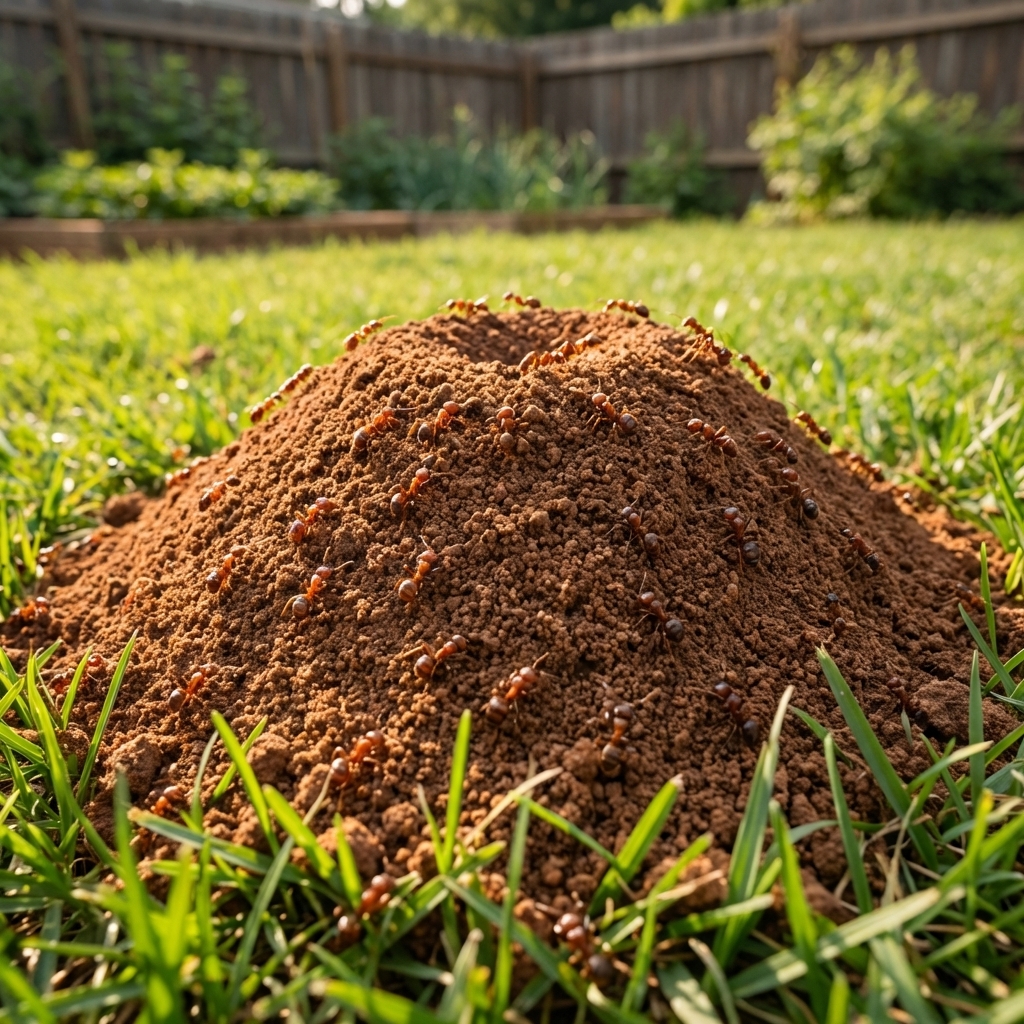
What a fire ant mound looks like
- Loose, fluffy soil that looks freshly piled, often like someone dumped a small bucket of dirt.
- Often no obvious entrance hole on the top. Many fire ants use side tunnels, especially in hot or rainy weather. Some mounds can show openings depending on conditions and species.
- Location changes with weather: they may build higher after rain and flatter when it is dry.
- Fast, aggressive response when disturbed.
Quick activity check (do not use your hand)
Use a long stick to lightly tap the mound. If it is an active fire ant colony, you will usually see ants rush up quickly. If you have kids or pets, do this from a safe distance and keep everyone away until you are ready to treat.
Safety note: Fire ant stings can be serious for people with allergies. If anyone in your household has had severe reactions to insect stings, treat aggressively and consider professional help for heavy infestations.
Quick Plan
- Many mounds across the yard: Broadcast bait.
- Just 1 to 3 problem mounds: Treat those mounds directly.
- Both are true: Use the two-step approach below.
Why Fire Ants Keep Coming Back
Fire ants are tough because the colony is the problem, not the mound. The mound is just the visible part of a much larger network of tunnels and chambers. Also, many areas have multiple colonies, and new queens can move in after you knock one out.
That is why the most reliable plan is to treat in two ways:
- Broadcast bait across the yard to reach colonies you have not noticed yet.
- Target individual mounds that are close to people, pets, garden beds, patios, and play areas.
The Two-Step Approach
Step 1: Broadcast bait across the yard
Broadcast bait is how you reduce the overall fire ant population. Ants pick up bait as food and carry it back to the colony. The goal is to hit the queen and the developing ants, not just the workers you see on top.
- When to apply: Choose a dry day with no rain expected for at least 24 hours. Apply when ants are actively foraging, often when temperatures are moderate (a common rule of thumb is roughly 70 to 90°F or 21 to 32°C at the soil surface).
- How to apply: Use a hand spreader or walk-behind spreader and follow label rates. More is not better with bait.
- Do not water it in: Bait needs to stay dry and attractive long enough for ants to collect it.
What baits work best
You will see two common bait styles. Both can work well when applied correctly and stored fresh.
- IGR baits (insect growth regulators): Slower, often a steadier long-term knockback because they disrupt development and queen reproduction. Expect a gradual decline over weeks.
- Faster-acting baits: Quicker reduction in activity, often noticeable in days, but may not provide as long a suppression depending on the product.
Important: Always follow the label, including any restrictions around flowering areas, water, and pollinators.
Step 2: Treat the worst mounds individually
While the bait is doing its slower work, you can knock down high-risk mounds near entryways, garden paths, the mailbox, and anywhere kids or pets spend time.

What to expect for timing
- Mound treatments: Often immediate to within a day, but may require repeat treatments on large or deep colonies.
- Baits: Typically take days to weeks. It is normal to see activity for 1 to 2 weeks before a noticeable collapse.
Natural and Lower-Toxicity Mound Treatments
These methods can work well when you use them correctly. Pick one approach for a mound and follow through. Mixing methods randomly can waste time and sometimes just causes the colony to move.
Boiling water
Boiling water can kill a mound fast, especially smaller colonies. It is also one of the cheapest options.
- How to do it: Bring a large pot of water to a boil. Carefully pour it directly onto the mound, aiming for the center and then around the edges.
- How much water: A common guideline is 2 to 3 gallons per mound, poured in stages. Success rates vary, and repeat treatments are sometimes needed.
- Best use: Mounds in open lawn areas where you are not going to scald plant roots.
- Downside: It can damage turf and nearby plants, and it may not reach deep queens in large colonies.
Safety note: Boiling water is a burn hazard. Carry it carefully, keep kids and pets inside, and avoid using it near irrigation valve boxes, shallow pipes, or areas where you could slip.
Tip: Treat early morning or evening when more of the colony is likely closer to the mound.
Diatomaceous earth (DE)
Food-grade diatomaceous earth can help reduce workers by damaging their outer coating. It works best when it stays dry.
- Where it helps: Along ant trails, around raised beds, near cracks in walkways, and in dry spots where ants travel.
- How to apply: Dust a thin layer. Piles do not work better than a light coating.
- Important: Use food-grade DE, not pool-grade. Avoid breathing dust. Keep it off blooms where pollinators land.
- Reality check: DE is rarely a full colony eliminator by itself, especially after rain or irrigation.
Orange oil (d-limonene)
Orange oil products (often based on d-limonene) can kill on contact and can be useful as a mound drench when mixed and applied according to the product directions.
- How it works: Contact action. It can knock down workers quickly.
- Best use: Small mounds away from sensitive plants.
- Downside: It can burn plants and turf if overapplied, and it may not reliably wipe out large colonies unless the drench reaches deep.
Extra caution: Concentrated citrus oils can be irritating and can be hazardous to pets (especially cats) and aquatic life. Keep it away from ponds, storm drains, and waterways, and follow the label exactly.
Spinosad baits
Spinosad is derived from a soil bacterium and is commonly used in garden pest control. In bait form, it can be a very effective fire ant tool when used correctly.
- Why it works: Ants carry it back as food, spreading it through the colony.
- How to use: Apply as a bait, not as a drench. Keep it dry and follow the label precisely.
- Label matters: Follow all restrictions, including guidance meant to reduce risk to pollinators and other beneficial insects.
Low-exposure conventional options (when you need stronger control)
If you need more punch but still want to minimize exposure, consider labeled fire ant mound treatments that are designed for targeted use (mound granules or mound drenches). Many homeowners use these for the few mounds closest to high-traffic areas while relying on bait for the whole yard.
- Why they help: They are localized to the mound, reducing the need to blanket-spray the yard.
- How to choose: Look for products specifically labeled for fire ants and for mound application, and follow label directions for watering-in if required.
One more note on “natural”: Natural does not automatically mean harmless. Keep pets and kids away during application, store products safely, and always follow the label.
How to Apply Bait Correctly
A lot of bait failures happen because of timing and storage, not because the product is bad.
- Check for foraging: Toss a few greasy chips or a spoonful of peanut butter near a mound. If ants start collecting within 15 to 30 minutes, bait timing is good.
- Keep bait fresh: Old bait can go rancid. Ants ignore it. Store it sealed in a cool, dry place.
- Do not disturb mounds first: If you kick a mound or flood it, ants may stop foraging and the bait will sit untouched.
- Keep it dry: Do not apply right before heavy irrigation or rain. Wet bait fails.
Pollinator tip: If you have flowering weeds in the lawn, mow before you broadcast bait so you are not scattering granules onto blooms where pollinators are working.

If Ants Move Instead of Dying
Fire ants can sometimes relocate or split under stress. This is more likely after ineffective or partial treatments and repeated disturbance, and it can vary by species and colony type.
- Stop stomping and digging unless you are immediately treating.
- Switch to the two-step plan if you have only been spot-treating mounds.
- Re-bait on schedule based on label directions, often every few months in high-pressure areas.
- Be patient: Baits are not instant. You may see activity for a week or two before colonies noticeably collapse.
Long-Term Prevention
You will never control fire ants long-term with a single weekend treatment. The goal is to keep your yard from becoming the easy, empty new home after you clear a colony.
1) Treat on a seasonal schedule
In much of the southern US, fire ants rebound quickly during warm months. A practical routine is to broadcast bait 2 to 3 times per year during active seasons, then spot-treat as needed.
2) Keep the lawn less inviting
- Fix soggy spots: Poor drainage and constant moisture can increase insect activity that ants feed on.
- Mow correctly: Do not scalp the lawn. Stressed turf opens space for weeds and pests.
- Reduce clutter: Boards, pots, and debris create protected nesting sites.
3) Watch the edges
Fire ants often start along fence lines, sidewalks, driveways, and mulch borders. Walk your yard every week or two during warm weather and treat new mounds early while they are small.
4) Be careful with mulch and compost deliveries
Occasionally, ants hitch a ride in materials stored outdoors. If you see suspicious activity in a new pile, keep it away from the house and treat nearby mounds promptly.
Sting First Aid
Stings happen. Having a simple plan helps you stay calm and reduce the chance of a bigger reaction.
- Move away from the mound and brush ants off quickly.
- Wash the area with soap and water.
- Cold pack 10 minutes on, 10 minutes off to reduce swelling.
- Itch relief: Consider an over-the-counter antihistamine or topical anti-itch or hydrocortisone product if appropriate for the person stung.
- Get urgent care now for trouble breathing, swelling of the lips or face, widespread hives, dizziness, or vomiting. Use an epinephrine auto-injector if prescribed.
When to Call a Professional
DIY is usually enough for light to moderate problems. Consider a pro if:
- You have dozens of mounds and they return quickly after baiting.
- There is a high risk to children, pets, or someone with sting allergies.
- Mounds are in difficult areas like deep mulch beds, under hardscape edges, or near electrical and irrigation boxes.
Quick Checklist
- Confirm active fire ant mounds with a stick test.
- Broadcast bait on a dry day when ants are foraging.
- Mow flowering weeds before baiting to help protect pollinators.
- Leave mounds alone so ants keep feeding and carrying bait.
- Spot-treat high-risk mounds with boiling water or a labeled mound treatment.
- Re-check in 7 to 14 days and retreat as needed.
- Repeat seasonal baiting to prevent rebound.