How to Get Rid of Earwigs in the Garden

Jose Brito
I’m Jose Britto, the writer behind The Country Store Farm Website. I share practical, down-to-earth gardening advice for home growers—whether you’re starting your first raised bed, troubleshooting pests, improving soil, or figuring out what to plant next. My focus is simple: clear tips you can actually use, realistic expectations, and methods that work in real backyards (not just in perfect conditions). If you like straightforward guidance and learning as you go, you’re in the right place.
Earwigs are one of those garden pests that can go from “huh, interesting bug” to “why are my seedlings shredded?” in a hurry. They mostly feed at night, hide during the day, and leave damage that looks like it came out of nowhere.
The good news is you can usually get earwigs under control with a few simple steps. No fancy sprays required. The goal is to confirm it is earwigs, remove the places they love to hide, then trap the ones that are already there.
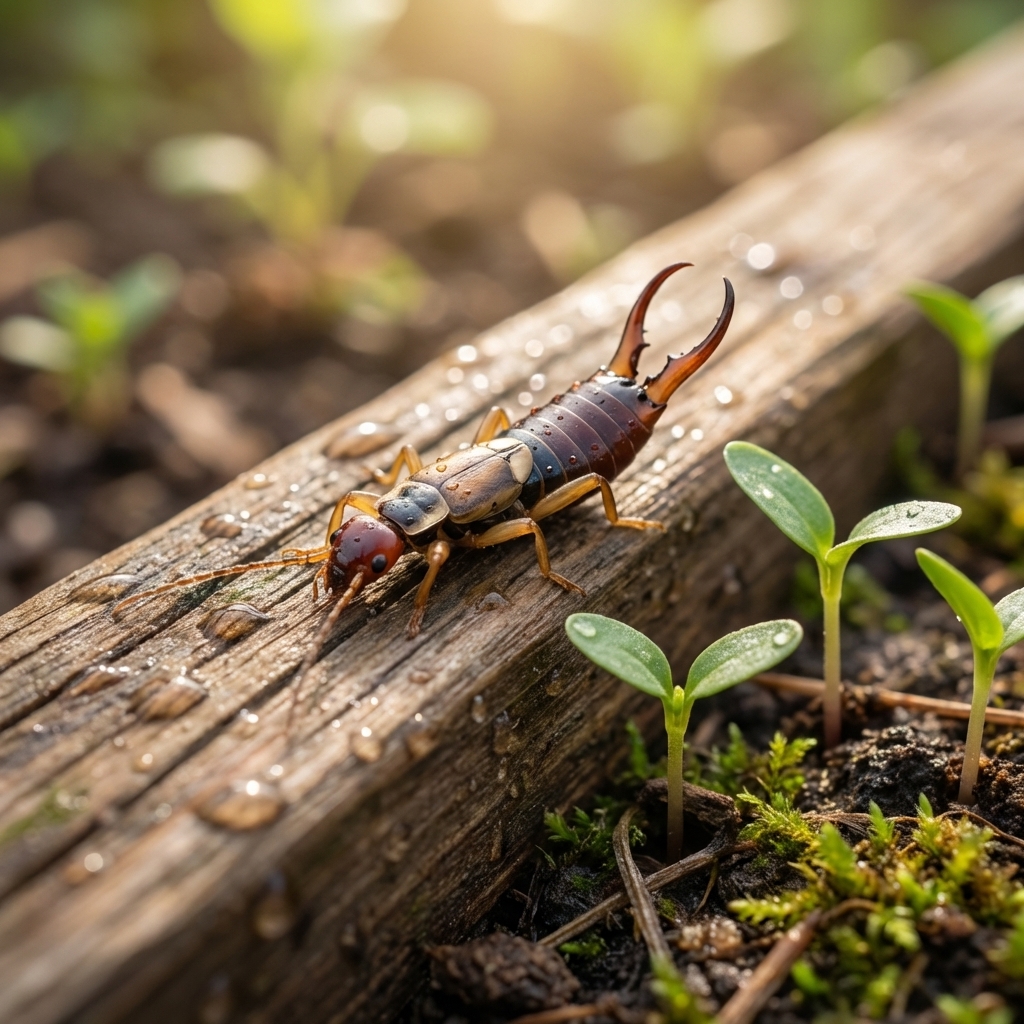
What earwigs look like (and where they hide)
Earwigs are slender, brown insects with forceps-like pinchers at the end of the abdomen. The pinchers look intimidating, but in the garden they are mostly a clue for identification.
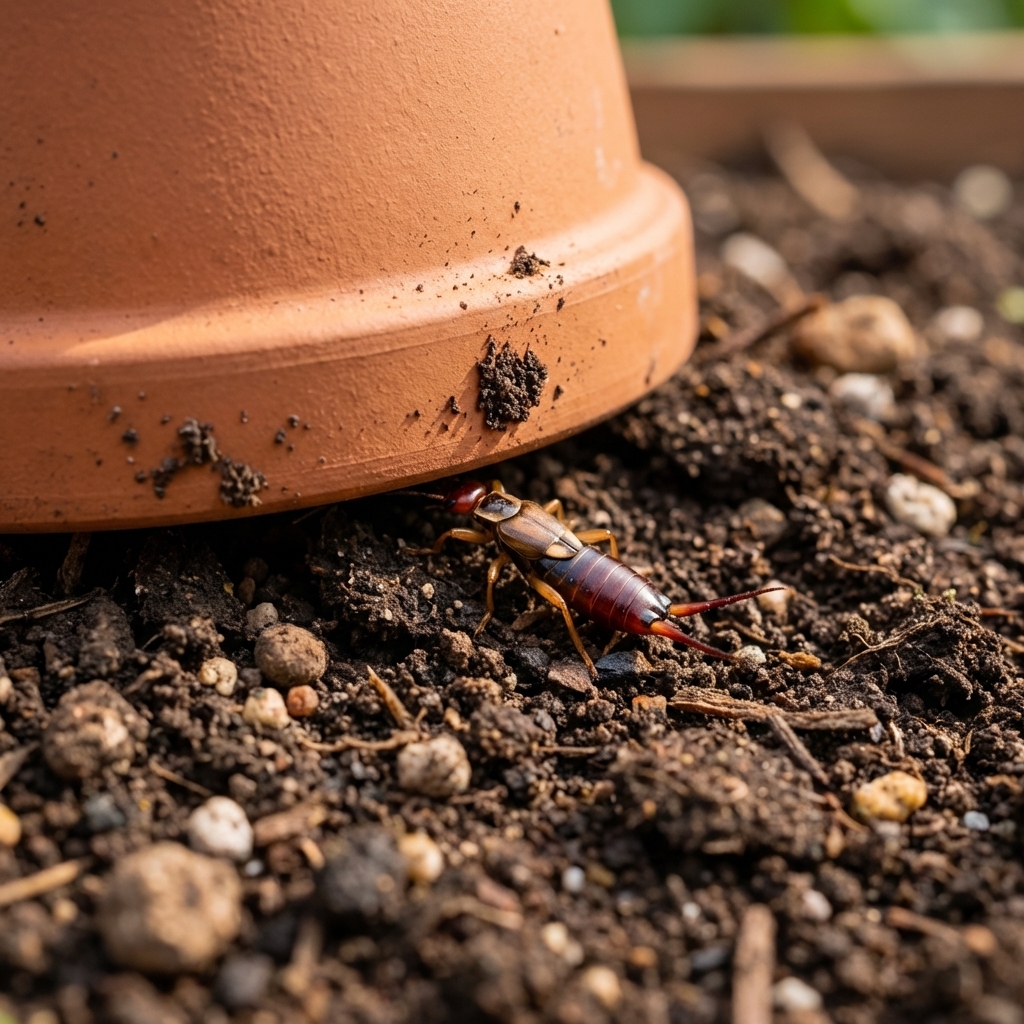
In daytime, earwigs squeeze into cool, damp hiding spots such as:
- Under mulch, leaves, and garden debris
- Under boards, stones, pots, and edging
- Inside tight plant crowns and dense groundcovers
- In cracks around raised beds and garden borders
If you want to confirm they are the culprit, check those hiding places early in the morning or just after dusk with a flashlight. If you lift a pot or board and find several earwigs tucked underneath, you have a strong match.
Earwig damage: what it looks like on plants
Earwig feeding can be confusing because it overlaps with slug damage and general “mystery chewing.” It can also look like caterpillars, cutworms, or even pillbugs in damp beds. Here are the common signs that point to earwigs:
- Seedlings with ragged edges or missing chunks, especially tender greens and new transplants
- Chewed flower petals on dahlias, zinnias, marigolds, and other soft blooms
- Damage that appears overnight, with plants looking worse in the morning
- Irregular holes and shredded leaf margins rather than neat, round holes
A couple of quick clues can help you avoid misdiagnosing:
- Slugs and snails often leave shiny slime trails and hide in very damp spots.
- Caterpillars are often visible on the plant and leave droppings (little dark pellets) on leaves or soil.
- Cutworms tend to clip seedlings at the soil line.
- Earwigs are commonly found under pots, boards, thick mulch, or inside blossoms when you check at night with a flashlight.
Earwigs often feed low on the plant or inside the canopy, so damage can be hidden until you spread the leaves apart.

Are earwigs always bad?
Not always. Earwigs are omnivores. They will chew tender plant tissue, but they also eat decaying organic matter and can prey on smaller pests like aphids and other soft-bodied insects. They may also eat insect eggs at times, but it is not something you should rely on for pest control.
When they are helpful
- You see a few earwigs here and there, but plants are not getting hit hard
- They are mostly in compost, leaf litter, or under logs away from seedlings
- You are dealing with aphids and you notice earwigs in the same area
When they are harmful
- Seedlings are being clipped or shredded
- Flowers are getting chewed nightly
- You find many earwigs under every pot, board, or thick mulch patch
A realistic approach is to tolerate a small population, but control them when the damage starts affecting what you are trying to grow.
Start with habitat cleanup
If your garden has lots of cool, damp hiding spots right next to your most tender plants, earwigs will thrive. This step alone can dramatically reduce numbers.
What to do
- Pull back thick mulch from around seedlings and young transplants. You can re-mulch later once plants are tougher.
- Remove boards, flat stones, and unused pots that sit on moist soil.
- Clean up piles of leaves and plant debris, especially near garden beds.
- Water earlier in the day when possible so the surface dries by night.
You do not need to make your garden “sterile.” Just reduce the prime hiding spots right where the earwigs are doing damage.

Simple earwig traps that work
Traps are ideal because they target earwigs directly and let you measure progress. Set traps in the evening and check them in the morning.
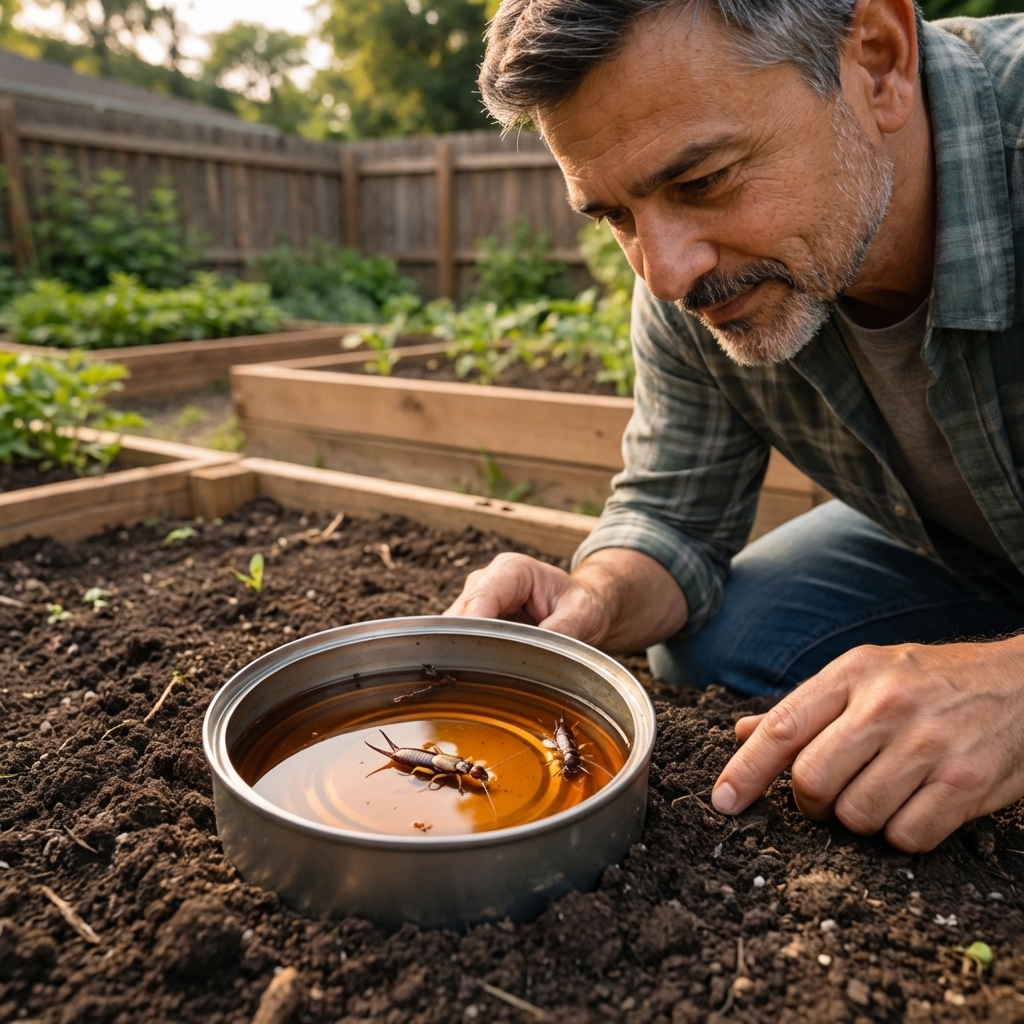
1) Oil and soy sauce trap
This is one of the most reliable backyard traps because the smell draws them in. Once they fall into the liquid, they typically cannot get out and drown.
- Use a shallow container like a tuna can, small yogurt cup, or jar lid.
- Add equal parts vegetable oil and soy sauce.
- Sink it so the rim is close to soil level.
- Place near seedlings, under susceptible flowers, or along bed edges.
Dump and refresh every day or two, especially after rain.
2) Rolled newspaper or cardboard trap
Earwigs love tight, dark spaces. This trap uses that habit against them.
- Roll up a damp newspaper or a piece of corrugated cardboard.
- Place it on the soil near the problem area at dusk.
- In the morning, shake the roll into a bucket of soapy water.
This works best when you are consistent for several mornings in a row.
3) Upside-down flowerpot trap
If you have earwigs climbing into flowers, this is a handy option.
- Stuff a small pot with straw or crumpled paper.
- Set it upside down on a stake or directly on soil near the plants.
- In the morning, knock the contents into soapy water.
How many traps to use
If you are actively losing seedlings, use enough traps to make a dent:
- Small beds or containers: 1 to 2 traps
- Average raised bed: 3 to 6 traps spaced around the edges and near the most damaged plants
- Large beds: about 1 trap every 4 to 6 feet along problem areas
You can scale back once you stop seeing fresh damage and trap counts drop.
Diatomaceous earth: how to use it
Diatomaceous earth (DE) can help, but it is not magic dust. It works when insects crawl through a dry layer. Once it gets wet, it clumps and loses effectiveness as a barrier, so you usually need to reapply to keep a continuous ring.
Best ways to apply DE for earwigs
- Apply to dry soil in a thin ring around seedlings or the base of susceptible plants.
- Target entry points like gaps at bed edges, cracks, and areas where you see earwigs traveling.
- Reapply after rain or heavy watering to restore the barrier.
Safety notes
- Use food-grade DE for garden use.
- Avoid creating dust clouds. A simple mask and gentle application helps.
- DE can affect beneficial insects too if they crawl through it, so keep applications targeted rather than broadcasting everywhere.
- Avoid dusting open, pollinator-attractive blooms or areas where bees are actively foraging.
Encourage natural predators
In a balanced yard, earwigs are food for plenty of helpful wildlife. You will not “release predators” like a quick fix, but you can make your space more predator-friendly.
Common earwig predators
- Ground beetles
- Spiders
- Toads and frogs
- Birds, especially in the early morning
How to help them help you
- Keep some diverse plantings and a few undisturbed areas away from your seedling beds.
- Avoid broad-spectrum insecticides that wipe out the good guys along with pests.
- Provide water nearby for birds and amphibians, even a shallow dish refreshed often.
If you must use a product
If trapping and cleanup are not enough, consider a targeted, lowest-impact option rather than blanket spraying. Always follow the label for your crop and location.
- Commercial earwig baits can be effective because they stay put and target foraging earwigs. Use only as directed and keep away from pets and wildlife.
- Spinosad bait (where labeled for earwigs and for your garden use) is another option some gardeners use. Apply in the evening and avoid placing it where it could be accessed by non-target animals.
Skip broad, repeated spraying. It tends to create more problems than it solves by knocking back beneficial predators.
When earwigs become a real problem
If you are finding dozens under every object, or you are losing seedlings night after night, treat it like a short campaign:
- Week 1: Pull back mulch near young plants, remove hiding spots, set multiple traps every evening (aim for 3 to 6 per raised bed).
- Week 2: Keep trapping, then add targeted DE barriers in dry weather where earwigs travel.
- Ongoing: Once damage slows, reduce to a few monitoring traps and keep the area around seedlings less inviting.
If you want a quick “is it working?” check, lift a board or pot in the morning every few days. If numbers are dropping, your plan is working.
When to expect them
Populations often ramp up in warm months, especially when conditions stay damp. Traps are most useful during these active stretches. Keep a few out as “early warning” traps anytime you are protecting new seedlings or prized flowers.
Quick earwig checklist
- Confirm earwigs by checking under pots, boards, and mulch early morning or at dusk.
- Look for clues that rule out other pests (slime trails, clipped stems, visible caterpillars).
- Reduce hiding spots near your most tender plants.
- Set oil and soy sauce traps at night and empty in the morning.
- Use diatomaceous earth only when dry and only where it matters.
- Encourage predators by avoiding broad sprays and keeping a healthy, diverse yard.
If you stick with traps and cleanup for a week or two, most home gardens see a noticeable drop in damage.