How to Get Rid of Drain Flies Naturally

Jose Brito
I’m Jose Britto, the writer behind The Country Store Farm Website. I share practical, down-to-earth gardening advice for home growers—whether you’re starting your first raised bed, troubleshooting pests, improving soil, or figuring out what to plant next. My focus is simple: clear tips you can actually use, realistic expectations, and methods that work in real backyards (not just in perfect conditions). If you like straightforward guidance and learning as you go, you’re in the right place.
Drain flies are one of those pests that make your house feel grimy even when you keep things pretty clean. You usually notice them as tiny fuzzy-looking flies hanging around sinks, showers, tubs, or a basement floor drain. The good news is you do not need harsh chemicals to get rid of them. You just need to remove what they are actually living in.
Drain flies are not coming from your houseplants or fruit bowl. They are breeding in the biofilm, a slimy film inside a drain, overflow channel, or any spot that stays wet and collects organic buildup. If you clear out that biofilm and keep it from rebuilding, the problem often fades fast, usually within 1 to 2 weeks depending on temperature and how many breeding spots you have.
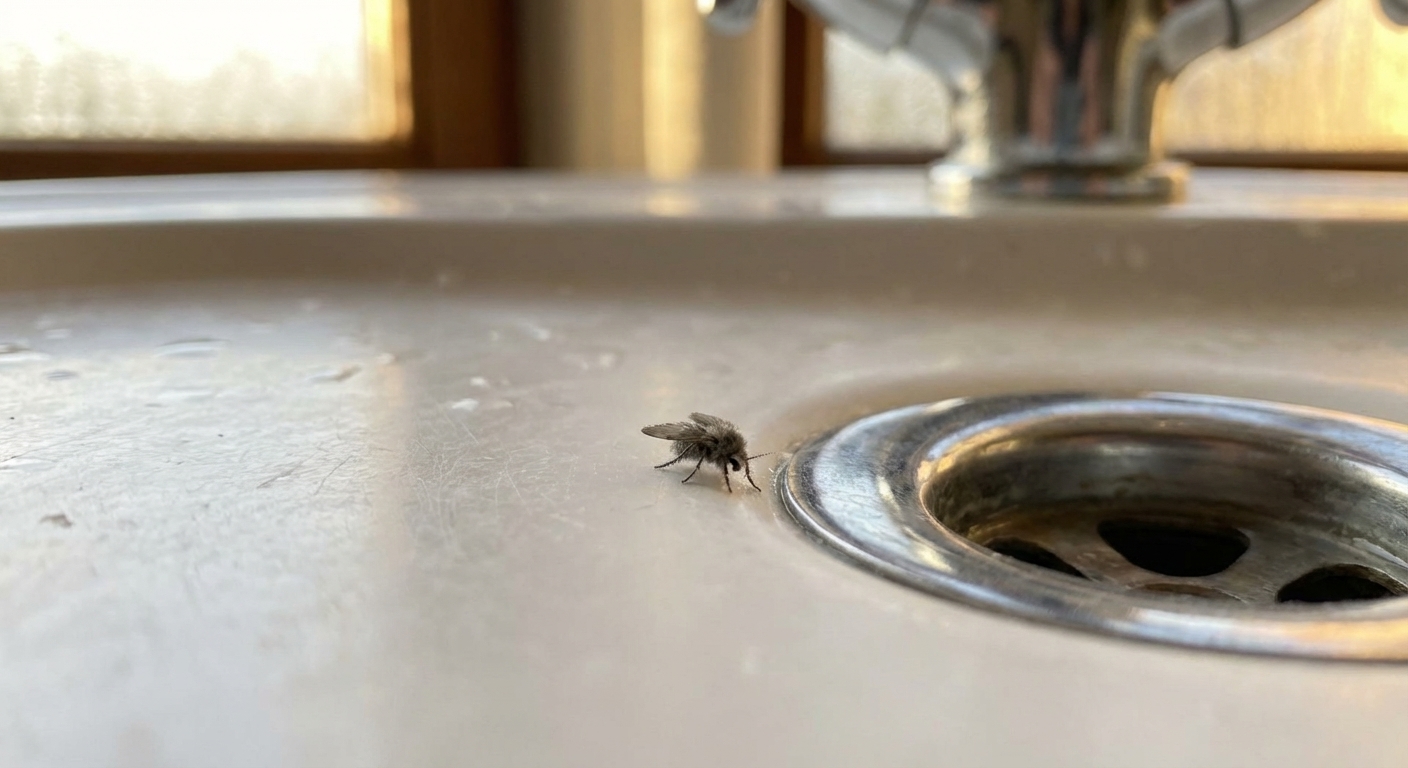
What are drain flies?
Drain flies (also called moth flies) are tiny flies, usually about 1/8 inch long, with fuzzy bodies and wings that look a bit like a small moth. They are weak fliers, so you will often see them sitting still on walls near a sink or shower, or hopping short distances when disturbed.
They are mainly a nuisance. They typically do not bite, and they are not always a sign of major plumbing trouble. But they are a sign that there is wet organic biofilm somewhere feeding the larvae. In some cases that points to a dry trap, a slow leak, or a drain that is not flushing well, so it is worth taking seriously.
Drain flies vs fruit flies vs fungus gnats
- Drain flies: fuzzy, moth-like, often seen near drains and on bathroom walls.
- Fruit flies: smooth tan or brown flies, usually near ripening fruit, trash, recycling, or sticky spills.
- Fungus gnats: tiny black gnat-like insects, usually hovering around houseplants and potting soil.
Where drain flies breed in a home
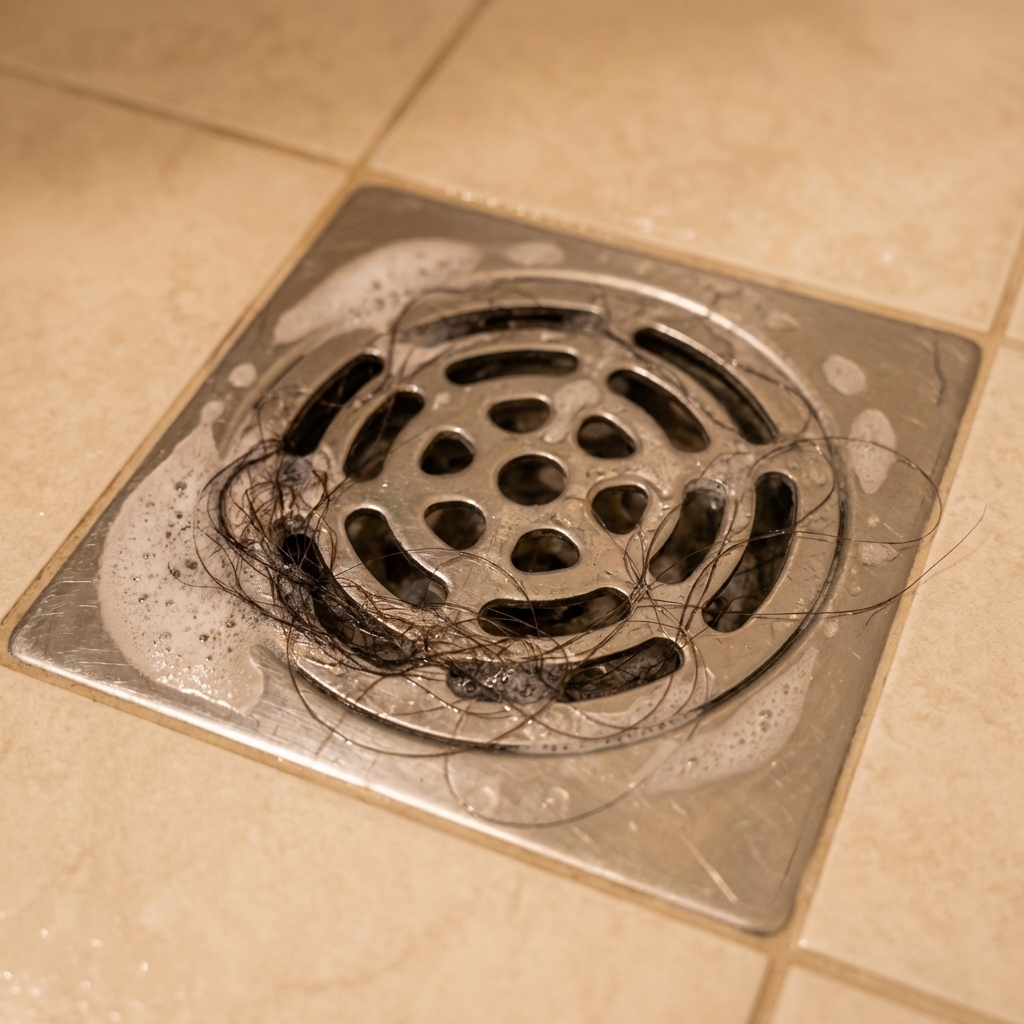
Drain flies lay eggs in the biofilm that builds up inside plumbing. This slimy film is made of soap scum, hair, grease, skin cells, food particles, and whatever else gets washed down. The larvae live in that film and feed there.
Common breeding spots include:
- Shower and tub drains (hair and soap scum build biofilm fast)
- Bathroom sink drains and especially the overflow hole
- Kitchen sink drains (grease and food residue)
- Basement floor drains and utility sinks that do not get flushed often
- Garbage disposal edges and splash guards
- Any rarely used drain where water sits, the trap dries out, or the drain stays damp
Confirm the source before you treat
If you treat the wrong drain, you will keep seeing flies and think nothing is working. This quick check helps you target the actual breeding spot.
The tape test
At night, dry the area around a suspected drain.
Place clear tape over the drain opening, sticky side down. Leave a small gap at one edge if water needs to pass in an emergency, or do this when the drain will not be used overnight.
Check in the morning. If you see drain flies stuck to the tape, that drain is a source.
If you find multiple drains with activity, treat them all. It is common for a bathroom drain and a nearby sink drain to both be breeding sites.
Step-by-step: Get rid of drain flies naturally
The goal is to remove the biofilm where eggs and larvae live, then keep the drain unfriendly long enough to break the life cycle. Eggs can hatch quickly, and adults keep laying if that slimy film stays in place.
Step 1: Scrub the drain and overflow
Natural treatments help, but they work best after you physically remove the biofilm.
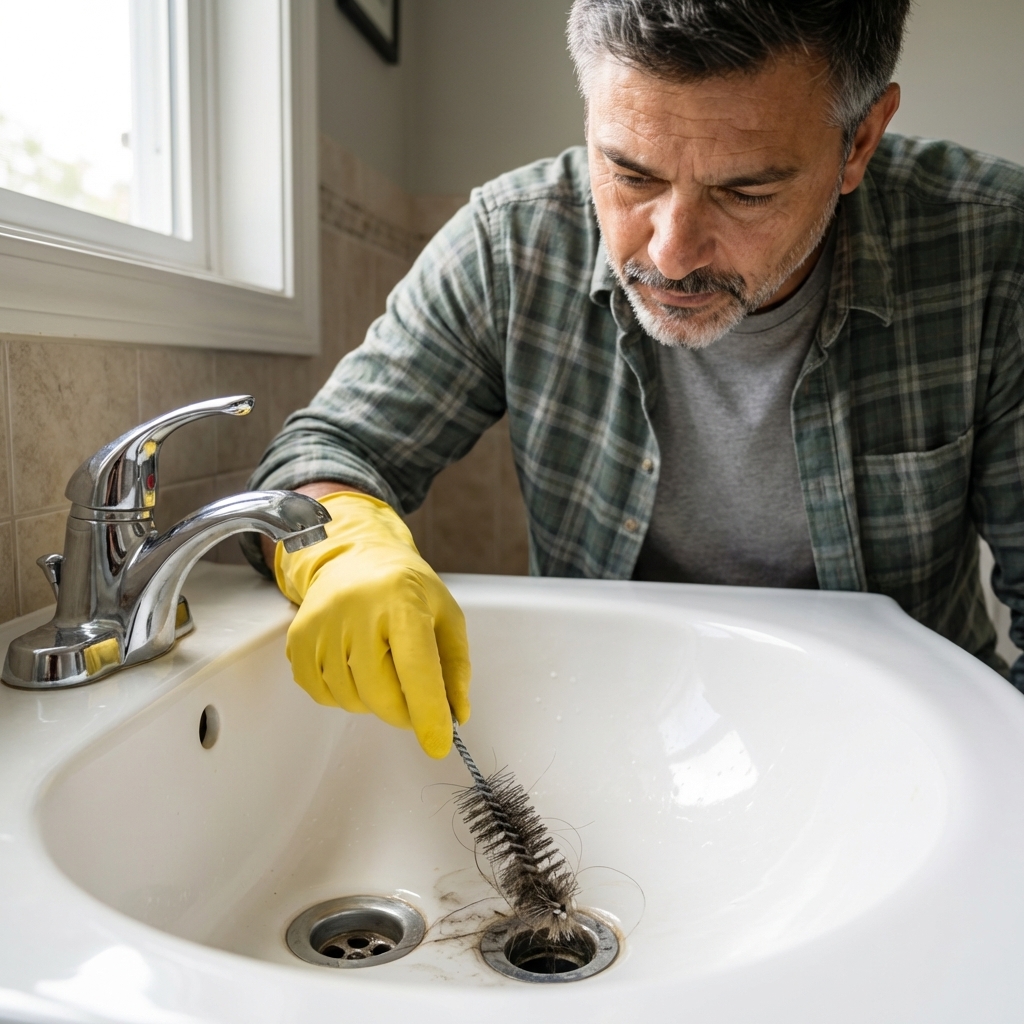
- Put on gloves.
- Remove the drain cover if possible.
- Use a stiff drain brush to scrub the inside walls of the drain, especially the first 6 to 12 inches.
- Do not forget the overflow hole on bathroom sinks and tubs. Use a small bottle brush or pipe cleaner.
- Pull out hair and debris with a plastic drain snake if needed.
If you do only one thing, do this. Drain flies are not living in the water. They are living in the slimy biofilm stuck to the pipe.
Step 2: Hot water flush
Hot water helps loosen residue and rinse away what you just scrubbed out. It can also kill some larvae near the top of the drain.
- Run very hot tap water for 2 to 3 minutes.
- Repeat once per day for 2 to 3 days, especially for bathroom drains.
Safety note: Boiling water can be risky for some plumbing materials and connections. If you have metal pipes, a careful boiling-water flush is often fine. If you have PVC, older joints, or you are unsure, stick with very hot tap water instead.
Step 3: Baking soda and vinegar
This combo will not magically dissolve a serious clog, but it is useful as a follow-up to help break up residue and freshen the drain.
Pour 1/2 cup baking soda into the drain.
Add 1 cup white vinegar.
Cover the drain opening for 20 to 30 minutes.
Flush with hot water.
Do this once a day for 2 to 3 days, then weekly for maintenance if that drain tends to smell.
Step 4: Enzyme drain gel
If you want one of the most reliable non-caustic methods, use an enzyme or bacterial drain gel designed to digest organic biofilm. This is different from bleach or chemical drain opener. Enzymes work slowly, but they target the food source that larvae live in.
- Choose an enzyme cleaner labeled for sinks, showers, and septic-safe use if that matters for your home.
- Apply at night so it sits undisturbed.
- Follow label directions and repeat for several nights.
Enzymes are especially helpful for kitchen drains, garbage disposals, and floor drains where greasy film can be stubborn.
Step 5: Clean the P-trap (optional, but powerful)
If a sink drain is still active after you scrub and treat, the next place to check is the P-trap, the U-shaped pipe under the sink. For comfortable DIYers, cleaning it is often the ultimate fix because it can hold sludge that never gets fully washed out.
- Put a bucket and towel under the trap.
- Unscrew the slip nuts (by hand or with pliers) and remove the trap.
- Dump the contents into the bucket and scrub the inside of the trap.
- Reinstall snugly, then run water and check for leaks.
If you are not sure, skip this step and call a plumber. A small leak under a sink can create a damp breeding zone nearby.
Step 6: Dry and disrupt nearby moisture
Adults like damp areas. Once you have treated the drain, make the area less inviting:
- Fix slow drips under sinks.
- Run the bathroom fan during and after showers.
- Wipe standing water around sink rims and tub edges.
- Do not leave wet sponges or rags in the sink overnight.
What not to do
- Do not rely on bleach alone. Bleach may kill some larvae near the surface, but it often does not remove biofilm. If the slime layer stays, the flies return.
- Do not skip scrubbing. Pouring things down a dirty drain is like spraying air freshener on a trash can. It helps for a moment, but the source is still there.
- Do not confuse them with fruit flies. If the flies are coming from a fruit bowl, recycling bin, or sticky spill, drain treatments will not solve it.
- Do not ignore rarely used drains. Basement floor drains and guest bathroom sinks are frequent culprits.
How long does it take?
If you scrub the drain and follow with a few days of hot water flushes and either baking soda and vinegar or an enzyme gel, you usually see a big drop in adults in 2 to 5 days. Full relief often takes 7 to 14 days because you are breaking a life cycle, not just killing what you see. Timelines vary with humidity, temperature, and how many drains are involved.
If you still see flies after about two weeks, there is usually another breeding spot you missed, or there is a plumbing issue keeping an area wet and dirty.
Prevention habits that work
Once you get the drain clean, prevention is mostly about not letting biofilm rebuild.
Weekly or biweekly routine
- Flush problem drains with hot water.
- Use an enzyme drain gel once a week for a few weeks, then monthly as needed.
- Scrub the drain cover and the area around it.
Kitchen habits
- Do not pour grease down the sink. Wipe pans with a paper towel first.
- Run the disposal with plenty of water, and clean the rubber splash guard.
- Rinse the sink strainer daily and clean it weekly.
Basement and rarely used drains
- Pour a few cups of water into floor drains every couple of weeks to keep the trap filled. A dry trap can let odors up and can attract insects to that damp, dirty opening.
- Keep the area dry and address seepage or standing water.
If you have a septic system
- Avoid frequent bleach or caustic drain openers.
- Use products labeled septic-safe. Enzyme and bacterial gels are often a good fit when used as directed.
When to call a plumber
Most drain fly problems are basic buildup. But it is worth getting help if any of these are true:
- You have sewage smells or frequent drain backups.
- Flies persist after treating every drain you can access.
- You suspect a leaking pipe or water damage behind a wall.
- A floor drain seems to stay wet even when you are not using nearby water.
- You think you may have a dry or damaged trap (odor, gurgling, recurring flies).
In those cases, the breeding site may be in a broken line, a damaged trap, a venting issue, or a hidden wet area that needs repair.
Also check nearby wet zones: sump pits, condensate drain lines and drip pans, wet mop buckets, damp trash areas, and leaks under appliances. Sometimes the flies are close to a drain, but not actually coming from it.
Quick checklist
- Confirm the breeding drain with the tape test.
- Remove the cover and scrub the pipe walls and overflow channel.
- Flush with hot water for a few days.
- Use baking soda and vinegar or an enzyme drain gel at night.
- For stubborn sink problems, clean the P-trap if you are comfortable doing it.
- Dry out the area and fix leaks.
- Maintain with periodic hot water flushes and enzyme treatment.
If you want the simple version: scrub first, treat second. That is what breaks the cycle and keeps drain flies from coming back.