How to Get Rid of Dandelions Naturally

Jose Brito
I’m Jose Britto, the writer behind The Country Store Farm Website. I share practical, down-to-earth gardening advice for home growers—whether you’re starting your first raised bed, troubleshooting pests, improving soil, or figuring out what to plant next. My focus is simple: clear tips you can actually use, realistic expectations, and methods that work in real backyards (not just in perfect conditions). If you like straightforward guidance and learning as you go, you’re in the right place.
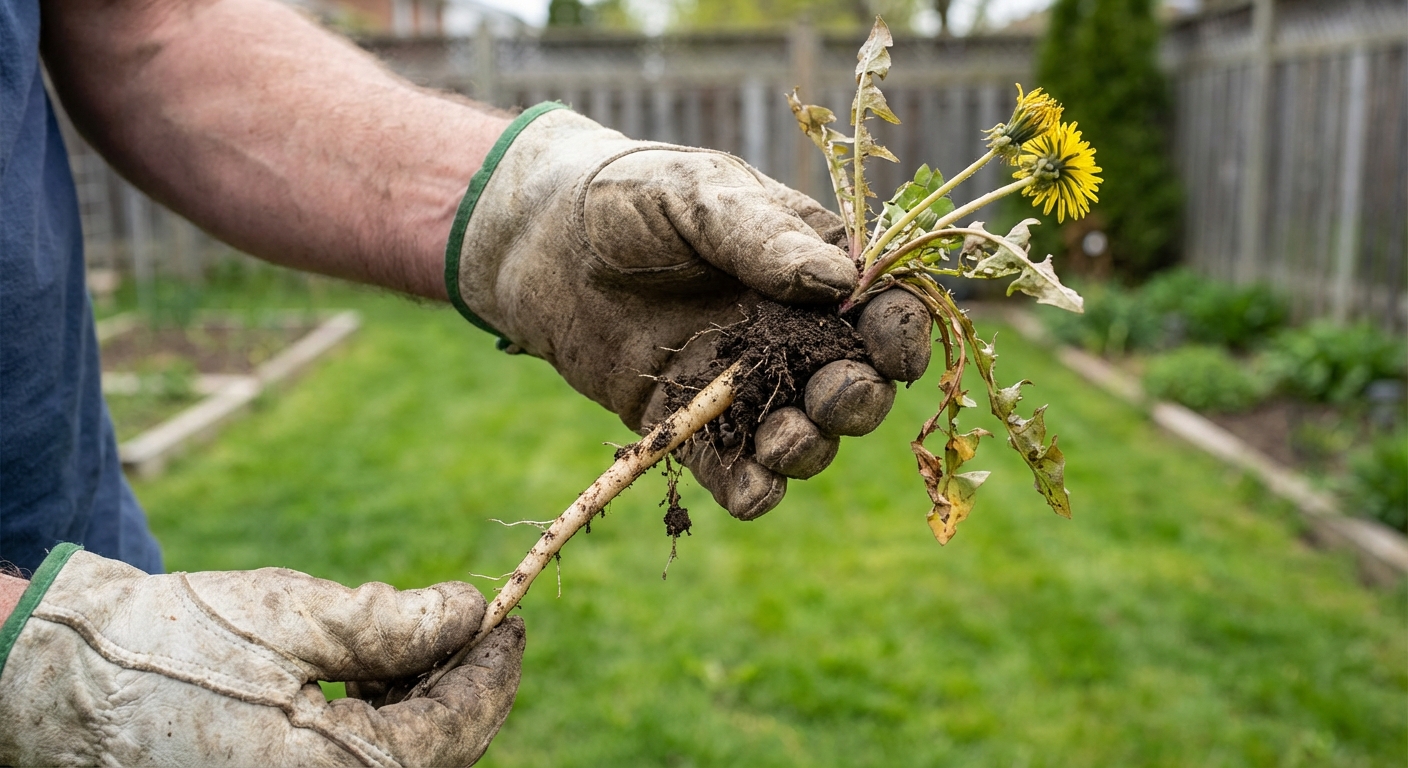
Dandelions are one of those weeds that look harmless until they take over. The tricky part is not the yellow flower. It is the long taproot underneath. If you pop the top off and leave the crown or a chunk of root behind, the plant can come right back like nothing happened.
This page is focused on dandelion-specific control, because they behave differently than crabgrass, clover, or general broadleaf weeds. If you work with the plant’s biology instead of fighting it, you can get rid of dandelions naturally and keep them from returning.
Know what makes dandelions hard to kill
Dandelions are perennial broadleaf weeds with a deep taproot. They form a low rosette of leaves that hugs the ground, which helps them survive mowing and outcompete thin turf.
Why they keep coming back
- Taproot regrowth: Dandelions can regrow from crown tissue and root fragments left behind, especially if the piece is thick and close to the surface.
- Seed spread: One plant can produce lots of those puffball seed heads that travel on the wind.
- Seeds stick around: Dandelion seeds can remain viable in the soil for years, so one “let it go” season can keep paying you back.
- They love weak turf: Sparse grass, compacted soil, low mowing, and low fertility give dandelions an opening.
The goal is to remove the plant completely when possible, then make your lawn less inviting so new seeds do not get established.
Manual removal that actually works
Hand-pulling is the most natural method, and it works well if you do it the right way. The key is timing, soil moisture, and the right tool.
Best time to pull dandelions
- After rain or watering: Moist soil releases the taproot with less breakage.
- Early spring or fall: Plants are actively growing and easier to remove completely.
- Before they go to seed: Pulling before seed heads form prevents the next wave.
Tools that help you get the whole root
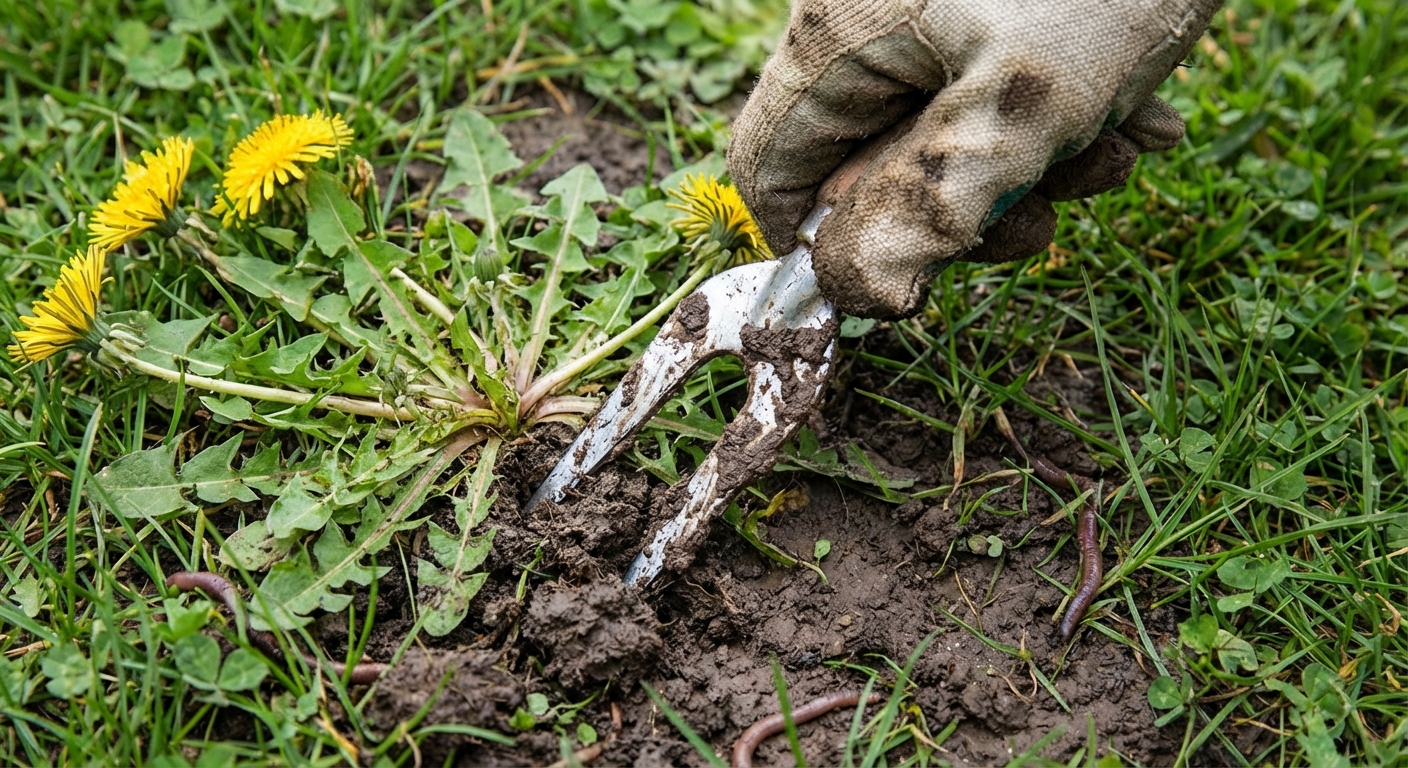
- Dandelion digger (forked tip)
- Long screwdriver or soil knife
- Weed puller tool with a claw (handheld or stand-up type)
Step-by-step: how to pull without snapping the root
- Soak the area if the soil is dry. Ten to fifteen minutes after watering is often a sweet spot, but heavy clay may need more time.
- Insert the tool 1 to 2 inches from the crown (the center where leaves meet the soil). Angle slightly toward the root.
- Work around the plant by loosening soil on two or three sides. Think “wiggle and pry,” not “yank.”
- Lift steadily while holding the leaves close to the base. Slow pressure pulls more root than a quick tug.
- Inspect the hole for broken root pieces. If you see a thick white piece left behind, dig a bit more and remove it.
- Fill and reseed the spot if you pulled a plug of soil. Bare holes are an invitation for more weeds.
What to do with pulled dandelions
If there are no seed heads: you can compost them, or you can use them. Unsprayed dandelions are edible (greens, flowers, and roots), as long as you are sure the area has not been treated with herbicides and is free of pet contamination.
If they have seed heads: bag them. Seeds can still mature on pulled plants if they are left on the ground. Let the bag sit in the sun for a few days to dry things out, then dispose of it to avoid spreading seeds when you turn compost.
Natural spot treatments
Sometimes you cannot pull dandelions cleanly. Maybe the soil is compacted, the root snaps every time, or the weed is growing in a crack or tight edge. In those cases, spot-treating can help. Most natural options are non-selective, meaning they can damage grass too, so treat individual weeds, not the whole lawn.
Boiling water
Boiling water works by cooking plant tissue. It is simple and fast, and it is best used where you do not mind losing surrounding vegetation.
- Where it works best: sidewalk cracks, gravel edges, driveway seams, along fences
- How to use: pour a small, controlled amount directly into the center of the dandelion crown
- What to expect: leaves wilt quickly, but you may need repeat treatments to fully weaken the root
Safety note: boiling water is a scald risk. Wear closed-toe shoes, go slow, and keep kids and pets away until the area cools.
Tip: For lawn dandelions, boiling water usually injures nearby grass. Save it for hardscape areas.
Vinegar solutions
Vinegar can burn back top growth. Household vinegar (5 percent acetic acid) is mild. Stronger horticultural vinegar can be more effective, but it is also more hazardous and still non-selective.
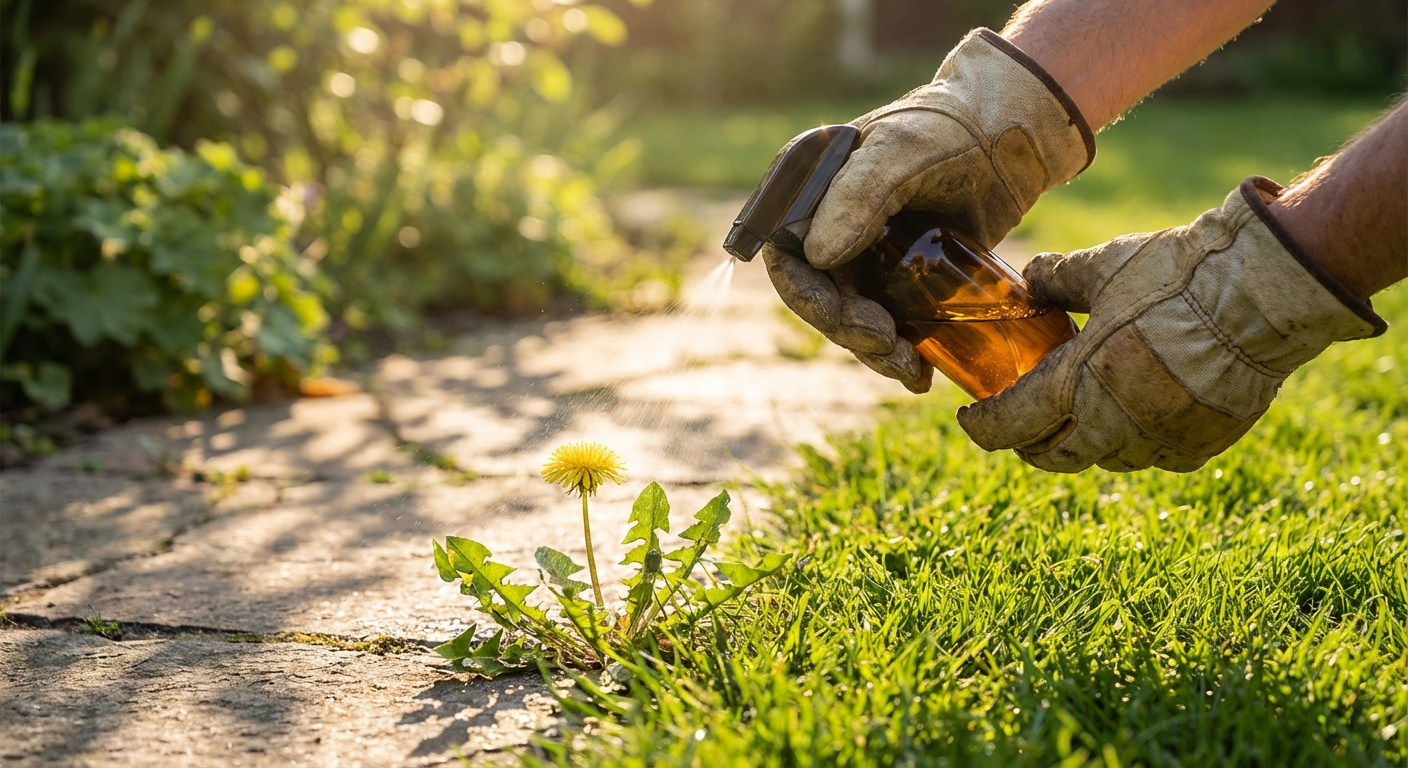
- Best use: spot applications on sunny, dry days
- How to apply: use a spray bottle and aim only at the leaves and crown
- Repeat: plan on multiple treatments, because vinegar often does not kill the entire taproot in one shot
Important safety note: Higher-acid vinegars can burn skin and eyes. Use gloves and eye protection, and avoid breathing mist. Also, repeated use (especially higher-acid products) may etch or dull some masonry, stone, and sealants, so spray carefully.
Flame weeding
A weed torch (flame weeder) is another popular natural spot treatment for cracks and gravel. It works by heat-shocking the plant. You are not trying to turn it into ash. A quick pass until the leaves dull and wilt is the goal.
- Where it works best: hardscapes, gravel, driveway seams, fence lines
- How to use: keep the flame moving and stay focused on the dandelion crown
- What to expect: top growth collapses fast, but established dandelions usually need repeat passes
Safety note: Use only where open flame is allowed and conditions are safe. Avoid dry, windy days. Keep water nearby and stay away from mulch, siding, and anything flammable.
Why natural sprays often “work” then fail
Dandelions store energy in the taproot. If a spray only burns leaves, the plant can push new growth from below. That is why repeated spot treatments, combined with improved turf density, are usually more successful than relying on sprays alone.
Crowd them out
If you want fewer dandelions long-term, focus on what your grass is doing. Thick turf is one of the best natural weed preventers.
Overseed thin areas
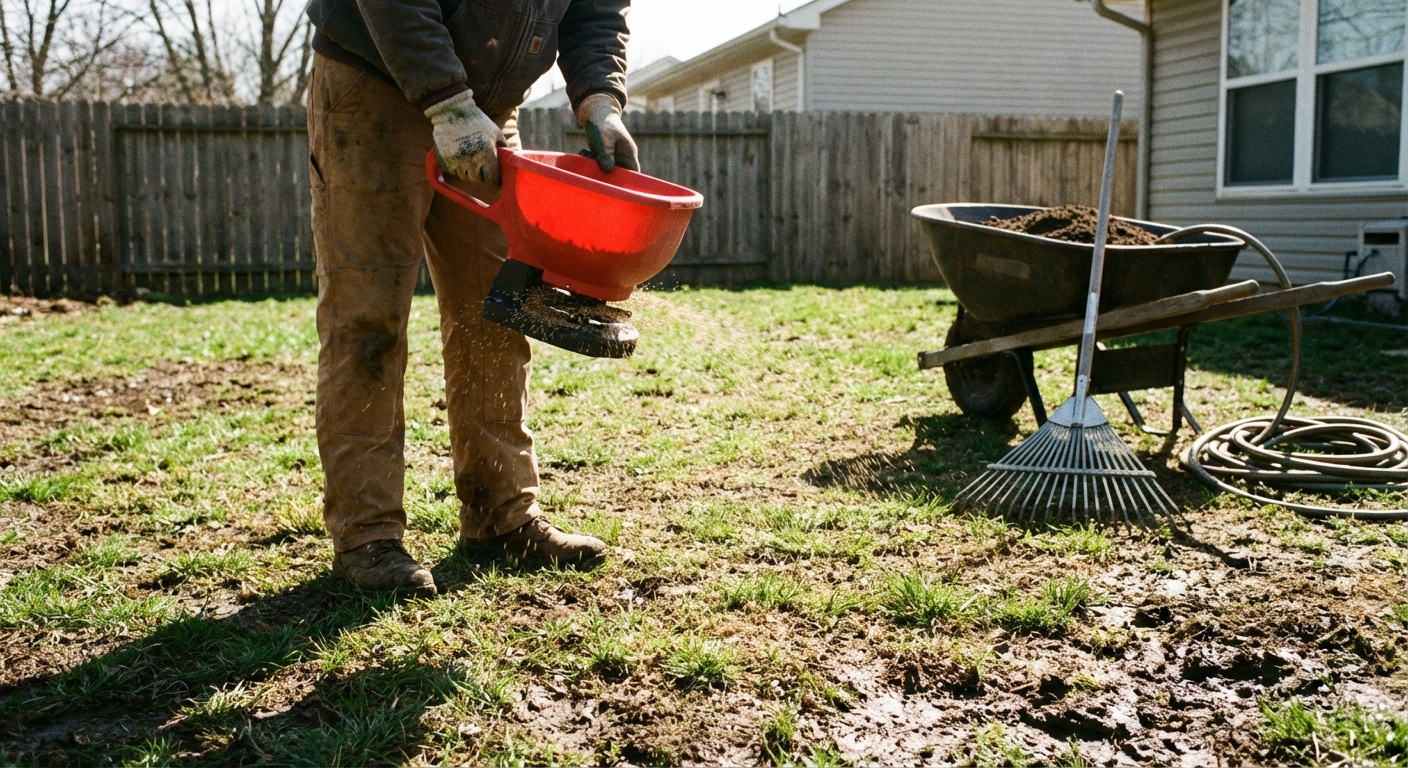
Dandelions love open space. Overseeding fills the gaps so seedlings cannot get established.
- Best time: early fall for cool-season lawns
- Warm-season note: Bermuda and zoysia are usually best thickened in late spring to early summer when soil is warm. St. Augustine and centipede are more often plugged or sodded than overseeded. Local extension guidance is worth a quick check.
- Prep: mow slightly shorter than normal and rake out dead material so seed contacts soil
- Seed-to-soil contact: lightly topdress with compost or fine soil if needed
- Water: keep the surface consistently moist until germination, then water deeper and less often
Feed the grass, not the weeds
Dandelions tend to move in when grass is weak. A simple fertility plan helps the lawn compete.
- Leave grass clippings if you can. They return nitrogen and organic matter.
- Use compost as a topdressing to improve soil structure and support beneficial microbes.
- Fertilize appropriately for your grass type and season. Avoid heavy feeding during heat stress.
Prevention that adds up
Once you knock back the existing plants, prevention is what keeps you from repeating the same battle every spring.
Mow higher
Short mowing weakens grass and lets sunlight hit the soil surface, which encourages weed seeds to sprout. Raise your mowing height and keep blades sharp.
- Cool-season lawns often do well around 3 to 4 inches.
- Warm-season lawns vary, but avoid scalping.
Water deeper, less often
Frequent shallow watering trains grass roots to stay near the surface. Deep watering encourages deeper grass roots and better drought resilience, which helps turf compete.
Fix compacted soil
Dandelions can tolerate tough conditions, including compacted soil. Aeration and organic matter can make a big difference.
- Core aerate if your soil is hard, water runs off, or the lawn feels spongy in spots.
- Topdress with compost after aeration to improve soil over time.
Stop seed heads early
If you cannot pull everything right away, at least remove blooms and seed heads to slow the spread. Since seeds can stay viable in the soil for years, every puffball you prevent matters. Snip them into a bag and keep mowing regularly.
A simple game plan
This weekend
- Pull the biggest dandelions after rain or watering.
- Fill holes and sprinkle grass seed on bare spots.
- Bag any plants with seed heads.
Next 2 to 4 weeks
- Recheck the same areas and pull regrowth while plants are small.
- Spot-treat dandelions in cracks with boiling water, vinegar, or a flame weeder (when safe and allowed).
- Mow higher and keep the schedule consistent.
This fall (or your best seeding window)
- Overseed thin areas and keep seed moist until established.
- Aerate if the soil is compacted.
- Topdress lightly with compost for a thicker, healthier lawn next season.
Common mistakes to avoid
- Pulling in dry soil: this almost guarantees a snapped taproot.
- Yanking by the leaves: it removes the top and leaves the engine underground.
- Using vinegar like a lawn spray: it can thin your turf and create more bare spots for weeds.
- Ignoring bare patches: open soil is where the next crop of dandelions starts.
- Mowing too low: it weakens the grass that should be doing the crowding-out.
FAQ
Will dandelions die if I keep mowing them?
Mowing alone rarely kills established dandelions because the growing point sits low. Mowing can prevent seed heads, but the plant usually survives.
Does vinegar kill the root?
Sometimes, but not reliably. Vinegar is best viewed as a burn-back treatment for leaves. For dandelions, manual removal or repeated spot treatments are usually needed to exhaust the root.
What is the most natural way to get rid of dandelions in a lawn?
Hand removal with full taproot extraction, followed by overseeding and better mowing height, is the most lawn-friendly natural approach.
Are dandelions a sign of poor soil?
They are often a sign of thin turf, compacted soil, or inconsistent lawn care, but they can grow in good soil too. If you improve turf density and soil structure, you usually see fewer dandelions over time.
Is it okay to leave a few dandelions?
If you are aiming for a natural lawn, it is fine to tolerate a few. They feed early pollinators and they are easy to spot-pull. The tradeoff is that any plant you let go to seed can multiply quickly, and those seeds can linger in the soil for years.
What if the infestation is overwhelming?
If you are dealing with a lawn that is more dandelion than grass, start with pulling and turf thickening, but do not be afraid to ask your local extension office for a plan. In some cases, a targeted selective broadleaf herbicide or a pro service can be the reset that lets you get back to mostly natural maintenance.
Bottom line
If you remember one thing, make it this: dandelions are a root problem. Pull them when the soil is moist and get as much taproot as you can. Use boiling water, vinegar, or flame weeding only as targeted spot tools, not as a blanket fix. Then thicken the lawn with overseeding, higher mowing, and healthier soil so the next batch has nowhere to land.