How to Get Rid of Crickets in the House

Jose Brito
I’m Jose Britto, the writer behind The Country Store Farm Website. I share practical, down-to-earth gardening advice for home growers—whether you’re starting your first raised bed, troubleshooting pests, improving soil, or figuring out what to plant next. My focus is simple: clear tips you can actually use, realistic expectations, and methods that work in real backyards (not just in perfect conditions). If you like straightforward guidance and learning as you go, you’re in the right place.
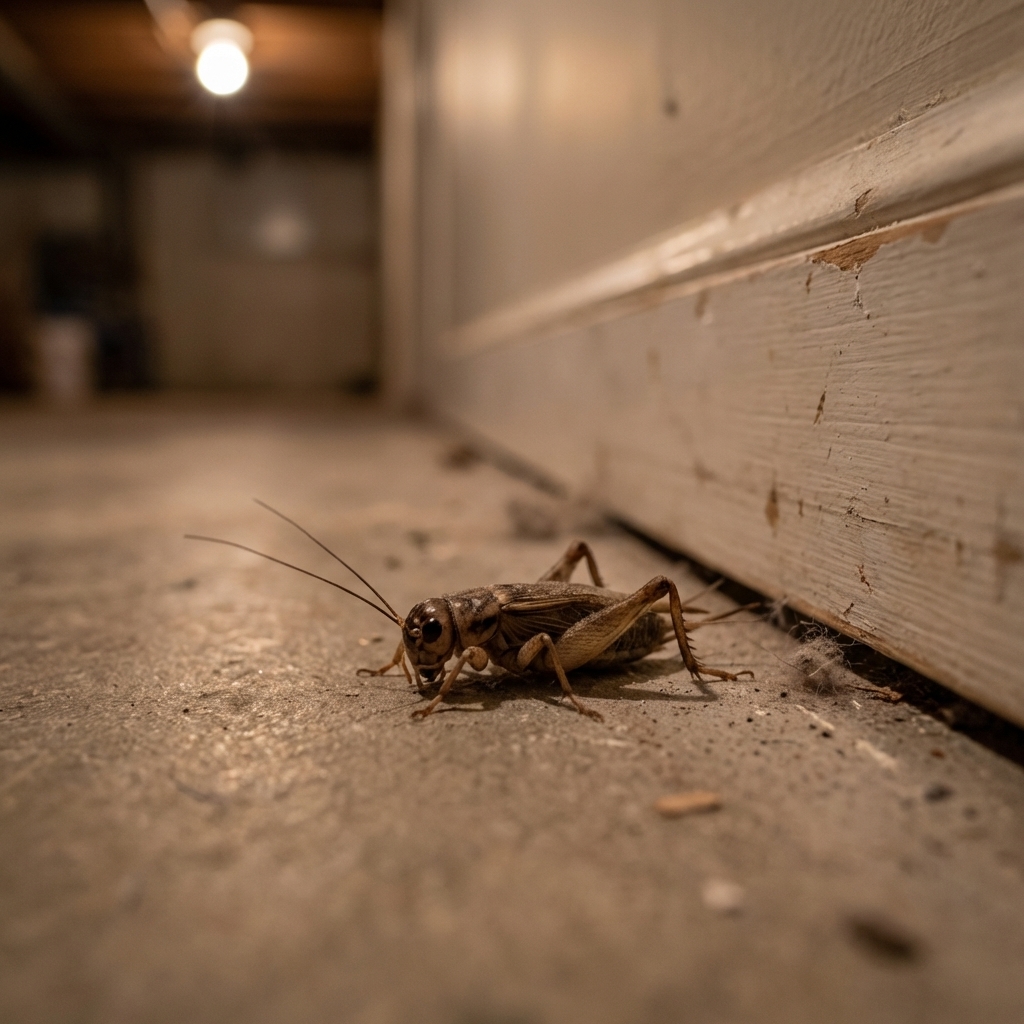
Crickets in the house are one of those pests that feel small until you are lying awake at 2 a.m. trying to find the one that will not stop chirping. The good news is you usually do not need harsh sprays to solve it. Most indoor cricket problems come down to a few basics: they can be drawn to your lights, slip in through tiny gaps, and find moisture and hiding spots once they are inside.
This guide walks you through fast ways to catch the ones you already have, plus long-term prevention so it does not turn into a seasonal routine.
Why crickets come inside
Crickets are outdoor insects, but homes offer exactly what they need when conditions outside get rough. The most common reasons they end up indoors are:
- Light attraction: Crickets can be drawn toward porch lights, garage lights, and bright windows at night.
- Easy access: Gaps under doors, torn window screens, foundation cracks, and openings around pipes are basically cricket doorways.
- Moisture: Damp basements, crawlspaces, laundry rooms, and leaky areas provide the humidity crickets like.
- Food sources: Pet food, crumbs, and organic debris (like leaves tracked into a garage) can feed them.
- Hiding spots: Clutter, storage boxes, and dark edges along walls give them cover.
- Seasonal shifts: In late summer and fall, crickets commonly wander indoors as outdoor temperatures start dropping.
If you address attraction plus access, you usually fix the problem at the source.
Quick ID: is it really crickets?
Most homeowners are dealing with house crickets, but a few close cousins can show up too. Here is a quick way to tell them apart.
| Type | Chirps? | Moisture preference | Common indoor spots |
|---|---|---|---|
| House crickets | Yes, often loud | Moderate | Kitchens, utility rooms, basements |
| Field crickets | Yes | Lower | Garages, entry areas, basements (seasonal) |
| Camel crickets (cave crickets) | No | High | Damp basements, crawlspaces |
The control steps below work for all of them, but the emphasis changes. Camel crickets almost always require extra focus on moisture control and reducing damp outdoor hiding areas near the foundation.
Start with fast control
1) Sticky traps (simple and effective)
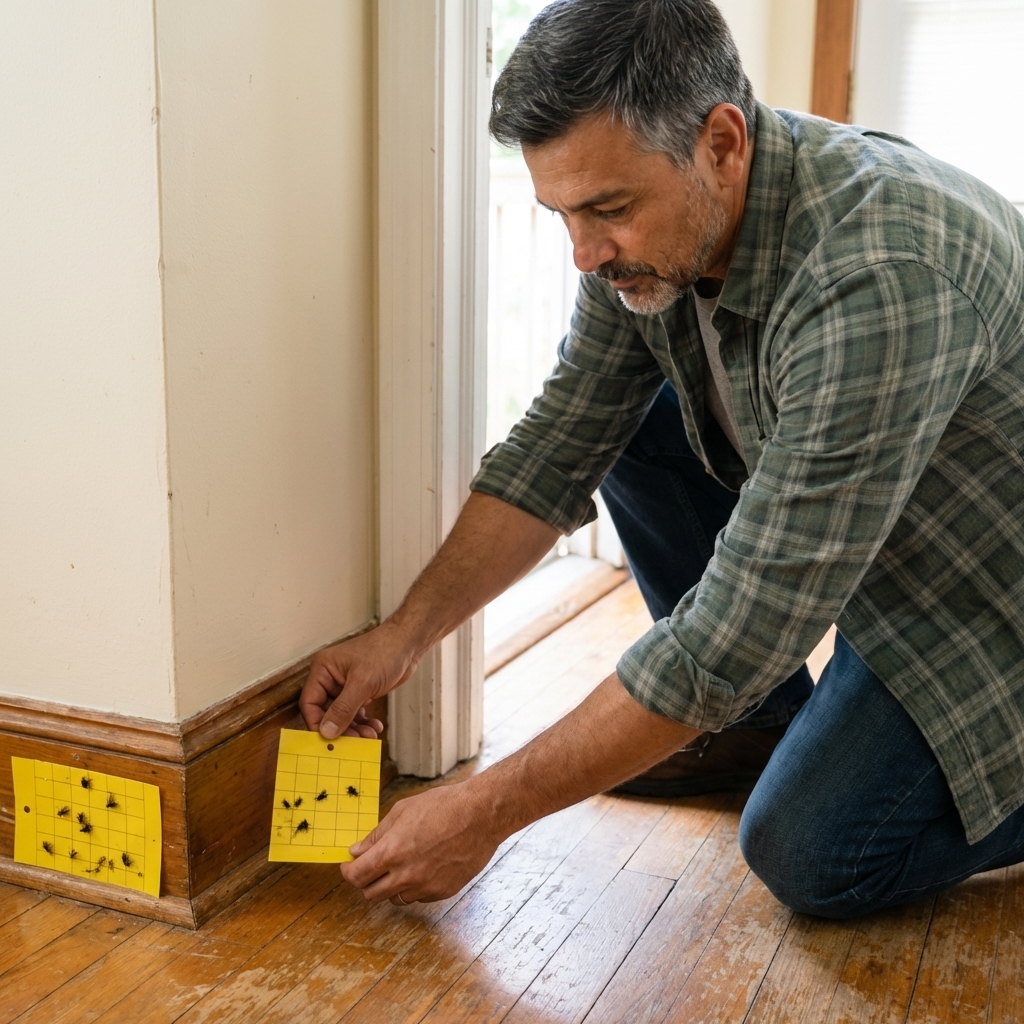
Sticky traps are one of the easiest ways to confirm where crickets are traveling and reduce the population quickly. They work especially well along edges where crickets hug walls.
- Place traps along baseboards, behind furniture, near the water heater, under sinks, and by doors to the garage or basement.
- Use more than one. In most homes, 4 to 10 traps placed in key spots works better than a single trap in the middle of the room.
- Check weekly and replace when dusty or full.
Pet and kid note: Put glue boards where paws and little hands cannot reach. A stuck paw is an avoidable problem.
2) Diatomaceous earth (DE) for cracks and edges
Food-grade diatomaceous earth is a dry powder that helps control crickets by abrading the waxy layer on their exoskeleton, which can cause them to dry out. It works best in dry areas and in places you cannot easily trap.
- Lightly dust DE into cracks, crevices, and along baseboards where crickets hide.
- Focus on basements, crawlspace access points, behind appliances, and around utility penetrations.
- Use a very thin layer. Piles are less effective and easier to disturb.
- Reapply after cleaning and any time it gets damp. DE loses effectiveness quickly when wet.
Safety note: Use food-grade DE only. Avoid creating airborne dust, and keep it out of places where kids and pets will kick it up.
3) Vacuum and remove
If you can spot the cricket, a vacuum is a fast, no-fuss solution. This is especially helpful in basements where crickets hide behind stored items.
- Vacuum around baseboards, storage boxes, and behind shelves.
- Empty the canister or bag outside afterward.
If you hear chirping but see nothing
That annoying chirp is usually coming from a male cricket. If the sound stops, it does not always mean they are gone. Try this instead:
- Use a flashlight at night: Crickets are more active after dark. Scan along baseboards, behind toilets, near the water heater, and around laundry hookups.
- Follow the edges: They tend to travel tight to walls and into corners, not across open floors.
- Place a few “locator” traps: Put sticky traps in suspected zones for 2 to 3 nights, then move them based on what you catch.
Natural deterrents (mild help)
Natural deterrents work best as a supporting strategy. Evidence is mixed and results can vary by species, so think of these as a mild “do not linger here” cue, not a reliable fix for an active infestation.
Peppermint oil
Peppermint oil is commonly used as a general insect deterrent. It is not magic, but it may help in entry zones.
- Mix 10 to 15 drops of peppermint essential oil with 1 cup of water in a spray bottle.
- Spray lightly around door thresholds, window frames, and baseboards.
- Reapply every few days, especially after mopping.
Pet note: Use caution with essential oils around pets, especially cats. Do not spray where pets can lick surfaces, and keep it away from pet bedding, food, and water areas.
Cedar blocks or cedar scent
Cedar can be helpful in closets, storage areas, and near entry points where crickets hide. Think of it as a mild deterrent, not a standalone control method.
- Use cedar blocks in storage bins, closets, and basement shelving areas.
- If using cedar essential oil, apply it sparingly on cotton balls and place them in out-of-the-way corners.

Seal entry points
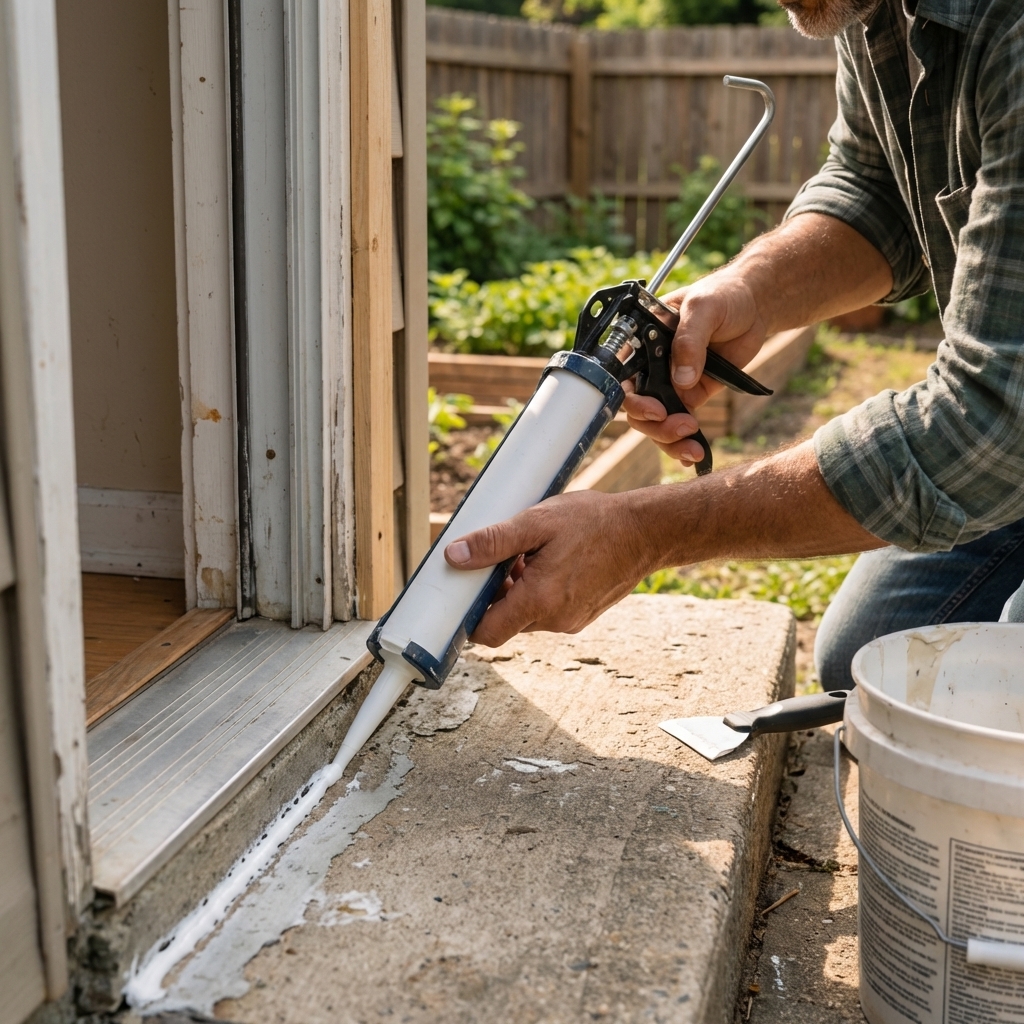
If you only trap crickets without sealing up access points, you can keep dealing with new ones. A quick perimeter check is usually the turning point.
Common entry points
- Door gaps: Especially the garage door into the house and exterior doors.
- Window screens: Small tears are enough for insects to slip through.
- Foundation cracks: Look where siding meets the foundation.
- Utility openings: Plumbing, cable, AC lines, dryer vents.
- Garage: Crickets often gather here first, then move inside.
What to use
- Door sweeps and weatherstripping for exterior doors.
- Silicone caulk for small cracks around trim and windows.
- Expanding foam for larger gaps around pipes (use carefully and trim cleanly).
- Screen repair kits for torn window or vent screens.
- Mesh hardware cloth for larger ventilation openings that need airflow.
Reduce outdoor lighting
Outdoor lights can increase insect activity near your foundation, which raises the odds of crickets wandering toward entry points. You do not have to live in the dark, but a few changes can reduce the draw.
- Turn off unnecessary lights at night, especially near doors and garage areas.
- Use motion sensors so lights are not on all evening.
- Switch bulbs: Warm or yellow LEDs tend to attract fewer insects than bright white or blue-toned bulbs.
- Aim lights down so they do not shine outward into the yard.
Manage moisture indoors
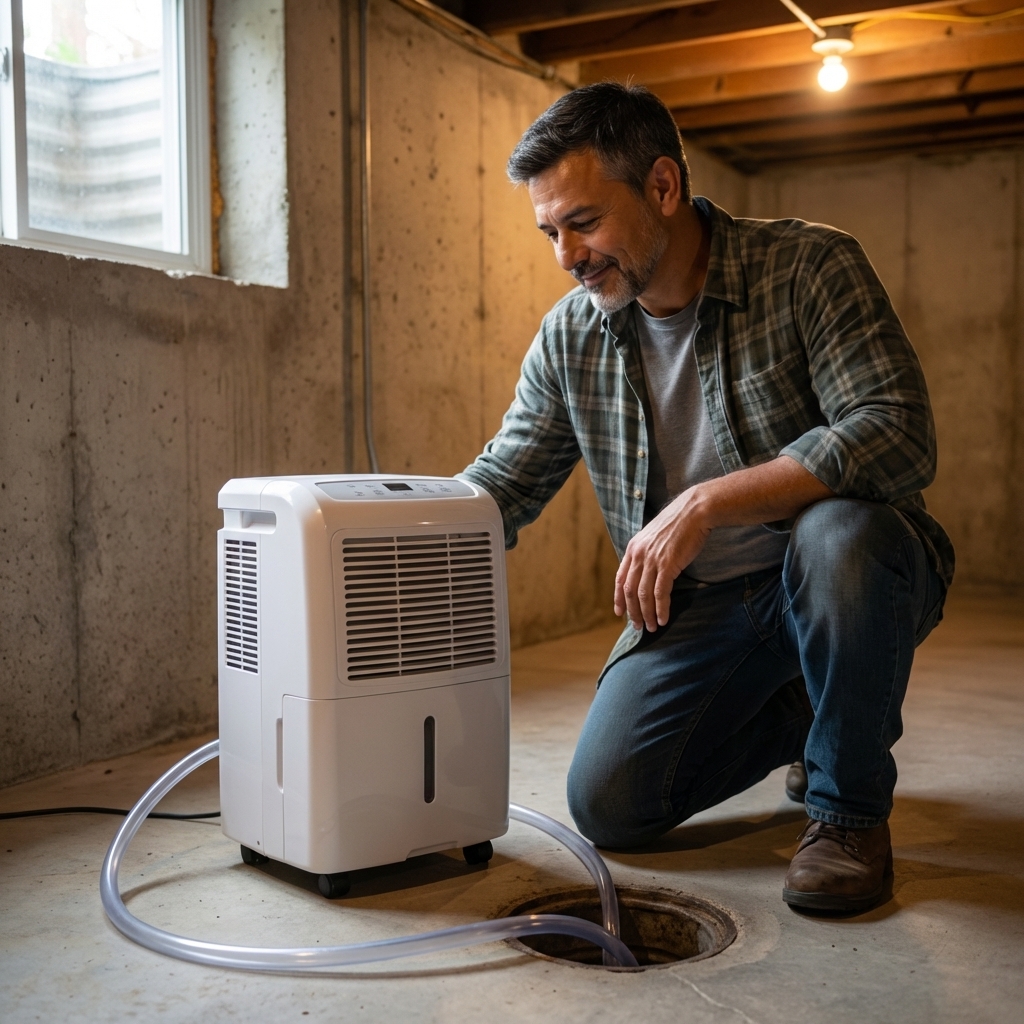
Crickets, especially camel crickets, love damp areas. If your home has humidity issues, you will likely keep seeing them until that is handled.
Moisture fixes
- Run a dehumidifier in basements and aim for around 50 percent humidity or lower if you can do it comfortably (basements vary).
- Fix leaks under sinks, around the water heater, and near laundry hookups.
- Improve ventilation in bathrooms and laundry rooms, and use exhaust fans.
- Keep storage off the floor in basements so air can circulate.
- Address crawlspaces with vapor barriers and proper venting if needed.
Clean up food and clutter
You do not need a spotless house, but removing easy food and shelter helps a lot.
- Store pet food in sealed containers and do not leave bowls full overnight if crickets are active.
- Sweep crumbs and spills, especially under appliances and in utility areas.
- Clean up garage feed and seed: Spilled birdseed or grass seed can attract insects.
- Reduce clutter near walls and in basements so crickets have fewer places to hide.
Yard and perimeter cleanup
When crickets hang out right next to your foundation, they are more likely to slip in. A little outdoor cleanup can reduce the pressure on your home.
- Trim tall grass and weeds near the house.
- Move mulch back a few inches from the foundation and avoid piling it high against the wall.
- Clear leaf litter and damp debris around steps and window wells.
- Store firewood away from the house and keep it off the ground.
- Reduce clutter in the garage so crickets have fewer hiding spots.
Common mistakes
- Do not rely on one indoor spray. Sprays rarely fix the underlying issue and can add unnecessary chemical exposure.
- Do not overapply essential oils. Strong concentrations can irritate people and pets, and they are not a substitute for sealing entry points.
- Do not ignore humidity. Damp conditions make it easier for crickets to stick around.
- Do not place traps only in the middle of a room. Crickets tend to travel along edges.
When to call a pro
If you have tried traps plus sealing and you are still seeing lots of crickets for several weeks, it may be time to bring in help. Consider a pest professional if:
- You see crickets daily in multiple rooms.
- You have persistent moisture problems you cannot easily solve.
- You suspect a heavy population in a crawlspace or wall void.
- You want an exterior perimeter treatment plan tailored to your home.
A reputable pro should focus on exclusion and prevention, not just repeated indoor spraying. In some situations, an exterior targeted residual treatment may be recommended as part of a broader plan, especially if crickets are building up around the foundation.
Simple plan for tonight
- Set sticky traps along baseboards, near doors, and in the basement.
- Dust food-grade DE into dry cracks and crevices where crickets hide.
- Do a quick nighttime flashlight check to find the hottest spots.
- Seal gaps under doors and around pipes this week.
- Lower humidity with a dehumidifier and fix any leaks.
- Cut back outdoor lighting or switch to warmer bulbs.
Do those steps and you will usually go from constant chirping to a quiet house pretty quickly.