How to Get Rid of Crabgrass Naturally

Jose Brito
I’m Jose Britto, the writer behind The Country Store Farm Website. I share practical, down-to-earth gardening advice for home growers—whether you’re starting your first raised bed, troubleshooting pests, improving soil, or figuring out what to plant next. My focus is simple: clear tips you can actually use, realistic expectations, and methods that work in real backyards (not just in perfect conditions). If you like straightforward guidance and learning as you go, you’re in the right place.
Crabgrass is one of those weeds that can make a decent lawn look patchy almost overnight. The tricky part is that by the time you really notice it, it is usually already thriving once summer heat arrives and spreading seed.
The good news is you can handle crabgrass without harsh chemicals. The key is doing the right thing at the right time: stop the seeds from sprouting in spring, remove what shows up in summer, and grow a lawn that leaves crabgrass fewer bare or thin spots to move into.
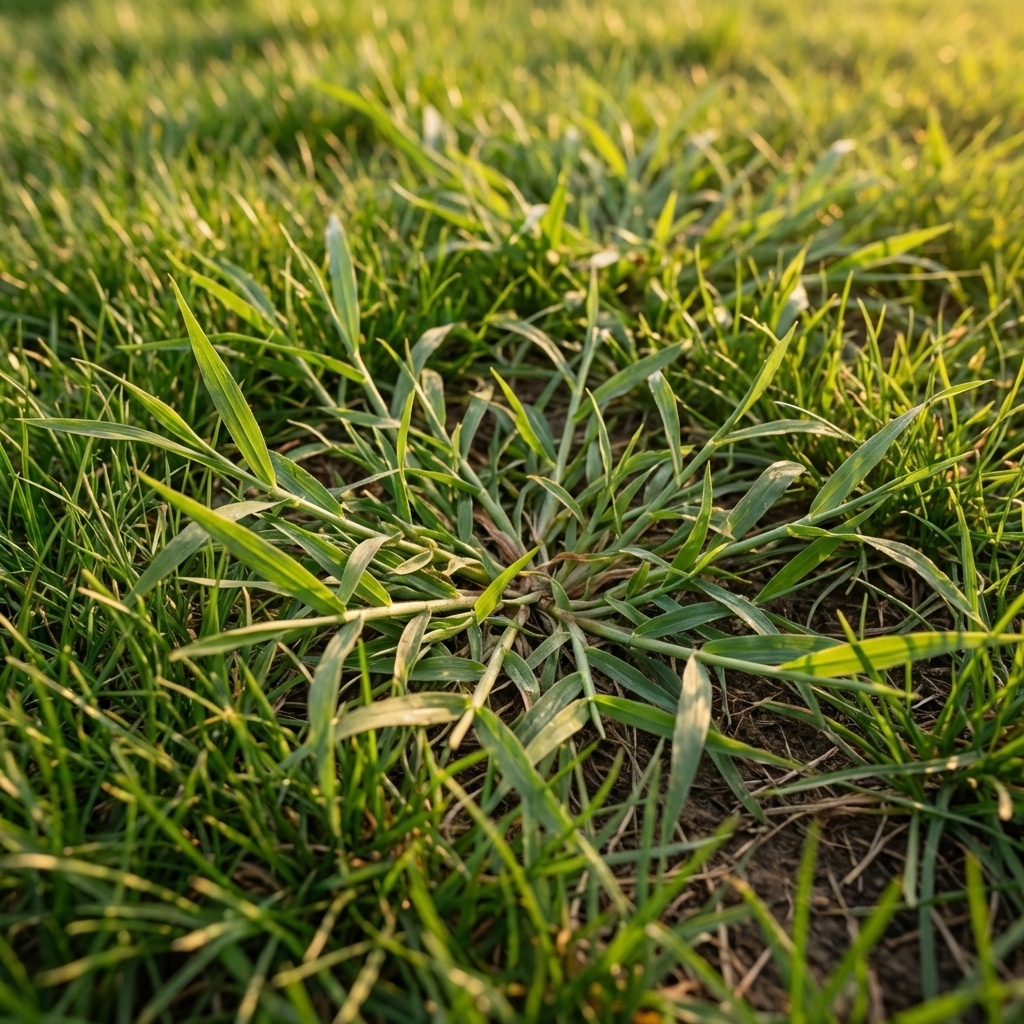
How to identify crabgrass
Crabgrass is an annual grassy weed. It looks a lot like turfgrass at first glance, which is why it sneaks in. Once you know what to look for, it gets easier to spot early.
Common signs
- Growth habit: Low and spreading, with stems that radiate outward like a star.
- Blades: Wider and coarser than most lawn grasses. Many types have a lighter green color.
- Clumps: It often forms flat, sprawling clumps that smother surrounding grass.
- Seedheads: In mid to late summer, you will see finger-like seed spikes.
Quick check: If you can trace several stems back to one central point and the plant is hugging the ground, you are probably looking at crabgrass.

Crabgrass life cycle (why timing matters)
Crabgrass is a summer annual. That means it lives fast and dies with frost, but not before dropping a lot of seed for next year.
The basic timeline
- Spring: Seeds begin germinating as soil warms. This is when prevention works best.
- Early summer: Plants spread quickly, especially in thin or stressed lawn areas.
- Mid to late summer: Seedheads form and drop seed. This is when you want to prevent reseeding.
- Fall: Plants die after the first hard frost, leaving bare spots if turf did not fill in.
If you remember one thing, make it this: crabgrass control is mostly about preventing germination. Post-emergent fixes are always more work.
Organic pre-emergent option: corn gluten meal
Corn gluten meal is a popular organic pre-emergent. It does not kill existing crabgrass. Instead, when applied at the right time, it can reduce successful germination for many seeds, including crabgrass.
How it works (realistic expectations)
Corn gluten meal releases natural compounds that can inhibit root formation in newly sprouted seedlings. If a crabgrass seed sprouts but cannot root well, it is less likely to survive.
Important: Results vary. Corn gluten meal can provide partial suppression, but it is not a guaranteed, one-and-done fix. It tends to work best as part of a long game with good timing, correct application, and a lawn that is getting thicker each season.
When to apply
- Apply just before crabgrass typically germinates in your area.
- A reliable target is when soil temperatures reach about 55°F (13°C) for a few days in a row.
- Visual cues many gardeners use: forsythia blooms are a classic crabgrass timing signal. Lilac bloom can also be a helpful cue in some areas.
How to apply it correctly
- Apply to a dry lawn so you can spread evenly.
- Water it in if the label directs, then allow the lawn surface to dry. Timing and watering matter, so follow your specific product instructions.
- Do not aggressively rake the lawn right after. You want it to stay near the soil surface.
- Do not use it at the same time you seed grass, because it can also reduce germination of your grass seed.
If you need to overseed, plan your calendar: use corn gluten meal in spring, then overseed later when crabgrass pressure is dropping and your lawn can establish.

Manual removal: the simplest natural method
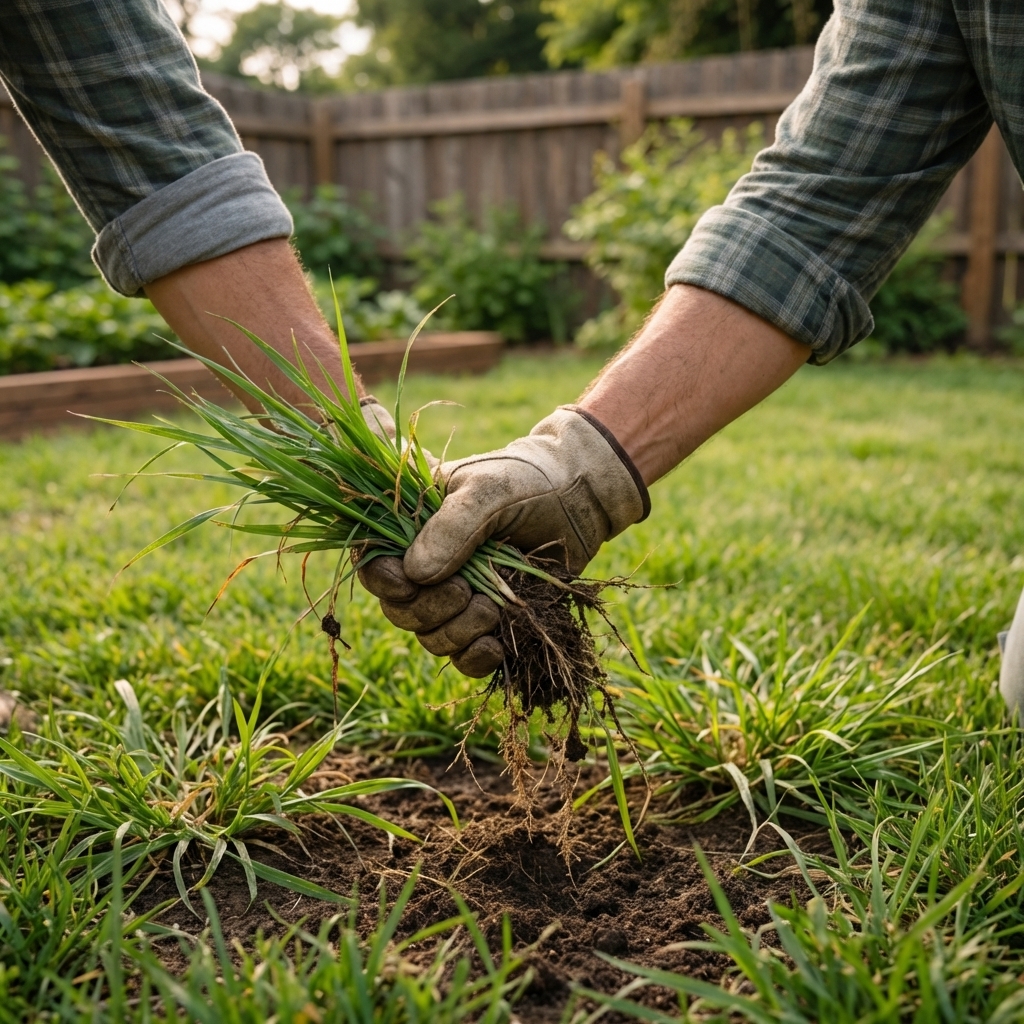
For small patches, hand pulling is still one of the most effective, truly organic options. The trick is pulling the whole plant, especially the crown at the base.
Best time to pull
- Pull when the soil is slightly moist, like the day after rain or after watering.
- Pull before seedheads form whenever possible.
How to pull crabgrass so it does not come right back
- Grab the plant low, close to the soil surface.
- Pull slowly and steadily to remove the crown and as much of the root system as possible.
- If it snaps off, use a hand weeding tool to pry out the base.
- Bag plants with seedheads instead of composting them.
Tip: If you have dozens of small clumps, a stand-up weed puller can save your back, but even a simple hand fork works if you stay consistent.
Natural post-emergent treatments (vinegar-based sprays)
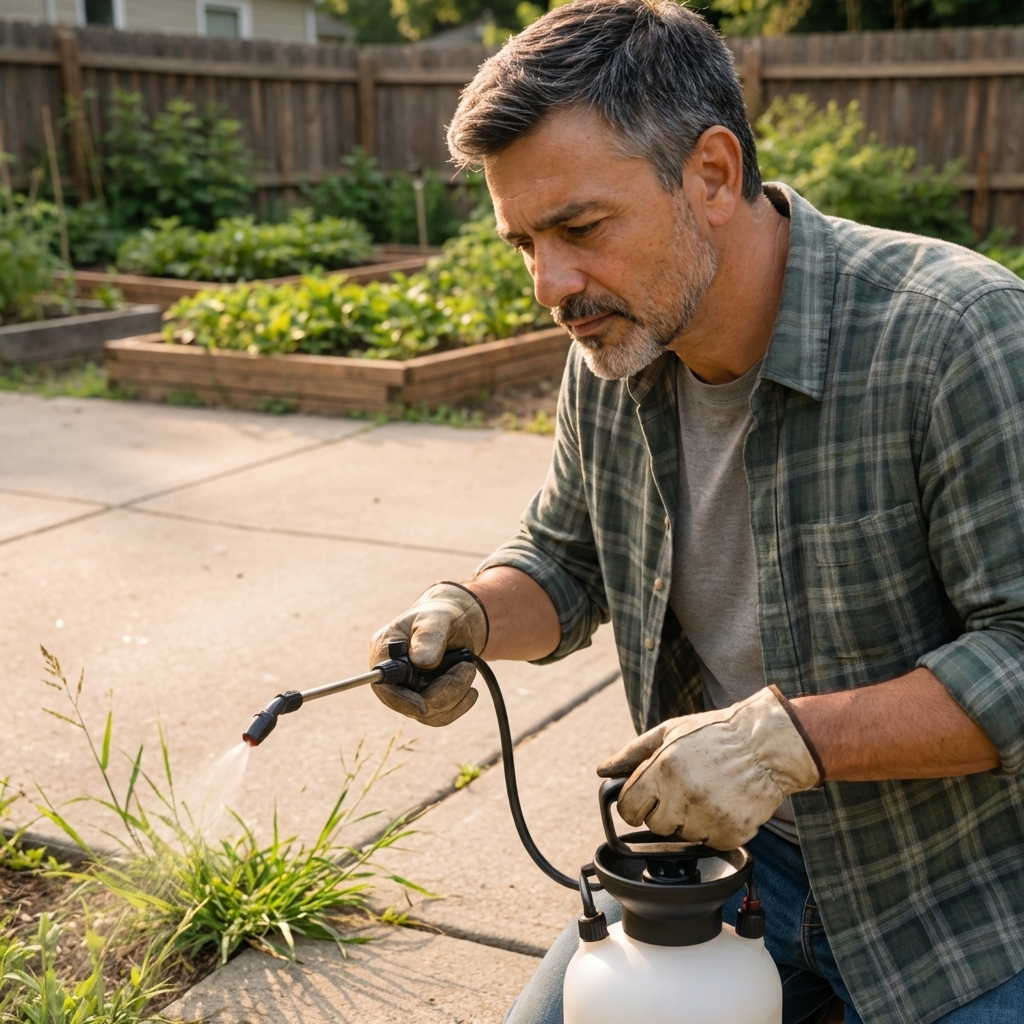
If crabgrass is already up and you want a natural spot treatment, vinegar-based sprays can help by burning back the top growth. This works best on young crabgrass and in cracks, edges, and gravel areas where you are not trying to protect turf.
Big warning: Vinegar is non-selective. It can damage or kill your lawn grass too. Treat it like a spot tool, not a broadcast solution.
What to know
- Vinegar sprays often work better on broadleaf weeds than grassy weeds, and grassy weeds like crabgrass can be stubborn.
- Expect repeat applications. Crabgrass can regrow from the crown if only the blades burn back.
What to use
- Household vinegar (5%): Mild, sometimes works on very young weeds, often needs repeat applications.
- Horticultural vinegar (higher acidity): Stronger and typically more effective, but more hazardous to handle.
How to apply for best results
- Spray on a hot, sunny, dry day for stronger burn-down.
- Target the crabgrass leaves directly, avoiding nearby turf and desirable plants.
- Use it where collateral damage is acceptable, like driveway edges, sidewalk cracks, and gravel.
Safety notes
- Wear gloves and eye protection, especially with stronger vinegars.
- Keep pets and kids off the area until the spray dries.
If crabgrass is mixed throughout your lawn, vinegar sprays usually create dead spots that you then have to reseed. In those cases, focus on pulling and lawn thickening instead.
Lawn practices that prevent crabgrass
Crabgrass loves thin turf, compacted soil, and stressed grass. If you fix the conditions, you reduce how much crabgrass can take hold each year. Consider crabgrass a useful clue that your lawn has openings that need closing.
Mow higher
Scalping opens the canopy and lets more sunlight hit the soil surface, which can encourage crabgrass to establish. Taller mowing also reduces stress on your turf.
- For many cool-season lawns, a common target is about 3 to 4 inches. Adjust based on your grass type and local guidance.
- Never remove more than about one-third of the grass blade at a time.
Overseed to thicken turf
A thick lawn is the best natural weed barrier. Overseeding helps fill in bare areas where crabgrass seeds love to sprout.
- Cool-season grasses: Best timing is usually late summer to early fall.
- Warm-season grasses: Seeding and repair timing is usually late spring to early summer when the turf is actively growing. Many warm-season lawns are filled in with plugs or sod rather than seed.
- Choose a grass type that matches your sun, shade, and traffic conditions.
Aerate compacted soil
Compaction weakens turf and makes it easier for crabgrass to move in. Core aeration improves airflow, water movement, and root growth.
- Aerate when your grass is in its main growth season so it can recover quickly.
- Cool-season lawns: Often best in early fall (or spring as a second choice).
- Warm-season lawns: Often best in late spring to early summer.
- Focus on high-traffic areas where soil gets packed down.
Water deeply, not constantly
Frequent shallow watering encourages shallow roots and a weaker lawn. Deeper watering, less often, helps turf outcompete weeds.
- Many lawns do well with about 1 inch of water per week including rainfall, adjusted for heat, soil type, and local restrictions.
- Water early in the day.
- Adjust for rainfall and your soil type.
Feed the soil
Healthy turf starts with soil. A basic soil test can guide you, but even without one, adding compost and mowing mulched clippings can improve the lawn over time.
A simple natural plan (put it all together)
Spring
- Watch for forsythia bloom or track soil temps. Apply corn gluten meal before germination starts in your area, around 55°F soil temperature for a few days.
- Mow higher as growth kicks in.
Summer
- Hand pull small patches when soil is moist.
- Use vinegar-based spot sprays only where you can tolerate damage to surrounding grass, like edges and cracks.
- Prevent seedheads from maturing whenever possible.
Late summer to fall
- Cool-season lawns: Aerate if soil is compacted, then overseed to fill thin areas and outcompete next year’s crabgrass.
- Warm-season lawns: Plan aeration and major repair work for late spring to early summer instead of fall.
- Topdress with a light layer of compost if your lawn needs a boost.
Common questions
Will crabgrass die on its own?
Yes, crabgrass typically dies with the first hard frost. But if it dropped seed, you will likely see it again next year unless you prevent germination and thicken your turf.
Does pulling crabgrass make it spread?
Pulling does not make it spread, but disturbing soil can bring buried seeds up into the germination zone and improve seed-to-soil contact. The fix is to pull carefully, then fill bare spots so weeds do not reclaim the space.
What should I do with the bare spots after removal?
Do not leave them open. Rake smooth, add a thin layer of compost or topsoil if needed, then repair with the right method for your lawn type: seed (common for cool-season), or plugs and sod (common for warm-season). Water gently until it establishes.
Is vinegar safe for lawns?
Vinegar is not selective. It can injure or kill turfgrass. Use it as a spot treatment only where you can avoid desirable grass, or where you plan to reseed afterward.