How to Get Rid of Clover in Your Lawn Naturally

Jose Brito
I’m Jose Britto, the writer behind The Country Store Farm Website. I share practical, down-to-earth gardening advice for home growers—whether you’re starting your first raised bed, troubleshooting pests, improving soil, or figuring out what to plant next. My focus is simple: clear tips you can actually use, realistic expectations, and methods that work in real backyards (not just in perfect conditions). If you like straightforward guidance and learning as you go, you’re in the right place.
Clover is one of those “love it or hate it” lawn plants. Some folks want a clean, uniform turf. Others are happy to see clover because it stays green, feeds pollinators, and can handle dry spells better than many grasses.
If you want less clover (or none), the good news is you can do it naturally. The better news is that clover is usually a symptom, not the real problem. Fix what made your lawn inviting to clover and you will get longer-lasting results.
Why clover invades lawns
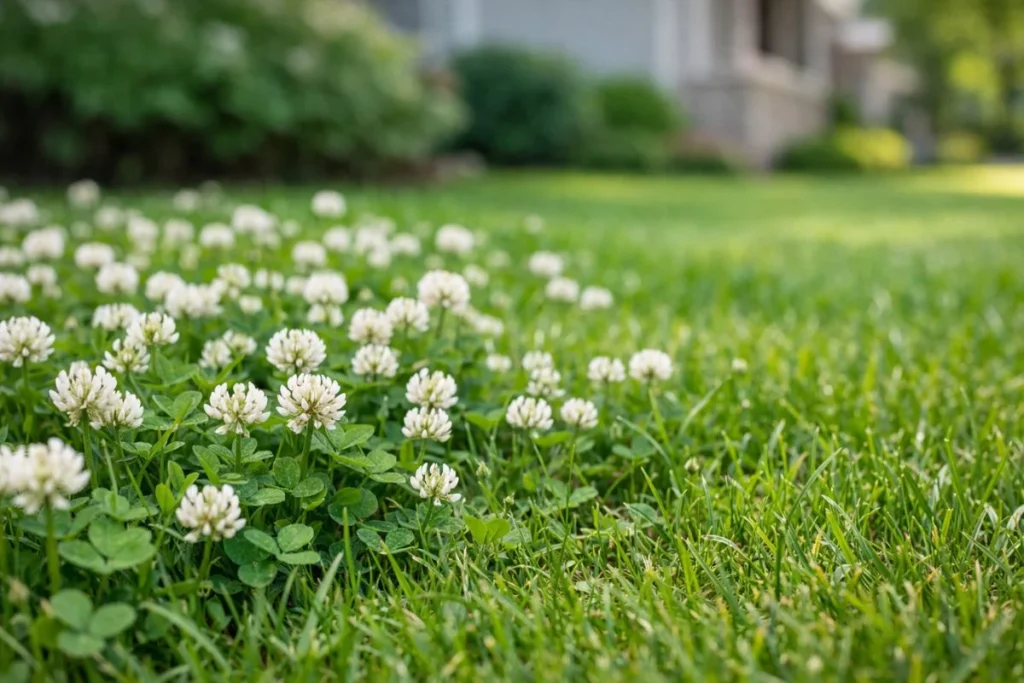
Clover spreads fastest in lawns that are thin, stressed, or short on nutrients. It is a survivor, and it takes advantage of openings where grass is not filling in.
1) Low nitrogen
Clover is a legume, which means it can pull nitrogen from the air (through soil bacteria on its roots) and use it to grow. Grass cannot do that. So when your lawn is low on nitrogen, clover has a built-in advantage and often shows up in patches.
2) Compacted soil
Compacted soil limits grass roots, water movement, and oxygen. Clover tolerates tough soil conditions better than many turf grasses, so it can slowly replace grass in high-traffic areas.
3) Thin turf and bare spots
Any time you can see soil between grass blades, weeds have room to move in. Clover spreads by seed and by creeping stems, so it does well in lawns with weak coverage.
4) Mowing too short
Scalping your lawn stresses grass and reduces its ability to crowd out weeds. Clover can stay low and still thrive, especially if grass is repeatedly cut too short.
Quick check: If you regularly see brown stubble after mowing, or your lawn looks “buzzed” and dries out fast, you are probably cutting too low for that grass type.
Make sure it is clover
Before you go to war, make sure you are targeting the right plant. White clover has round leaflets (usually three) and often a faint white “V” mark on each leaflet. It also has small white to pinkish ball-shaped flowers.
A common lookalike is oxalis (wood sorrel), which often has more heart-shaped leaflets and yellow flowers. Control strategies overlap, but timing and persistence can differ.
Is clover actually beneficial?
Sometimes clover is not the enemy. In small amounts, it can improve your lawn’s resilience and even help your soil.
- Adds nitrogen: Clover fixes nitrogen with bacteria in its root nodules, but that nitrogen mostly becomes available to the lawn after clover is mowed and the clippings break down, or after plants die back and decompose. Leaving grass and clover clippings on the lawn is the easiest way to recycle those nutrients.
- Stays green with less water: White clover often stays greener in summer than many cool-season turf lawns, though drought tolerance varies by grass species and clover type.
- Feeds pollinators: White clover flowers are a steady food source for bees.
- Soft ground cover: It can fill in bare patches where grass struggles.
When to leave it: If clover is scattered and you like a more natural, low-input lawn, you may be better off keeping it and focusing on mowing height and overall lawn health.
When to remove it: If clover is taking over large areas, you have a specific turf look you want, or you are trying to reduce flowering plants in play areas, then it makes sense to push it back and thicken your grass.
Natural ways to get rid of clover
You will get the best results by combining a couple of methods instead of relying on one “magic fix.” Think: remove what is there, then fix the conditions that let it spread.
One more reality check: Established clover is persistent. Natural control usually takes repeated passes plus overseeding over a season, not one weekend.
Hand-pull clover (best for small patches)
For a few patches, hand-pulling is simple and surprisingly effective if you do it right.
- Water the area first or pull the day after rain. Moist soil releases roots more easily.
- Grab low at the base and pull slowly to remove as much root as possible.
- Fill divots with a little compost and topsoil, then seed those spots right away.
Tip: If you pull and leave bare soil, clover (or another weed) will come right back. Always follow up with seed or healthy grass coverage.

Corn gluten meal (pre-emergent help, not a quick cure)
Corn gluten meal is often used as a natural pre-emergent. It can help reduce new clover seedlings, but it will not eliminate established clover plants overnight.
- When it helps: Before clover seeds germinate (timing depends on your region and weather).
- When to avoid it: If you are planning to overseed soon, because it can also reduce grass seed germination.
- Best use: Use it as part of a prevention plan after you have already reduced existing clover.
Worth knowing: Real-world results vary and depend heavily on timing, even coverage, and sometimes repeat applications. It is a tool, not a guarantee.
Important: Read the product label for application rates. More is not better, and uneven application can create patchy results.
Vinegar spot treatment (use carefully)
Vinegar can burn back clover leaves, especially in sunny, warm conditions. The catch is that vinegar is non-selective. It can damage grass just as easily.
- Use it as a spot treatment only, not as a broadcast spray.
- Choose a calm day to avoid drift onto grass you want to keep.
- Target isolated clumps, sidewalk cracks, or edge areas where collateral damage is acceptable.
Strength matters: Household vinegar (about 5% acetic acid) is often too weak to do much to established clover. Horticultural vinegar (often 20% to 30%) is more likely to show results, and it is also much more hazardous.
Realistic expectation: Vinegar usually knocks back the top growth, but regrowth can happen. Plan to repeat and reseed, and focus on turf density afterward.
Safety note: Stronger horticultural vinegars can irritate skin and eyes. Wear gloves and eye protection, and store it safely.
Overseed to outcompete clover (the most important step)
If you only remove clover, you leave open space. Clover loves open space. Overseeding is how you take that space back.
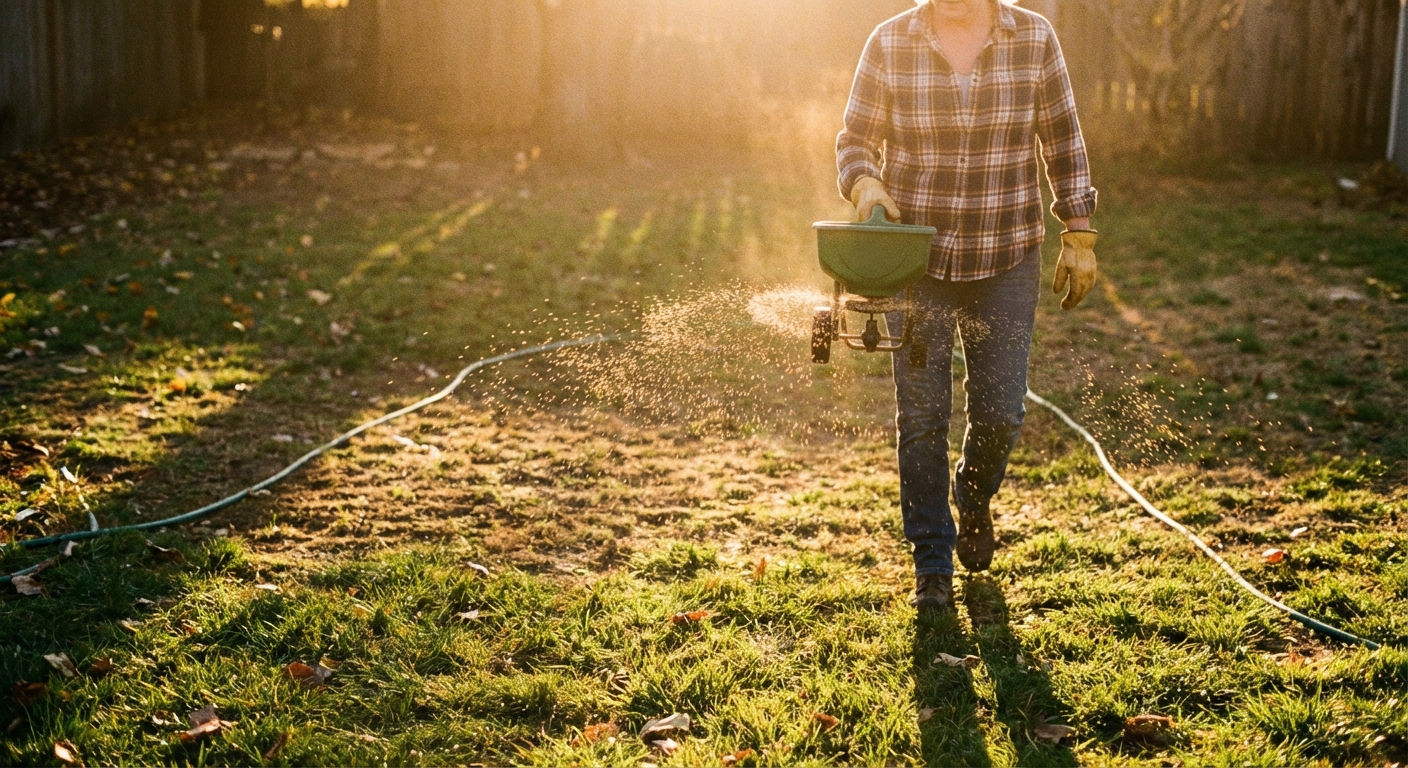
- Rake or loosen the top layer of soil where clover was removed.
- Add a thin layer of compost (optional but helpful) to improve seed-to-soil contact.
- Seed with a grass type that matches your lawn and sun conditions.
- Keep it evenly moist until the grass is established.
Timing tip: In many areas, early fall is the easiest time to overseed because the soil is warm but weeds are slowing down. Spring can work too, but you may compete with summer heat and weed pressure.
Fix the lawn conditions that favor clover
These steps are what keep clover from returning year after year.
Raise your mowing height
Most lawns do better when you mow higher than you think. Taller grass shades the soil, keeps moisture more consistent, and makes it harder for clover seedlings to get started.
- Cool-season lawns often do well around 3 to 4 inches. Some warm-season grasses are commonly kept shorter, so adjust based on your grass type and local recommendations.
- Follow the “one-third rule” and avoid cutting more than one-third of the blade at once.
Add nitrogen if your lawn is pale
Clover often points to a nitrogen shortage. If your grass looks light green, slow-growing, or thin, it may need feeding.
- Use a slow, steady nitrogen source such as composted manure, finished compost, or an organic lawn fertilizer.
- Feed lightly and consistently rather than dumping on a heavy dose all at once.
Best move: If you can, get a basic soil test. It takes the guesswork out and helps you avoid over-applying nutrients your lawn does not need.
Aerate compacted areas
If clover clusters in walkways, play zones, or where the mower turns, compaction is likely part of the problem.
- Core aeration (removing plugs) is more effective than spike aeration.
- After aeration, topdress with a thin layer of compost to improve soil structure over time.
Water deeper, less often
Frequent light watering encourages shallow roots. Deeper watering helps grass build stronger roots that compete better with weeds.
- As a general target, aim to wet the soil roughly 4 to 6 inches deep per watering. Many lawns do well with about 1 inch per week total (including rain), adjusted for heat, shade, and soil.
- Water early in the day.
- Adjust for your soil type: sandy soils need water more often than clay, but both benefit from deeper soakings.
Limit spread by seed (if you are removing it)
If your goal is less clover, try not to let it go to seed. Mowing a bit more frequently during peak flowering can reduce seed production. If you want to support pollinators, you can also compromise by allowing clover to bloom in a low-traffic area while keeping play areas mowed.
A simple natural plan (week by week)
If you want results without overthinking it
- Week 1: Hand-pull or spot-treat the worst patches. Rake out dead material.
- Week 2: Loosen soil, add a thin layer of compost, and overseed.
- Weeks 2 to 4: Keep seed moist. Mow high once grass is tall enough.
- After establishment: Lightly feed with an organic nitrogen source and address compaction with aeration if needed.
That combination is what changes the lawn long-term. Clover is persistent, but it is much less of a problem when your turf is thick and growing steadily.
Common questions
Will clover die on its own?
Sometimes clover thins during heat or drought, but it usually returns when conditions improve unless you fix the underlying causes like thin turf and low nitrogen.
Does vinegar kill clover roots?
Vinegar mainly burns the leaves. It can weaken plants, but full root kill is not guaranteed. Expect to repeat and reseed afterward.
What is the fastest natural method?
For small patches, hand-pulling is the fastest. For bigger areas, the fastest “real” solution is removal plus overseeding so grass can reclaim the space.
Is clover a sign of poor soil?
It is often a sign your lawn is low in nitrogen or compacted, or both. A soil test is the quickest way to confirm what your soil needs.
Bottom line
If clover is popping up, your lawn is telling you something: the grass is struggling and clover is filling the gap. You can remove clover naturally, but the real win is preventing it by thickening your turf, mowing higher, reducing compaction, and feeding the lawn enough nitrogen to stay competitive.
And if you decide you do not mind a little clover, that is fine too. A lawn can still be healthy, usable, and good-looking without being perfectly uniform.