How to Get Rid of Chipmunks in Your Garden

Jose Brito
I’m Jose Britto, the writer behind The Country Store Farm Website. I share practical, down-to-earth gardening advice for home growers—whether you’re starting your first raised bed, troubleshooting pests, improving soil, or figuring out what to plant next. My focus is simple: clear tips you can actually use, realistic expectations, and methods that work in real backyards (not just in perfect conditions). If you like straightforward guidance and learning as you go, you’re in the right place.
Chipmunks look harmless until you notice the same pattern every spring: freshly planted bulbs mysteriously vanish, seed trays get dug up, and neat little holes pop up along your beds. The good news is you can usually fix chipmunk problems without poison and without turning your yard into a fortress. You just need to focus on two things: blocking access to the spots they want and removing the easy meals.
This page walks you through the most reliable, humane options I have seen work in everyday home gardens: hardware cloth around bulbs, L-shaped fencing, natural repellent sprays, and smart cleanup. I will also cover live trapping, including when it makes sense and when it just turns into a loop.
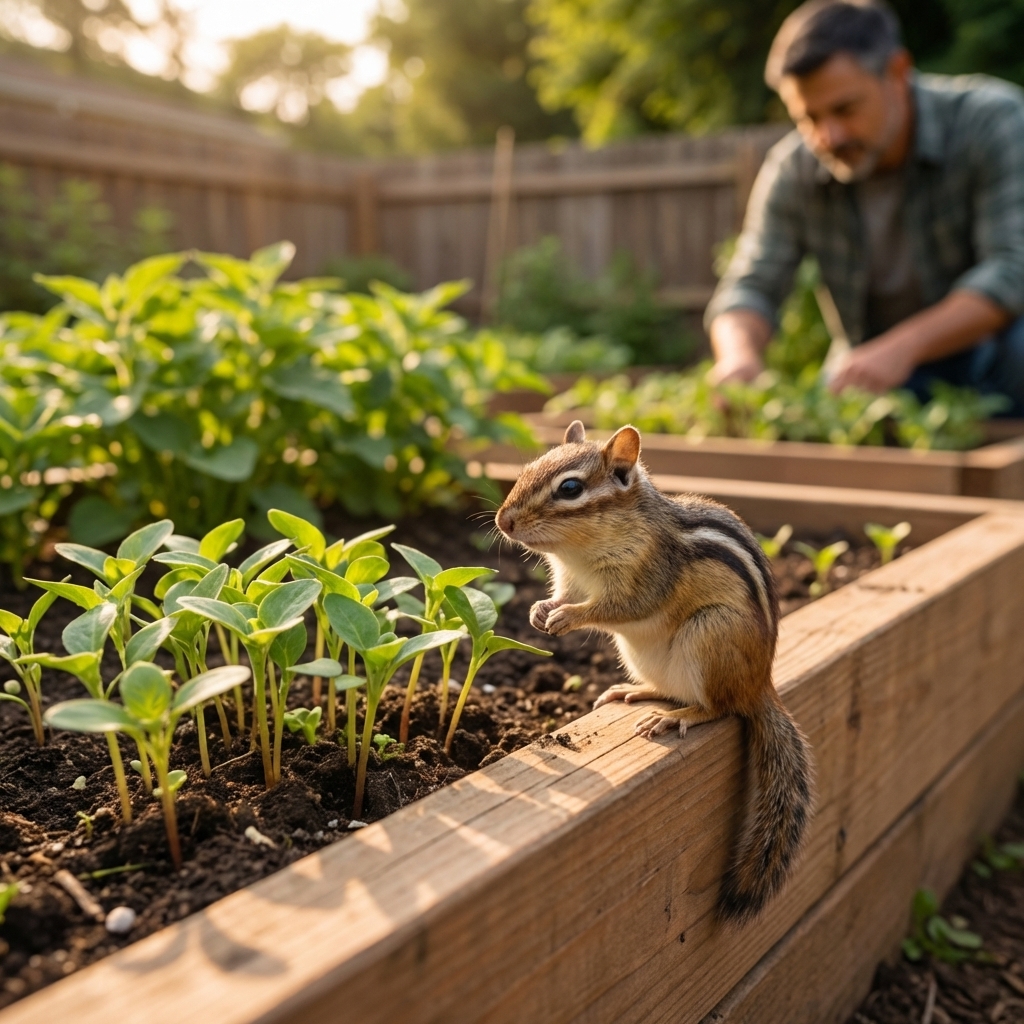
What chipmunks eat and why your garden attracts them
Chipmunks are ground-dwelling rodents that spend a lot of time collecting and caching food. They are not eating your entire garden, but they are very good at finding the most convenient, highest-reward spots.
Common chipmunk foods
- Seeds (sunflower, corn, squash, beans, peas, and newly sown beds)
- Bulbs and corms (tulips, crocus, gladiolus, and other planted “treasures”)
- Fruits and berries (strawberries, raspberries, tomatoes as they soften)
- Nuts and acorns (especially if you have oaks nearby)
- Insects (they do eat some bugs, which is why they can be around even when plants look untouched)
What pulls them in
- Loose, easy-to-dig soil (fresh beds, raised beds, recently mulched areas)
- Cover nearby (woodpiles, brush, dense shrubs, stone walls, sheds, decks)
- Reliable food sources (bird seed, pet food, fallen fruit, compost scraps)
- Water (bird baths, leaky hoses, shallow dishes)
Once you understand the draw, the strategy becomes simple: remove the buffet, then block the kitchen door.
How to tell it’s chipmunks
Correct ID matters, because chipmunks behave differently than squirrels and the fixes are a little different.
- Small, neat holes often around 1.5 to 2 inches wide, usually with little or no soil piled up. Chipmunks often disperse excavated soil rather than leaving a big spoil mound.
- Bulbs missing or “hollowed” where the planting spot looks disturbed but not shredded.
- Daytime activity. Chipmunks are typically active during the day. Voles tend to stay hidden and leave runways under grass or mulch.
- Damage close to cover like foundations, shrubs, stone edges, and wood stacks.
If you see wide, sloppy digging in pots and beds, that is more often squirrels. If you see surface tunnels, runways, and chewed roots with no obvious digging, that leans toward voles.
Start with the best humane fix: protect targets
If chipmunks are digging bulbs or popping up in one or two beds, barriers are your best friend. Repellents can help, but barriers are what consistently stop the behavior.
1) Bulb cages that actually work
Chipmunks love freshly planted bulbs because it is basically buried food in soft soil. The easiest way to win is to deny access.
- Use hardware cloth with 1/2-inch openings for easier shoot growth, or 1/4-inch if you need a tougher barrier (galvanized is best).
- Make a simple box or “tray” in the planting hole: hardware cloth on the bottom and sides.
- Plant bulbs inside, then cover with soil. Add a hardware cloth “lid” if digging is severe.
- Leave enough depth for roots and enough room for shoots to come up through the openings.
This is especially helpful for tulips and crocus, which chipmunks often treat like a pantry.
Worth knowing: Some bulbs are naturally unpalatable and often get ignored, including daffodils, many alliums, and fritillaria. If those are your main plantings, you may not need cages at all. If you are mixing bulbs, cage the tasty ones.

2) Cover newly seeded beds
Newly seeded rows are a chipmunk magnet. For direct-sown crops, a short-term cover can prevent days of replanting.
- Lay hardware cloth or strong wire mesh flat over the bed and pin it down with landscape staples.
- Remove once seedlings are established and no longer being dug up (often 1 to 3 weeks).
- For seed trays and pots, elevate them on a table or use a wire rack with a mesh cover.
L-shaped fencing for burrowing
Chipmunks do not need to dig deep to get under a fence. They just need a soft edge. An L-shaped apron makes the edge “dig proof” without needing a trench all the way down.
How to build it
- Use 1/2-inch hardware cloth or welded wire.
- Run fencing around the garden perimeter.
- At the bottom, bend the wire outward in an L shape so it lays on the ground like a skirt, 8 to 12 inches wide.
- Pin it down securely with landscape staples and cover lightly with soil or mulch so they cannot lift it or dig at seams.
- Make sure the vertical fence meets the ground snugly with no gaps.
When a chipmunk tries to dig at the base, it hits the horizontal wire and usually gives up and moves on.
Important: Chipmunks are also excellent climbers. An L-shaped footer stops digging under, but it does not stop a chipmunk that can simply climb over. If you need true exclusion, you have two reliable options:
- Enclose the bed like a cage (a full hardware cloth box over a raised bed or frame).
- Use a fence they cannot easily scale, such as fine mesh hardware cloth pulled tight on sturdy posts, with a secure top edge and no nearby “step” objects. In high-pressure areas, a fully covered top is still the most dependable.

Remove food sources
If you only repel or trap, but you keep feeding them, you will be repeating the same battle every season. A quick cleanup routine makes a big difference.
Do these first
- Move bird feeders away from the garden, or switch to a setup that reduces spillage. Rake up spilled seed regularly.
- Do not leave pet food outdoors, even on a covered porch.
- Harvest ripe produce promptly, especially strawberries and tomatoes.
- Pick up fallen fruit and nuts if you have trees nearby.
- Use a rodent-resistant compost bin if kitchen scraps are attracting wildlife. Avoid meat, fats, and greasy foods (good general practice for keeping wildlife out).
Reduce hiding places near beds
- Stack firewood neatly and, if possible, farther from the garden.
- Trim dense shrubs around the garden edge to reduce cover.
- Clean up brush piles and tall weeds where they can dart in and out.
Natural repellents (peppermint and cayenne)
Repellents can help, especially for light pressure or to protect a specific area while plants establish. The catch is that they need reapplication. Effectiveness varies by yard, weather, and how motivated the chipmunks are, so treat repellents as a helper, not the whole plan.
Peppermint spray
- Use a ready-to-spray peppermint oil repellent, or mix a small amount of peppermint essential oil with water and a few drops of mild liquid soap as an emulsifier.
- Spray on mulch, borders, and non-edible surfaces near the target area.
- Reapply on a schedule and always after heavy rain or irrigation.
Tip: Avoid spraying peppermint directly on tender seedlings in strong sun. Spot test first.
Cayenne or hot pepper spray
- Cayenne works by making digging and nibbling unpleasant.
- Use commercial hot pepper repellents for consistency, or mix cayenne with water and a small amount of mild soap, then spray where digging happens.
- Reapply after heavy rain or irrigation.
Safety note: Keep pepper sprays off your eyes, and wash hands and tools well. Use extra caution if kids or pets play in the area.
Repellents are best used with barriers, not instead of them. Think of them as a nudge, not a wall.
Live trapping and relocation
Live trapping can work when you have one persistent chipmunk that has learned your garden routine. But it is not always a permanent fix, because new chipmunks can move into the same territory if the habitat and food remain inviting.
Before you trap
- Check local rules first. In many areas, relocating wildlife is restricted or illegal.
- Know the humane reality. Relocation is stressful, and survival can be low in unfamiliar territory. Some jurisdictions require on-site release or handling by a licensed professional.
- Focus on prevention too. Trapping without cleanup and barriers often becomes an endless cycle.
How to trap responsibly
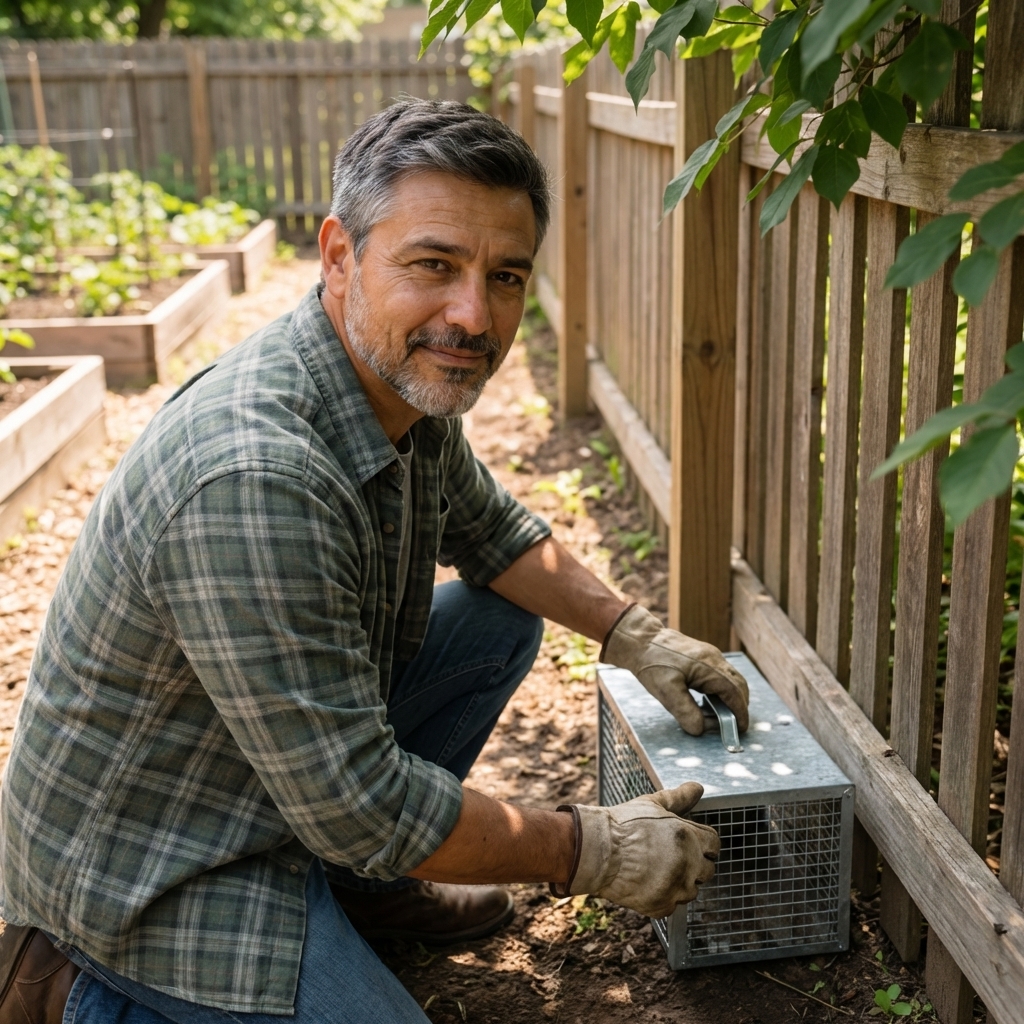
- Use a small live trap sized for chipmunks.
- Bait with peanut butter on bread, sunflower seeds, or rolled oats.
- Place along travel routes: near walls, fences, or the edge of cover.
- Check traps frequently. Provide shade and avoid leaving an animal exposed to heat or predators.
If relocation is allowed where you live, follow guidance from local wildlife authorities for distance and release location. If it is not allowed, contact local animal control or a licensed wildlife professional for options that meet regulations.
Extra deterrents that can help
These are worth trying if you are close to solving the problem, or if you want to increase pressure while you install barriers. Results vary, but they can help tip things in your favor.
- Motion-activated sprinklers near beds and entry points can reduce daytime visits.
- Gravel borders (a few inches wide) can make digging less comfortable in certain spots, especially along foundations.
- Raised planters with smooth sides can reduce access compared to ground beds, though chipmunks can still climb if nearby objects act like steps.
What not to do
- Do not use poison baits in or near the garden. Poison risks pets, children, and predators like hawks and owls.
- Do not rely on fake predators alone. Plastic owls and snakes usually stop working once chipmunks realize they never move.
- Do not ignore the “why”. If bird seed and fallen fruit are available daily, deterrents tend to fail.
Seasonal timing that matters
- Early spring: Prioritize seed protection and fresh-bed covers, plus bulb cages if you are planting.
- Late spring to summer: Keep cleanup tight and protect ripening fruit (especially berries).
- Fall: This is prime time for caching. Protect newly planted bulbs and remove easy food sources like fallen fruit and spilled seed.
Materials checklist
- Hardware cloth: 1/2-inch (easier for shoots) or 1/4-inch (tighter barrier), galvanized
- Landscape staples for pinning mesh and aprons
- Wire snips and work gloves (cut wire edges are sharp)
- Zip ties or wire for fastening seams
- Small live trap (only if needed and legal)
A simple plan for this week
If you want the shortest path to results, do this in order:
- Clean up food sources: spilled bird seed, fallen fruit, pet food, easy compost scraps.
- Protect the high-value targets: hardware cloth cages for bulbs and mesh over newly seeded beds.
- Block entry points: add an L-shaped apron of hardware cloth where they are slipping under fences or entering beds.
- Stop the climb: if they can get over your barrier, switch to a fully enclosed bed cage or improve the fence so it cannot be easily scaled.
- Add a repellent (peppermint or hot pepper) for the first couple weeks while they break the habit, and reapply after heavy rain or irrigation.
- Trap only if needed, and only if it is legal and you can do it responsibly.
Most gardeners see improvement fast once bulbs and fresh beds are protected. Chipmunks are persistent, but they are also practical. When the easy food disappears and the digging stops working, they usually move their efforts elsewhere.
Quick FAQs
Will chipmunks destroy my whole garden?
Usually no. They tend to focus on seeds, bulbs, and ripe, easy fruit. You can protect those areas and keep the rest of the garden productive.
Do coffee grounds repel chipmunks?
Some gardeners report short-term results, but it is inconsistent and washes away quickly. If you want a reliable approach, use barriers first, then repellents as backup.
What is the most effective humane method?
Hardware cloth for bulbs and vulnerable beds is the most consistent fix. It physically prevents digging and does not depend on smell or weather.