How to Get Rid of Centipedes in Your House Naturally

Jose Brito
I’m Jose Britto, the writer behind The Country Store Farm Website. I share practical, down-to-earth gardening advice for home growers—whether you’re starting your first raised bed, troubleshooting pests, improving soil, or figuring out what to plant next. My focus is simple: clear tips you can actually use, realistic expectations, and methods that work in real backyards (not just in perfect conditions). If you like straightforward guidance and learning as you go, you’re in the right place.
Finding a centipede in the bathroom at night is one of those little shocks you do not forget. The good news is that most centipedes you see indoors are not aggressive and typically avoid people. They are usually looking for two things: moisture and other insects to eat.
If you want to get rid of centipedes naturally, focus on the conditions that make your home inviting. You can remove the ones you see, but the real fix is drying things out, sealing entry points, and cutting down their food supply.

Why centipedes come inside
Centipedes are predators. If they are in your house, it often means your house has the kind of environment that supports the small pests they hunt.
1) Moisture and humidity
House centipedes especially like damp, protected places. Common hotspots include:
- Bathrooms and shower areas
- Basements and crawl spaces
- Laundry rooms
- Under sinks and around plumbing penetrations
- Garage corners and utility closets
2) Food sources (other bugs)
Centipedes eat many common indoor pests, including:
- Silverfish
- Roaches
- Ants
- Spiders
- Small flies and larvae
If you are seeing centipedes regularly, it is worth checking for other pests too. They are often a symptom, not the root problem.
3) Shelter and seasonal movement
Outdoor centipedes can wander in through gaps around doors, cracked foundations, vents, and window wells. They may show up more during hot, dry spells (searching for damp) or during heavy rain (getting flooded out).
House centipede vs outdoor centipede
Knowing what you are dealing with helps. Indoor and outdoor species behave differently.
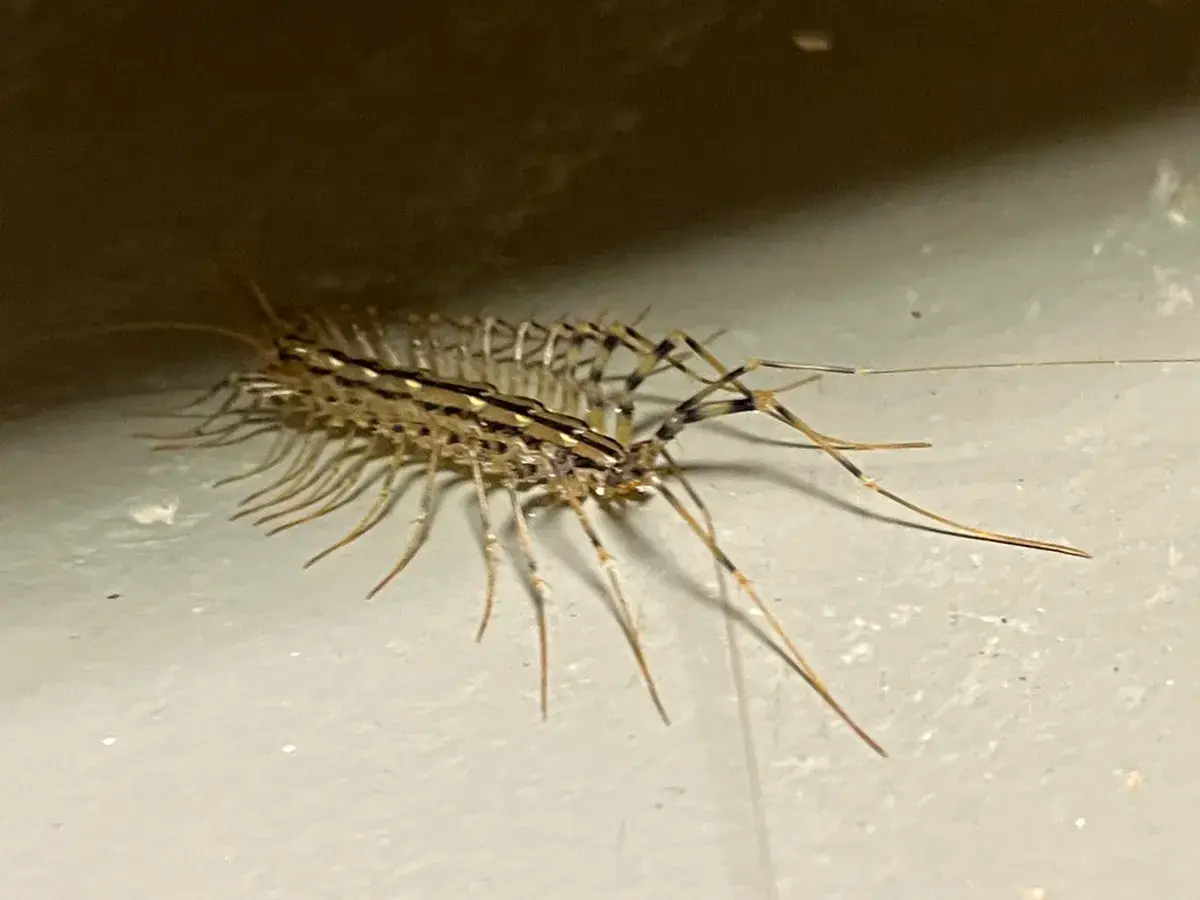
Common house centipede
- Scientific name: Scutigera coleoptrata
- Look: light tan to yellow-gray body with dark stripes and very long, delicate legs
- Size: typically 1 to 1.5 inches long, but legs make it look bigger
- Speed: very fast
- Where you see it: bathrooms, basements, along baseboards, near drains
Fun fact: House centipedes are technically “beneficial” hunters. They aggressively prey on pests many people would much rather avoid, including roaches, silverfish, termites, and even bed bugs. That said, most people still want them out of the house, and that is completely reasonable.
House centipedes rarely bite, and bites are uncommon because they would rather run. A bite can happen if one is handled or trapped against skin, and it may cause localized pain, redness, or swelling.
Outdoor centipedes
- Look: usually thicker-bodied with shorter legs than house centipedes
- Where they live: under rocks, mulch, logs, leaf litter
- Why they come in: accidentally, or looking for moisture and shelter
If you mostly find them near a door, a garage, or a basement walkout, you might be dealing with outdoor centipedes sneaking in.
What works best
Here is the approach that works in most homes without jumping straight to harsh sprays. Do these in order and you usually see a big drop within 1 to 3 weeks.
Step 1: Dry out problem areas
This is the big one. Dry spaces are unfavorable for centipedes.
- Run a dehumidifier in basements and damp rooms. Aim to keep indoor humidity below about 50%, often around 40 to 50% for comfort.
- Use a hygrometer (a small humidity meter) so you are not guessing.
- Fix leaks under sinks, around toilets, and at hose bibs.
- Use bathroom fans during and after showers for at least 20 minutes.
- Clear damp clutter like wet towels, cardboard boxes on basement floors, and piles of laundry.
If you only do one thing, do this.
Step 2: Remove hiding spots indoors
- Vacuum along baseboards and in corners regularly (eggs and prey insects get removed too).
- Reduce stored items directly on the floor, especially in basements.
- Store paper goods in plastic bins if your basement runs damp.
Step 3: Seal entry points
Centipedes squeeze through tiny gaps, especially where pipes and wires enter.
- Caulk cracks around baseboards, window trim, and along foundation gaps.
- Add door sweeps and replace worn weather stripping.
- Seal around pipes under sinks and behind toilets with caulk or expandable foam (use foam sparingly and neatly).
- Check window screens and repair tears.
Do a quick nighttime check with a flashlight around the foundation and door thresholds. You will often spot the obvious routes.
Step 4: Use diatomaceous earth (DE)
Food-grade diatomaceous earth can be effective for crawling pests when applied correctly, but it is slow-acting and results can vary. It works mainly by damaging the insect’s outer layer and helping it dry out.
- Where to apply: thin dusting along baseboards, behind toilets, under sinks, behind appliances, and along basement walls.
- Less is more: use a very light layer. Heavy piles get avoided.
- Keep it dry: if it gets wet, it stops working. Reapply after cleaning or moisture.
Safety note: Even food-grade DE is a fine dust. Avoid breathing it in. Apply gently, and keep pets and kids away during application.

Step 5: Essential oils (optional helper)
Essential oils can help discourage centipedes in the short term, especially around entry points and known routes. Evidence is mixed and results are often anecdotal, so treat this as an add-on, not the main fix. They work best after you are already drying the area and sealing gaps.
Simple peppermint spray:
- 2 cups water
- 1 teaspoon mild liquid soap (helps it mix)
- 15 to 20 drops peppermint essential oil
Shake well and lightly spray along baseboards, under sinks, and around door thresholds. Reapply every few days or after mopping.
Other oils people use: tea tree, eucalyptus, cedarwood, lavender. Results vary. Test on a small hidden spot first, as oils can stain some surfaces.
Pet caution: Some essential oils can be irritating or unsafe for pets, especially cats. If you have pets, use oils sparingly, keep them off pet bedding and food areas, and consider skipping oils entirely and leaning on humidity control and sealing instead.
Traps and quick removal
Sticky traps
Simple glue traps placed along baseboards and behind toilets can catch centipedes and also tell you where they are traveling. Put them:
- In basement corners
- Behind the washer and dryer
- Under sinks
- Along the wall near floor drains
This is not the full solution, but it helps you monitor the problem while you fix moisture and entry points.
Vacuuming
If you see one, vacuuming is the cleanest no-contact option. Empty the vacuum canister outside right after, or seal the contents in a bag and toss it.
If you want a fast kill
Avoid handling centipedes with bare hands. Squishing works but can be messy and is not necessary. If you need quick removal, use a cup and stiff paper to escort it outside, or stick with vacuuming and traps.
Outdoor fixes
If centipedes are coming from outside, a few yard adjustments can make a noticeable difference.
- Pull mulch back 6 to 12 inches from the foundation if you have heavy mulch right against the house.
- Reduce leaf litter and keep the perimeter tidy.
- Move wood piles and compost bins away from the house.
- Improve drainage so water is not pooling near the foundation.
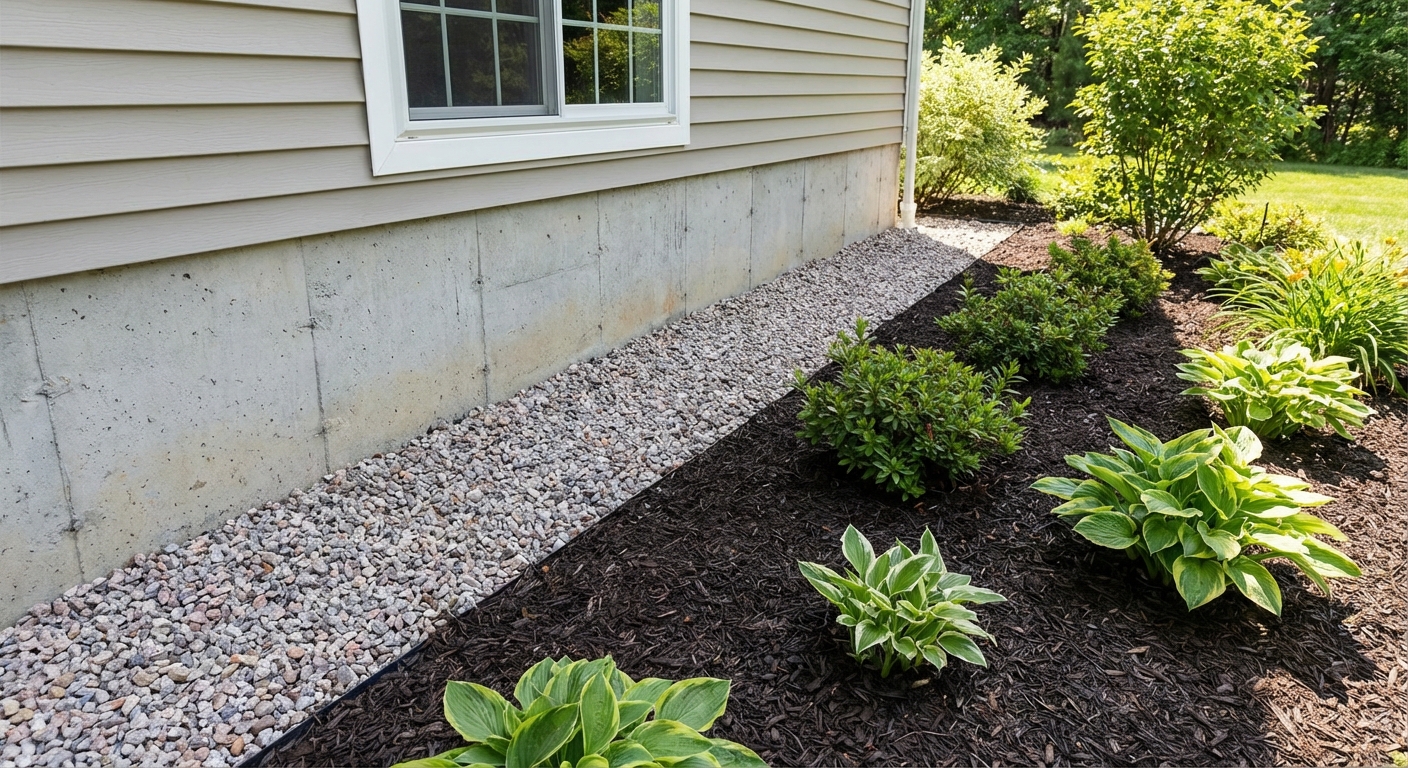
Centipedes love damp organic material. If your foundation edge is basically a moist buffet and hiding spot, they will hang around.
What not to do
- Do not just spray random pesticides and call it done. If moisture and prey insects remain, centipedes often return.
- Do not overapply DE. Thick layers are less effective and messier.
- Do not ignore plumbing and damp zones. Many sightings happen near water sources, but centipedes can travel anywhere they find prey and cover.
- Do not skip the “why.” If you only kill what you see, you keep playing whack-a-mole.
When it may be a bigger issue
Occasional centipedes happen. But if you are seeing them daily or finding many in one area, look for:
- Persistent dampness from leaks, poor ventilation, or high basement humidity
- Hidden pest activity like silverfish, roaches, or ants
- Foundation gaps that need more than a quick caulk job
If you cannot get humidity down, or you suspect a bigger pest infestation, it may be worth bringing in a reputable local pro for an inspection. You can still request low-tox options and focus on exclusion and moisture control.
FAQ
Are house centipedes dangerous?
House centipedes are generally not dangerous to people. They are not aggressive, and bites are uncommon. Most issues are nuisance and fear factor, plus the fact they often indicate moisture and other bugs.
Does vinegar kill centipedes?
Vinegar is not a reliable centipede killer, and it is not a great long-term repellent either. You will get better results with drying the area, sealing entry points, and using DE in dry spots.
How long does it take to get rid of centipedes naturally?
If humidity is the main driver, you can often see improvement within a week of running a dehumidifier and sealing obvious gaps. Full control usually takes 2 to 4 weeks as prey insects decline and hiding spots dry out.
Why do I see centipedes mostly at night?
Most centipedes are nocturnal hunters. At night, your house is quieter and darker, and many of the insects they eat are active too.
Quick checklist
- Run a dehumidifier or improve ventilation in damp rooms
- Measure humidity with a hygrometer and keep it below about 50%
- Fix leaks and dry out under-sink areas
- Vacuum corners and along baseboards
- Seal gaps, add door sweeps, repair screens
- Apply a thin line of food-grade DE in dry, protected areas
- Use sticky traps to monitor activity
- Reduce mulch, leaves, and moisture near the foundation
Centipedes are persistent, but they are not complicated. Make your home drier, tighter, and less buggy, and they usually move on.