How to Get Rid of Carpet Beetles

Jose Brito
I’m Jose Britto, the writer behind The Country Store Farm Website. I share practical, down-to-earth gardening advice for home growers—whether you’re starting your first raised bed, troubleshooting pests, improving soil, or figuring out what to plant next. My focus is simple: clear tips you can actually use, realistic expectations, and methods that work in real backyards (not just in perfect conditions). If you like straightforward guidance and learning as you go, you’re in the right place.
Carpet beetles are one of those pests that can live in a home for a long time before you realize what is happening. The adults are small and easy to overlook. The larvae do the real damage, quietly feeding on animal-based fibers in carpets, rugs, clothing, and stored linens.
The good news is you usually do not need anything extreme to get control. If you clean with a plan, target the places they hide, and tighten up storage habits, you can stop the cycle and prevent repeat infestations.

Carpet beetles: larvae vs adults
Correct ID matters because many people spot an adult beetle near a window and assume it is a random outdoor bug. With carpet beetles, the adults are often just the tip of the iceberg.
What carpet beetle larvae look like
- Shape: small, carrot-shaped, and segmented
- Texture: fuzzy or bristly hairs on the body
- Color: usually brown to tan with banding
- Behavior: slow crawlers that prefer dark, quiet spots
Larvae are the stage that chews holes in fabric. You may also find shed larval skins that look like tiny hollow shells.
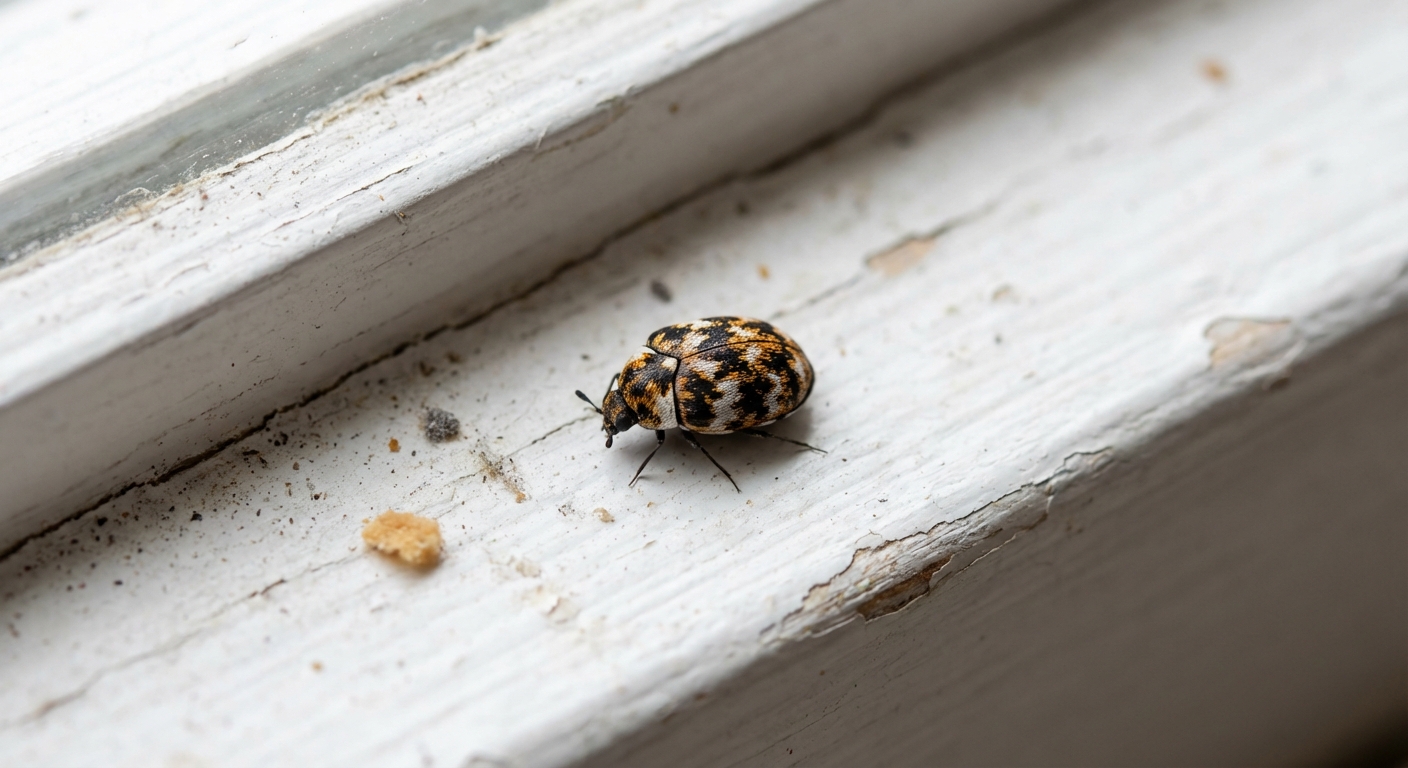
What adult carpet beetles look like
- Size: very small, often 1/16 to 1/8 inch
- Shape: oval
- Color: depends on species, can be solid black or mottled with white, brown, and yellow scales
- Behavior: commonly seen at windows because they are attracted to light
Adults often feed on pollen and nectar outdoors, then wander inside to lay eggs in suitable indoor food sources like wool, fur, feathers, lint, and other protein-rich debris.
Signs you have carpet beetles
Carpet beetle damage can look a lot like moth damage, but there are a few clues that help you narrow it down.
Damage to fabrics and furnishings
- Small holes in wool sweaters, felt hats, scarves, or blankets
- Thinning or bare patches in rugs, especially wool rugs
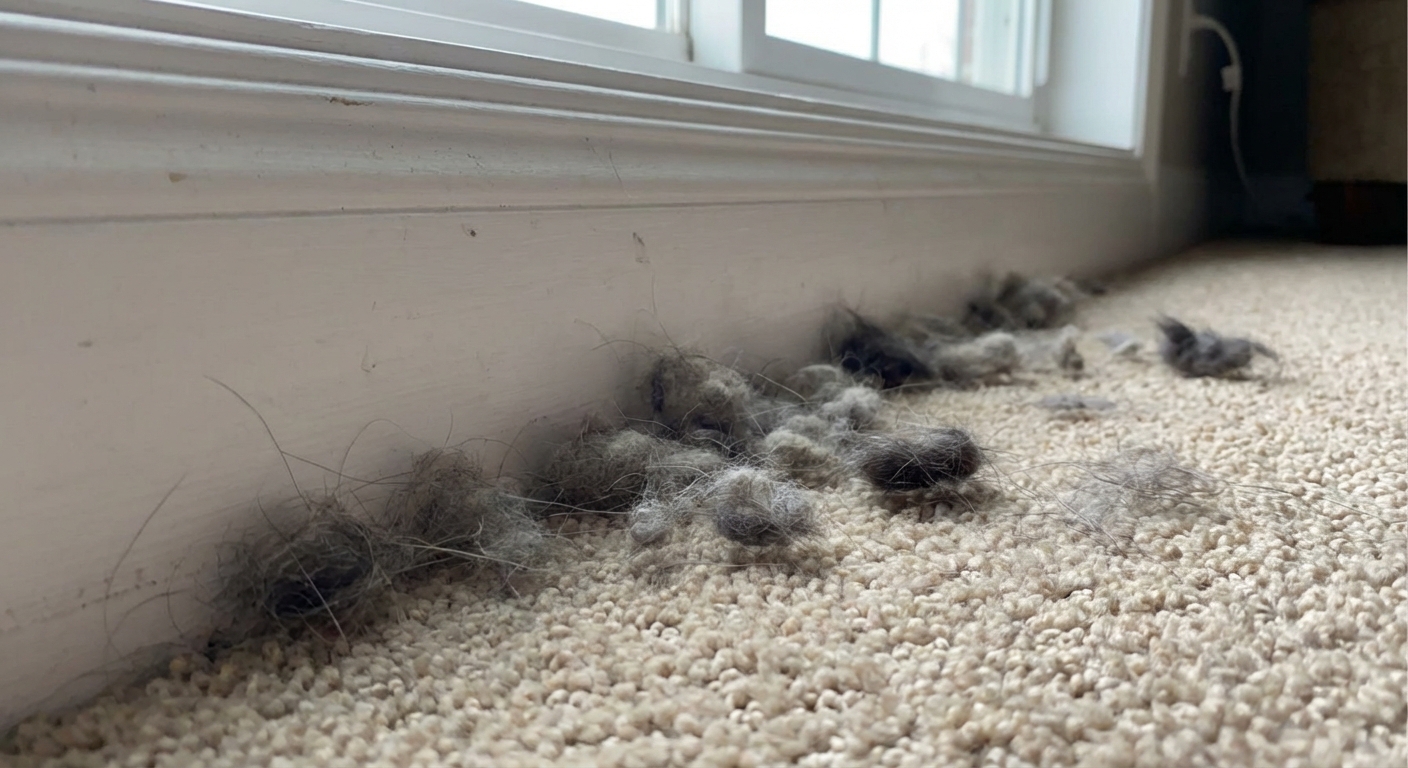
- Damage along edges like baseboards, carpet tacks, and under furniture where lint collects
- Irregular fraying on upholstery, pet beds, or stored textiles
Other clues
- Larvae or shed skins in closets, drawers, or storage boxes
- Gritty specks near damage that may be frass, especially when paired with other signs
- Adults at windows especially in spring and early summer
If you are dealing with itchy skin bumps, note that carpet beetle larvae hairs can irritate some people. It is not the same as bed bugs, but it can still cause a rash in sensitive households.
What they eat and what they ignore
This is one of the fastest ways to narrow your search. Carpet beetle larvae prefer animal-based fibers and protein-rich debris.
- Most likely targets: wool, cashmere, silk, fur, feathers, leather, felt, taxidermy, pet bedding, lint, hair, and dead insects
- Sometimes targeted: cotton and linen, usually when items are soiled with sweat, body oils, food, or stains
- Usually not eaten: 100% synthetic fabrics like polyester or nylon, unless they are heavily soiled or blended with natural fibers
Where they come from and where they hide
Carpet beetles are not attracted to dirt in the usual sense. They are attracted to animal-based fibers plus the hidden buffet of lint, hair, dead insects, and forgotten natural materials that collect in out-of-the-way areas.
- Closets and drawers with wool, cashmere, silk, or stored seasonal items
- Under beds and heavy furniture where dust and pet hair build up
- Along baseboards and carpet edges
- Air vents and returns where lint collects
- Attics and wall voids especially if there is an old bird nest, rodent nest, or dead insect buildup
- Stored textiles like quilts, yarn, stuffed animals, and fabric decorations
- Odd but real sources like dried flowers, older holiday decor with natural materials, and some stored pet foods
How to get rid of carpet beetles
The goal is to break the life cycle: remove eggs and larvae, eliminate their food, and treat hiding spots so new larvae cannot keep hatching and feeding. Larvae can hang around for months, which is why follow-up matters even after you clean once.
Step 1: Find the hot spots
Start where the damage is, then work outward. Check:
- Closet floors and closet corners
- Under area rugs and rug pads
- Under beds and sofas
- Along baseboards and carpet edges
- Storage bins that hold wool, felt, feathers, or old linens
Step 2: Vacuum like you mean it
Vacuuming is the most reliable non-chemical tool for carpet beetles because it physically removes larvae, eggs, shed skins, and lint.
- Use a crevice tool along baseboards and carpet edges.
- Vacuum under furniture and along the perimeter of each room.
- Vacuum inside closets, especially the floor edges and corners.
- If you have pets, focus on areas where hair collects.
Important: Empty the canister or remove the vacuum bag right after, seal it in a plastic bag, and take it outside. Otherwise, you can re-infest the home.
Step 3: Wash and heat-treat what you can
Heat is a carpet beetle killer, but it has to be hot enough all the way through the item. For washable items, use:
- Hot wash when the fabric allows, ideally 120°F (49°C) or hotter
- High heat drying on the hottest safe setting for 30 to 45 minutes, longer for bulky items so the heat penetrates fully
For dry-clean-only items, consider professional cleaning. If the material allows, a garment steamer can help on seams and folds, but the goal is still thorough heat exposure, not a quick pass on the surface.
Step 4: Freeze items that cannot be heated
Freezing works well for delicate wool items, heirloom textiles, and stored decorations.
- Seal items in an airtight bag.
- Freeze at 0°F (-18°C) or colder for at least 72 hours.
- For thicker items, a longer freeze is safer, up to a week.
Step 5: Use diatomaceous earth in cracks and hiding zones
Food-grade diatomaceous earth (DE) can help in dry, protected areas where larvae travel. It works by damaging the insect’s outer layer and dehydrating it.
- Apply a very light dusting along baseboards, under appliances, and in closet corners.
- Keep it out of high-traffic areas where it will be kicked up.
- Do not apply on damp surfaces. DE is much less effective when wet.
- Expect it to work slowly and only where it stays dry and undisturbed.
Safety note: Avoid breathing any dust. Even food-grade DE can irritate lungs. Apply carefully, ventilate, and keep it away from kids and pets during application.
Step 6: Consider sprays if needed
If you are still seeing activity after thorough cleaning and fabric treatment, an over-the-counter residual insecticide labeled for carpet beetles can be a reasonable next step for some homes. Products often use active ingredients such as permethrin or related pyrethroids. Focus on crack-and-crevice spots where larvae hide, not broad spraying.
- Use only products specifically labeled for carpet beetles and indoor use.
- Follow the label exactly, including ventilation and re-entry time.
- Keep sprays off clothing, bedding, and kids’ and pets’ areas unless the label clearly allows it.
- Sprays work best after cleaning, because you want to remove eggs and food sources first.
If you prefer to avoid insecticides, you can skip this step and lean harder on repeated vacuuming, heat or freezing, and storage changes. If the infestation is widespread or the source is hidden, a pro is usually the faster route.
Step 7: Use essential oils as a helper
Essential oils can be useful for light deterrence and freshening closets, but they are not a reliable standalone fix for an established infestation. If you use them, use them after cleaning so you are not just masking the problem.
- Cedarwood is a common choice for fabric pests.
- Lavender can be a mild repellent for storage areas.
- Peppermint is often used around baseboards, but it is strong and can be irritating.
Use a diluted spray on non-delicate surfaces like closet shelves (test first for staining). Do not spray directly onto valuable textiles. Keep essential oils away from pets, especially cats, and follow label safety guidance.
Step 8: Repeat and monitor for a few weeks
Carpet beetle eggs and larvae can be stubborn. Plan on vacuuming and checking hot spots every few days at first, then weekly until you stop finding activity. Sticky traps near windows or in closets can help you track adult beetles and confirm whether the problem is trending down.
Closet and textile prevention
Once you knock them back, prevention is mostly about removing food sources and denying access to the stuff they love most.
Store clothes the right way
- Wash before storing. Body oils, sweat, and food spills make fabrics more attractive.
- Use sealed bins or garment bags. Airtight storage beats neat stacks every time.
- Keep wool and cashmere contained. Treat these like pantry items: sealed, clean, and rotated.
Keep closet floors and edges clean
- Vacuum closet floors, corners, and baseboards regularly.
- Do not let lint, pet hair, and dust build up under hanging clothes.
Reduce the hidden buffet
- Vacuum under beds and sofas.
- Clean air returns and vents where lint collects.
- Check old stored rugs, pet bedding, and craft supplies like wool yarn or felt.
Stop adults from getting in
- Repair window screens and weatherstripping.
- Seal gaps around doors, baseboards, and utility penetrations.
- Check for bird nests near vents, eaves, and attic openings and remove them when inactive and legal to do so.
When to call a pro
If you are seeing larvae in multiple rooms, finding repeated damage despite cleaning, or suspect a nest in an attic or wall void, a professional inspection can save time and protect expensive textiles.
- Pros can locate hidden sources like old nests and dead insect buildup.
- They can apply targeted treatments into cracks and voids more effectively.
If you go this route, ask for an approach that includes inspection and source removal, not just spraying baseboards.
Quick checklist
- Identify larvae (the damaging stage) and find hot spots.
- Vacuum edges, baseboards, and closets thoroughly, then dispose of contents outside.
- Wash at 120°F (49°C) or hotter when safe, and dry hot long enough to heat items through.
- Freeze at 0°F (-18°C) or colder for 72+ hours for delicate items.
- Use a light dusting of food-grade DE in dry cracks and protected areas.
- Consider a labeled residual spray if cleaning alone is not enough, or call a pro for widespread issues.
- Store clean seasonal textiles in sealed bins or garment bags.
If you want a simple rule to follow: clean first, treat second, store smart. That combination solves most carpet beetle problems in regular homes.