How to Get Rid of Carpenter Bees Naturally

Jose Brito
I’m Jose Britto, the writer behind The Country Store Farm Website. I share practical, down-to-earth gardening advice for home growers—whether you’re starting your first raised bed, troubleshooting pests, improving soil, or figuring out what to plant next. My focus is simple: clear tips you can actually use, realistic expectations, and methods that work in real backyards (not just in perfect conditions). If you like straightforward guidance and learning as you go, you’re in the right place.
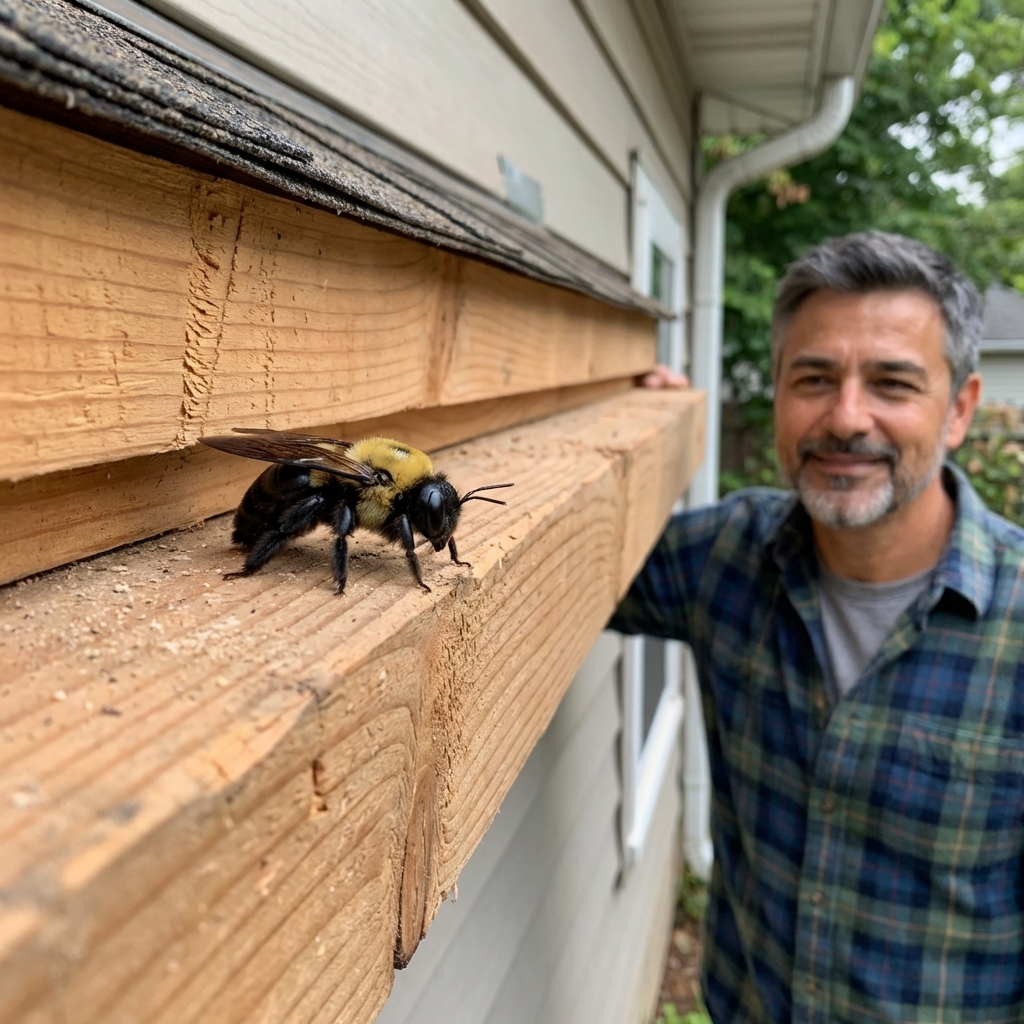
Carpenter bees are one of those “wait, is that a bumble bee?” insects that can fool you at first glance. The big difference is what they do to your wood. Instead of nesting in the ground like many bumble bees often do, carpenter bees tunnel into bare or weathered wood to lay eggs. That is why they show up around eaves, fascia boards, deck rails, pergolas, fences, and wooden garden structures every spring.
The good news is you usually do not need harsh chemicals to handle them. With a mix of identification, a few simple deterrents, and sealing up the wood they like most, you can protect your home and still respect the fact that these bees are strong pollinators.
Carpenter bees vs bumble bees
People mix these two up constantly, so let’s clear it up in plain terms.
What carpenter bees look like
- Shiny black abdomen: Carpenter bees usually have a smooth, glossy rear end that looks almost hairless.
- Often seen hovering: Males commonly hover and “guard” an area. They can act bold but they cannot sting (they do not have a stinger). Females can sting, but they rarely do unless they are handled or directly provoked.
- Hang around wood: You will see them near rails, trim, porch ceilings, and shed overhangs.
What bumble bees look like
- Fuzzy abdomen: Bumble bees are hairy all over, including the abdomen.
- More flower-focused: You usually see them moving from bloom to bloom rather than inspecting wood surfaces.
- Nest location: Many bumble bees nest in the ground, but some also nest above ground in wall cavities, bird boxes, compost piles, or other sheltered spaces.
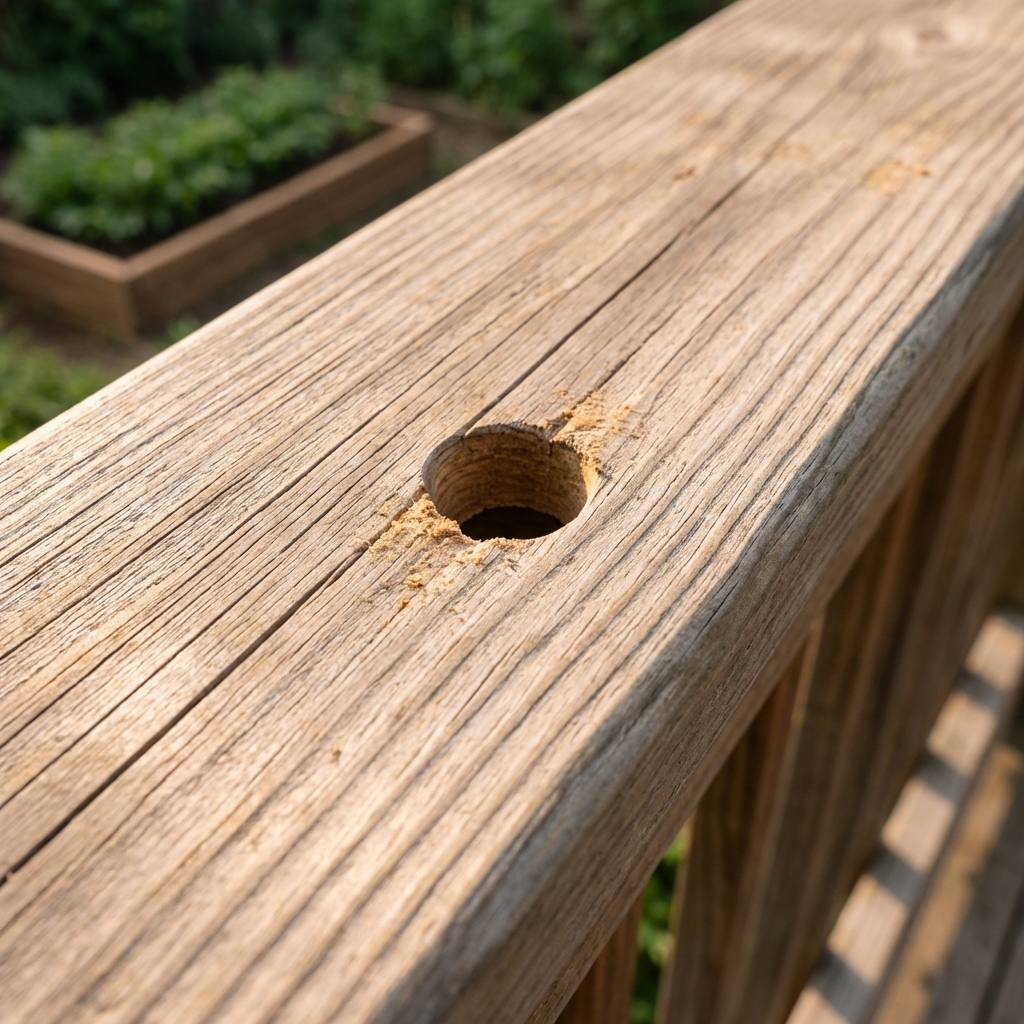
Why it matters: Bumble bees are rarely the ones drilling holes in your deck or siding. If you have clean, perfectly round holes in wood, you are most likely dealing with carpenter bees, especially if you also see hovering adults and fresh sawdust-like frass. (Other wood-boring insects can leave holes too, but they are often smaller, less clean, and paired with different frass patterns.)
Signs you have carpenter bees
Carpenter bee damage has a few telltale clues that are easy to spot once you know what to look for.
1) Perfectly round holes in wood
The entry hole is usually neat, clean, and round, typically about 3/8 inch (around 9 to 10 mm) across. It is commonly drilled into softwoods like pine, cedar, and redwood, especially if the wood is unpainted or weathered.
2) Sawdust-like frass below the hole
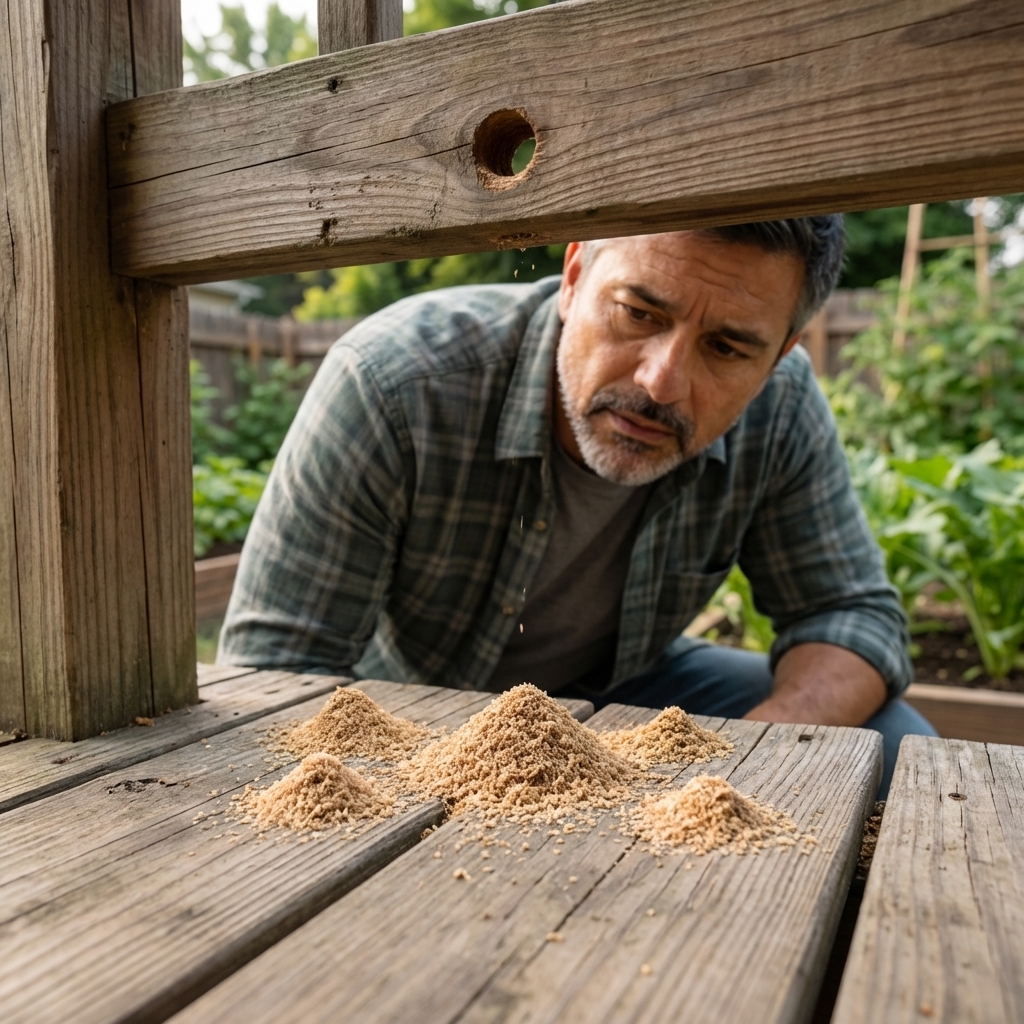
As they excavate, carpenter bees kick out wood shavings that can look like coarse sawdust. You may see little piles on a porch floor, deck boards, or windowsill below the entry point.
3) Yellowish stains or drip marks
Sometimes you will see stains below holes. This can be pollen, nectar, or waste around the entrance.
4) Buzzing and hovering in the same spot
If you have one area where bees are constantly cruising back and forth, it often means there are active tunnels nearby.
5) Woodpecker attention
Woodpeckers may peck at the wood to get at larvae inside. Sometimes the woodpecker damage ends up worse than the bee damage.
How carpenter bees damage wood
Carpenter bees do not eat wood like termites. They tunnel into it to create nesting galleries. Over time, though, repeated nesting in the same area can cause real problems.
- First year: One tunnel is usually more of a cosmetic issue.
- Multiple years: Re-used tunnels expand, and new tunnels get added nearby.
- Structural risk: Deck rails, pergola beams, fascia boards, and other exposed pieces can weaken if activity continues year after year.
That is why the “natural” strategy is not just repelling bees. It is also closing tunnels and making the wood less inviting going forward.
Natural ways to get rid of carpenter bees
If you want a humane, chemical-free approach, focus on deterrence and exclusion. Here are the options that actually make a difference in real backyards.
Citrus oil spray
Citrus scents can discourage carpenter bees from nesting and re-entering old holes. Results vary by yard, so think of this as a short-term deterrent, not a guaranteed cure.
- What to use: Lemon, orange, or citrus essential oil diluted in water. A small amount of mild soap can help it mix.
- Where to apply: Around entry holes, along the underside of rails, eaves, and other places they like to start drilling.
- When to apply: Early spring before nesting ramps up, then reapply after rain or heavy dew.
Tip: Aim for the wood surface, not the bee. You are trying to make the site unattractive, not harm pollinators.
Almond oil as a deterrent
Almond oil is another scent-based deterrent some homeowners have good luck with, especially when applied to problem spots repeatedly. Like citrus, it is not a permanent fix.
- How to use it: Put a small amount on a cloth and wipe it onto bare wood near holes and common landing areas.
- Best use case: Small areas like deck rails, pergola corners, shed trim, and fence tops.
Realistic expectation: Oils fade and wash away. Use them to reduce interest while you also work on sealing and protecting the wood.
Plugging holes with hardwood plugs
If you only repel bees but leave the tunnels open, they often come right back. Plugging and sealing is what breaks the cycle, but timing is everything.
- Only plug holes when the bees have vacated, which is usually late summer to fall after active nesting has ended in many areas.
- Do not plug an active tunnel or trap a live bee inside. If a bee is sealed in, it can chew a new exit hole and cause more damage.
- Confirm inactivity: Watch the hole for a few warm days. If you do not see any in-and-out traffic and there is no fresh frass, it is more likely safe to seal.
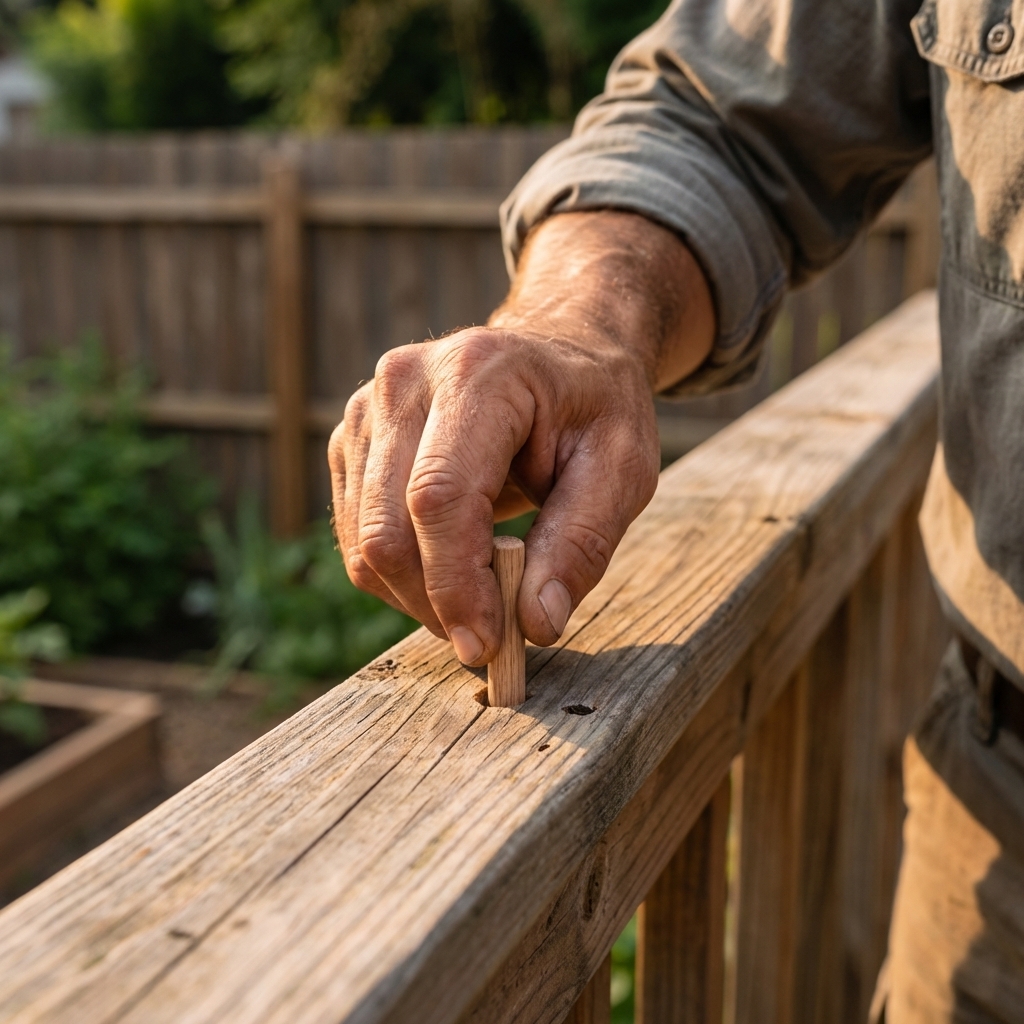
- Use a hardwood plug or dowel that fits snugly in the hole.
- Tap it in with wood glue for a tight seal.
- Fill and finish: Use exterior wood filler if needed, then paint or stain to match.
Why hardwood: It resists re-drilling better than softwood fillers alone.
Paint or stain exposed wood
Carpenter bees strongly prefer bare, weathered wood. Painting or staining does not make your home bee-proof, but it makes your wood a much less appealing nesting spot.
- Paint: Usually the most effective because it fully seals the surface.
- Stain + sealer: A good second choice when you want a natural wood look.
- Don’t forget the underside: Bees often drill into the underside of rails, eaves, and beams because it is sheltered from rain.
Quick win: If you can only do one thing this weekend, seal the most targeted boards first, especially horizontal rails and sunny, sheltered trim.
Preventive maintenance
- Replace severely weathered boards: Rot, cracks, and splintering make it easier for bees to start a tunnel.
- Seal end grain: The ends of boards soak up moisture and weather faster, and bees like those softer spots.
- Keep wood dry: Fix gutter drips and leaks so wood stays harder and less appealing.
Humane approach
Carpenter bees can be frustrating because the damage is real, but they also do important work in the garden. They visit spring blooms, fruit tree flowers, and early perennials when other pollinators are still ramping up.
A good middle-ground approach is to deter nesting on your structures while still letting them forage in your yard. If you have the space, you can even give them a better option by keeping a small sacrificial piece of untreated wood away from the house, then sealing and protecting the wood you care about most.
When to act
Timing matters with carpenter bees. The earlier you interrupt nesting behavior, the less drilling and repeat activity you deal with.
- Early spring: Watch for hovering and scouting. Start scent-based deterrents and inspect exposed wood.
- Mid-spring: Peak nesting time in many areas. Keep up with deterrents and plan repairs, but avoid sealing holes that may still be active.
- Late summer to fall: Best time to plug and seal holes once activity slows down, then paint or stain for long-term prevention.
Quick checklist
- Confirm it is a carpenter bee (shiny black abdomen, hanging around wood).
- Find the neat round holes (often about 3/8 inch) and any frass below.
- Use citrus oil spray or almond oil on target areas and reapply as needed (short-term deterrents, results vary).
- Plug and seal holes only after bees have vacated, typically late summer to fall.
- Paint or stain exposed wood, especially undersides and sheltered spots.
- Keep the pollinator value in mind and focus on humane prevention.
If you stay on top of it for one season, most yards go from “they are everywhere” to “I see one once in a while,” which is exactly where you want to be.