How to Get Rid of Carpenter Ants in Your House

Jose Brito
I’m Jose Britto, the writer behind The Country Store Farm Website. I share practical, down-to-earth gardening advice for home growers—whether you’re starting your first raised bed, troubleshooting pests, improving soil, or figuring out what to plant next. My focus is simple: clear tips you can actually use, realistic expectations, and methods that work in real backyards (not just in perfect conditions). If you like straightforward guidance and learning as you go, you’re in the right place.
Carpenter ants are not like the little sugar ants that show up around a sink. If you are seeing large ants indoors, especially near windows, baseboards, or damp areas, you want to take it seriously because carpenter ants can excavate wood to build their nests. They prefer wood that is already damp or softened, and while they can cause real damage over time, they typically do not destroy wood as quickly as termites.
The good news is you can usually get rid of them without tearing your house apart. The trick is to stop guessing and do it in order: identify the ant, track the nest, treat the colony, then fix the moisture and entry points so they do not come right back.
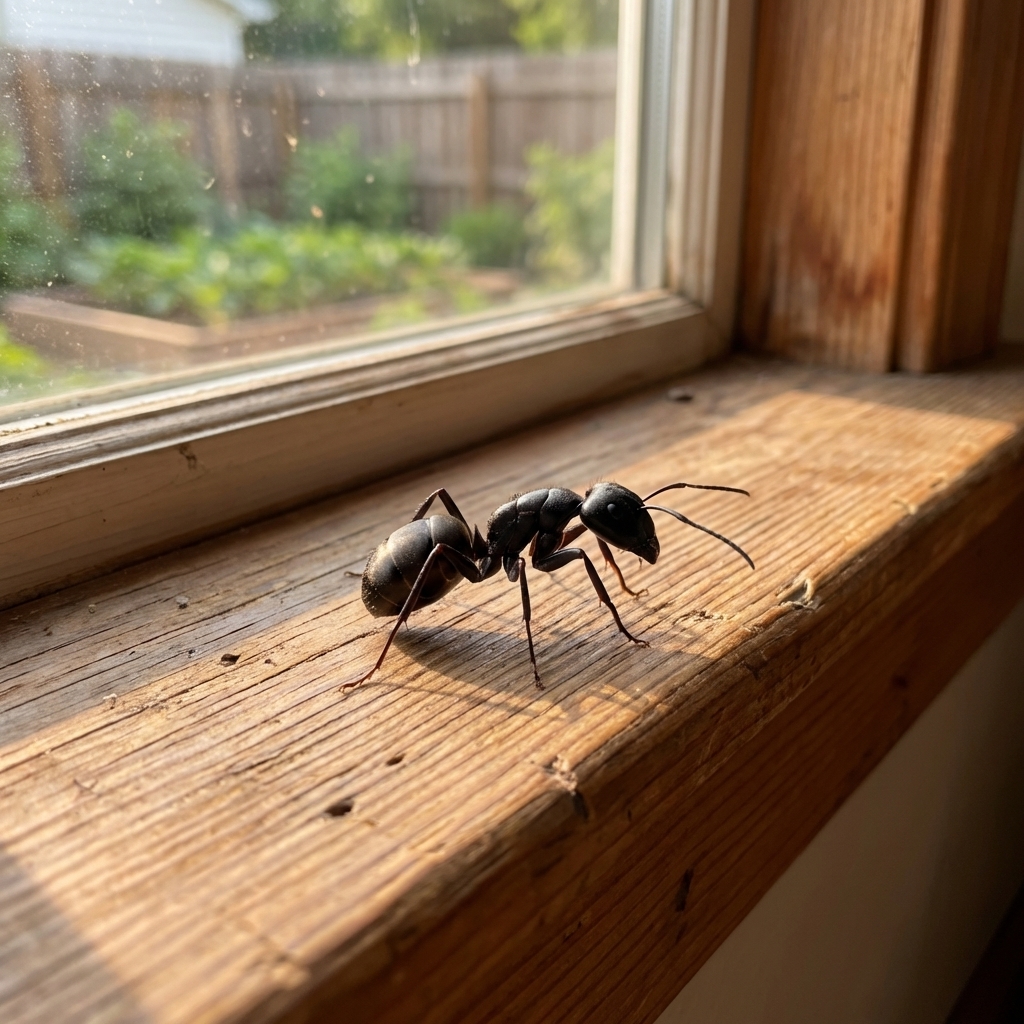
Carpenter ants vs common nuisance ants
A lot of ant advice online is written for tiny kitchen ants like pavement ants or odorous house ants. Carpenter ants behave differently and the treatment is different because your goal is the nest, not just the ants you happen to see.
Quick signs you are dealing with carpenter ants
- Size: workers are often 1/4 to 1/2 inch long, sometimes larger.
- Mixed worker sizes: you may see noticeably different sizes on the same trail (major and minor workers).
- Color: black is common, but some species are reddish or two-toned.
- Body shape: the thorax profile looks uneven when viewed from the side, and they have a single node (petiole) between the thorax and abdomen.
- Wood shavings (frass): they push out sawdust-like material from galleries, often mixed with dead insects.
- They like moisture: activity often centers around bathrooms, kitchens, basements, leaky windows, or damaged siding.
- They do not eat wood: they excavate it to nest, then forage for sweets and proteins.
How to tell them from termites
This matters because termite control is a different job.
- Carpenter ant frass: looks like coarse sawdust with bits of insect parts.
- Termite frass: can look like tiny uniform pellets and termites often create mud tubes.
- Wings: termite swarmers have equal-length wings; ant swarmers have uneven wings (front wings longer).
Find the nest by following frass and traffic
Sprays can kill the ants you see and still leave the colony thriving. For carpenter ants, the winning move is locating the nest. That is where your effort pays off.
Where to look first
- Under sinks, behind dishwashers, and around plumbing penetrations
- Window and door frames that get condensation or leaks (ants near windows may be foraging, so use trails and frass to confirm)
- Basement rim joists and sill plates
- Attic areas under roof leaks or around vents
- Deck ledgers and siding transitions on the exterior wall nearest the indoor activity
What frass piles usually mean
Carpenter ants often push frass out of a small slit or crack. If you find a little pile that keeps returning after you vacuum it, you are probably close. A fresh frass pile is one of the best clues you can get.

Simple tracking methods that work
- Night check: carpenter ants forage more after dark. Use a flashlight and follow their path.
- Masking tape markers: place small tape pieces along the trail so you do not lose it as it turns corners.
- Listen test: in a quiet room, put your ear near suspect wood. This usually only works with heavy activity, but when it works you can hear faint rustling or crackling.
Important: it is common to have a nest outdoors in a stump, log pile, or wet tree and a satellite nest indoors in damp structural wood. If you only treat one, the other can keep the problem going.
Stop using repellent sprays on the trail
It is tempting to grab a can of ant spray. But with carpenter ants, repellent sprays can disrupt trails, scatter foragers, and make baiting less effective. You want them feeding and sharing bait back to the colony.
If you need immediate relief in a bedroom or kitchen, you can vacuum up visible ants and clean the area with soapy water. Then switch to baits and targeted dusts for the real fix.
Best way to kill carpenter ants: bait the colony
Baits work because foragers carry food back to the nest and share it. That is how you reach queens and larvae. The goal is steady feeding over days, not a quick knockdown.
What to look for in store-bought baits
Many homeowners do best with a labeled carpenter ant bait used exactly as directed. Depending on what is available where you live, common modern active ingredients you may see include fipronil, indoxacarb, spinosad, and boric acid/borax. The right choice is the one they will feed on and carry back to the colony, so follow the label and place it where you are seeing activity.
Boric acid baits (how to use them correctly)
- Use small amounts placed along trails, near frass piles, and close to where they enter the room.
- Keep bait out of reach of kids and pets. Place in tamper-resistant stations when possible.
- Do not contaminate bait with cleaners or sprays. Ants avoid weird smells.
- Expect increased activity at first. That is usually a good sign.
If you are tempted to mix your own boric acid bait, the concentration matters. Too strong and they die before sharing. For most homeowners, using a labeled product or a reputable, tested recipe is the safer way to avoid ineffective or overly concentrated mixes.
Sweet bait vs protein bait
Carpenter ants switch preferences as the colony’s needs change. Protein and grease-based baits are often preferred in spring when colonies are growing and feeding larvae. Sweet baits are often preferred in late summer and fall when they are focused more on carbohydrates. If they ignore one bait type, try the other. In many homes, you will get the fastest results by offering both and seeing what they take.
Use diatomaceous earth to dust voids and cracks
Food-grade diatomaceous earth (DE) can help when applied as a light dust in dry areas where ants travel or nest. It works by abrading and drying out insects. For carpenter ants, DE is most helpful as a support tool alongside baiting.
Where DE works best
- Under baseboards and behind trim if you can access the gap
- Wall voids near known activity points (using a bulb duster)
- Basement sill plate cracks and utility penetrations
DE safety notes
- Use food-grade, not pool-filter DE.
- Apply a thin dust. Piles are less effective and easier to disturb.
- Avoid breathing dust. Wear a mask during application and keep it out of high-traffic living areas.
- Be cautious around outlets, switches, and electrical equipment. Use light applications, avoid packing voids, and follow local guidance.

Essential oils: helpful for deterring, not for colony control
Essential oils can help disrupt trails and discourage foraging in certain spots, but they rarely eliminate a carpenter ant colony on their own. Think of oils as a prevention and spot deterrent after you have baited.
Options homeowners commonly use
- Peppermint oil diluted in water
- Tea tree oil diluted in water
- Clove oil diluted in water
Test on a small hidden area first. Oils can stain wood finishes and irritate skin. Keep them away from pets, especially cats, which are more sensitive to certain oils.
Fix the moisture problem or they will return
Carpenter ants love damp, softened wood. If you remove the ants but keep the moisture, you are basically leaving the welcome sign up.
Common moisture sources that attract carpenter ants
- Leaky plumbing under sinks, behind tubs, or near washing machines
- Window or door leaks and rotted trim
- Poor ventilation in bathrooms and crawl spaces
- Roof leaks, clogged gutters, and water running behind siding
- Wood touching soil or mulch piled against wood siding
Practical fixes that make a big difference
- Repair leaks and dry the area thoroughly.
- Run a dehumidifier in damp basements or crawl spaces.
- Improve bathroom ventilation and use exhaust fans.
- Replace rotted trim and damaged siding where water is getting in.
Seal entry points after you have baited
Do not rush to caulk everything on day one. If you seal them out while the colony is active, you can force them to reroute and make the problem harder to track. Once baiting has clearly reduced activity, sealing becomes your prevention step.
What to seal
- Cracks around window frames, door frames, and siding joints
- Gaps around plumbing, wiring, and AC lines entering the house
- Foundation cracks and sill plate gaps
Use exterior-rated caulk for outdoor gaps. Indoors, paintable acrylic latex caulk works well for trim cracks.
Outdoor cleanup that prevents repeat infestations
A lot of carpenter ant problems start outside, then move in. Cleaning up the ant habitat near your house can reduce pressure on your walls.
- Remove dead stumps, buried wood, and rotting landscape timbers near the foundation.
- Store firewood off the ground and away from the house.
- Trim branches that touch the roof or siding.
- Keep mulch a few inches back from siding and avoid piling it high against the house.
- Fix gutter and downspout issues so water is carried away from the foundation.

How long does it take to get rid of carpenter ants?
If you are using baits correctly and the ants are feeding, you often see a noticeable drop in activity within 3 to 7 days. Full control can take 2 to 4 weeks, especially if there is an outdoor nest plus an indoor satellite nest, and it can sometimes take longer depending on colony size, temperature, and how hidden the nesting site is.
Keep baits available as long as they are taking them. Refill as needed and avoid spraying near bait locations.
When to call a professional
Sometimes you can do everything right and still need backup. Consider calling a licensed pest professional if:
- You see winged swarmers indoors, especially in winter or early spring.
- Frass piles keep returning and you cannot locate the nest.
- You suspect structural damage in a wall, window header, or roof area.
- You have tried baits for 2 to 3 weeks with no reduction in activity.
A pro can use non-repellent treatments and targeted dusting inside wall voids safely, and they can help confirm whether you are dealing with carpenter ants, termites, or both.
Quick checklist
- Confirm carpenter ants: large ants plus frass, mixed worker sizes, and damp-wood association.
- Track trails at night and find frass exit points.
- Use baits first and avoid repellent sprays near trails and bait placements.
- Support with DE in dry voids and crack lines, applied lightly and safely.
- Fix moisture issues and replace rotted wood.
- After activity drops, seal entry points and clean up outdoor wood sources.