How to Get Rid of Armadillos in Your Yard

Jose Brito
I’m Jose Britto, the writer behind The Country Store Farm Website. I share practical, down-to-earth gardening advice for home growers—whether you’re starting your first raised bed, troubleshooting pests, improving soil, or figuring out what to plant next. My focus is simple: clear tips you can actually use, realistic expectations, and methods that work in real backyards (not just in perfect conditions). If you like straightforward guidance and learning as you go, you’re in the right place.
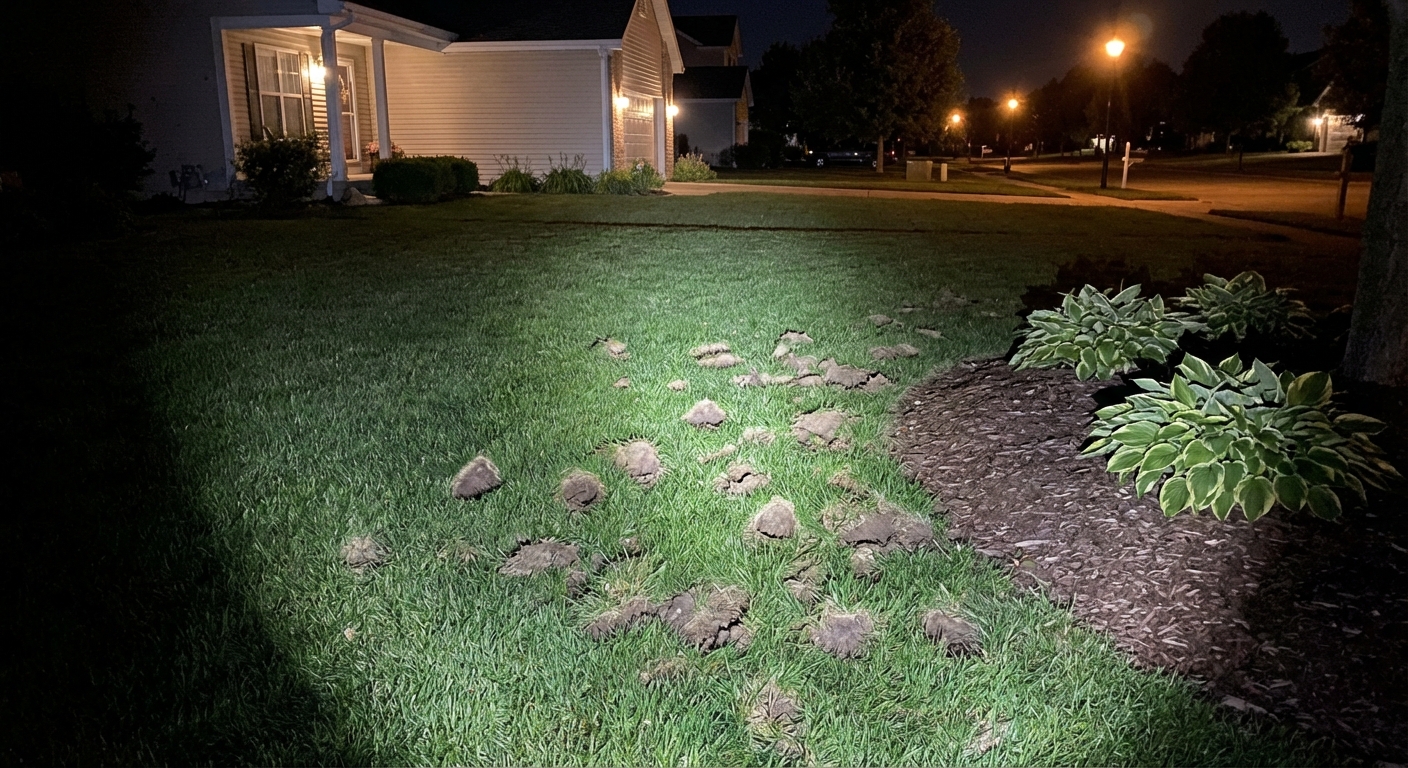
If your lawn looks like it was “peppered” with little holes overnight, or your mulch bed has been rooted up like someone raked it with a claw, you may have an armadillo visitor. They are not trying to destroy your yard. They are simply doing what they do best: sniffing out grubs, beetles, earthworms, and other soil snacks.
The good news is you can usually solve an armadillo problem without anything extreme. The key is to confirm it is really an armadillo, then combine deterrents (make the food harder to enjoy) with barriers (make your yard harder to enter).
Quick note on timing: Armadillo activity varies by region and season. In many areas they are busiest during warm, wet stretches, but a hungry animal can show up any time conditions are right.
How to identify an armadillo problem
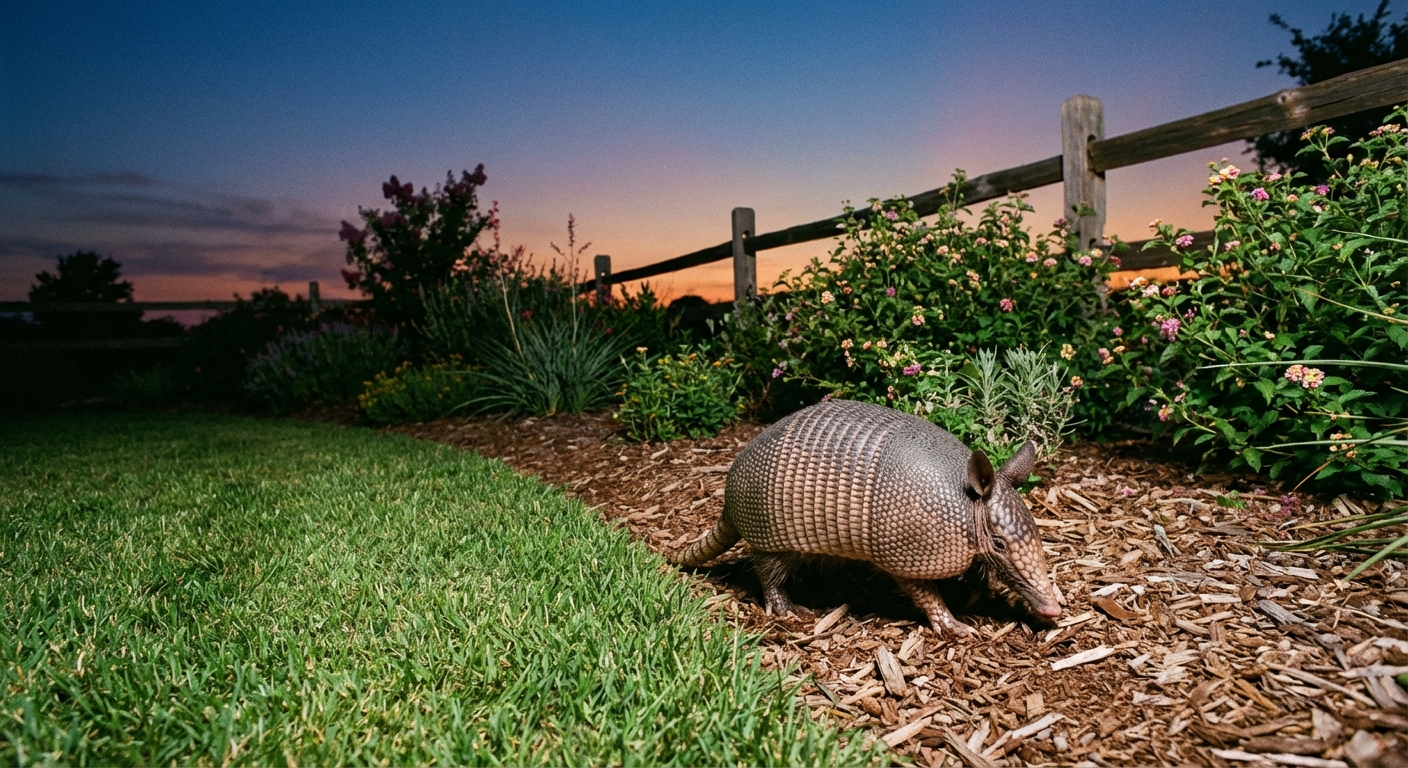
Armadillos are most active from dusk through dawn, so you often see the damage before you ever see the animal. Start by checking for a few telltale signs.
Common lawn and garden damage
- Small, cone-shaped holes about 1 to 3 inches wide, sometimes deeper than they look, scattered across turf and beds.
- Mulch and soil pushed aside where they “root” with their snout.
- Shallow trenches along bed edges or fence lines where they patrol and forage.
- Burrow openings (less common in many yards) that can be 7 to 10 inches wide, usually near brushy edges, under sheds, or along foundations.
Armadillo vs. skunk vs. mole damage
These three get mixed up all the time because they all hunt grubs.
- Armadillos: lots of distinct holes and disturbed spots, like someone poked the ground repeatedly.
- Skunks: “rolled back” chunks of sod, like little divots flipped over as they pry for grubs.
- Moles: raised tunnels and ridges, not open holes everywhere.
If you want to be sure, set a motion-activated camera aimed at the most active area for 2 or 3 nights.
Why armadillos dig up lawns
Armadillos are primarily insect eaters, but they are also opportunistic foragers. In a yard, that usually means they are following the buffet: grubs, beetle larvae, earthworms, and other soil insects. When conditions are right, they can do a lot of digging fast.
What attracts them
- Grubs in turf (often late summer and early fall, but it can happen other times too)
- Moist soil after irrigation or rain, which makes insects easier to detect
- Mulch beds full of earthworms and bugs
- Cover and quiet edges like woodlines, brush piles, or tall grass near the yard
Do they ruin the lawn?
Most of the time, the turf recovers if you fix the underlying issue and repair the disturbed spots. But repeated digging can thin grass, dry out patches, and leave trip hazards, especially in sandy soil where holes collapse into soft craters.
Fast, humane ways to deter armadillos
If you are trying to protect lawn and garden beds, deterrents work best when you use them consistently for a couple of weeks while you also tighten up entry points. Think of it as making your yard “not worth the effort.”
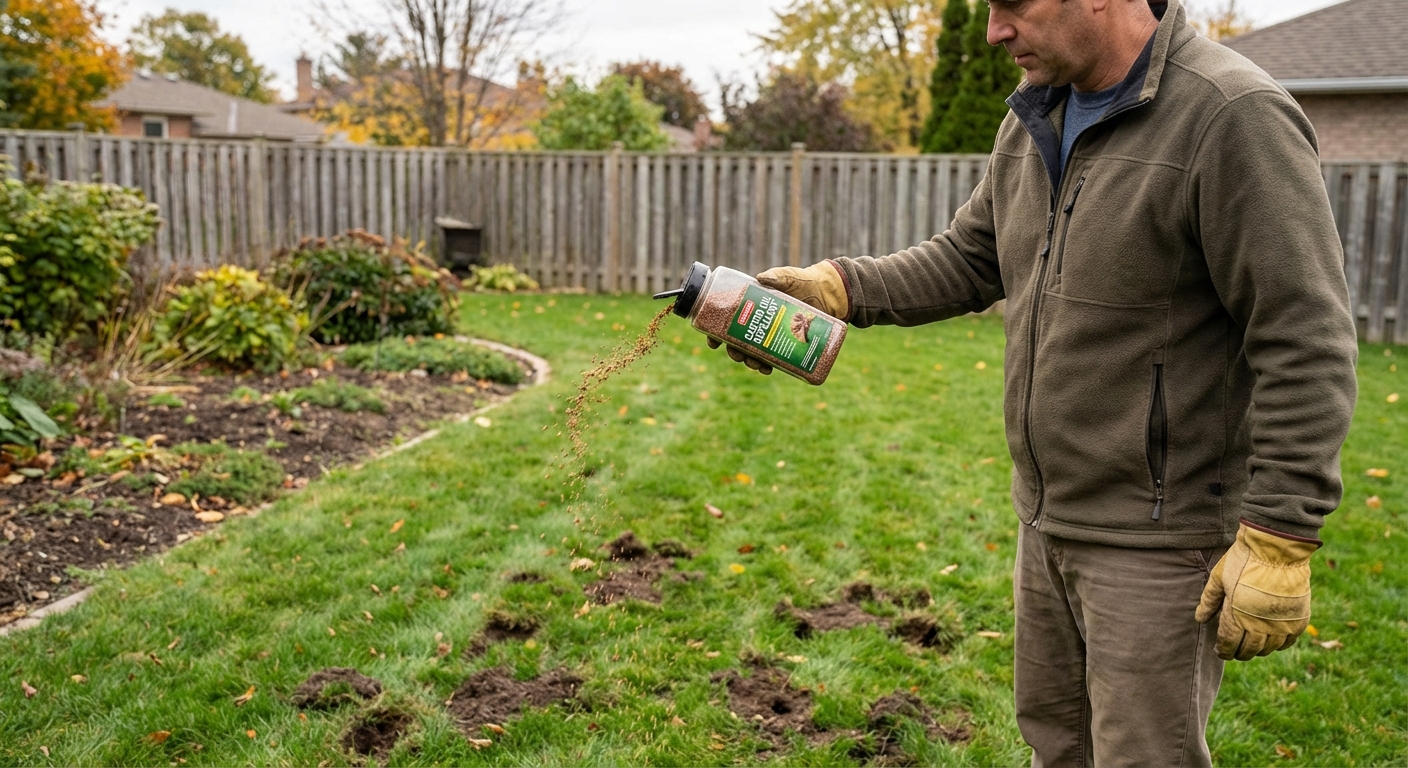
Try castor oil granules
Castor oil-based repellents are a popular homeowner-friendly option. They do not poison the animal. Results can be mixed, though, so think of these as something that may help, especially when paired with exclusion.
- Choose castor oil granules or a hose-end spray labeled for armadillos, moles, or grub-feeding pests.
- Apply to the active digging area plus a buffer zone.
- Reapply after heavy rain and follow the label rate. Under-applying is a common reason people think it “didn’t work.”
Tip: If armadillos are digging in multiple places, focus first on the route they likely travel, such as fence lines, hedges, and the edge where lawn meets woods.
Reduce the food source (grub control)
If armadillos are repeatedly visiting, there is a good chance you have a grub or soil insect issue. You do not always need to blanket-treat the yard with chemicals, but you do want to confirm what is going on.
- Check for grubs: Cut a 1-foot square of sod and peel it back. If you see several C-shaped grubs in that small area, that is a clue.
- Water smarter: Avoid overwatering at night. Consistently wet soil makes for easy foraging.
- Consider targeted grub treatment: If you confirm grubs, choose a product appropriate for your timing and lawn type. Follow all label directions and local guidance.
Even with grub control, you may still need fencing. Armadillos also eat worms and other insects that are hard to eliminate, especially in rich garden beds.
Use light and motion
Motion-activated sprinklers and lights can help, especially when the animal is just passing through. They are less reliable for a determined armadillo that has found a reliable food source, but they can buy you time while you install a barrier.
- Place devices near the entry route, not just where you see holes.
- Move them every few days so the animal does not get used to the pattern.
Fencing that works
If you want the most dependable, long-term fix, install a barrier. Armadillos are not great climbers, but they are persistent diggers, so the fence needs to address both.
Best fence setup
Specs vary by soil and pressure, but this is a typical starting point that works in many yards.
- Material: 1/2-inch hardware cloth or sturdy welded wire
- Height: about 18 to 24 inches
- Buried depth: about 12 to 18 inches, or use an L-shaped “apron” that extends outward underground
- Bottom edge: pin tight to the ground with landscape staples if you are using an apron
If your soil is sandy or you are seeing heavy, repeated digging, plan on going deeper, using heavier-gauge wire, and reinforcing corners and gate gaps.
For garden beds, a short perimeter fence with buried hardware cloth is often the sweet spot. You can protect your vegetables and flowers without fencing the entire property.

Seal up easy access points
Before you spend money on deterrents, take a quick walk around the yard perimeter.
- Close gaps under gates.
- Block access under decks and sheds with hardware cloth.
- Remove brush piles and tall weeds near the fence line.
If your yard backs up to woods or an overgrown drainage area, focus your “armadillo proofing” on the first 30 feet along that edge. That is usually where they enter and start hunting.
Protect beds and lawns now
If you have fresh seedlings, newly planted flowers, or a lawn you are trying to rehab, you may need a short-term protective move while you work on longer-term fixes.
Quick bed protection
- Temporary hardware cloth panels staked around the bed edge
- Row cover or netting is not enough by itself, since armadillos come from below and the side
- Keep mulch tidy and avoid thick layers right next to the bed edge where insects thrive
Repairing holes in turf
- Rake the area smooth and break up compacted soil around the hole.
- Fill with topsoil or a soil-compost blend.
- Press down firmly, then overseed or patch with sod depending on season.
- Water lightly to settle, then return to normal watering.
Trapping and removal
Rules vary by state and county. In some places, trapping is allowed but relocating wildlife is restricted or illegal, and some areas require a permit or a licensed operator. Check your local wildlife agency rules before you do anything.
Live trapping basics
Live trapping can work, but it is not always simple. Armadillos do not respond to bait the way raccoons or opossums do, so placement matters more than “what you put in the trap.” Their poor eyesight can work in your favor because they tend to follow edges and barriers.
- Use a sturdy live trap placed along a fence line or travel path.
- Guide the animal in with boards or temporary fencing like a funnel.
- Check traps frequently and follow local rules. In some areas, the next step may be release on-site where permitted, transfer to animal control, or calling a licensed wildlife professional.
If you are uncomfortable handling a trapped wild animal, skip this and move to a professional.
What not to do
- Do not use poisons or unapproved pesticides. They are unsafe for pets and wildlife and may be illegal.
- Skip mothballs and other toxic home remedies. They can contaminate soil and harm animals and people.
- Do not flood burrows. It can undermine soil near structures and does not reliably solve the problem.
When to call wildlife control
Sometimes the best move is to bring in help, especially if the problem is recurring or you suspect a burrow near structures.
Call a pro if:
- You find a large burrow near a foundation, patio, or under a shed.
- Damage is spreading quickly across the yard.
- You have tried repellents and basic fencing but still see nightly activity.
- You are in an area with strict trapping, permit, or relocation rules.
Ask the company what methods they use, whether they offer exclusion work (fencing and sealing), and if they provide a warranty on re-entry.
Common questions
Are armadillos dangerous?
They are generally shy and avoid people. The main risks are lawn damage, holes that can cause trips, and burrowing near structures. There is also a low but real health consideration: armadillos are known carriers of Hansen’s disease (leprosy). Transmission to humans is rare, and risk is mainly associated with handling armadillos or their tissues. To be safe, avoid direct contact and follow local public health guidance if you have concerns.
- Do not handle armadillos, alive or dead.
- Wear gloves when working in soil where you have heavy armadillo activity.
- Wash hands well after gardening, filling holes, or moving mulch in affected areas.
Will grub killer get rid of armadillos?
It can help if grubs are the main attractant, but it is not a guaranteed fix. Armadillos also eat worms and other insects. Pair grub control with deterrents and a barrier for best results.
What is the most effective repellent?
For most homeowners, the most dependable humane approach is exclusion (hardware cloth fencing with a buried edge or apron). Repellents like castor oil products may help as a supporting tactic, but they are not reliable enough to be the only plan.
A simple plan
If you want a no-drama approach, here is the order I would tackle it:
- Step 1: Confirm it is an armadillo (damage pattern, camera if needed).
- Step 2: Tighten up entry points (gates, under sheds, brushy edges).
- Step 3: Apply a repellent like castor oil granules to the active area and travel routes, then reassess after rain and reapply as directed.
- Step 4: Inspect for grubs and correct watering habits.
- Step 5: Install hardware cloth fencing around the garden bed or problem edge, with a buried section or apron.
- Step 6: If digging continues after 10 to 14 days, contact wildlife control for removal and exclusion help, especially if relocation is restricted where you live.
Once you make your yard harder to forage in and harder to enter, armadillos usually move on to an easier meal somewhere else.