How to Dry Fresh Herbs at Home

Jose Brito
I’m Jose Britto, the writer behind The Country Store Farm Website. I share practical, down-to-earth gardening advice for home growers—whether you’re starting your first raised bed, troubleshooting pests, improving soil, or figuring out what to plant next. My focus is simple: clear tips you can actually use, realistic expectations, and methods that work in real backyards (not just in perfect conditions). If you like straightforward guidance and learning as you go, you’re in the right place.
Drying herbs is one of the easiest ways to save your garden flavor for winter. The trick is simple: dry them fast enough to prevent mold, but gently enough to keep the oils that make herbs taste and smell like herbs.
Below are four reliable ways to dry common backyard herbs, plus exactly which method works best for basil, oregano, thyme, rosemary, and mint. If you have ever dried herbs and ended up with dusty, flavorless flakes, this will fix that.
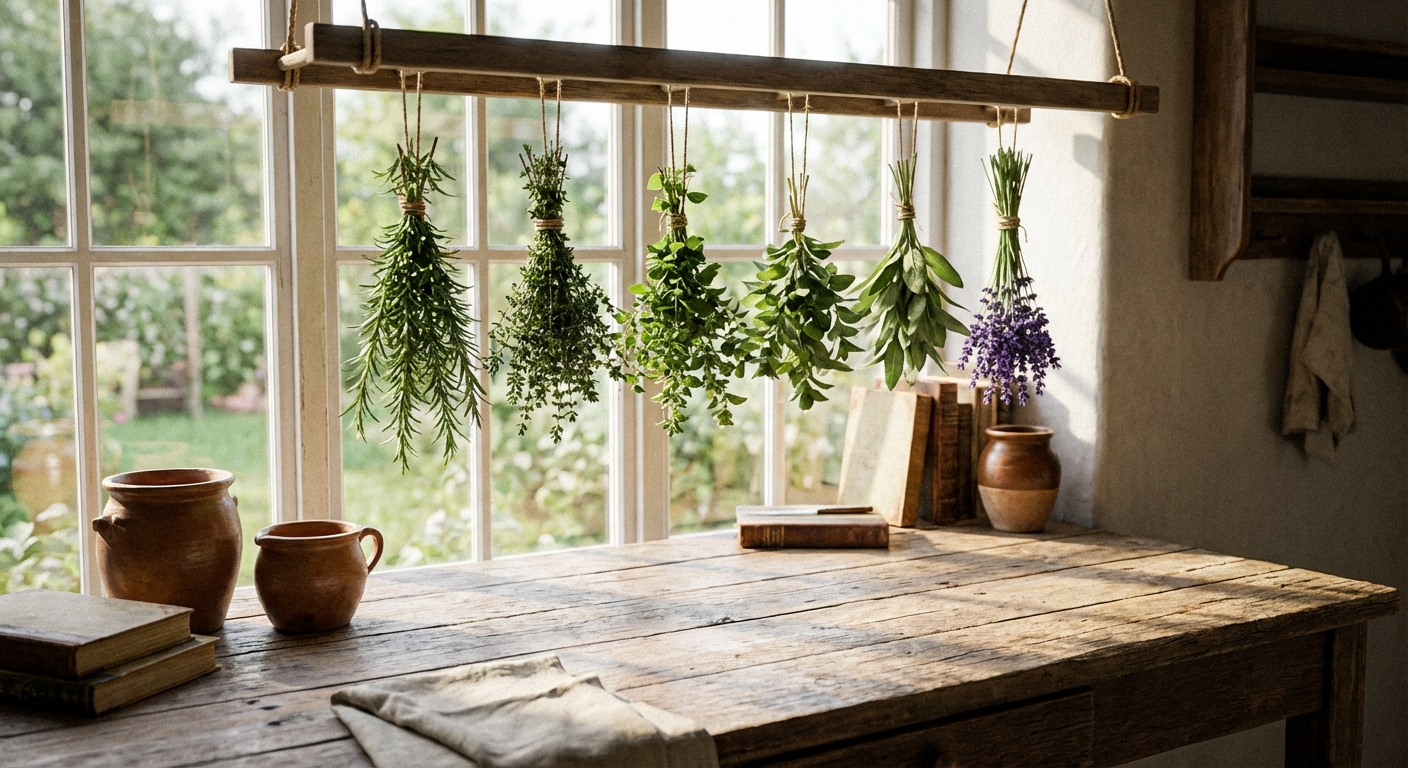
Before you dry anything
Pick at the right time
For strongest flavor, harvest in the morning after the dew dries but before the day heats up. That is when the essential oils are typically at their peak.
- Take healthy stems: skip anything with spots, mildew, or bug damage.
- Harvest before flowering when possible. Once many herbs bloom, leaf flavor can drop.
Wash or not?
If your herbs are clean, you can skip washing. If they are dusty, have splashed soil, or you sprayed anything recently, rinse quickly in cool water and dry thoroughly.
- Shake off excess water.
- Pat gently with a towel.
- Let them sit on a towel until the surface is completely dry.
Important: water on the leaves slows drying and can lead to mold, especially with air-drying.
Prep basics (what to remove)
- For woody herbs (rosemary, thyme, oregano): you can dry whole sprigs.
- For tender herbs (basil, mint): dry leaves on stems if air-drying, or strip leaves for dehydrator, oven, and microwave drying so they dry evenly.
- Remove thick stems if you are drying loose leaves. They hold moisture and can slow everything down.
Method 1: Air-drying (best for most woody herbs)
Air-drying is hands-off and preserves flavor well, as long as your space is dry and has airflow. It works best for herbs with lower moisture content.
How to air-dry herbs
- Bundle 8 to 15 stems together (smaller bundles dry better).
- Tie with twine or a rubber band. Rubber bands tighten as stems shrink.
- Hang upside down in a dark, dry place with airflow. A pantry, closet, or spare room works well.
- Add a paper bag (optional but helpful): slip a paper bag over the bundle and poke a few holes for airflow. This keeps dust off and catches leaves.
- Wait until fully crisp. Most herbs take 1 to 3 weeks depending on humidity and bundle size.
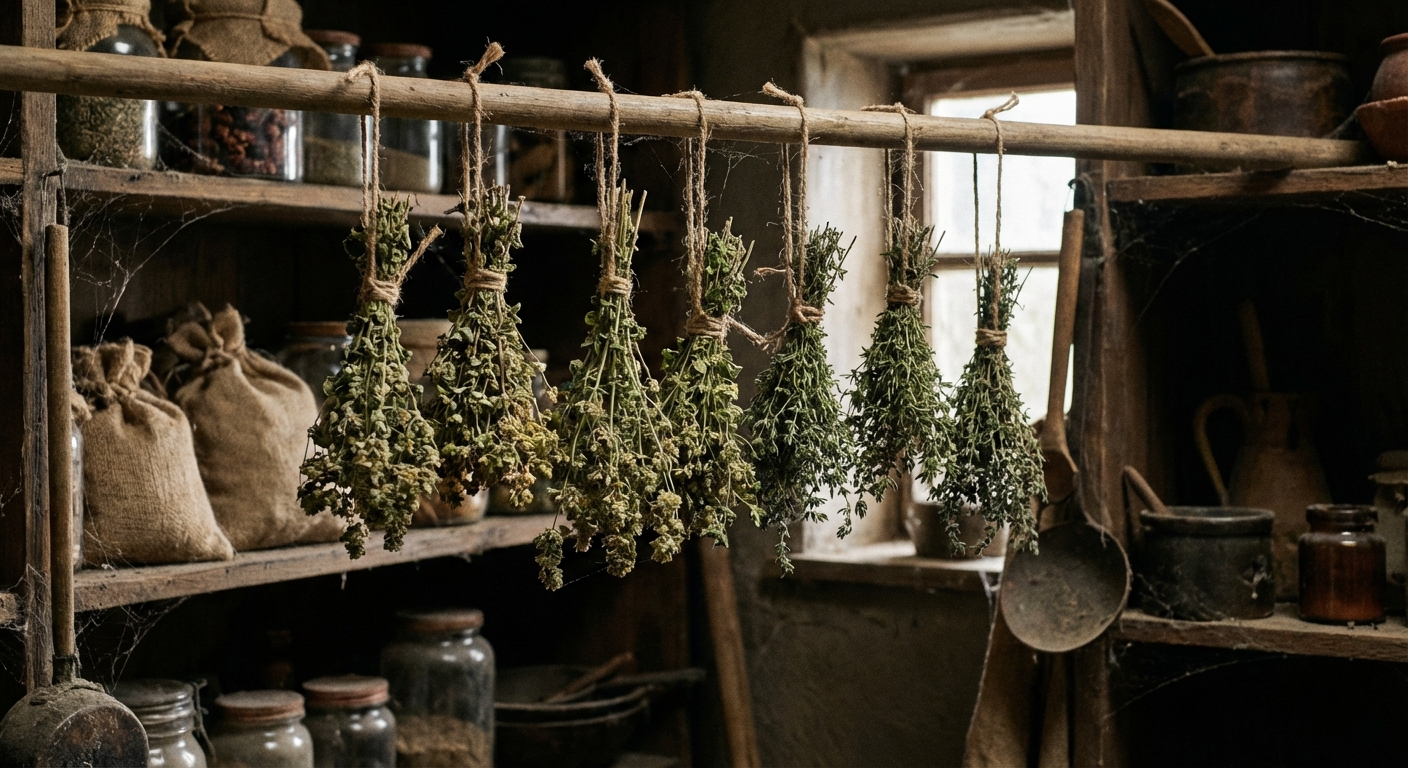
Where air-drying goes wrong
- Too much humidity: herbs feel limp for days and can develop a musty smell. Switch to a dehydrator, microwave, or oven.
- Sunlight: direct sun fades color and can reduce flavor. Keep it dark.
- Big bundles: the center stays damp. Make smaller bundles.
Best conditions
- Dry air and steady airflow matter more than warmth.
- Avoid kitchens and bathrooms if you can. Steam and splashes raise humidity.
Method 2: Dehydrator (most consistent results)
If you dry herbs often, a dehydrator is the most reliable tool. It gives gentle heat and steady airflow, which means faster drying without cooking the leaves.
How to dehydrate herbs
- Strip leaves for basil and mint. For thyme, oregano, and rosemary, you can do sprigs or stripped leaves.
- Spread in a single layer on trays. Do not pile them up.
- Set temperature to 95 to 115°F (35 to 46°C), or use your machine’s herb setting. If the lowest setting is 125°F (52°C), that still works, just check more often.
- Dry until crisp. Start checking early (after 1 to 2 hours for tender herbs, 2 to 3 hours for woody herbs), then check every 30 to 60 minutes.
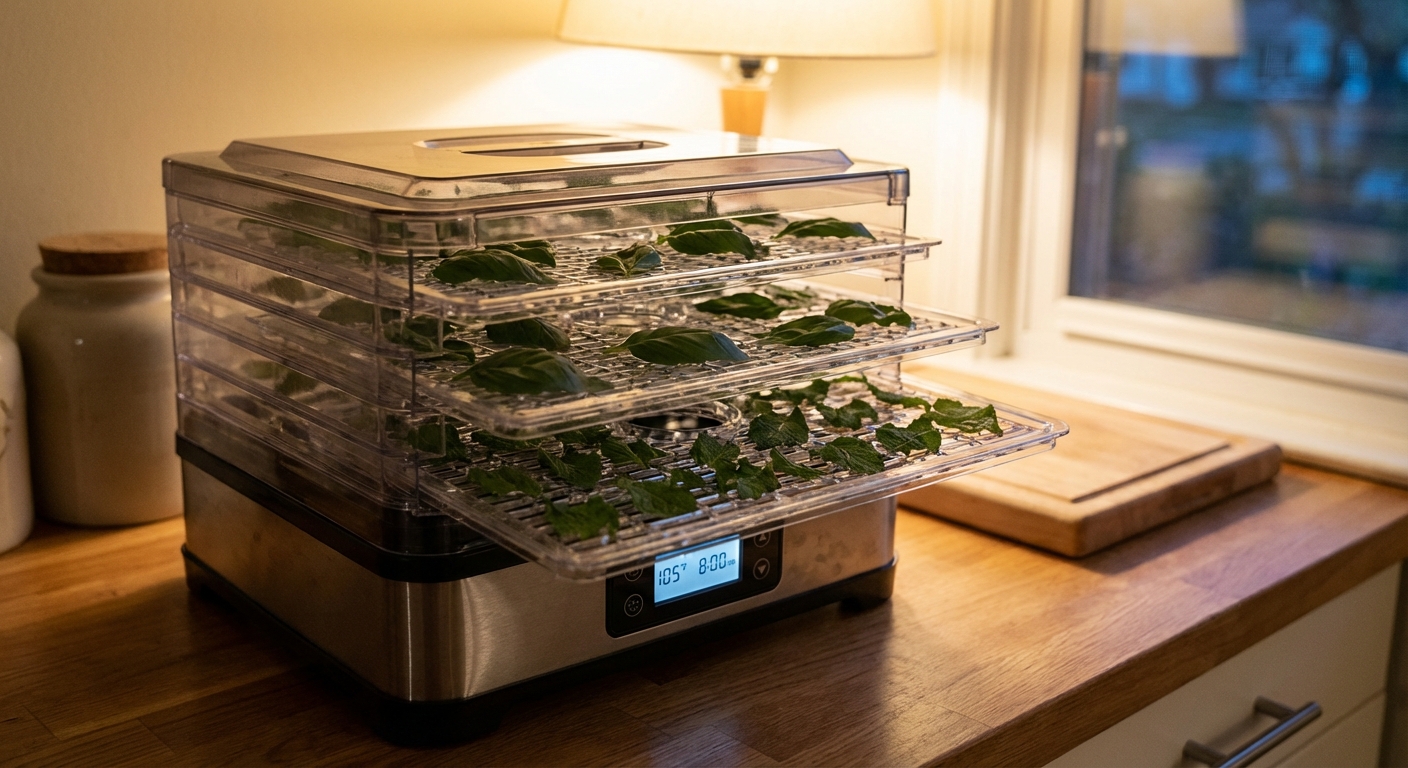
Typical dehydrator times (realistic ranges)
- Basil: 2 to 4 hours
- Mint: 2 to 4 hours
- Oregano: 2 to 4 hours
- Thyme: 2 to 4 hours
- Rosemary: 3 to 6 hours
Times vary by leaf size, humidity, and how full your dehydrator is. Your best timer is texture.
Method 3: Oven-drying (fast, but easiest to overdo)
Oven-drying is great when you need herbs dried today, but it is also the easiest way to lose flavor if the heat is too high. Essential oils start to volatilize at relatively low temperatures, well below 170°F, so even gentle oven heat can mute aroma if you are not careful.
How to oven-dry herbs
- Preheat to the lowest setting, ideally 170°F (75°C) or lower. If your oven goes to 200°F, you can still do it, just watch closely.
- Line a baking sheet with parchment.
- Spread herbs in a single layer. Strip leaves for basil and mint.
- Vent for moisture: if your oven manual allows it, crack the door 1 to 2 inches to help moisture escape (a wooden spoon in the door works). If you prefer not to crack the door, use convection if you have it and rotate the tray more often.
- Check often and flip or stir lightly once or twice.
Safety note: Keep kids and pets away from an open oven door, and use extra care with hot trays. For gas ovens, follow the manufacturer’s guidance on venting with the door ajar.
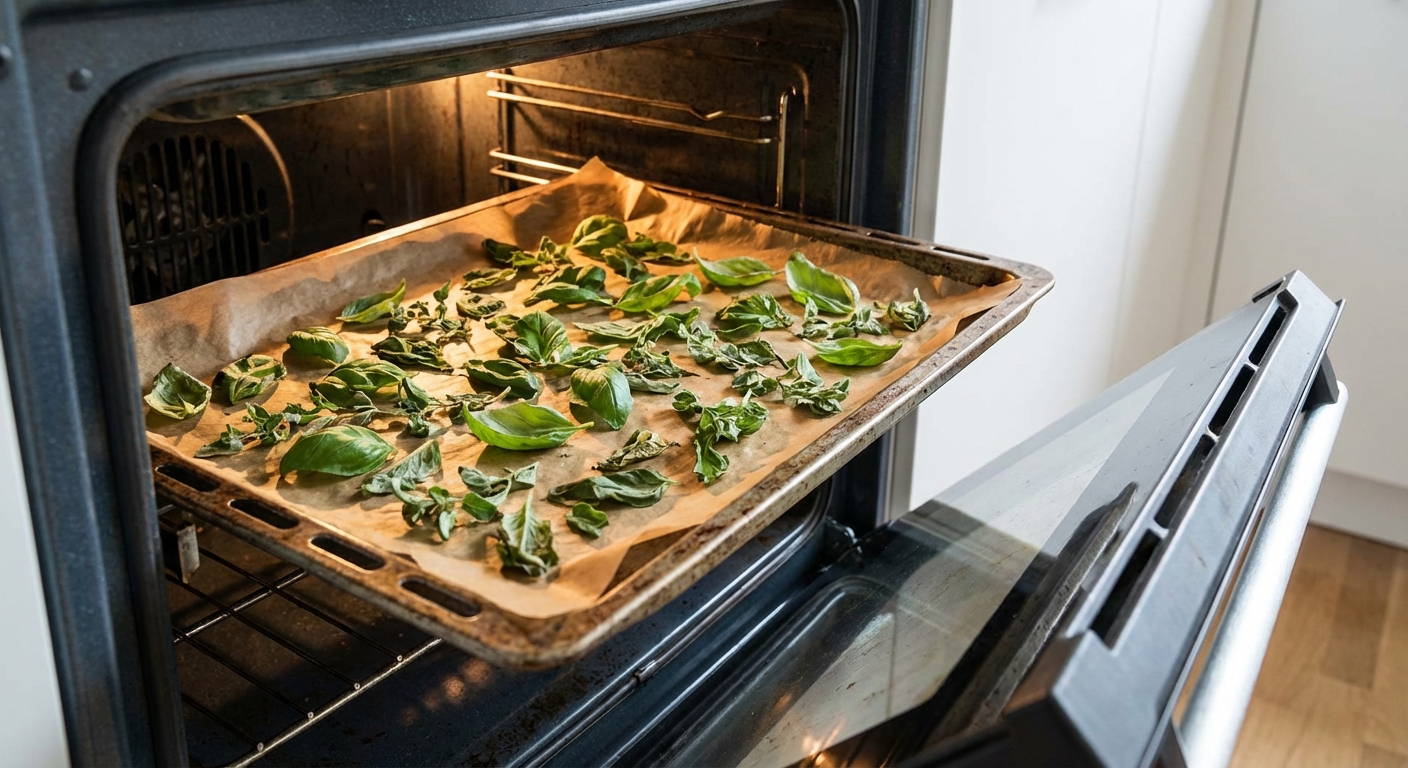
Oven timing guidelines
- Tender herbs (basil, mint): 15 to 45 minutes
- Woody herbs (oregano, thyme, rosemary): 30 to 90 minutes
Tip: If your oven runs hot, turn it off after 10 to 15 minutes and let herbs finish drying with the residual heat, checking every 10 minutes.
Method 4: Microwave (best for small batches)
The microwave is surprisingly effective for tender herbs like basil and mint. It flashes off moisture fast, which can help preserve greener color and fresh aroma better than a warm oven. This method is best for small quantities.
How to microwave-dry herbs
- Strip and dry the leaves thoroughly. Surface water makes results uneven.
- Layer leaves in a single layer between two paper towels on a microwave-safe plate.
- Microwave in short bursts: start with 30 seconds on high, then continue in 15 to 20 second bursts until crisp. Most herbs finish in 1 to 3 minutes total, depending on the microwave and leaf size.
- Cool for a minute. Leaves crisp up more as they cool.
Watch closely: Microwaves vary a lot, and herbs can scorch fast once they are almost dry.
Which drying method is best for each herb?
Each herb has its own personality. Some dry beautifully with no heat. Others turn dark or bland if you are not careful.
Basil
- Best: Dehydrator (95 to 110°F) or microwave for small batches
- Okay: Oven on the lowest setting, watched closely
- Not great: Air-drying in humid climates (basil holds a lot of moisture and can darken or mold)
Basil bruises easily and oxidizes fast. The quick, gentle dry from a dehydrator (or a careful microwave batch) usually keeps the best color and flavor.
Oregano
- Best: Air-drying or dehydrator
- Okay: Oven
Oregano is forgiving. Air-drying a small bundle in a dry room works well and keeps good flavor.
Thyme
- Best: Air-drying or dehydrator
- Okay: Oven
Thyme dries fast because the leaves are tiny. Dry sprigs whole, then rub leaves off once fully crisp.
Rosemary
- Best: Dehydrator or air-drying
- Okay: Oven
Rosemary is sturdy and does not mind air-drying. A dehydrator speeds things up and gives a very consistent result.
Mint
- Best: Dehydrator or microwave for small batches
- Okay: Air-drying (small bundles, good airflow)
- Tricky: Oven (it can crisp and brown fast)
Mint can air-dry well, but it is moisture-heavy. If your house is humid, use a dehydrator to avoid that musty smell.
How to tell when herbs are fully dry
Do not rely only on time. Rely on texture.
- Leaves should crumble easily between your fingers.
- Stems should snap, not bend.
- No cool or leathery spots should remain, especially near thicker stems.
If you store herbs that are even slightly damp, you are inviting mold.
How to store dried herbs for maximum shelf life
Storage matters as much as the drying. Light, heat, air, and moisture slowly strip flavor.
Best containers
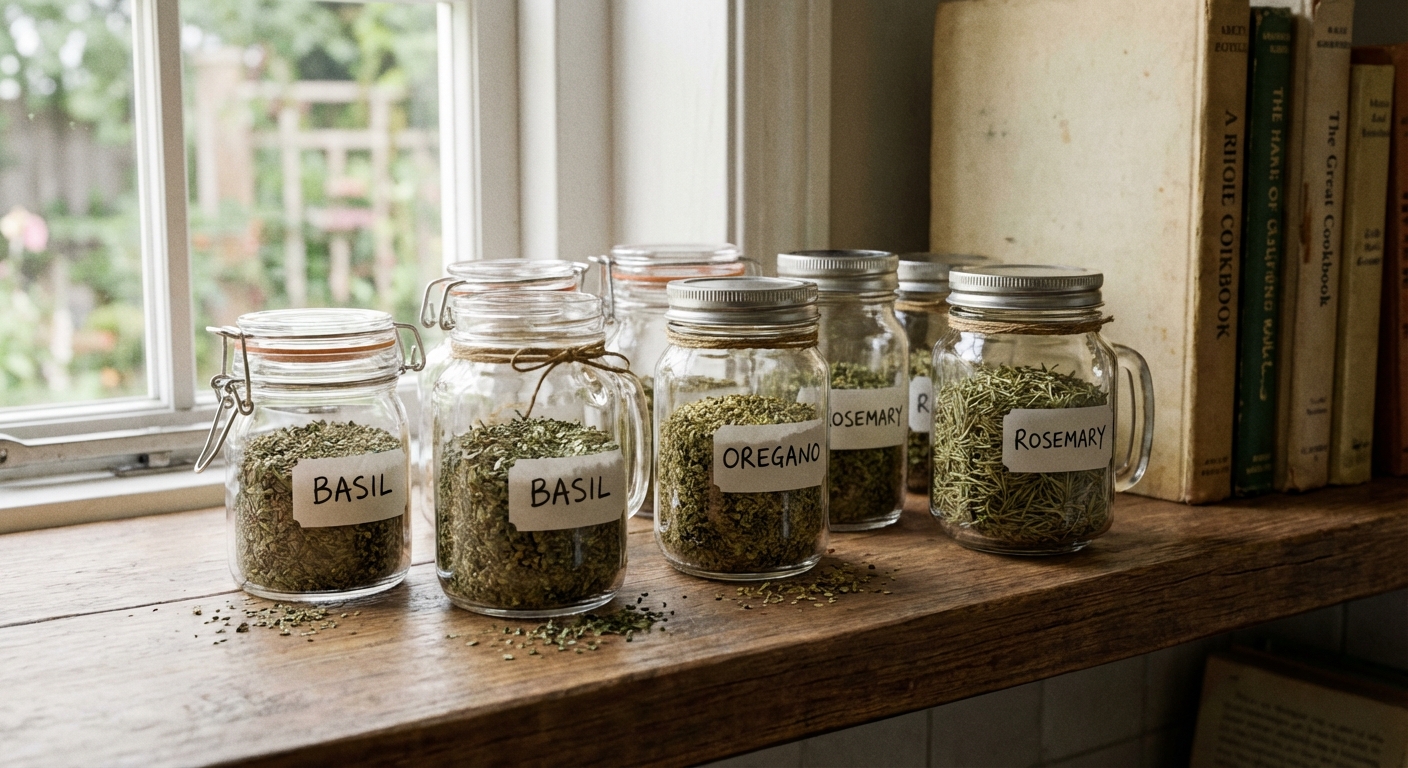
- Glass jars with tight lids are ideal.
- Small jars are better than one big jar since you expose them to air less often.
- Plastic bags work in a pinch, but they crush herbs and are not as protective long term. Jars keep flavor better.
Condition first (simple, but important)
Even when herbs feel dry, tiny pockets of moisture can hide in thicker leaves or stems. Conditioning helps you catch that before it turns into condensation and mold.
- Loosely pack cooled, dried herbs into a clean, dry jar.
- Seal and store at room temperature for 3 to 7 days.
- Shake once daily.
- If you see condensation or the herbs feel less crisp, re-dry them and repeat.
Whole leaves vs crushed
Keep herbs as whole as you can, and crush only what you need while cooking. Whole leaves hold their essential oils longer.
Where to store
- Cool, dark cabinet, away from the stove, dishwasher, and sunny windows.
- Skip the fridge. Opening and closing creates condensation.
How long do dried herbs last?
Dried herbs are safest for a long time when kept dry, but flavor is what fades. For best taste:
- Leafy herbs (basil, mint, oregano, thyme): use within 6 to 12 months
- Woody herbs (rosemary): 12 to 18 months
They are often still usable beyond that, but you will need more to get the same punch.
Quick test: rub a pinch between your fingers and smell it. If the aroma is weak, use more than usual or replace it.
A simple workflow that works every time
- Dry your herbs the same day you harvest if possible.
- Use air-drying for oregano, thyme, and rosemary when your indoor air is dry.
- Use a dehydrator for basil and mint, and anytime humidity is high.
- Use the microwave for small, fast batches of tender herbs.
- Use the oven when you need speed, but monitor it closely.
- Condition in a jar for a few days, then store in small glass jars in a dark cabinet. Keep herbs whole until you use them.
If you want one takeaway: the best dried herbs come from gentle drying and good storage. Do those two things and your homegrown basil and oregano will still smell like summer when it is snowing outside.