Fiddle Leaf Fig Care

Jose Brito
I’m Jose Britto, the writer behind The Country Store Farm Website. I share practical, down-to-earth gardening advice for home growers—whether you’re starting your first raised bed, troubleshooting pests, improving soil, or figuring out what to plant next. My focus is simple: clear tips you can actually use, realistic expectations, and methods that work in real backyards (not just in perfect conditions). If you like straightforward guidance and learning as you go, you’re in the right place.
The fiddle leaf fig (Ficus lyrata) has a reputation for being fussy, but most problems come from the same few things: not enough light, watering on a schedule instead of by soil moisture, and sudden changes. Once you dial in those basics, it becomes a steady, good-looking houseplant.
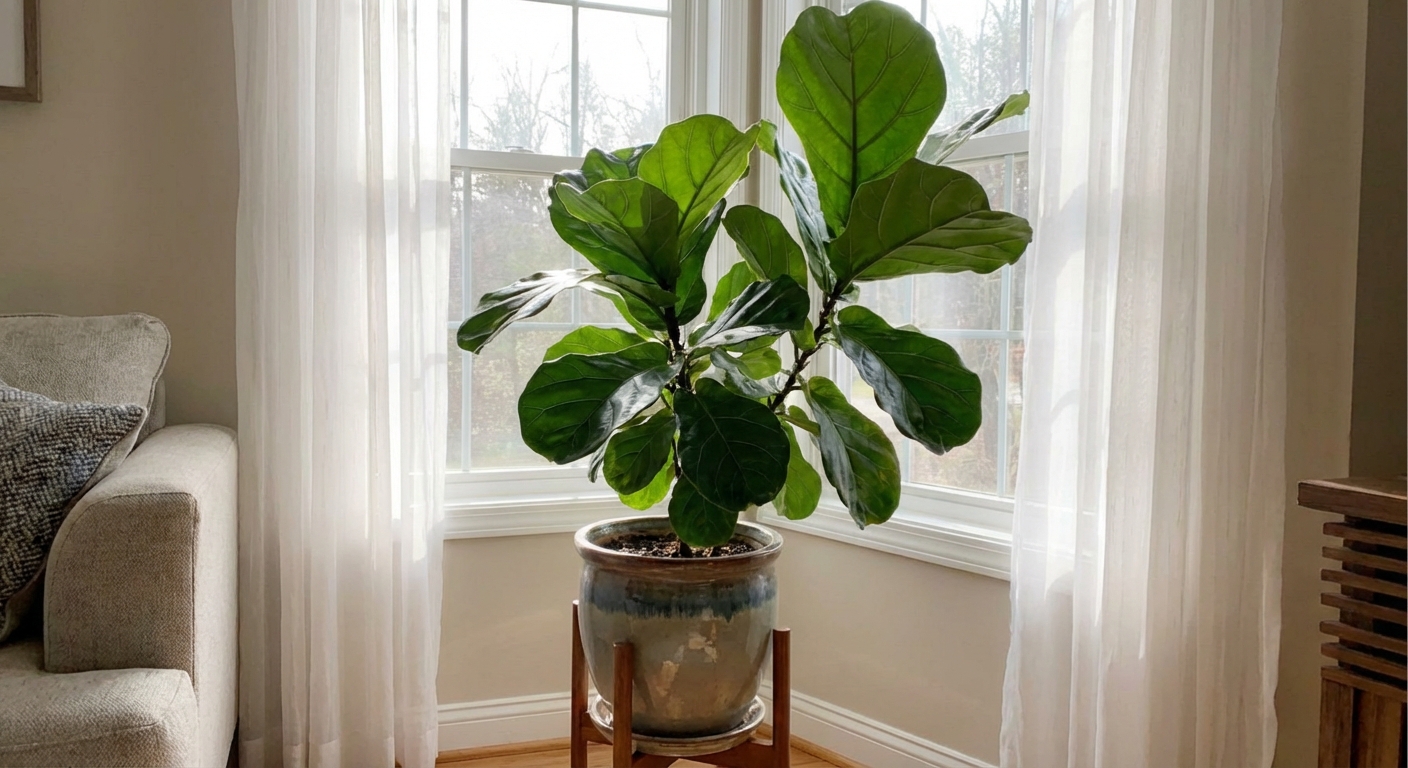
This guide covers exactly what to do for day-to-day care, plus how to troubleshoot the issues people run into most often.
Light
If there is one “secret” to an easy fiddle leaf fig, it is giving it enough light. In most homes, low light is what causes slow growth, leaf drop, and weak, leggy stems.
What “bright light” means
- Place it within a few feet of a bright window where you can comfortably read during the day without switching on a lamp.
- If the plant is several feet back in a dim corner, it is almost always too dark.
Best light
- Bright light for most of the day. Bright, indirect light works well, and some direct sun is often beneficial indoors.
- A spot near an east window is usually ideal. South or west can also be excellent, especially if you introduce direct sun gradually.
- Rotate the pot about a quarter turn every 1 to 2 weeks so it grows evenly.
Can it take direct sun?
Yes. Gentle morning sun is usually easy. Several hours of direct sun can be great for growth, especially in south or west windows, but acclimation is the key. Leaf scorch is most likely when a plant is suddenly moved from low light into strong sun through glass. If you are moving it brighter, do it gradually over 1 to 2 weeks.
Signs it needs more light
- New leaves are smaller than older ones
- Long gaps between leaves on the stem
- Leaves dropping from the lower half of the plant
- Soil staying wet for a long time after watering
Watering
Most fiddle leaf fig problems are watering problems. The goal is simple: water thoroughly, then let the soil dry partway before watering again.
How often to water
Instead of watering “every Saturday,” use the soil as your guide:
- Water when the top 2 to 3 inches of soil feel dry.
- Also check that the pot feels noticeably lighter than right after watering and that moisture is drying down through the root zone, not just on top.
- In bright light and warm months, that might be every 7 to 10 days.
- In winter or lower light, it might be every 2 to 3 weeks.
Pot size matters: small pots can dry quickly, so do not let them go bone-dry for long. Very large pots can stay wet deep down even when the surface seems dry, so check a little deeper and rely on the “lighter pot” test too.
How to water correctly
- Water slowly until you see water come out of the drainage holes.
- Empty the saucer after 10 to 15 minutes so the pot is not sitting in water.
- If the soil has become very dry and pulls away from the pot, soak it thoroughly (even bottom-water once) until the root ball is evenly moist again.
What water is best?
Room-temperature tap water is fine in most areas. If your water is very hard or you see white crust building up on the soil surface, occasional watering with filtered water can help.
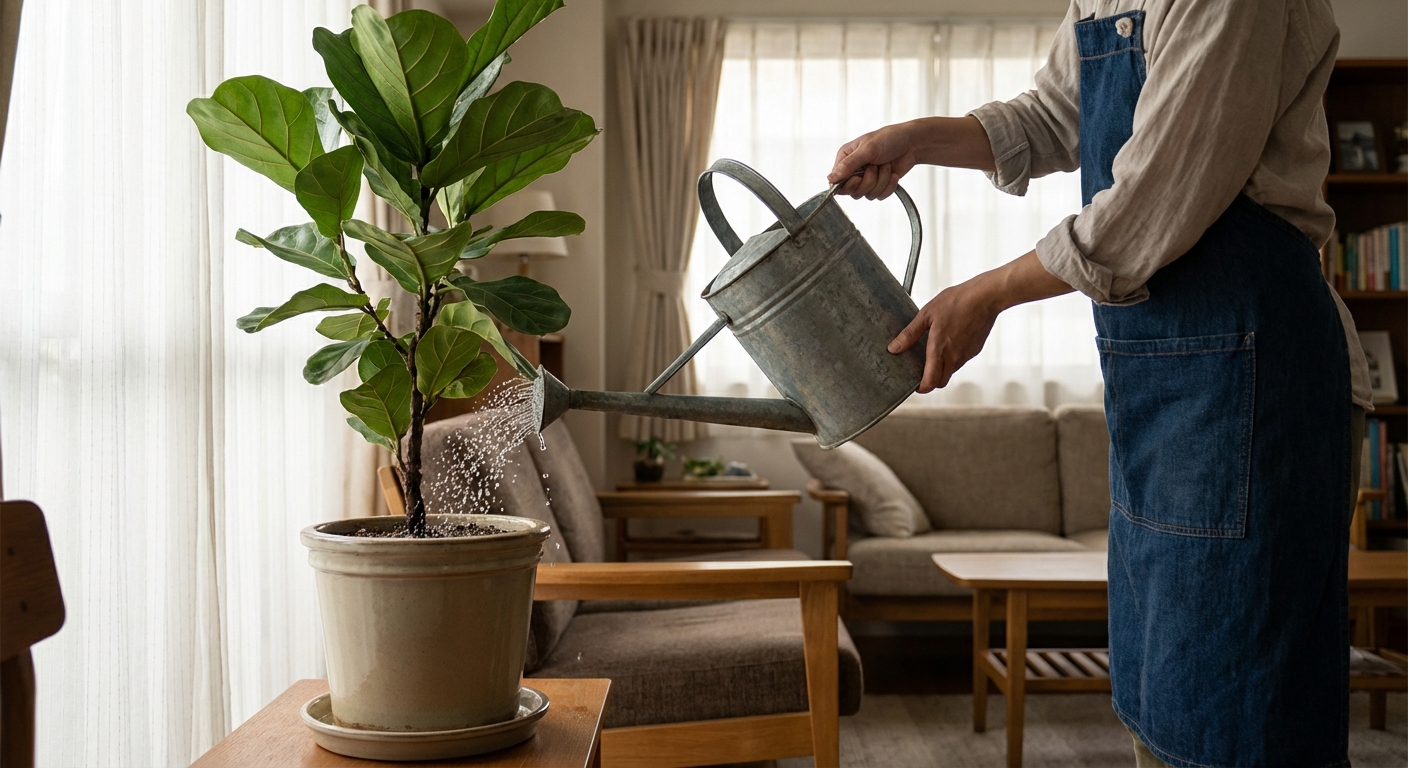
Quick reality check
If your plant is in a big pot, in low light, and the soil mix holds water, it will dry slowly and be easier to overwater. Light, soil, and pot size are tied to watering, so adjust those first before you blame yourself.
Soil and pot
Fiddle leaf figs want a mix that holds some moisture but still drains well and stays airy around the roots.
What to use
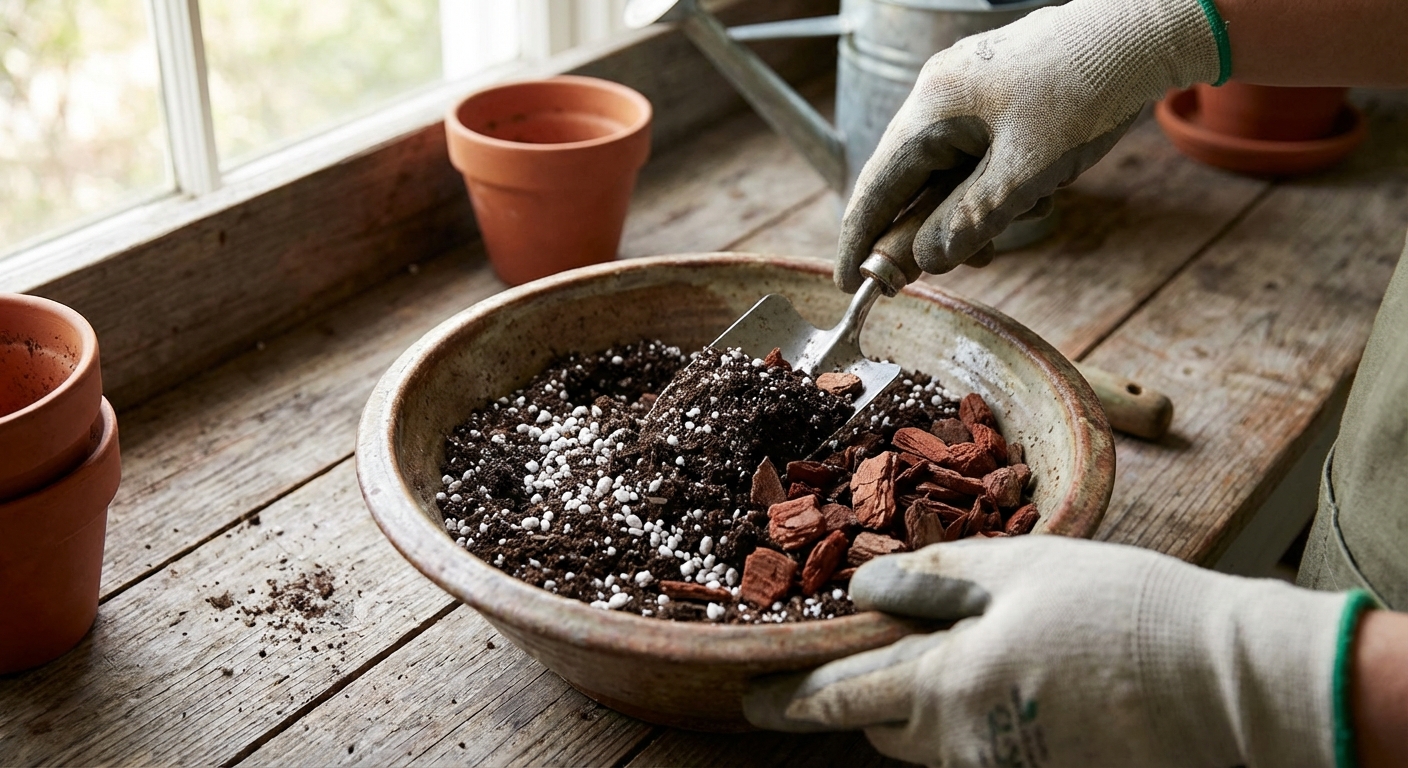
- A quality indoor potting mix plus extra aeration, such as perlite or orchid bark.
- A practical blend many home growers like is 2 parts potting mix, 1 part perlite, 1 part bark.
Drainage matters
- Always use a pot with drainage holes.
- A decorative cachepot is fine, but keep the plant in a draining nursery pot inside it.
- Pot material tip: terracotta tends to dry faster than plastic, which can be helpful if you are prone to overwatering.
Temperature and humidity
Fiddle leaf figs do well in typical home temperatures, but they dislike drafts and sudden swings.
- Temperature: Aim for about 65 to 80 F. Keep it away from cold windows in winter and from blasting HVAC vents.
- Humidity: Average household humidity is usually okay. If you can keep it around 40 to 60 percent, you will often see stronger growth and fewer crispy edges, but it is not a make-or-break requirement if light and watering are solid.
Easy ways to boost humidity
- Group plants together
- Run a small humidifier nearby
- Use a pebble tray (helpful, but mild)
Misting is optional and usually short-lived. It also does not fix the bigger issues like low light or inconsistent watering.
Fertilizing
If your plant is getting good light and putting out new leaves, a little feeding helps it look its best.
- In spring and summer, fertilize with a balanced houseplant fertilizer at half strength about once a month (or follow your product label).
- In fall and winter, ease off or pause unless the plant is actively growing under strong light.
- When in doubt, under-fertilize. Too much can stress roots and brown leaf edges.
Common problems and fixes
When a fiddle leaf fig looks rough, do not change five things at once. Identify the symptom, check the soil moisture and light, then adjust one main factor.
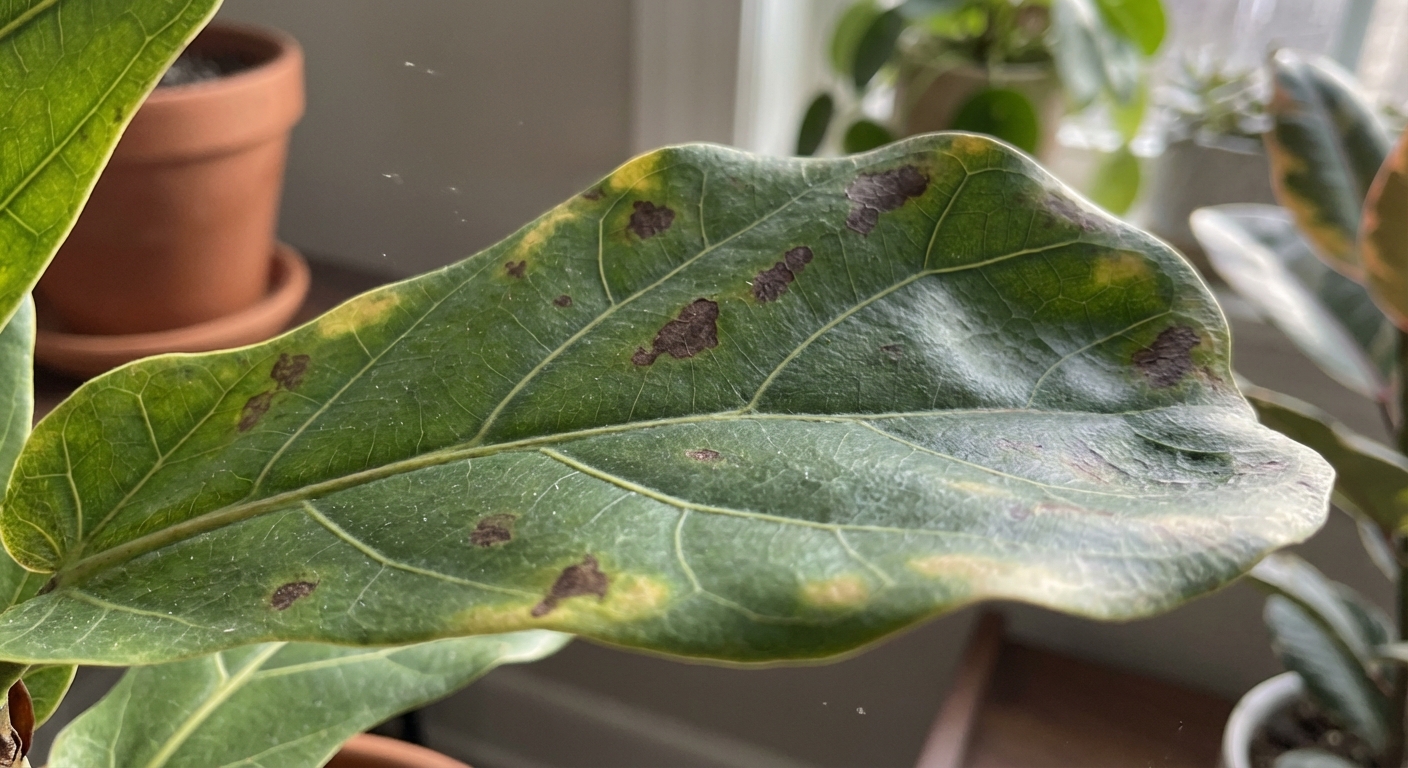
Brown spots
Brown spots can have a few different causes. The pattern tells you a lot.
- Dark brown spots that spread, sometimes with yellow around them: often overwatering or roots staying wet too long, but can also be fungal or bacterial leaf spot. Let soil dry more between waterings, improve light, and consider repotting into a chunkier mix if the soil stays wet for weeks. If spots keep increasing despite better watering, isolate the plant, improve airflow, avoid wetting the leaves, remove badly affected leaves, and consider a plant-safe fungicide labeled for houseplants.
- Tan, crispy patches, especially on the side facing a window: sunburn. Move it back from harsh direct sun and acclimate gradually.
- Small brown speckles: can be stress from inconsistent watering or low humidity, but also check for pests.
Dropping leaves
- A few older bottom leaves dropping occasionally: can be normal, especially if growth is happening at the top.
- Many leaves dropping at once: usually a sudden change like moving locations, cold draft, overwatering, or very low light.
What to do: check soil moisture, confirm it is getting bright light, and keep conditions steady for a few weeks. These plants often pause and then rebound once they settle.
Yellowing leaves
- Yellow plus soft, droopy leaves: often too much water or poor drainage.
- Yellow plus dry soil and crispy edges: underwatering or the soil has become water-repellent and is not absorbing evenly.
Leaves curling or crispy edges
- Usually underwatering, low humidity, or heat from a vent
- Make sure you are watering thoroughly, not just a small splash
Root rot
If the soil stays wet for a long time and the plant looks limp or drops leaves, check for root issues.
- Common signs: sour smell from the pot, black or mushy roots, or a root ball that stays wet and heavy for many days.
- What to do: unpot the plant, trim mushy roots with clean snips, repot into fresh, chunky mix in a pot with drainage, and water lightly at first. Then prioritize bright light and let it dry appropriately between waterings.
Pests (especially spider mites)
Fiddle leaf figs can attract spider mites in dry indoor air. Look for tiny speckling, webbing, or dusty-looking leaves.
- Rinse leaves in the shower or wipe with a damp cloth.
- Treat with insecticidal soap or horticultural oil, repeating weekly for a few rounds.
- Increase humidity and keep the plant clean.
Cleaning and maintenance
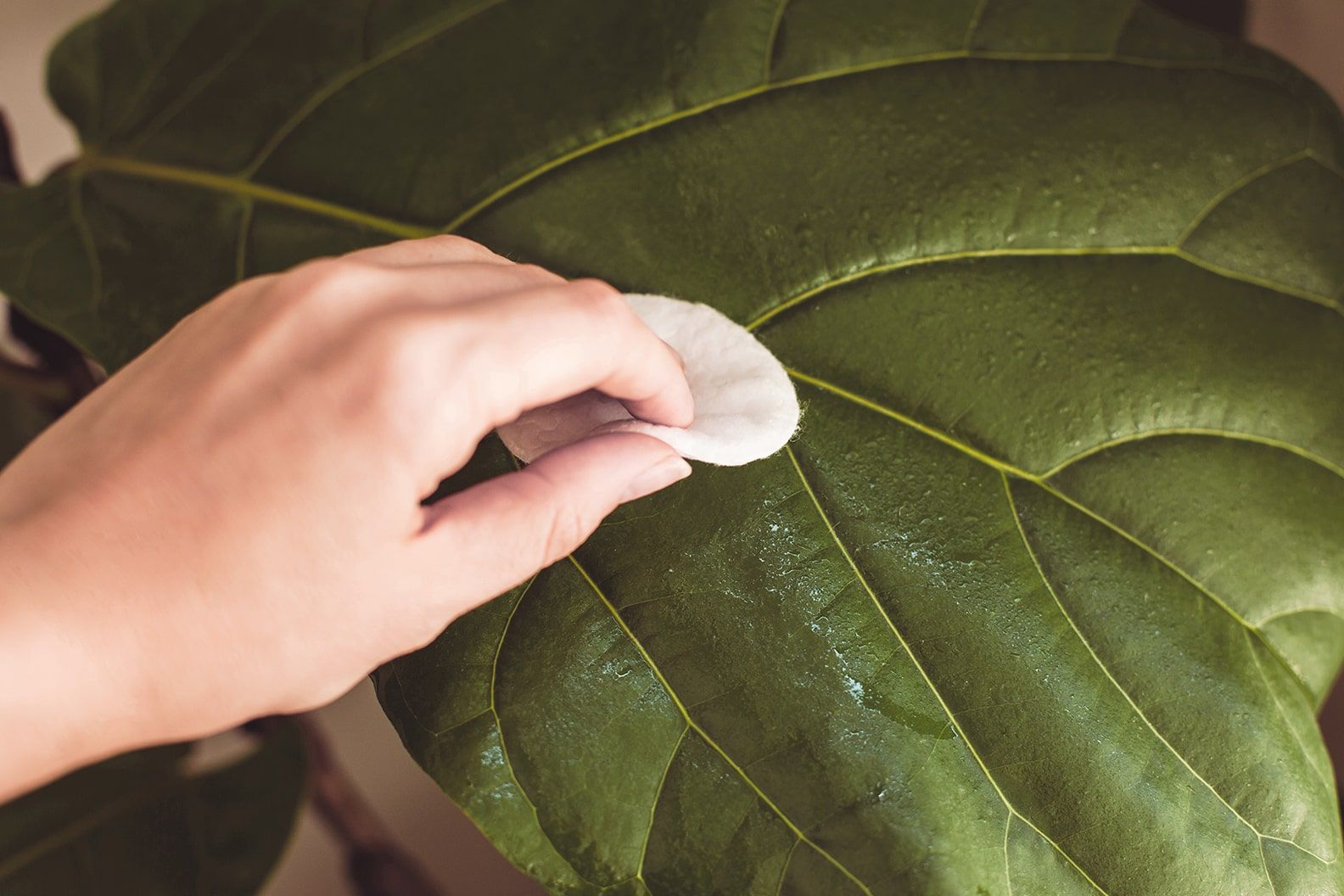
Dusty leaves do not photosynthesize as well, and pests love a neglected plant. A little routine care makes a big difference.
- Wipe leaves with a damp microfiber cloth every few weeks.
- Skip leaf shine products. They can leave residue, reduce gas exchange, and attract dust.
- Prune off fully brown, dead leaves with clean snips.
Repotting
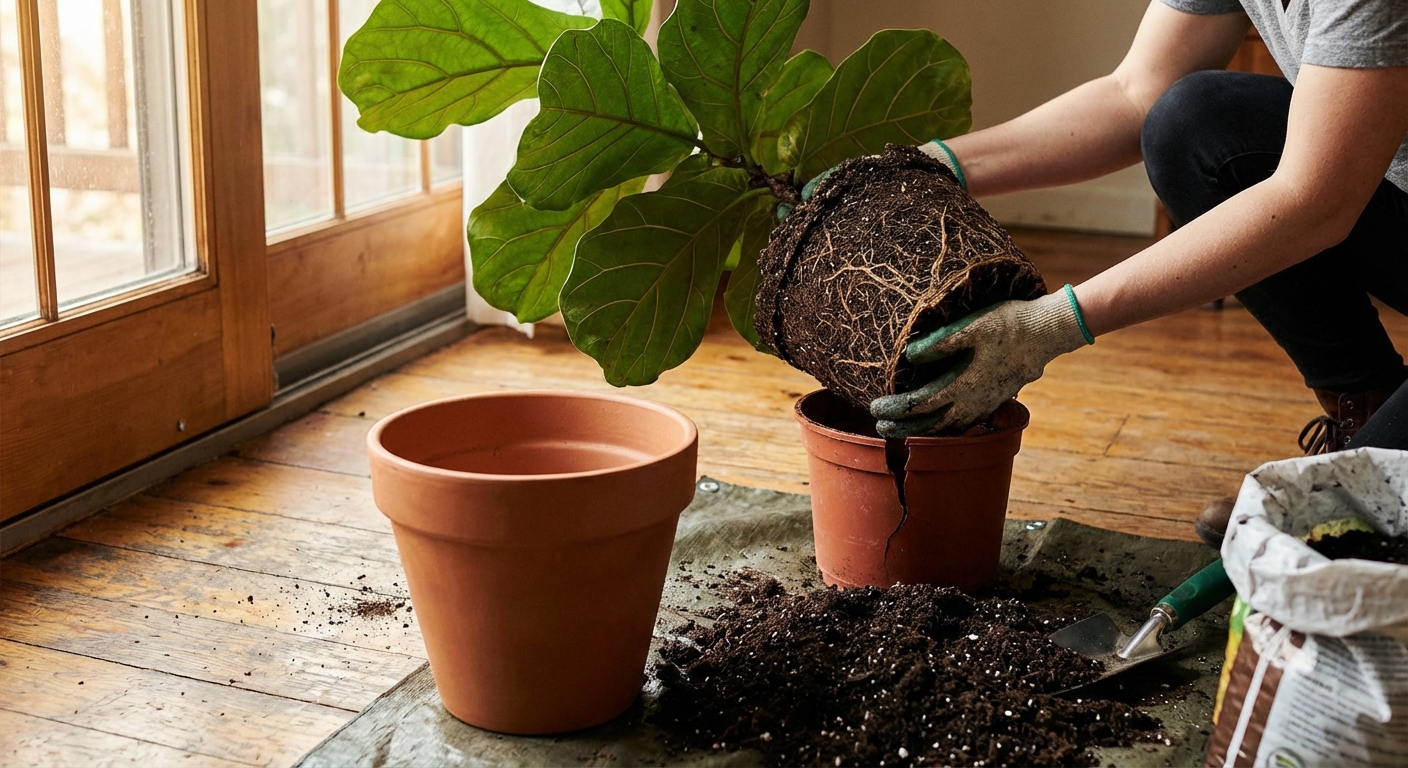
Fiddle leaf figs do not need constant repotting. In fact, moving to a much larger pot too soon can keep soil wet for too long and invite root issues.
When to repot
- Roots circling the pot or coming out of drainage holes
- The plant dries out extremely fast (every few days) even after thorough watering
- The mix has broken down and stays soggy
How to repot without setbacks
- Repot in spring or early summer if possible.
- Choose a pot only 1 to 2 inches wider than the current pot.
- Use a chunky, well-draining mix and keep the plant at the same soil level as before.
- Water in well, then let it settle and avoid extra changes for a couple weeks.
After repotting, a little leaf drop can happen. Focus on steady light and careful watering while it re-establishes roots.
How to encourage branching
If you want that fuller “tree” look, you need to push the plant to grow side shoots. A fiddle leaf fig naturally wants to grow straight up, so branching usually takes a little intervention.
Start with the basics
- Strong light is non-negotiable. A plant in low light will not branch well.
- Make sure it is actively growing (spring through summer is best).
Option 1: Pruning the tip
Pruning is the most reliable method.
- Use clean, sharp pruners.
- Cut just above a leaf node where you want branching to start.
- Expect 1 to several new shoots to form below the cut over the next weeks to months.
You can root the cut top as a new plant if the cutting has a few leaves and a healthy stem section.
Option 2: Notching
Notching is less drastic than pruning and sometimes works well.
- Make a small, shallow cut into the bark/cambium just above a node. Keep it shallow and do not cut deep or sever the stem.
- Do this during active growth and only on a healthy plant.
If nothing happens after several weeks, do not keep slicing the same plant repeatedly. Improve light and try again later.
Option 3: Pinching new growth
On softer new growth, pinching the growing tip can slow upward growth and encourage side shoots. Results vary, but it can help on younger plants.
Propagation
The easiest way to propagate a fiddle leaf fig is from a healthy tip cutting after pruning.
- Root the cutting in water or a chunky, lightly moist potting mix.
- Expect rooting to take several weeks to a couple months, depending on warmth and light.
Pet and skin safety
Fiddle leaf fig sap (latex) can irritate skin, and the plant is considered toxic to pets if ingested. Wear gloves if you are sensitive, wash hands after pruning, and keep it out of reach of curious pets and kids.
Quick care checklist
- Light: bright light, some direct sun can help, rotate regularly
- Water: when top 2 to 3 inches are dry and the pot feels lighter, then soak thoroughly
- Soil: airy mix, pot with drainage holes
- Humidity: 40 to 60 percent is helpful, but not required
- Stability: avoid sudden moves, drafts, and big routine changes
If your fiddle leaf fig is struggling, fix light and watering first and give it time. These plants respond slower than many houseplants, but once they settle in, they can be surprisingly dependable.